Περιγραφή
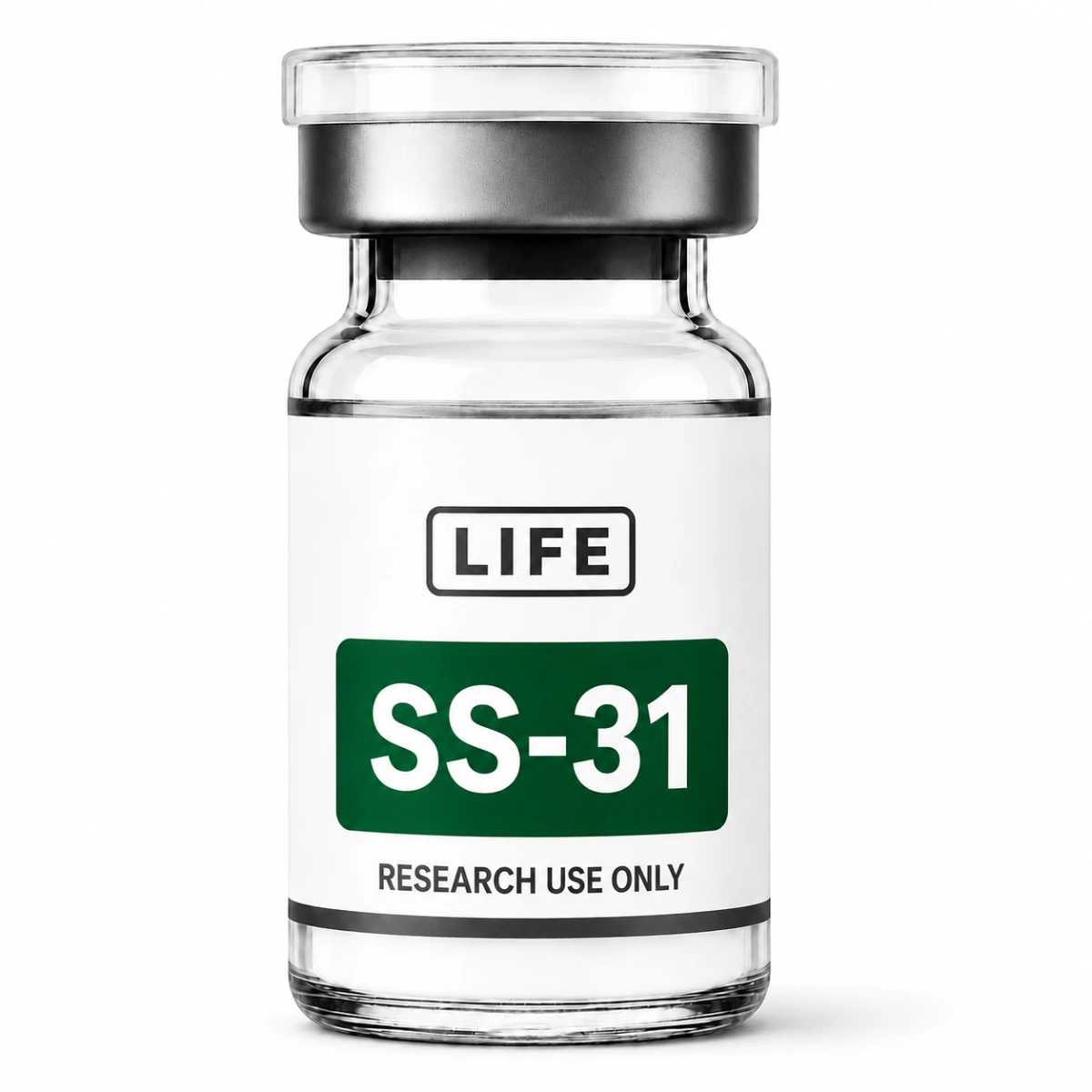
Το SS-31, γνωστό επίσης ως Ελαμιπρετίδη, MTP-131 ή Bendavia, είναι ένα συνθετικό τετραπεπτίδιο-στόχος τα μιτοχόνδρια.
Σε αντίθεση με τα περισσότερα πεπτίδια, το SS-31 δεν αλληλεπιδρά πρωτίστως με έναν υποδοχέα στην επιφάνεια του κύτταρου. Αντίθετα, εισέρχεται ταχεία στα κύτταρα και συσσωρεύεται επιλεκτικά εντός των μιτοχονδρίων, όπου συνδέεται με την καρδιολιπίνη, ένα φωσfolipidο μοναδικό στην εσωτερική μιτοχονδριακή μεμβράνη.
Επειδή η καρδιολιπίνη είναι απαραίτητη για τη διατήρηση της μιochondριακής αρχιτεκτονικής και την αποτελεσματική παραγωγή ATP, το SS-31 έχει γίνει ένα από τα κορυφαία υπό έρευνα πεπτίδια για την έρευνα σχετικά με μιτοχondριακή δυσλειτουργία, οξειδωτικό στρες και κυτταρικός ενεργειακός μεταβολισμός.
Θέλετε να αγοράσετε SS-31 στην Ευρώπη; Η Life Peptide προμηθεύει SS-31 υψηλής καθαρότητας για εργαστηριακή έρευνα, με αξιόπιστη αποστολή σε όλη την ΕΕ.
Γιατί το SS-31 ερευνάται ευρέως
Η δημοσιευμένη έρευνα έχει εξετάσει το SS-31 σε σχέση με:
- μιτοχονδριακή επιδιορθωση
- παραγωγή κυτταρικής ενέργειας
- Σύνθεση ATP
- οξειδωτικό στρες
- μυϊκή φυσιολογία
- υγιής γήρανση
- καρδιαγγειακή έρευνα
- νευροεκφύλιση
- μιτοχονδριακή νόσος
Σε αντίθεση με τα μεταβολικά πεπτίδια που ρυθμίζουν την κυτταρική σηματοδότηση, το SS-31 στοχεύει άμεσα τη φυσική δομή των μιτοχονδρίων, καθιστώντας το μοναδικό μεταξύ των σύγχρονων ερευνητικών πεπτιδίων.
Πώς λειτουργεί το SS-31
Σταθεροποίηση της καρδιολιπίνης
Το SS-31 συνδέεται εκλεκτικά με την καρδιολιπίνη, ένα απαραίτητο φωσφολιπίδιο που εντοπίζεται στην εσωτερική μιτοχondριακή μεμβράνη.
Η καρδιολιπίνη διαδραματίζει κρίσιμο ρόλο στη διατήρηση της δομής των μιτοχονδριακών ακρολοφιών και στην υποστήριξη της αλυσίδας μεταφοράς ηλεκτρονίων. Υπό συνθήκες οξειδωτικού στρες, η καρδιολιπίνη υφίσταται βλάβη, μειώνοντας τη μιτοχονδριακή απόδοση. Δημοσιευμένη έρευνα υποδεικνύει ότι το SS-31 βοηθά στη σταθεροποίηση αυτού του περιβάλλοντος της μεμβράνης και στη διατήρηση της μιτοχονδριακής λειτουργίας.
Παραγωγή κυτταρικής ενέργειας
Διατηρώντας τη δομή των μιτοχονδρίων, το SS-31 έχει μελετηθεί για τη βελτίωση της απόδοσης της οξειδωτικής φωσφορυλίωσης και της παραγωγής ATP. Αντί να διεγείρει τα μιτοχόνδρια να παράγουν περισσότερη ενέργεια, το SS-31 φαίνεται να βοηθά τα δυσλειτουργικά μιτοχόνδρια να παράγουν ενέργεια με μεγαλύτερη αποδοτικότητα.
Οξειδωτικό στρες
Πληθώρα προκlinικών μελετών έχουν διερευνήσει το SS-31 για τη μείωση των μιτοχondριακών δραστικών μορφών οξυγόνου (ROS) και τον περιορισμό της οξειidative βλάβης που σχετίζεται με τη διαταραγμένη μιτοχondριακή λειτουργία.
Προστασία ιστών
Επειδή τα μιτοχόνδρια επηρεάζουν σχεδόν κάθε σύστημα οργάνων, το SS-31 έχει μελετηθεί στην καρδιαγγειακή, νευρολογική, νεφρική έρευνα και στην έρευνα των σκεletικών μυών, καθιστώντας το ένα από τα ευρύτερα μιτοχονdriακά πεπτίδια που είναι επί του παρόντος διαθέσιμα.
Γιατί το SS-31 διαφέρει από άλλα μιτοχονdrιακά πεπτίδια
Δεν ερευνούν όλα τα μιτοχονδριακά πεπτίδια την ίδια βιολογία.
MOTS-c διereυνά πώς τα κύτταρα ρυθμίζουν τον ενεργειακό μεταβολισμό ενεργοποιώντας προσαρμοστικές μεταβολικές οδούς σηματοδότησης.
ΣΣ-31 διereυνά πώς τα μιτοχόνδρια παράγουν φυσικά ενέργεια σταθεροποιώντας την έσω μιτοχondριακή μεμβράνη και διατηρώντας τη λειτουργία της αλυσίδας μεταφοράς ηλεκτρονίων.
Αντί να αλλάζει τη μεταβολική σηματοδότηση, το SS-31 εστιάζει στη διατήρηση του ίδιου του μιochondριακού μηχανισμού.
Αυτή η διάκριση έχει κάνει το SS-31 ένα από τα πιο σημαντικά ερευνητικά πεπτίδια για τη μιτοχondριακή βιολογία και την έρευνα για την υγιή γήρανση.
Ανθρώπινη και προκλινική έρευνα
Το SS-31 έχει προχωρήσει περισσότερο στην κλινική ανάπτυξη από πολλά ερευνητικά πεπτίδια.
Οι μελέτες σε ανθρώπους έχουν διερευνήσει το SS-31 σε πρωτοπαθής μιτοχondριακή νόσος, σύνδρομο Barth, καρδιακή ανεπάρκεια, νεφρική βλάβη και οφθαλμικές διαταραχές, ενώ εκτεταμένη προκλινική έρευνα έχει διερευνήσει τις επιδράσεις του στον σκεletiko μυ, τη νευροεκφύλη, τον τραυματισμό από ισχαιμία-επανάρśη και τη σχετιζόμενη με την ηλικία μιτοχονδριακή δυσλειτουργία.
Παρόλο που τα κλινικά αποτελέσματα έχουν ποικίλλει ανάλογα με την ένδειξη, το SS-31 παραμένει ένα από τα καλύτερα χαρακτηρισμένα πεπτίδια που στοχεύουν στα μιτοχόνδρια και μελετώνται επί του παρόντος.
Δημοσιευθείσες παρατηρήσεις ασφαλείας
Το SS-31 έχει υποβληθεί σε πολλαπλές κλινικές μελέτες σε διάφορους τομείς ασθενειών.
Οι δημοisιευμένες κλινικές δοκιμές έχουν γενικά αναφέρει ευνοϊκή ανοχή, με τις ανεπιθύμητες ενέργειες να είναι συνήθως ήπιες έως μέτριες. Η κλινική αποτελεσματικότητα έχει ποικίλλει ανάλογα με την υπό εξέταση πάθηση, αναδεικνύοντας την πολυπλοκότητα των μιτοχondριακών νόσων και την ανάγκη για συνεχιζόμενη έρευνα.
Χαρακτηριστικά προϊόντος
Εφαρμογή: εργαστηριακή και αναλυτική έρευνα
Χρήση περιορισμού: όχι για ανθρώπινη κατανάλωση· όχι για ιατρική, κτηνιατρική ή καλλυντική χρήση
Παράγεται σε εγκαταστάσεις που συμμορφώνονται με τις ΟGMP υπό αυστηρά πρωτόκολλα ΠΚ.
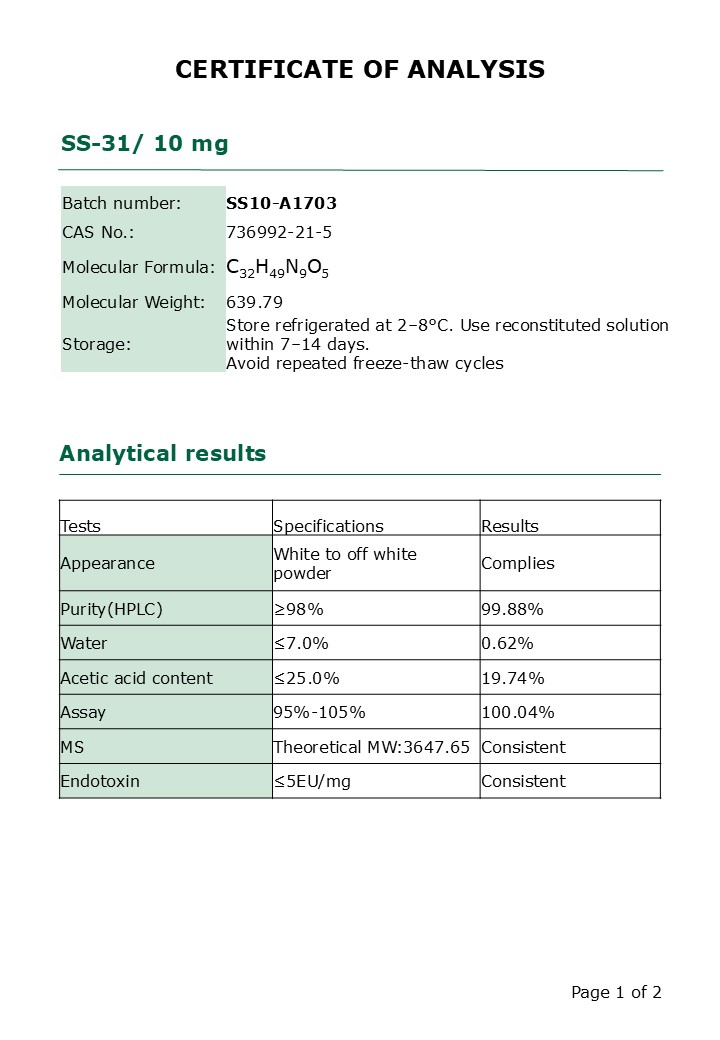
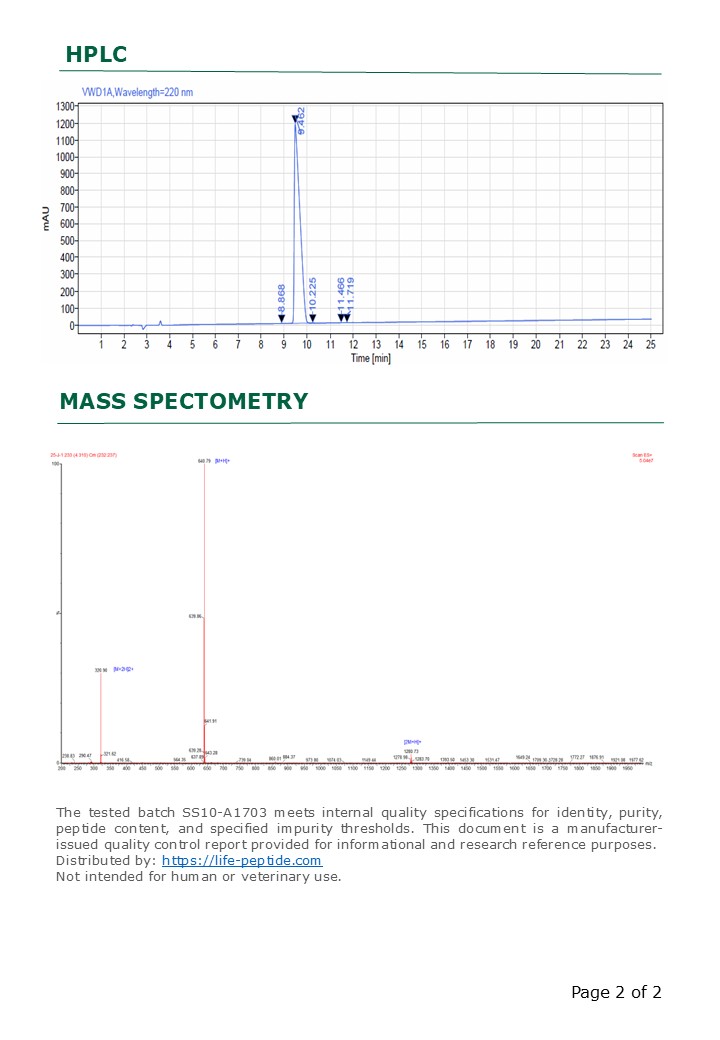
Κάθε παρτίδα ελέγχεται προσεκτικά στο εργαστήριο μετά την παραγωγή (μπορείτε να βρείτε το Πιστοποιητικό Ανάλυσης κάτω από τις εικόνες του προϊόντος).
Κατάψυξη-αποξήρανση (λυσόφιλη) για μέγιστη σταθερότητα και παρατεταμένη διάρκεια ζωής.
Σφραγισμένα σε αποστειρωμένες φιάλες, έτοιμα για ανασύσταση.
Καθαρότητα: ≥ 99,881 TP4T, ελεγμένη με HPLC.
Εμφάνιση: λευκή λυοφιλοποιημένη σκόνη
Μοριακός τύπος: C32H49N9O5
Μριακό βάρος: 639,79
Αποθήκευση: τα αφυδατωμένα σε ξηρή ψύξη, σφραγισμένα φιαλίδια φυλάσσονται καλύτερα συντήρηση στους 2–8°C, η οποία είναι η μέθοδος αποθήκευσης που επιβεβαιώθηκε από τον συνεργάτη παραγωγής μας και είναι κατάλληλη για έως και 24 μήνες. Η ψύξη προτιμάται επειδή ελαχιστοποιεί τους περιττούς κύκλους ψύξης-απόψυξης κατά τον συνήθη χειρισμό. Εάν απαιτείται σημαντικά μακροχρόνια αποθήκευση, τα σφραγισμένα λυοφιλοποιημένα φιαλίδια μπορούν επίσης να διατηρηθούν κατεψυγμένα. Μόλις ανασυσταθεί, αποθηκεύετε πάντα σε 2–8°C και μην καταψύχετε.
Ανα
Το SS-31 παρέχεται ως λυοφιλοποιημένο φιαλίδιο και πρέπει να χειρίζεται σύμφωνα με τις τυπικές διαδικασίες ανασυστατικής πεπτιδίων που είναι κατάλληλες για το ερευνητικό περιβάλλον. Πρέπει να ανασυσταθεί με Βακτηριοστατικό νερό πριν τη χρήση. Για να διατηρηθεί η δομική ακεραιότητα, προσθέστε το επιλεγμένο διαλύτη αργά στο εσωτερικό τοίχωμα του φιαλιδίου αντί απευθείας στη μάζα του πεπτιδίου, και αποφύγετε το έντονο ανακίνημα. Η απαλή περιστροφή είναι γενικά επαρκής μόλις το πεπτίδιο διαλυθεί πλήρως. Η τυπική εργαστηριακή πρακτική περιλαμβάνει επίσης την αναμονή των ψυχόμενων φιαλιδίων να φτάσουν σε θερμοκρασία δωματίου πριν από την ανασύσταση για να ελαχιστοποιηθεί η συμπύκνωση στο εσωτερικό του φιαλιδίου.
Για την επιλογή άλλων διαλυτών, σχεδιασμό συγκεντρώσεων και οδηγίες αποθήκευσης, δείτε το πλήρες Οδηγός Ανασύστασης Πεπτιδίων και Υπολογιστής Απεικόνισης.
Επιλεγμένες ερευνητικές αναφορές
- Γουάνγκ Υ. κ.ά. Ελαμιπρετίδη: Μια Ανασκόπηση της Δομής, του Μηχανισμού Δράσης και του Θεραπευτικού της Δυναμικού, Life, 2025
Μια ολοκληρωμένη ανασκόπηση που καλύπτει τον μηχανισμό του SS-31, τη σύνδεση με την καρδιολιπίνη, τη μιτοχονδριακή βιοενεργειακή και την κλινική ανάπτυξη.
- Λιου Υ, κ.ά. Εφαρμογή και έρευνα του νέου πεπτιδικού αντιοξειδωτικού με στόχευση τα μιτοχόνδρια SS-31 στην άμβλυνση της μιτοχονδριακής δυσλειτουργίας, Redox Report, 2024
Μια λεπτομερής ανασκόπηση των μηχανισμών του SS-31 και ανάλυση 18 κλινικών δοκιμών σε μιτοchondriakές διαταραχές και σχετικές ασθένειες.
- Chatfield KC, et al. Η ελαμιπρετίδη βελτιώνει τη μιτοχονdrιακή λειτουργία στην πάσχουσα ανθρώπινη καρδιά, JACC: Basic to Translational Science, 2019
Αποδεικνύει βελτιώσεις στη μιτοχondριακή λειτουργία στον ανθρώπινο καρδιακό ιστό και υποστηρίζει τον μηχανισμό του SS-31 που στοχεύει στην καρδιολιπίνη.
Συχνές Ερωτήσεις
Τι είναι το SS-31;
Το SS-31 (Ελαμιπρετίδη) είναι ένα συνθετικό τετραπεπτίδιο που στοχεύει επιλεκτικά τα μιτοχόνδρια συνδεόμενο με την καρδιολιπίνη εντός της εσωτερικής μιτοχondριακής μεμβράνης. Μελετάται ευρέως για την επιδιόρθωση των μιτοχondρίων, την παραγωγή κυτταρικής ενέργειας και την έρευνα για την υγιή γήρανση.
Γιατί το SS-31 αποκαλείται πεπτίδιο αποκατάστασης μιτοchondria;
Σε αντίθεση με τα περισσότερα πεπτίδια που ενεργοποιούν τους υποδοχείς της κυτταρικής επιφάνειας, το SS-31 στοχεύει απευθείας την εσωτερική μιτοχondριακή μεμβράνη. Η έρευνα δείχνει ότι βοηθά στη διατήρηση της μιτοχondριακής δομής, στη βελτίωση της βιοενεργειακής και στη μείωση του οξειδωτικού στρες στα δυσλειτουργικά μιτοχόνδρια.
Πώς διαφέρει το SS-31 από το MOTS-c;
Και τα δύο διερευνούν τη μιτοχondριακή βιολογία, αλλά το MOTS-c ρυθμίζει κυρίως τη μεταβολική σηματοδότηση, ενώ το SS-31 εστιάζει στη φυσική ακεραιότητα και την αποτελεσματικότητα του μιτοχονδριακού μηχανισμού παραγωγής ενέργειας. Διερευνούν συμπληρωματικές πτυχές της μιτοχονδριακής λειτουργίας.
Ποιoi τομείς έρευνας διερευνούν συνήθως το SS-31;
Η τρέχουσα έρευνα περιλαμβάνει τη μιτοχondριακή νόσο, την καρδιαγγειακή φυσιολογία, τη λειτουργία των σκελετικών μυών, τη νευροεκφύλιση, τη νεφρική βλάβη, τις μεταβολικές διαταραχές και την υγιή γήρανση.
Είναι το SS-31 ένα από τα πιο κλινικά μελετημένα πεπτίδια;
Ναι. Σε σύγκριση με πολλά ερευνητικά πεπτίδια, το SS-31 έχει προχωρήσει σε πολλαπλά προγράμματα κλινικών δοκιμών Φάσης 2 και Φάσης 3 σε διάφορες ασθένειες που σχετίζονται με τα μιτοχόνδρια, καθιστώντας το ένα από τα καλύτερα μελετημένα μιτοχονδριακά πεπτίδια που είναι προς το παρόν διαθέσιμα.
Μπορώ να αγοράσω SS-31 στην Ευρώπη;
Ναι. Αποστέλλουμε το SS-31 στις περισσότερες ευρωπαϊκές χώρες χρησιμοποιώντας αξιόπιστες υπηρεσίες ταχυμεταφορών. Οι διαθέσιμες μέθοδοι αποστολής και οι χρόνοι παράδοσης εμφανίζονται κατά την ολοκλήρωση της αγοράς με βάση τον προορισμό σας.
Αυτό το προϊόν προορίζεται για ανθρώπινη χρήση;
Το προϊόν με αριθμό SS-31 που διατίθεται από την Life Peptide προορίζεται αποκλειστικά για εργαστηριακή και αναλυτική έρευνα. Δεν προορίζεται για ανθρώπινη κατανάλωση, διάγνωση, θεραπεία ή πρόληψη ασθενειών.
Σχετικό ερευνητικό πλαίσιο
Το SS-31 συζητάται συχνά παράλληλα με άλλα ερευνητικά πεπτίδια που διεereυνώνται για την κυτταρική ενέργεια, την αποκατάσταση και την υγιή γήρανση, αν και το καθένα στοχεύει σε διαφορετικό επίπεδο της κυτταρικής φυσιολογίας.
MOTS-c – διερευνήθηκε για τη μεταβολική σηματοδότηση, την προσαρμογή στην άσκηση και τη μιτοχondριακή επικοινωνία.
Επιταλόν – σπούδασε τη βιολογία των τελομερών, τη ρύθμιση του κιρκάδιου ρυθμού και την υγιή γήρανση.
GHK-Cu – διερευνάται για την αποκατάσταση των ιστών, την αναδιαμόρφωση της εξωκυτταρικής μήτρας και τη αναγεννητική βιολογία.
ARA-290 – εστιάζει στην εγγενή αποκατάσταση των ιστών, τη φλεγμονώδη σηματοδότηση και την αναγέννηση των νεύρων.
CJC-1295 με DAC – διερευνήθηκε για παρατεταμένη σηματοδότηση αυξητικής ορμόνης και IGF-1 που υποστηρίζει την αναβολική φυσιολογία.
Παρόλο που αυτά τα πεπτίδια συνδέονται συχνά με την έρευνα για τη μακροζωία και την αποκατάσταση, το SS-31 ξεχωρίζει μέσω της άμεσης δράσης του στη μιτοχondριακή δομή και τη βιοενεργειακή, παρά μέσω ορμονικής ή μεταβολικής σηματοδότησης.
ΣΗΜΕΙΩΣΗ: Αυτό είναι μόνο για εκπαιδευτική αναφορά και δεν αποτελεί ιατρική συμβουλή.
Αποποίηση ευθύνης
Αυτό το προϊόν πωλείται αποκλειστικά για ερευνητικούς σκοπούς. Δεν προορίζεται για τη διάγνωση, θεραπεία, ίαση ή πρόληψη οποιασδήποτε ασθένειας. Ο αγοραστής αναλαμβάνει πλήρως την ευθύνη για τον σωστό χειρισμό και τη χρήση.