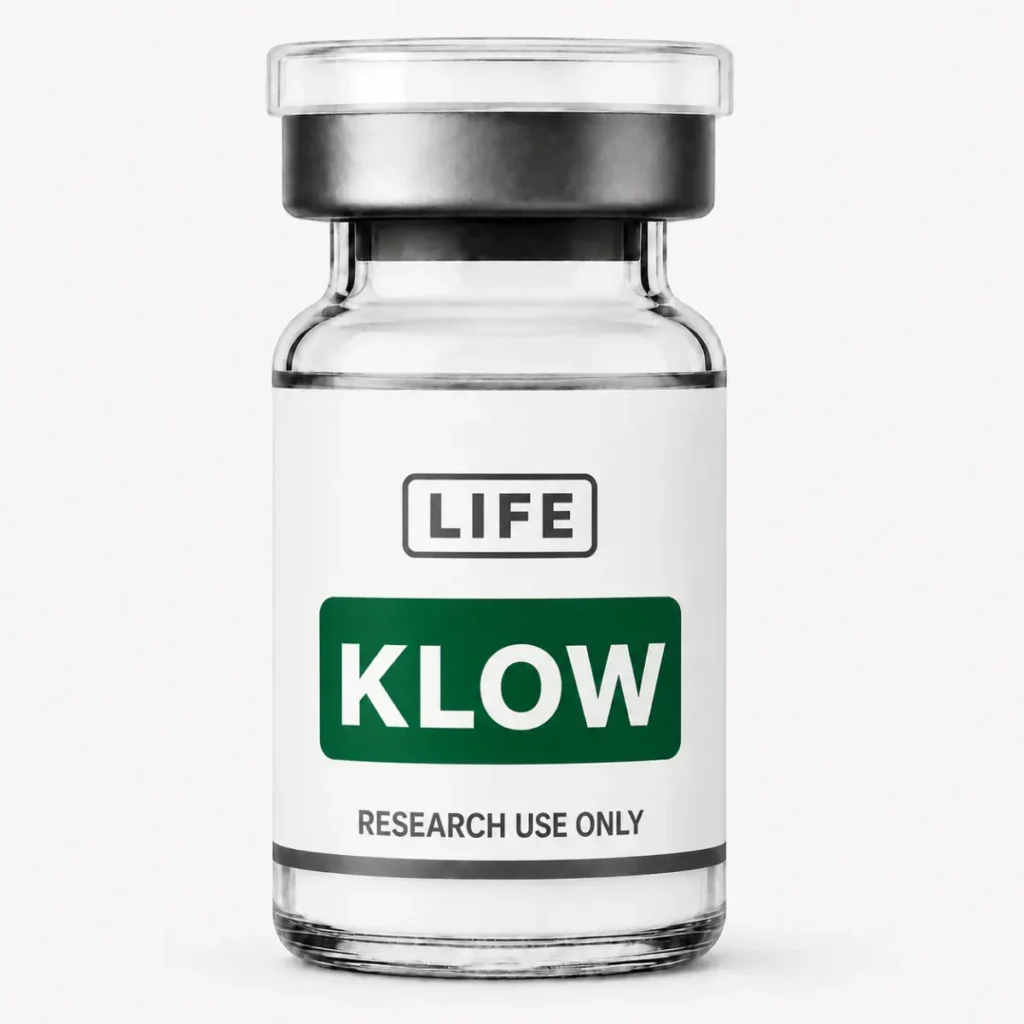
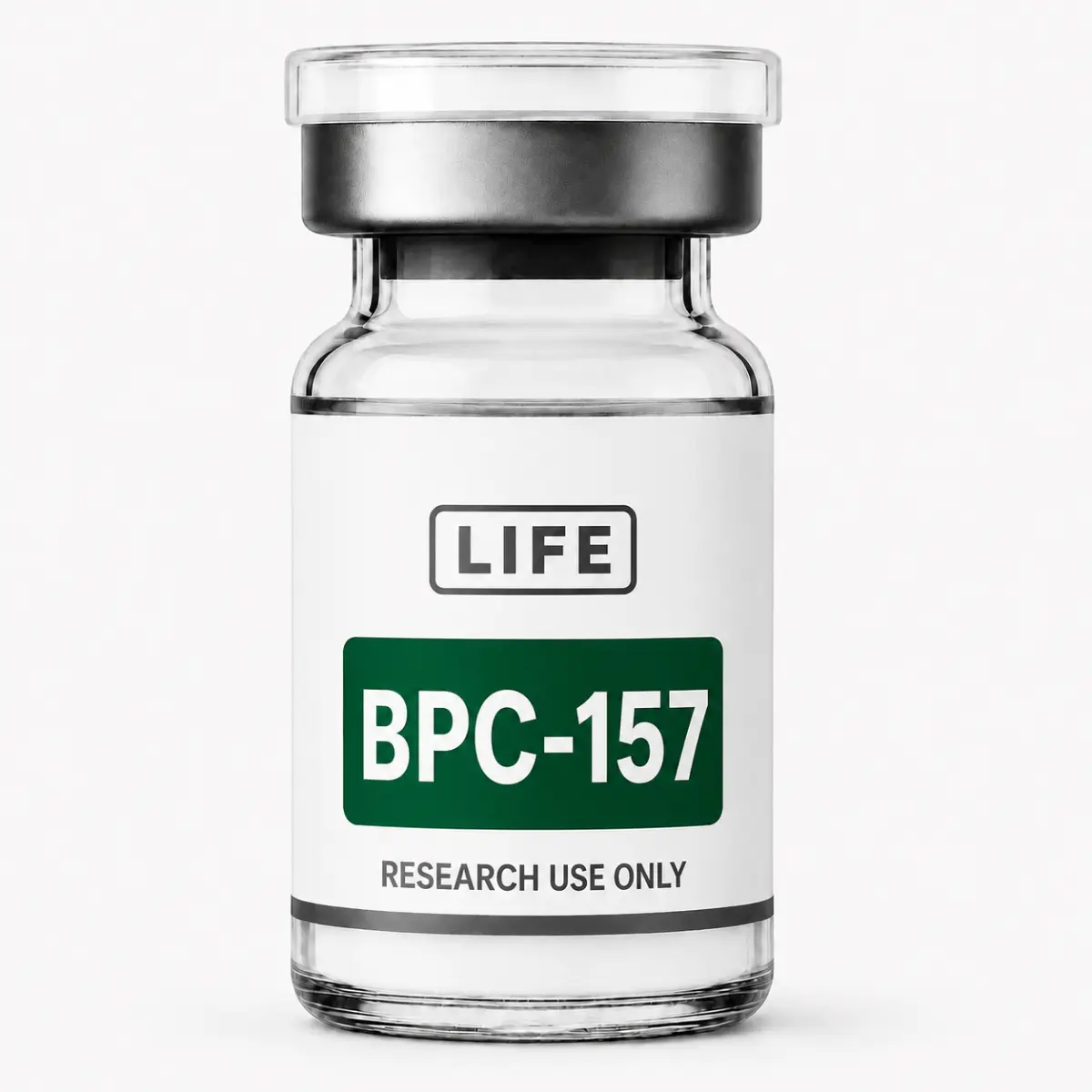
Περιγραφή
Το BPC-157 (Body Protection Compound-157) είναι ένα συνθετικό πεπτίδιο 15 αμινοξέων που προέρχεται από μια προστατευτική πρωτεΐνη φυσικά παρόν στο ανθρώipino γαστρικό υγρό. Περιγράφεται συχνά στη επιστημονική βιβλιογραφία ως ένα σταθερό γαστρικό πενταδεκαπεπτίδιο, αντικατοπτρίζοντας τόσο τη βιολογική του προέλευση όσο και την ασυνήθιστη σταθερότητά του υπό πειραματικές συνθήκες.
Σε αντίθεση με πολλά αναγεννητικά πεπτίδια που προέρχονται από ενδοκρινολογική ή ανοσολογική σηματοδότηση, το BPC-157 προέκυψε από τη γαστρεντερική έρευνα προτού μελετηθεί ευρέως στη βιολογία του μυοσκελετικού, του αγγειακού και του συνδετικού ιστού.
Σήμερα είναι ένα από τα πλέον εκτενώς μελετημένα πειραματικά πεπτίδια στην έρευνα της αναγέννησης, ιδιαίτερα σε μοντέλα που αφορούν επιδιόρθωση μαλακών μορίων, αγγειογένεση και κυτταροπροστατευτική σηματοδότηση.
Θέλετε να αγοράσετε BPC-157 στην Ευρώπη; Η Life Peptide προμηθεύει BPC-157 υψηλής καθαρότητας για εργαστηριακή έρευνα, με αξιόπιστη αποστολή σε όλη την ΕΕ.
Γιατί το BPC-157 έχει σημασία στην έρευνα στον τομέα της αναγεννητικής ιατρικής
Ένας από τους λόγους για τους οποίους το BPC-157 έχει προσελκύσει τόσο μεγάλο επιστημονικό ενδιαφέρον είναι το ευρύ φάσμα των ιστών και των βιολογικών συστημάτων που έχουν μελετηθεί στο πλαίσιο πειραματικών ερευνών. Σε δημοσιευμένες μελέτες έχει διερευνηθεί η δράση του BPC-157 σε σχέση με:
- αποκατάσταση τένοντα
- επούλωση των συνδέσμων
- βιολογία των σκελετικών μυών
- έρευνα σχετικά με τις αρθρώσεις και τον συνδετικό ιστό
- αγγειογένεση
- γαστρεντερική προστασία
- φλεγμονώδης σηματοδότηση
- οδoi μονοξειδίου του αζώτου
- έρευνα σχετικά με τα περιφερικά νεύρα
- αναγέννηση μαλακών ιστών
Επειδή οι τραυματισμοί σε τένοντες, συνδέσμους και μύες είναι συνηθισμένοι στους φυσικά δραστήριους πληθυσμούς, το BPC-157 έχει επίσης καταστεί ένα από τα πιο αναγνωρισμένα πεπτίδια στην αθλητική ιατρική και στην έρευνα για την αποκατάσταση του μυοσκελετικού συστήματος, αν και η πλειονότητα των δημοσιευμένων στοιχείων παραμένει σε προκλινικό στάδιο. Παρότι τα ευρήματα αυτά έχουν προκαλέσει σημαντικό ενδιαφέρον, τα περισσότερα από τα διαθέσιμα στοιχεία προέρχονται από εργαστηριακές και ζωικές μελέτες και όχι από μεγάλες κλινικές δοκιμές σε ανθρώπους.
Πώς λειτουργεί το BPC-157
Σε αντίθεση με τα πεπτίδια που ενεργοποιούν κυρίως έναν μόνο υποδοχέα, το BPC-157 φαίνεται να επηρεάζουν διάφορες αλληλένδετες βιολογικές οδούς που εμπλέκονται στην αποκατάσταση των ιστών. Σε δημοσιευμένες πειραματικές μελέτες έχει διερευνηθεί η σχέση της με:
- Αγγειογένεση
Σηματοδότηση του σχηματισμού νέων αιμοφόρων αγγείων και της αγγειακής αποκατάστασης.
- Οδοί μονοξειδίου του αζώτου
Ρύθμιση των συστημάτων του μονοξειδίου του αζώτου που εμπλέκονται στην αγγειακή λειτουργία και στην αποκατάσταση των ιστών.
- Βιολογία των τενόντων και του συνδετικού ιστού
Μελέτες έχουν διερευνήσει τη δραστηριότητα των ινοβλαστών, την οργάνωση του κολλαγόνου και τις αποκρίσεις επούλωσης των τόνων μετά από τραυματισμό.
- Κυτταροπροστασία
Οι έρευνες έχουν επίσης εξετάσει τις προστατευτικές επιδράσεις στους γαστρεντερικούς ιστούς, σε συνδυασμό με ευρύτερες κυτταρικές αντιδράσεις στο στρες.
Αντί να αποτελεί έναν μεμονωμένο μηχανισμό, το BPC-157 μελετάται γενικά ως πεπτίδιο που επηρεάζει ταυτόχρονα πολλαπλές πτυχές της αναγεννητικής βιολογίας.
Τι διακρίνει το BPC-157 από τα άλλα αναγεννητικά πεπτίδια;
Αν και τα BPC-157, TB-500 και GHK-Cu συχνά ομαδοποιούνται στο πλαίσιο της έρευνας για την αναγέννηση, αντιπροσωπεύουν διαφορετικές βιολογικές προσεγγίσεις.
ΒΡC-157
- Σταθερό γαστρικό πενταδεκαπεπτίδιο
- Έρευνα στον τομέα των μαλακών ιστών και του μυοσκελετικού συστήματος
- Βιολογία των τενόντων και των συνδέσμων
- Αγγειογένεση
- Σηματοδότηση μέσω του μονοξειδίου του αζώτου
- Κυτταροπροστασία
- Η βιολογία της θυμοσίνης β4
- Μετανάστευση κυττάρων
- Δυναμική της ακτίνης
- Αναδιαμόρφωση ιστών
- Ενδογενές πεπτίδιο χαλκού
- Βιολογία του κολλαγόνου
- Ρύθμιση εξωκυττάριου θεμελίου υλικού
- Φυσιολογία του δέρματος και του συνδετικού ιστού
Αντ' αυτού να ανταγωνίζονται άμεσα, αυτά τα πεπτίδια συζητούνται συχνά μαζί επειδή στοχεύουν διαφορετικές πτυχές της αποκατάστασης των ιστών και της αναγεννητικής βιολογίας.
Δημοσιευθείσες παρατηρήσεις ασφαλείας
Οι δημοσιευμένες πειραματικές μελέτες έχουν γενικά αναφέρει ευνοϊκά ευρήματα ασφάλειας για το BPC-157 στα εξεταζόμενα μοντέλα.
Ωστόσο, σε σύγκριση με την εκτεταμένη βιβλιογραφία εργαστηριακών μελετών, τα ανθρώπινα κλινικά δεδομένα παραμένουν περιορισμένα. Ως εκ τούτου, η τρέχουσα κατανόηση του BPC-157 βασίζεται κυρίως σε προκλινική έρευνα, και τα ευρήματα θα πρέπει να ερμηνεύονται εντός αυτού του πλαισίου.
Συχνές Ερωτήσεις
Τι είναι το BPC-157;
Το BPC-157 (Body Protection Compound-157) είναι ένα συνθετικό πεπτίδιο 15 αμινοξέων που προέρχεται από μια προστατευτική πρωτεΐνη η οποία υπάρχει φυσικά στο ανθρώπινο γαστρικό υγρό. Είναι ευρέως αναγνωρισμένο στην αναγεννητική έρευνα για μελέτες που αφορούν την αποκατάσταση ιστών, τη βιολογία τενόντων και συνδέσμων, την αγγειογένεση και τη γαστρεντερική προστασία. Λόγω του ευρέος πειραματικού ερευνητικού του προφίλ, το BPC-157 έχει γίνει ένα από τα πιο γνωστά πεπτίδια στη μυοσκελετική και αναγεννητική βιολογία.
Γιατί το BPC-157 αποκαλείται σταθερό γαστρικό πενταδεκαπεπτίδιο;
Ο όρος “σταθερό γαστρικό πενταδεκαπεπτίδιο” αντανακλά τόσο την προέλευση όσο και τη δομή του BPC-157. Προέρχεται από μια φυσικά απαντώμενη προστατευτική γαστρική πρωτεΐνη, περιέχει 15 αμινοξέα (εξ ου και πενταδεκαπεπτίδιο) και επιδεικνύει ασυνήθιστη σταθερότητα υπό πειραματικές συνθήκες σε σύγκριση με πολλά άλλα πεπτίδια. Αυτά τα χαρακτηριστικά το κατέστησαν αρχικά σημαντικό αντικείμενο στη γαστρεντερική έρευνα προτού η μελέτη του επεκταθεί στον συνδετικό ιστό και στη αναγεννητική βιολογία.
Γιατί το BPC-157 ερευνάται ευρέως στην έρευνα για τένοντες και συνδέσμους;
Δημοσιευμένες πειραματικές μελέτες έχουν διερευνήσει το BPC-157 σε πολυάριθμα μοντέλα που αφορούν τένοντες, συνδέσμους, μυς και άλλους συνδετικούς ιστούς. Ερευνητές έχουν εξερευνήσει τη σχέση του με την αγγειογένεση, τη δραστηριότητα των ινοblastών, την οργάνωση του κολλαγόνου και τις διαδικασίες αποκατάστασης των ιστών, καθιστώντας το ένα από τα πιο συζητημένα πεπτίδια στην έρευνα της μυοσκελετικής και αθλητικής ιατρικής. Παρόλο που αυτά τα ευρήματα έχουν κινήσει σημαντικό ενδιαφέρον, η πλειονότητα των διαθέσιμων αποδεικτικών στοιχείων προέρχεται από εργαστηριακές και ζωικές μελέτες και όχι από μεγάλες κλινικές δοκιμές σε ανθρώπους.
Πώς διαφέρει το BPC-157 από το TB-500;
Παρόλο που και τα δύο πεπτίδια συνδέονται συχνά με την αναγεννητική έρευνα, έχουν διαφορετικό βιολογικό υπόβαθρο. Το BPC-157 προήλθε από τη γαστρεντερική έρευνα και μελετάται συνήθως σε μοντέλα τενόντων, συνδέσμων, μυών, αγγείων και κυτταροπροστασίας. Το TB-500 σχετίζεται με τη βιολογία της θυμοσυνης β4 (Thymosin β4) και συνδέεται στενότερα με τη μετανάστευση κυττάρων, τη Δυναμική της ακτίνης και την αναδιαμόρφωση των ιστών. Αντί να αποτελούν άμεσες εναλλακτικές λύσεις, συχνά θεωρούνται συμπληρωματικά ερευνητικά εργαλεία.
Πώς διαφέρει το BPC-157 από το GHK-Cu;
Το GHK-Cu είναι ένα φυσικό τριπεπτίδιο που δεσμεύει τον χαλκό, το οποίο έχει μελετηθεί κυρίως σε σχέση με τη ρύθμιση της εξωκυτταρικής μήτρας, τη βιολογία του κολλαγόνου, τη φυσιολογία του δέρματος και την αναδιαμόρφωση του συνδετικού ιστού. Το BPC-157, σε σύγκριση, μελετάται συχνότερα σε θέματα αποκατάστασης μαλακών ιστών, έρευνας του μυοσκελετικού συστήματος, προστασίας του γαστρεντερικού συστήματος και αγγειογένεσης. Αν και αμφότερα εμφανίζονται στην αναγεννητική έρευνα, στοχεύουν σε διαφορετικές βιολογικές οδούς και ερευνητικά ερωτήματα.
Ποιoi ερευνητικοί τομείς εξετάζουν συνήθως το BPC-157;
Η δημοisιευμένη έρευνα έχει εξετάσει το BPC-157 σε ένα ευρύ φάσμα πειραματικών μοντέλων, συμπεριλαμβανομένης της βιολογίας των τενόντων και των συνδέσμων, των σκελετικών μυών, της γαστρεντερικής προστασίας, της αγγειογένεσης, της έρευνας για τα περιφερειακά νεύρα, της σηματοδότησης του μονοξειδίου του αζώτου, των φλεγμονωδών οδών και της αποκατάστασης του συνδετικού ιστού. Αυτό το ευρύ ερευνητικό προφίλ είναι ένας από τους λόγους για τους οποίους το BPC-157 παραμένει ένα από τα πιο ευρέως αναγνωρισμένα αναγεννητικά πεπτίδια.
Μπορώ να αγοράσω το BPC-157 στην Ευρώπη;
Ναι. Αποστέλλουμε BPC-157 στις περισσότερες ευρωπαϊκές χώρες χρησιμοποιώντας αξιόπιστες υπηρεσίες ταχυμεταφορών. Οι διαθέσιμες μέθοδοι αποστολής και οι χρόνοι παράδοσης εμφανίζονται κατά την ολοκλήρωση της παραγγελίας με βάση τον προορισμό σας.
Αυτό το προϊόν προορίζεται για ανθρώπινη χρήση;
Το προϊόν BPC-157 που διατίθεται από την Life Peptide προορίζεται αποκλειστικά για εργαστηριακή και αναλυτική έρευνα. Δεν προορίζεται για ανθρώπινη κατανάλωση, διάγνωση, θεραπεία ή πρόληψη ασθενειών. Οποιαδήποτε αναφορά σε δημοσιευμένες μελέτες σε αυτή τη σελίδα περιλαμβάνεται με σκοπό τη σύνοψη της τρέχουσας επιστημονικής βιβλιογραφίας σχετικά με το μόριο BPC-157 και δεν πρέπει να ερμηνεύεται ως οδηγίες ή συστάσεις χρήσης.
Χαρακτηριστικά προϊόντος
Εφαρμογή: εργαστηριακή και αναλυτική έρευνα
Χρήση περιορισμού: όχι για ανθρώπινη κατανάλωση· όχι για ιατρική, κτηνιατρική ή καλλυντική χρήση
Παράγεται σε εγκαταστάσεις που συμμορφώνονται με τις ΟGMP υπό αυστηρά πρωτόκολλα ΠΚ.
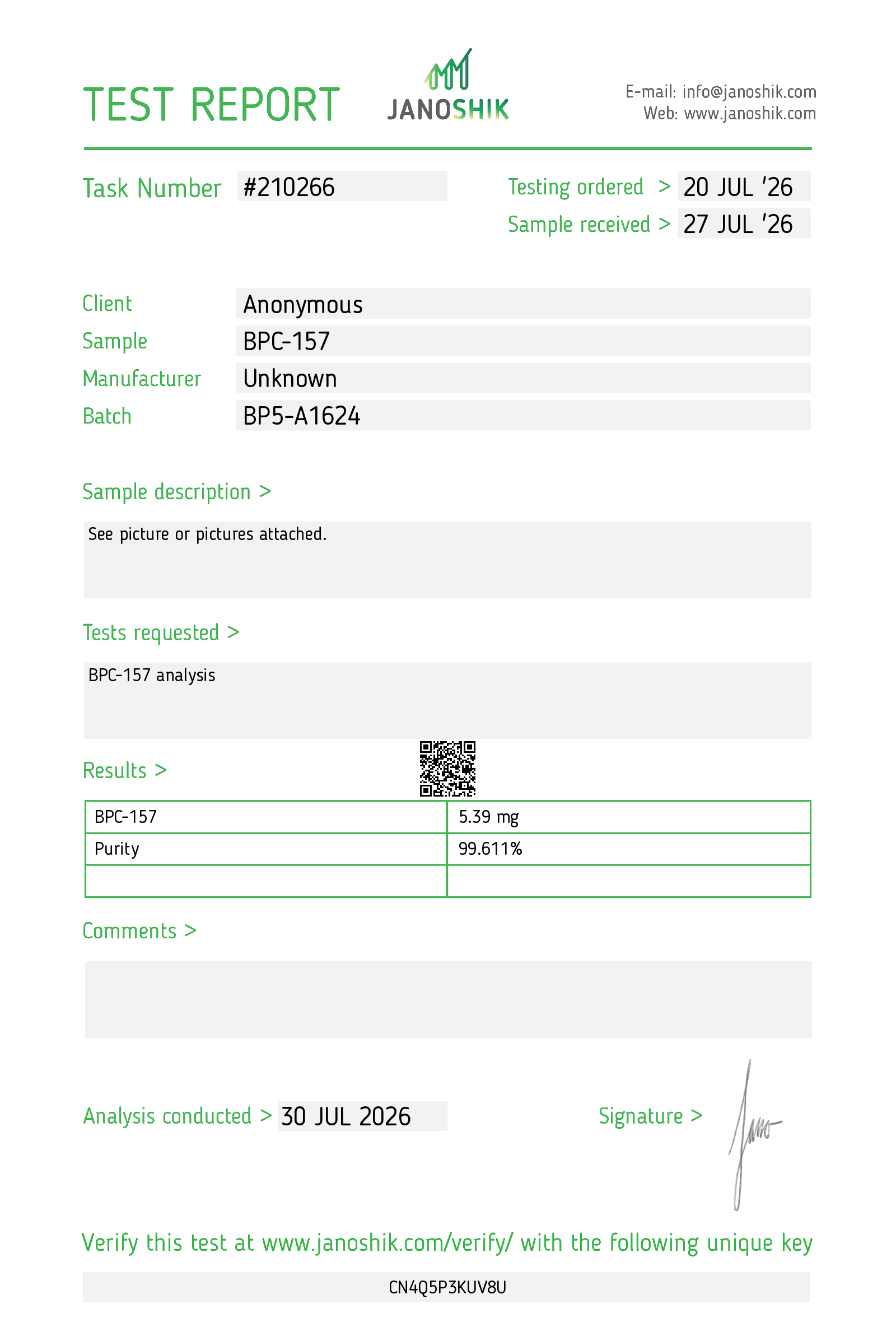
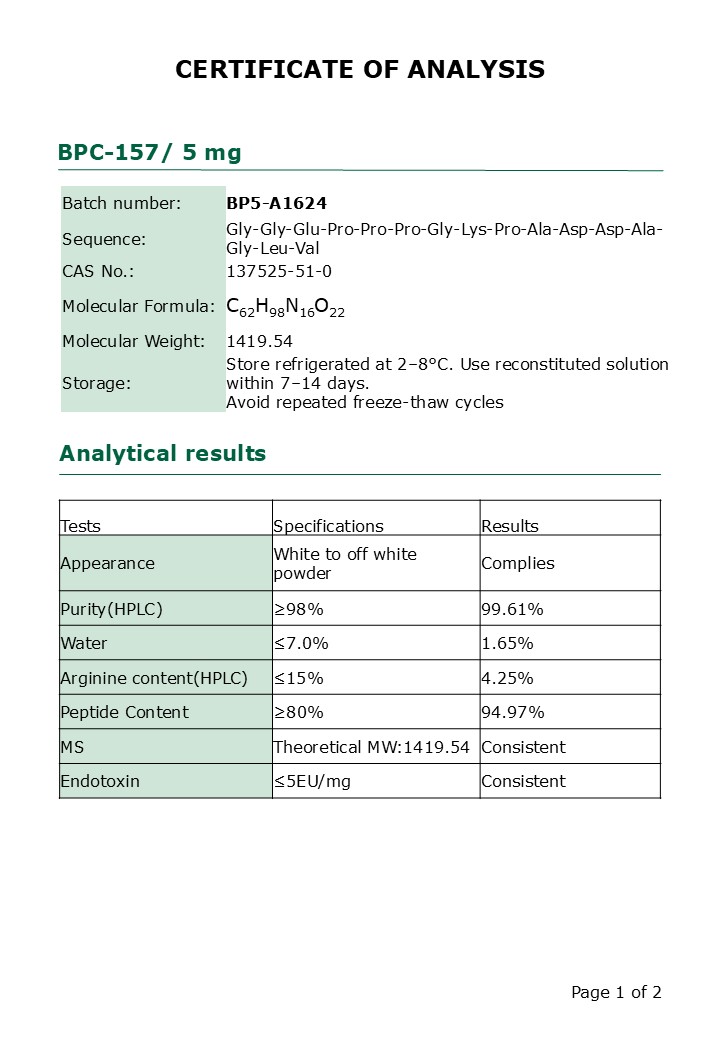
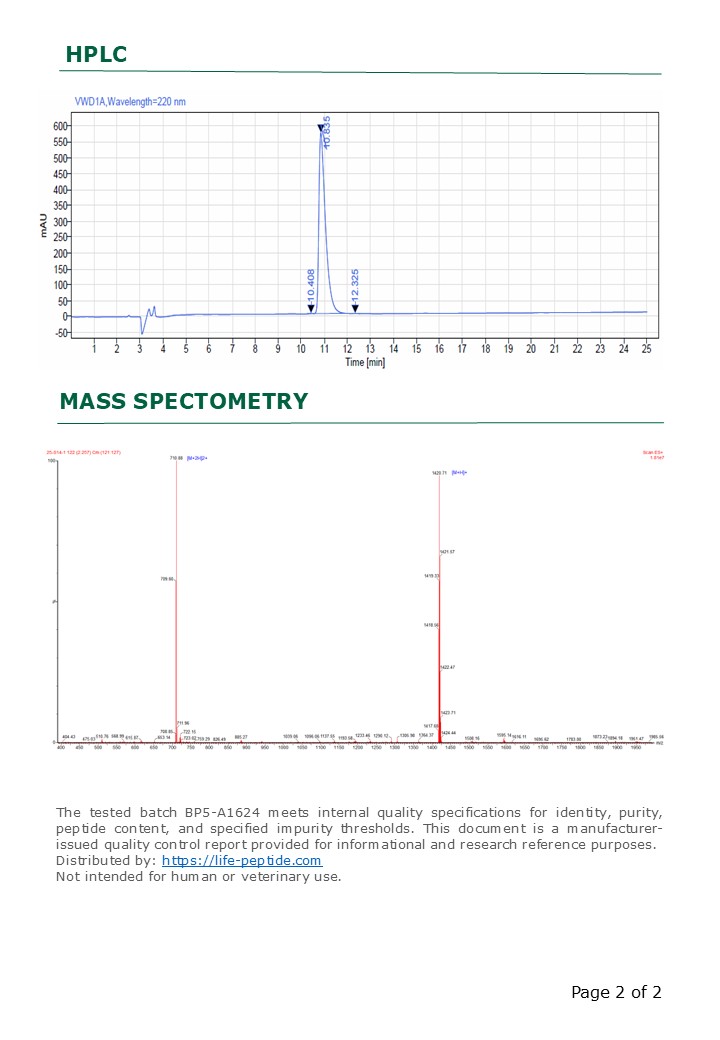
Κάθε παρτίδα ελέγχεται προσεκτικά στο εργαστήριο μετά την παραγωγή (μπορείτε να βρείτε το Πιστοποιητικό Ανάλυσης κάτω από τις εικόνες του προϊόντος).
Κατάψυξη-αποξήρανση (λυσόφιλη) για μέγιστη σταθερότητα και παρατεταμένη διάρκεια ζωής.
Σφραγισμένα σε αποστειρωμένες φιάλες, έτοιμα για ανασύσταση.
Καθαρότητα: ≥99,61 TP4T, δοκιμασμένο με HPLC, ανεξάρτητα επιβεβαιωμένη υψηλή καθαρότητα και συνοχή ταυτότητας. Δείτε την επαλήθευση από τρίτους.
Εμφάνιση: Λυοφιλοποιημένη λευκή/υπόλευκη σκόνη
Μοριακός τύπος: C62H98N16O22
Μριακό βάρος: 1419.54 g/mol
Ακολουθία: Gly-Glu-Pro-Pro-Pro-Gly-Lys-Pro-Ala-Asp-Asp-Ala-Gly-Leu-Val
Αποθήκευση: τα αφυδατωμένα σε ξηρή ψύξη, σφραγισμένα φιαλίδια φυλάσσονται καλύτερα συντήρηση στους 2–8°C, η οποία είναι η μέθοδος αποθήκευσης που επιβεβαιώθηκε από τον συνεργάτη παραγωγής μας και είναι κατάλληλη για έως και 24 μήνες. Η ψύξη προτιμάται επειδή ελαχιστοποιεί τους περιττούς κύκλους ψύξης-απόψυξης κατά τον συνήθη χειρισμό. Εάν απαιτείται σημαντικά μακροχρόνια αποθήκευση, τα σφραγισμένα λυοφιλοποιημένα φιαλίδια μπορούν επίσης να διατηρηθούν κατεψυγμένα. Μόλις ανασυσταθεί, αποθηκεύετε πάντα σε 2–8°C και μην καταψύχετε.
Ανα
Το BPC-157 παρέχεται ως λυοφιλοποιημένο φιαλίδιο και πρέπει να χειρίζεται σύμφωνα με τις τυπικές διαδικασίες ανασυστασης πεπτιδίων που είναι κατάλληλες για το ερευνητικό περιβάλλον. Πρέπει να ανασυσταθεί με Βακτηριοστατικό νερό πριν τη χρήση. Για να διατηρηθεί η δομική ακεραιότητα, προσθέστε το επιλεγμένο διαλύτη αργά στο εσωτερικό τοίχωμα του φιαλιδίου αντί απευθείας στη μάζα του πεπτιδίου, και αποφύγετε το έντονο ανακίνημα. Η απαλή περιστροφή είναι γενικά επαρκής μόλις το πεπτίδιο διαλυθεί πλήρως. Η τυπική εργαστηριακή πρακτική περιλαμβάνει επίσης την αναμονή των ψυχόμενων φιαλιδίων να φτάσουν σε θερμοκρασία δωματίου πριν από την ανασύσταση για να ελαχιστοποιηθεί η συμπύκνωση στο εσωτερικό του φιαλιδίου.
Για την επιλογή άλλων διαλυτών, σχεδιασμό συγκεντρώσεων και οδηγίες αποθήκευσης, δείτε το πλήρες Οδηγός Ανασύστασης Πεπτιδίων και Υπολογιστής Απεικόνισης.
Βασικές δημοσιευμένες μελέτες
- Σικίριτς Π, Σάιβερθ Σ, Ρούκμαν Ρ, κ.ά. Σταθερό Γαστρικό Πενταδεκαπεπτίδιο BPC 157: Νέα Θεραπεία στον Γαστρεντερικό Σωλήνα. Current Pharmaceutical Design, 2011.
Μια σημαντική ανασκόπηση που περιγράφει την προέλευση του BPC-157, την αξιοσημείωτη σταθερότητά του και το ευρύ φάσμα γαστρεντερικής και αναγεννητικής έρευνας που έχει διεξαχθεί για το πεπτίδιο.
- Τσανγκ CH, Τσάι WC, Σου YM, κ.ά. Το πενταδεκαπεπτίδιο BPC 157 Ενισχύει την Έκφραση του Υποδοχέα Αυξητικής Ορμόνης σε Τενοντοϊνοβλάστες. Molecular Medicine Reports, 2014.
Μια βασική μηχανιστική μελέτη που δείχνει αυξημένη έκφραση του υποδοχέα αυξητικής ορμόνης και δραστηριότητα των ινοβλαστών, συμβάλλοντας στην ερμηνεία της σπουδαιότητας του BPC-157 στη βιολογία των τενόντων.
- Cerovecki T, Bojanic I, Brcic L, et al. PΤο δεκαπενταπεπτίδιο BPC 157 βελτιώνει την επούλωση των συνδέσμων σε ένα πειραματικό μοντέλο. Journal of Orthopaedic Research, 2010.
Μία από τις ορόσημο μυοσκελετικές μελέτες που διερευνούν την επούλωση των συνδέσμων, τη βιομηχανική αποκατάσταση και την αναγέννηση του συνδετικού ιστού.
- Σικιρίτς Π, Σέιγουερθ Σ, Γκραμπάρεβιτς Ζ, κ.ά. Το Σταθερό Γαστρικό Πενταδεκαπεπτίδιο BPC 157 και ο Άξονας Εγκεφάλου–Εντέρου. Current Neuropharmacology, 2016.
Μια εμπεριστατωμένη ανασκόπηση που διερευνά το BPC-157 στην γαστρεντερική, νευρολογική, αγγειακή και αναγεννητική έρευνα.
Σχετικό ερευνητικό πλαίσιο
Το BPC-157 αποτελεί μέρος της ερευνητικής κατηγορίας πεπτιδίων που σχετίζονται με την επούλωση και την αποκατάσταση ιστών, τα οποία μελετώνται συνήθως σε μοντέλα που αφορούν την αγγειογένεση, την αναδιαμόρφωση της εξωκυττάριας μήτρας και την αποκατάσταση μαλακών μορίων. Για ευρύτερο πλαίσιο σχετικά με τα αναγεννητικά μονοπάτια και τις αλληλεπιδράσεις των ενώσεων, δείτε το Οδηγός έρευνας για την επούλωση και την ανάρρωση.
Περιηγηθείτε σε όλες τις ενώσεις στο Κατηγορία έρευνας: Θεραπεία & ανάρρωση.
Οι ερευνητές που διερευνούν την αποκατάσταση ιστών πολλαπλών οδών και τα αναγεννητικά σηματα μπορεί επίσης να εξετάσουν:
Θυμοσίνη b4 (TB-500) (πλήρης αλληλουχία) – ρύθμιση της ακτίνης και κυτταρική μετανάστευση
GHK-Cu (συμπλεγμα πεπτιδιων χαλκου) – αναδιαμόρφωση ιστών και οδοί που σχετίζονται με το κολλαγόνο
ΚΠΒ (θραύσμα α-MSH) – πεπτιδικό θραύσμα που ρυθμίζει τη φλεγμονή
ARA-290 — έρευνα για την προστασία των ιστών από την ερυθropoϊτίνη
ΣΣ-31 – διερευνήθηκε για τη μιτοχονδριακή λειτουργία και την κυτταρική παραγωγή ενέργειας.
ΣΗΜΕΙΩΣΗ: Αυτό γίνεται αποκλειστικά για εκπαιδευτικούς σκοπούς και δεν συνιστά ιατρική συμβουλή.
Αποποίηση ευθύνης:
Αυτό το προϊόν πωλείται αποκλειστικά για ερευνητικούς σκοπούς. Δεν προορίζεται για τη διάγνωση, θεραπεία, ίαση ή πρόληψη οποιασδήποτε ασθένειας. Ο αγοραστής αναλαμβάνει πλήρως την ευθύνη για τον σωστό χειρισμό και τη χρήση.