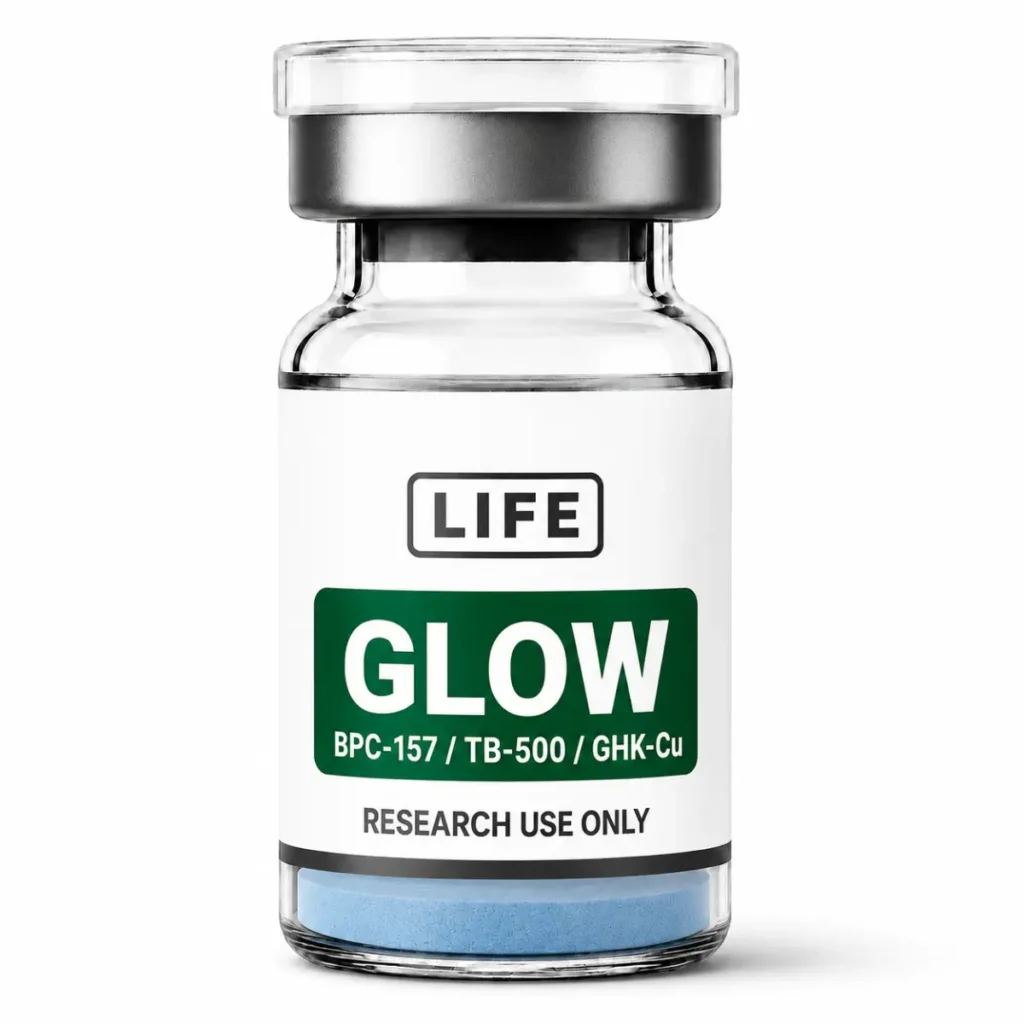
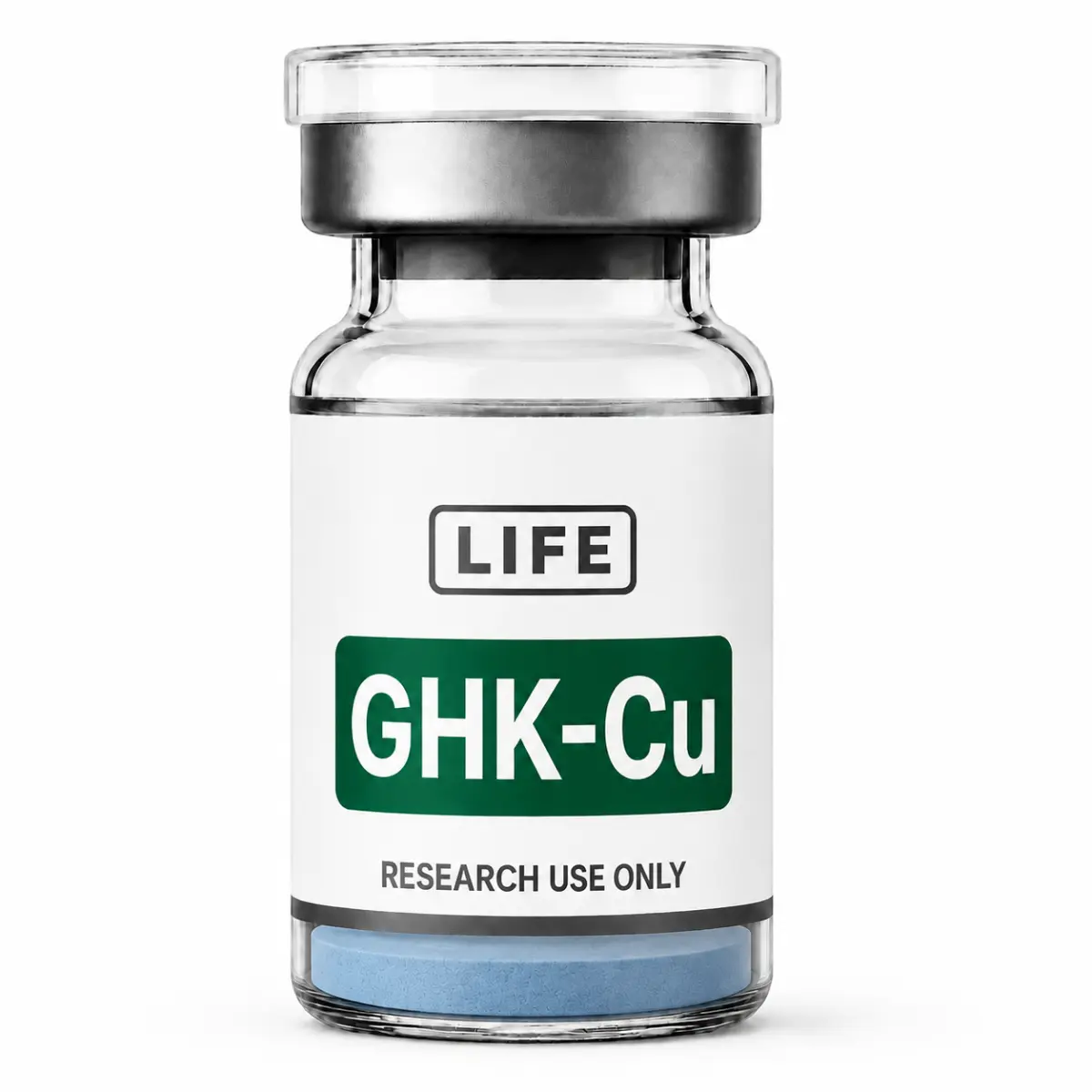
Descripción
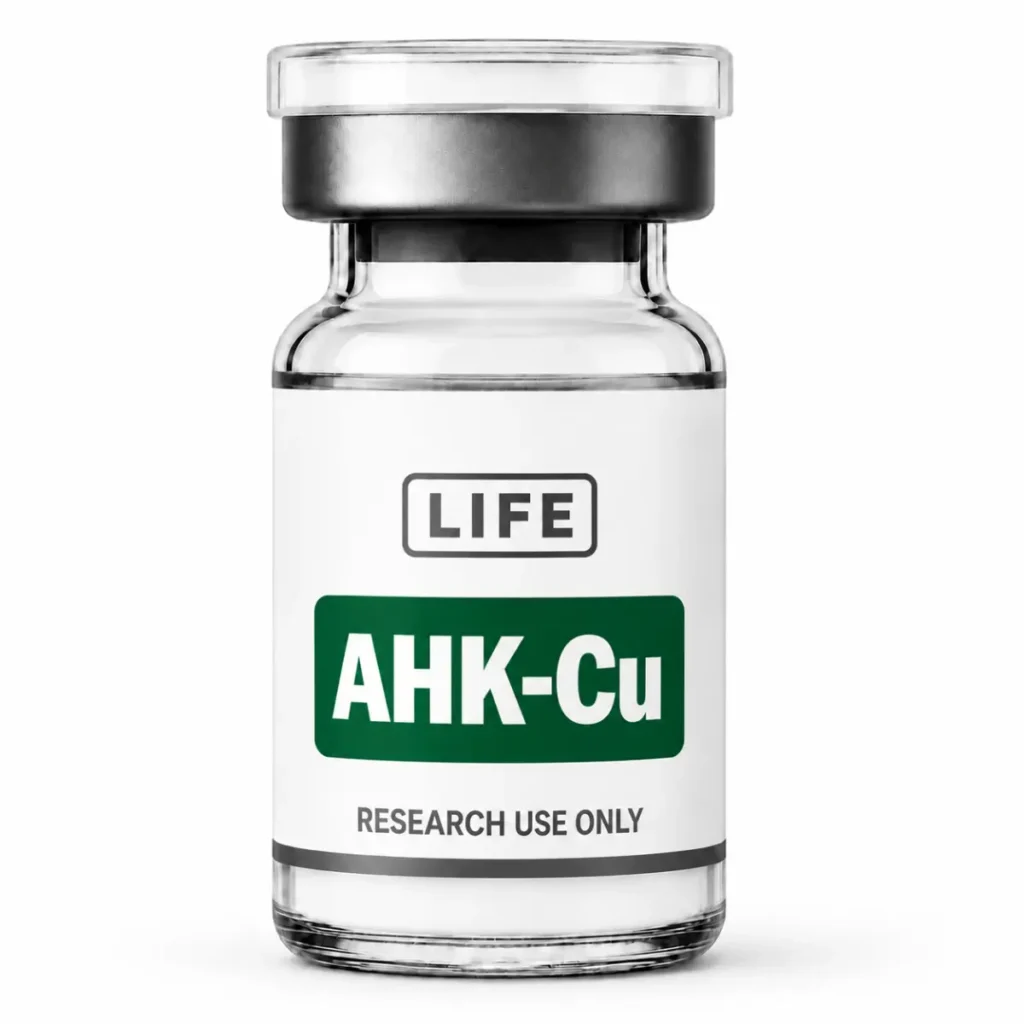
GHK-Cu en Europa | ¿Quieres comprar GHK-Cu en Europa? Life Peptide suministra GHK-Cu de alta pureza para investigación de laboratorio, con un servicio de envío fiable a toda la UE.
El GHK-Cu (complejo de cobre de glicil-L-histidil-L-lisina) es un tripéptido que se une al cobre de forma natural identificado por primera vez en el plasma humano. A diferencia de los péptidos señalizadores sintéticos desarrollados específicamente para la investigación terapéutica, el GHK es una molécula endógena cuya concentración disminuye gradualmente con la edad, lo que lo convierte en un tema importante en los estudios de regeneración de tejidos y biología del envejecimiento.
Al unirse a iones de cobre, el GHK-Cu participa en numerosos procesos biológicos relacionados con el mantenimiento de la matriz extracelular, la comunicación celular, la reparación de heridas y la regulación de la inflamación. Debido a su amplia actividad biológica, se ha convertido en uno de los más estudiados péptidos regenerativos en dermatología, biología del tejido conectivo y medicina regenerativa.
Por qué GHK-Cu importa en la investigación regenerativa
El GHK-Cu ha atraído un interés científico continuo porque influye en múltiples vías biológicas en lugar de actuar a través de un solo receptor.
Estudios publicados han investigado el GHK-Cu en relación con:
- remodelación de la matriz extracelular
- biología del colágeno y la elastina
- curación de heridas
- angiogénesis
- señalización inflamatoria
- respuestas antioxidantes
- fisiología de la piel
- biología del folículo piloso
- regeneración de tejido conectivo
A diferencia del BPC-157 o el TB-500, que se discuten principalmente en relación con modelos de lesiones y reparación, el GHK-Cu se investiga frecuentemente como un regulador más amplio de la remodelación tisular y la homeostasis celular.
Cómo funciona el GHK-Cu
El GHK-Cu actúa principalmente a través de la regulación de la expresión génica en lugar de la activación de una única vía receptora.
La investigación publicada ha demostrado que GHK-Cu puede influir en numerosos genes involucrado en:
- síntesis de matriz extracelular
- recambio de colágeno
- remodelación tisular
- señalización inflamatoria
- defensa antioxidante
- vías relacionadas con células madre
- angiogénesis
La unión del cobre es esencial para esta actividad biológica, lo que permite que el GHK-Cu participe en procesos de señalización celular asociados con el mantenimiento y la reparación de tejidos.
A diferencia de muchos péptidos que se dirigen a un receptor específico, el GHK-Cu funciona como péptido señal multifuncional, lo que explica el rango inusualmente amplio de áreas de investigación en las que ha sido investigado.
Investigación humana y preclínica publicada
GHK-Cu ha sido investigado tanto en el laboratorio como en estudios en humanos durante varias décadas. Los estudios publicados han examinado su papel en:
- regeneración de la piel
- curación de heridas
- reparación del tejido conectivo
- biología del cabello
- modulación inflamatoria
- remodelación de la matriz extracelular
Las investigaciones clínicas en humanos se han centrado principalmente en aplicaciones dermatológicas, mientras que la investigación de laboratorio a gran escala ha explorado los mecanismos moleculares implicados en la reparación de tejidos, la síntesis de colágeno y la regulación génica.
A diferencia de otros péptidos en investigación más recientes, el GHK-Cu se beneficia de una historia de investigación relativamente larga en múltiples disciplinas.
Observaciones de seguridad publicadas
Los estudios clínicos publicados que involucran GHK-Cu tópico generalmente han reportado una tolerabilidad local favorable. Dado que gran parte de la literatura humana disponible se relaciona con formulaciones dermatológicas y cosméticas en lugar de la investigación de péptidos inyectables, los hallazgos de seguridad deben interpretarse en el contexto de la formulación específica investigada.
En general, el GHK-Cu sigue siendo uno de los péptidos regenerativos mejor caracterizados en términos de actividad biológica y compatibilidad tisular.
Por qué el GHK-Cu difiere de otros péptidos regenerativos
Aunque el GHK-Cu, el BPC-157 y el TB-500 a menudo se agrupan como péptidos de investigación regenerativa, representan enfoques biológicos distintos y no son directamente intercambiables.
GHK-Cu es más conocido por su amplia influencia en biología de la matriz extracelular, recambio de colágeno y regulación génica. En lugar de actuar a través de un único receptor o vía de señalización, la investigación publicada sugiere que el GHK-Cu puede influir en numerosos genes implicados en la remodelación de tejidos, respuestas inflamatorias, defensa antioxidante y reparación celular. Esta actividad a nivel de sistema lo ha convertido en un modelo importante para estudios de fisiología de la piel, biología del tejido conectivo y señalización regenerativa.
BPC-157 se investiga principalmente en modelos de reparación de tejidos blandos, angiogénesis y citoprotección. La investigación se ha centrado en tejidos de tendones, ligamentos, músculos y gastrointestinales, con un interés particular en sus efectos sobre las señales de reparación de tejidos y las respuestas vasculares tras una lesión.
TB-500 (un fragmento de investigación derivado de la timosina beta-4) se estudia principalmente por su papel en migración celular, dinámica de actina y remodelación tisular. A diferencia del GHK-Cu, que está estrechamente asociado con la regulación de la matriz extracelular, el TB-500 se investiga a menudo por cómo las células se mueven, organizan y responden durante la reparación de tejidos.
Para los investigadores, la elección entre estos péptidos depende menos de cuál es “mejor” y más de la pregunta biológica que se está investigando. El GHK-Cu se selecciona con frecuencia cuando el enfoque está en biología del colágeno, fisiología de la piel, remodelación de la matriz extracelular o señalización regenerativa amplia, mientras que BPC-157 y TB-500 se exploran más comúnmente en modelos experimentales centrados en respuesta a la lesión, reparación de tejidos y mecanismos de recuperación.
Dado que estos mecanismos son complementarios en lugar de mutuamente excluyentes, la investigación publicada a menudo analiza estos péptidos juntos al explorar diferentes aspectos de la biología regenerativa.
Características del producto
Aplicación: investigación de laboratorio y análisis
Uso restringido: no apto para consumo humano; no apto para uso médico, veterinario o cosmético
Producido en instalaciones que cumplen con GMP bajo estrictos protocolos de control de calidad.
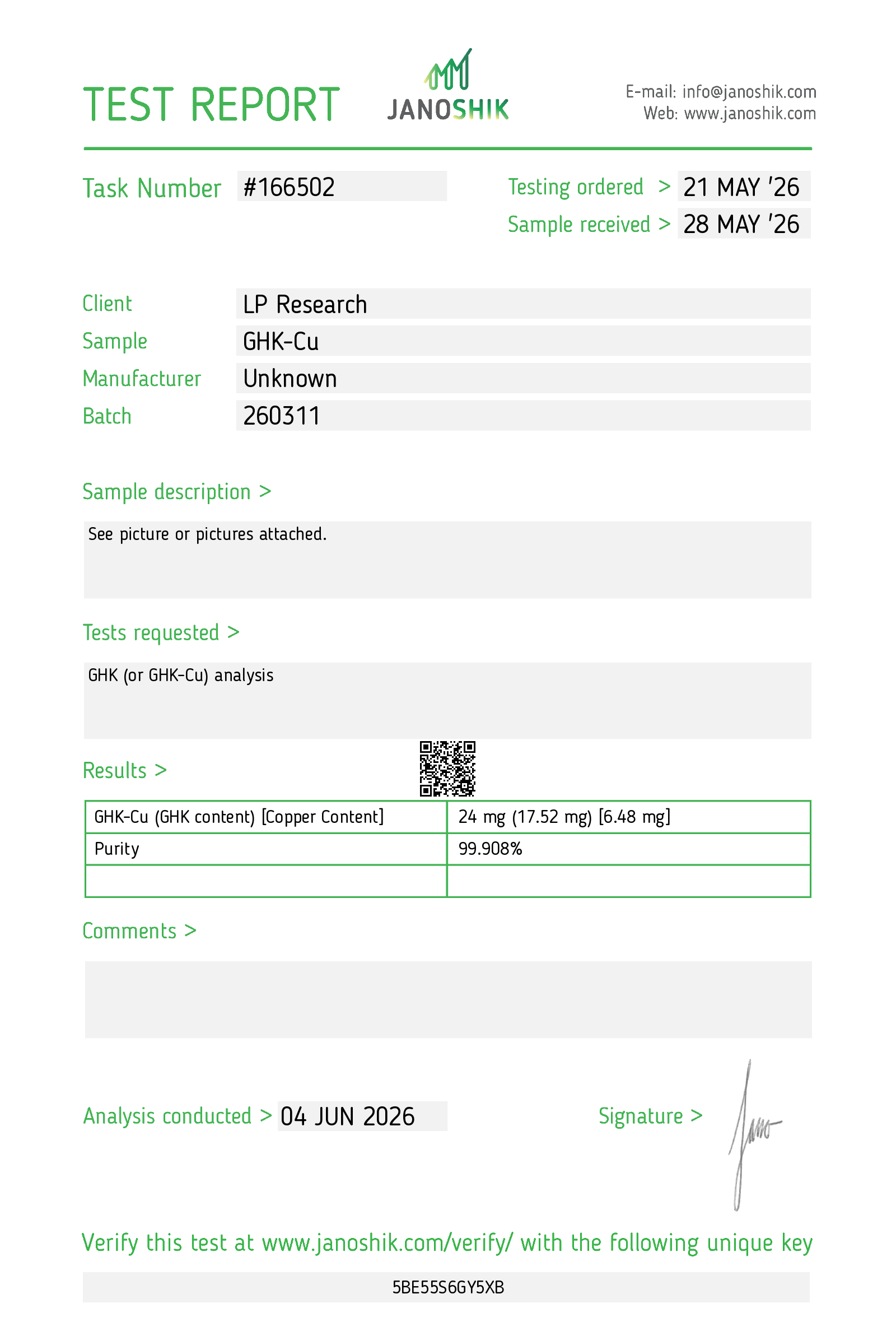
Cada lote se somete a pruebas de laboratorio exhaustivas después de la producción (puede encontrar el Certificado de Análisis debajo de las imágenes del producto).
Liofilizado (liofilizado) para máxima estabilidad y vida útil prolongada.
Sellado en viales estériles, listo para la reconstitución.
Pureza: ≥ 99%. Analizado mediante HPLC; alta pureza y consistencia en la identidad confirmadas de forma independiente. Verificar terceros.
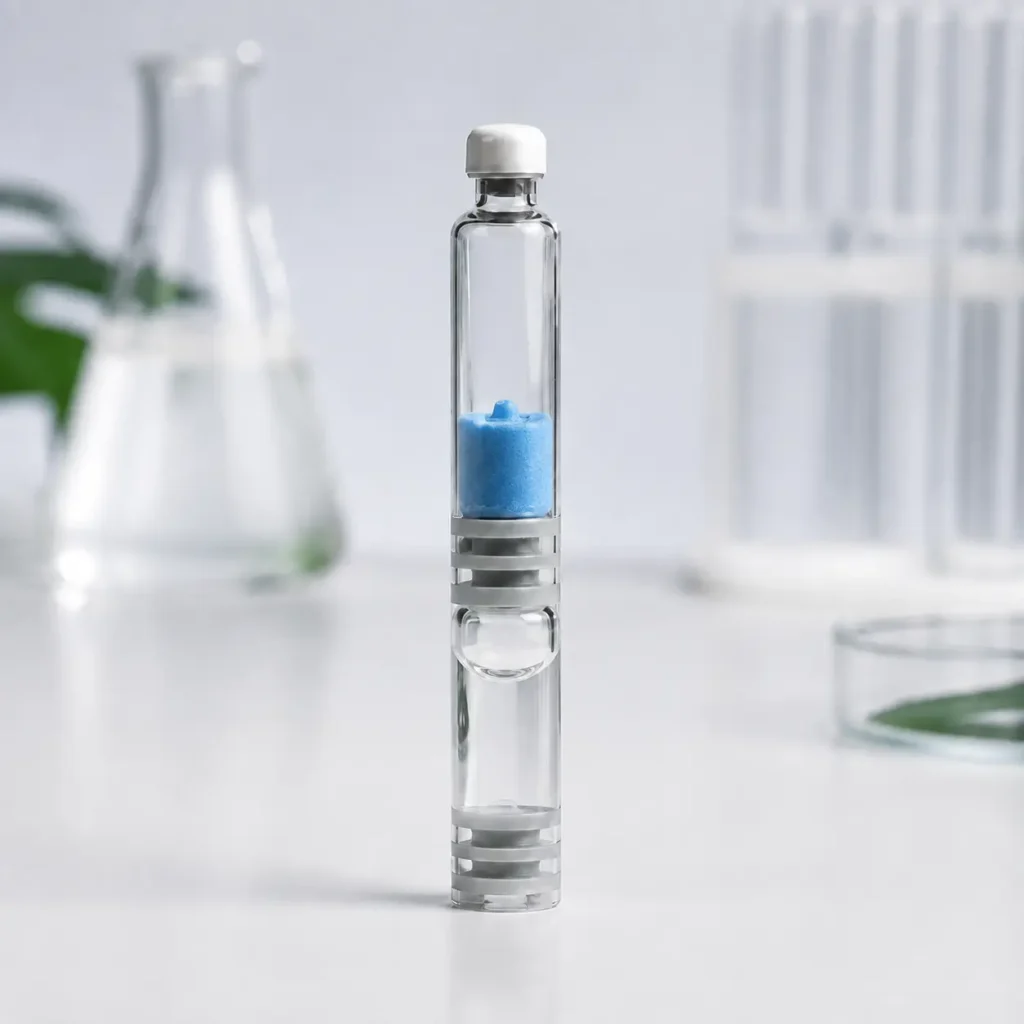
Aspecto: Polvo liofilizado azul
Fórmula molecular: C14H22CuN6O4
Peso molecular: 403,9 g/mol
Secuencia: Glicina-Histidina-Lisina:Cobre (1:1, ácido acético)
Almacenamiento: los viales liofilizados sin abrir se almacenan mejor refrigerar a 2–8 °C, que es el método de almacenamiento confirmado por nuestro socio de fabricación y adecuado para hasta 24 meses. Se prefiere la refrigeración porque minimiza los ciclos innecesarios de congelación y descongelación durante la manipulación rutinaria. Si se requiere un almacenamiento a más largo plazo, los viales liofilizados sin abrir también pueden mantenerse congelados. Una vez reconstituidos, almacene siempre a 2–8 °C y no congele.
Reconstitución y manipulación
GHK-Cu se suministra como un péptido liofilizado y debe reconstituirse utilizando procedimientos de laboratorio apropiados adecuados para la investigación de péptidos. Para ayudar a preservar la integridad estructural, agregue el disolvente elegido lentamente contra la pared interior del vial en lugar de directamente sobre el "pastel" de péptido, y evite la agitación vigorosa. La agitación suave es generalmente suficiente una vez que el péptido se ha disuelto completamente. La práctica estándar de laboratorio también incluye permitir que los viales refrigerados alcancen la temperatura ambiente antes de la reconstitución para minimizar la condensación dentro del vial.
Con mayor frecuencia, el GHK-Cu se reconstituye con agua bacteriostática antes de usar. Para la filtración estéril de soluciones de péptidos se aconseja usar un Filtro de jeringa de PES de 0,22 µm. Para otras selecciones de solventes, planificación de concentraciones y orientación de almacenamiento, consulte la guía completa Guía de Reconstitución de Péptidos y Calculadora de Reconstitución.. Estos recursos explican cómo los diferentes volúmenes de reconstitución afectan la concentración de trabajo sin recomendar protocolos de investigación.
Estudios clave publicados
- Pickart L. El tripéptido humano GHK y la remodelación tisular. Revista de Ciencia de Biomateriales, 2008.
El trabajo fundamental que describe el descubrimiento biológico del GHK y su papel en la reparación de tejidos y la señalización regenerativa.
- Pickart L, Margolina A. Acciones Regenerativas y Protectoras del Péptido GHK-Cu a la Luz de Nuevos Datos Genéticos. International Journal of Molecular Sciences, 2018.
Una de las revisiones emblemáticas que demuestra amplios efectos reguladores génicos asociados con el GHK-Cu.
- Pickart L. El tripéptido humano GHK-Cu en la prevención del estrés oxidativo y la reparación de tejidos. BioMed Research International, 2015.
Una visión general completa de la biología regenerativa, la reparación de heridas y los mecanismos antioxidantes.
- Finkley MB et al. Péptido de Cobre y Investigación de Regeneración de la Piel. Journal of Cosmetic Dermatology, 2015.
Trabajo clínico que examina el GHK-Cu en investigación dermatológica y fisiología de la piel.
Preguntas Frecuentes
¿Qué es el GHK-Cu?
El GHK-Cu es un tripéptido quelante de cobre de ocurrencia natural presente en el plasma y los tejidos humanos. Ha sido investigado extensamente por su papel en la remodelación de tejidos, la biología de la matriz extracelular y la señalización regenerativa.
¿Cómo se diferencia GHK-Cu de BPC-157?
El BPC-157 se investiga principalmente en modelos de lesiones y relacionados con tendones, mientras que el GHK-Cu tiene un perfil de investigación mucho más amplio que involucra la biología del colágeno, la remodelación de la matriz extracelular, la curación de heridas, la fisiología de la piel y la regulación génica.
¿En qué se diferencia el GHK-Cu del TB-500?
TB-500 se asocia principalmente con la migración celular y la dinámica de actina, mientras que GHK-Cu es reconocido por sus efectos en la biología de la matriz extracelular, el metabolismo del colágeno y la señalización regenerativa.
El cobre es importante en GHK-Cu porque es el **componente activo** del tripéptido GHK-Cu. El GHK-Cu (péptido de cobre) se compone de tres aminoácidos (glicina, histidina y lisina) unidos a un ion de cobre. El cobre desempeña un papel crucial en las siguientes funciones:* **Acción antioxidante:** El cobre es un cofactor para varias enzimas antioxidantes que ayudan a proteger las células del daño causado por los radicales libres. * **Reparación de tejidos:** Se cree que el cobre promueve la síntesis de colágeno y elastina, proteínas esenciales para la salud y la elasticidad de la piel. * **Reducción de la inflamación:** El cobre puede tener propiedades antiinflamatorias, ayudando a calmar la piel y reducir el enrojecimiento. * **Crecimiento celular:** El cobre es necesario para el metabolismo celular y la proliferación, lo que puede contribuir a la cicatrización de heridas y la regeneración de la piel.En resumen, el cobre es el ion metálico que confiere al péptido GHK sus propiedades biológicas y terapéuticas, especialmente en el contexto del cuidado de la piel y la reparación de tejidos.
El cobre es una parte esencial del complejo GHK-Cu. Al unirse al cobre, el péptido puede participar en múltiples procesos biológicos relacionados con la comunicación celular, la reparación de tejidos y el mantenimiento de la matriz extracelular.
Las áreas de investigación que comúnmente investigan el GHK-Cu incluyen
Los estudios publicados han investigado el GHK-Cu en la remodelación de tejidos, la fisiología de la piel, la cicatrización de heridas, la biología del tejido conectivo, la angiogénesis, la señalización inflamatoria, la biología capilar y la medicina regenerativa.
¿Puedo comprar GHK-Cu en Europa?
Sí. Enviamos GHK-Cu a la mayoría de los países europeos utilizando servicios de mensajería fiables. Los métodos de envío y los tiempos de entrega disponibles se muestran durante el proceso de pago según su destino.
¿Está este producto destinado al uso humano?
No. GHK-Cu suministrado por LIFE Peptide se proporciona estrictamente para investigación de laboratorio y analítica. No está destinado al consumo humano, diagnóstico, tratamiento o prevención de enfermedades. Cualquier discusión de estudios publicados resume la literatura científica relacionada con la molécula GHK-Cu en lugar del uso previsto de este producto.
Contexto de investigación relacionado
GHK-Cu es parte de la clase de investigación de péptidos regenerativos y remodelación de la matriz extracelular (MEC), comúnmente estudiado en modelos que involucran síntesis de colágeno, regeneración de tejidos y regulación de metaloproteinasas. Para un contexto más amplio sobre angiogénesis, vías de reparación de tejidos e interacciones multi-compuesto, consulte nuestro Guía de investigación sobre curación y recuperación.
Para la comparación mecanicista con péptidos citoprotectores y moduladores de migración, ver nuestro Péptidos de cobre y guía de reparación de tejidos.
Explorar todos los compuestos en el Categoría de investigación de curación y recuperación.
Los investigadores que investigan la remodelación tisular, la señalización de reparación y la regeneración multirruta también pueden examinar:
BPC-157 – péptido asociado a las vías de angiogénesis y reparación de tejidos
Tb4 (Secuencia completa de timosina beta-4, también conocida como TB500) – regulación de actina y migración celular
KPV (fragmento de α-MSH) – fragmento peptídico que modula la inflamación
SS-31 – investigado para la función mitocondrial y la producción de energía celular.
NOTA: Esto es solo para fines de referencia educativa y no constituye asesoramiento médico.
Descargo de responsabilidad
Este producto se vende únicamente para fines de investigación. No está destinado a diagnosticar, tratar, curar ni prevenir ninguna enfermedad. El comprador asume toda la responsabilidad por su manipulación y uso adecuados.