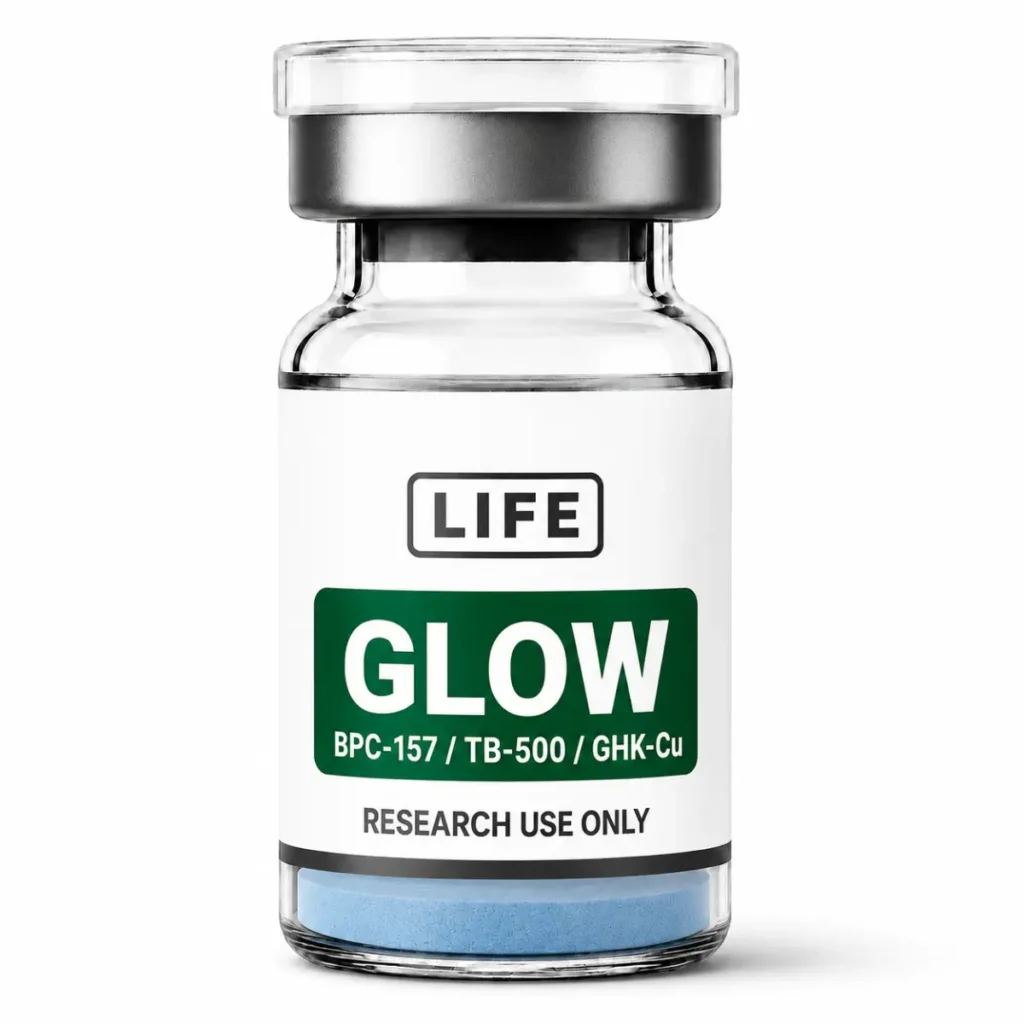
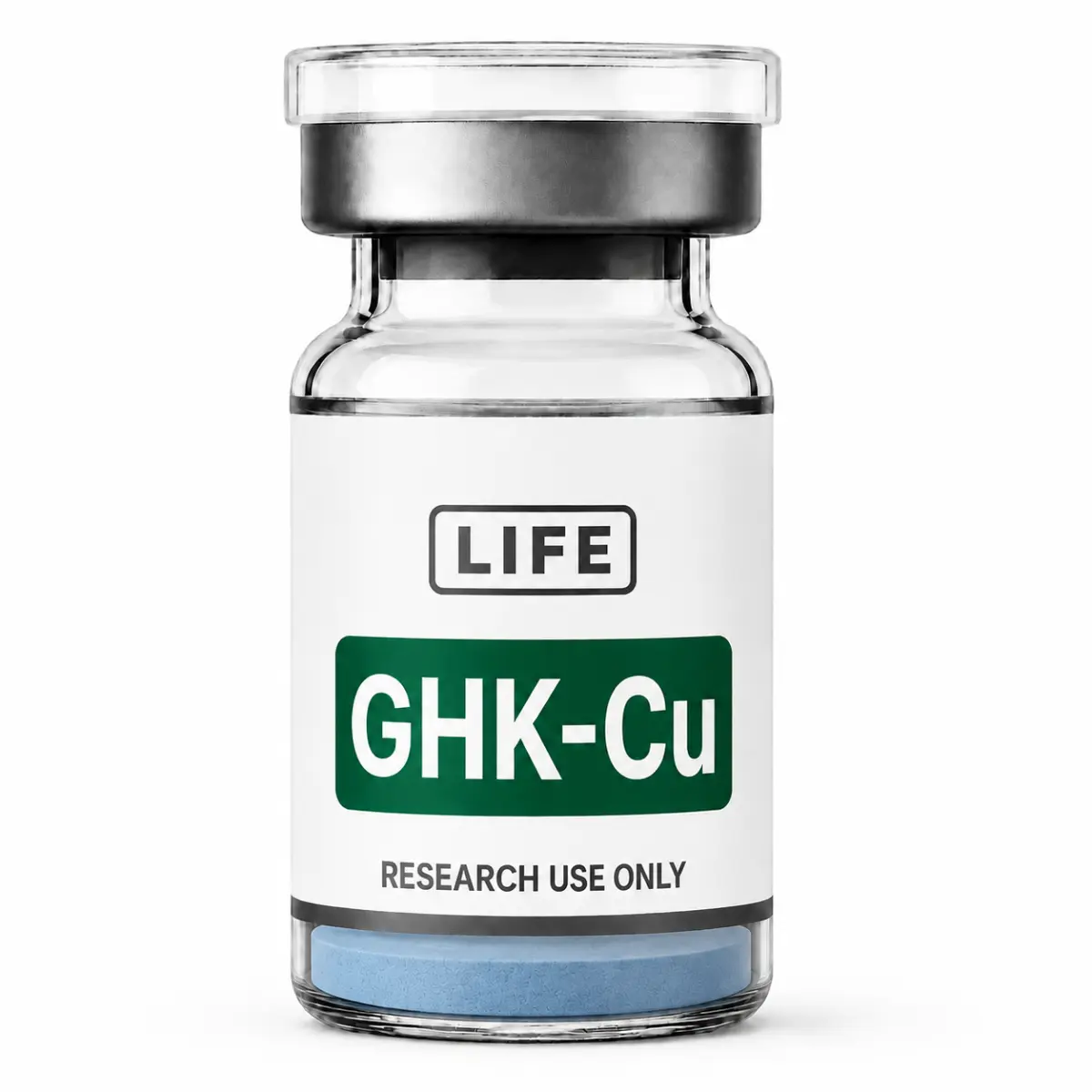
Description
GHK-Cu in Europe | Looking to buy GHK-Cu in Europe? LIFE Peptide supplies high-purity GHK-Cu for laboratory research with reliable EU-wide shipping.
GHK-Cu (glycyl-L-histidyl-L-lysine copper complex) is a naturally occurring copper-binding tripeptide first identified in human plasma. Unlike synthetic signalling peptides developed specifically for therapeutic research, GHK is an endogenous molecule whose concentration gradually declines with age, making it an important subject in studies of tissue regeneration and ageing biology.
By binding copper ions, GHK-Cu participates in numerous biological processes related to extracellular matrix maintenance, cellular communication, wound repair and inflammatory regulation. Because of its broad biological activity, it has become one of the best-studied regenerative peptides in dermatology, connective tissue biology and regenerative medicine research.
Why GHK-Cu matters in regenerative research
GHK-Cu has attracted sustained scientific interest because it influences multiple biological pathways rather than acting through a single receptor.
Published studies have investigated GHK-Cu in relation to:
- extracellular matrix remodelling
- collagen and elastin biology
- wound healing
- angiogenesis
- inflammatory signalling
- antioxidant responses
- skin physiology
- hair follicle biology
- connective tissue regeneration
Unlike BPC-157 or TB-500, which are primarily discussed in relation to injury and repair models, GHK-Cu is frequently investigated as a broader regulator of tissue remodelling and cellular homeostasis.
How GHK-Cu works
GHK-Cu acts primarily through regulation of gene expression rather than activation of a single receptor pathway.
Published research has demonstrated that GHK-Cu can influence numerous genes involved in:
- extracellular matrix synthesis
- collagen turnover
- tissue remodelling
- inflammatory signalling
- antioxidant defence
- stem-cell related pathways
- angiogenesis
Copper binding is essential to this biological activity, allowing GHK-Cu to participate in cellular signalling processes associated with tissue maintenance and repair.
Unlike many peptides that target a specific receptor, GHK-Cu functions as a multifunctional signalling peptide, which explains the unusually broad range of research areas in which it has been investigated.
Published human and preclinical research
GHK-Cu has been investigated in both laboratory and human research for several decades. Published studies have examined its role in:
- skin regeneration
- wound healing
- connective tissue repair
- hair biology
- inflammatory modulation
- extracellular matrix remodelling
Human clinical investigations have primarily focused on dermatological applications, while extensive laboratory research has explored molecular mechanisms involved in tissue repair, collagen synthesis and gene regulation.
Unlike newer investigational peptides, GHK-Cu benefits from a relatively long research history across multiple disciplines.
Published safety observations
Published clinical studies involving topical GHK-Cu have generally reported favourable local tolerability. Because much of the available human literature relates to dermatological and cosmetic formulations rather than injectable peptide research, safety findings should be interpreted within the context of the specific formulation investigated.
Overall, GHK-Cu remains one of the best-characterised regenerative peptides in terms of biological activity and tissue compatibility.
Why GHK-Cu differs from other regenerative peptides
Although GHK-Cu, BPC-157 and TB-500 are often grouped together as regenerative research peptides, they represent distinct biological approaches and are not directly interchangeable.
GHK-Cu is best known for its broad influence on extracellular matrix biology, collagen turnover and gene regulation. Rather than acting through a single receptor or signalling pathway, published research suggests that GHK-Cu can influence numerous genes involved in tissue remodelling, inflammatory responses, antioxidant defence and cellular repair. This systems-level activity has made it an important model for studies of skin physiology, connective tissue biology and regenerative signalling.
BPC-157 is primarily investigated in models of soft tissue repair, angiogenesis and cytoprotection. Research has focused on tendon, ligament, muscle and gastrointestinal tissues, with particular interest in its effects on tissue repair signalling and vascular responses following injury.
TB-500 (a research fragment derived from Thymosin Beta-4) is studied mainly for its role in cell migration, actin dynamics and tissue remodelling. Unlike GHK-Cu, which is closely associated with extracellular matrix regulation, TB-500 is often investigated for how cells move, organise and respond during tissue repair.
For researchers, the choice between these peptides depends less on which is “better” and more on the biological question being investigated. GHK-Cu is frequently selected when the focus is on collagen biology, skin physiology, extracellular matrix remodelling or broad regenerative signalling, while BPC-157 and TB-500 are more commonly explored in experimental models centred on injury response, tissue repair and recovery mechanisms.
Because these mechanisms are complementary rather than mutually exclusive, published research often discusses these peptides together when exploring different aspects of regenerative biology.
Product characteristics
Application: laboratory and analytical research
Use restriction: not for human consumption; not for medical, veterinary or cosmetic use
Produced in GMP-compliant facilities under strict QC protocols.
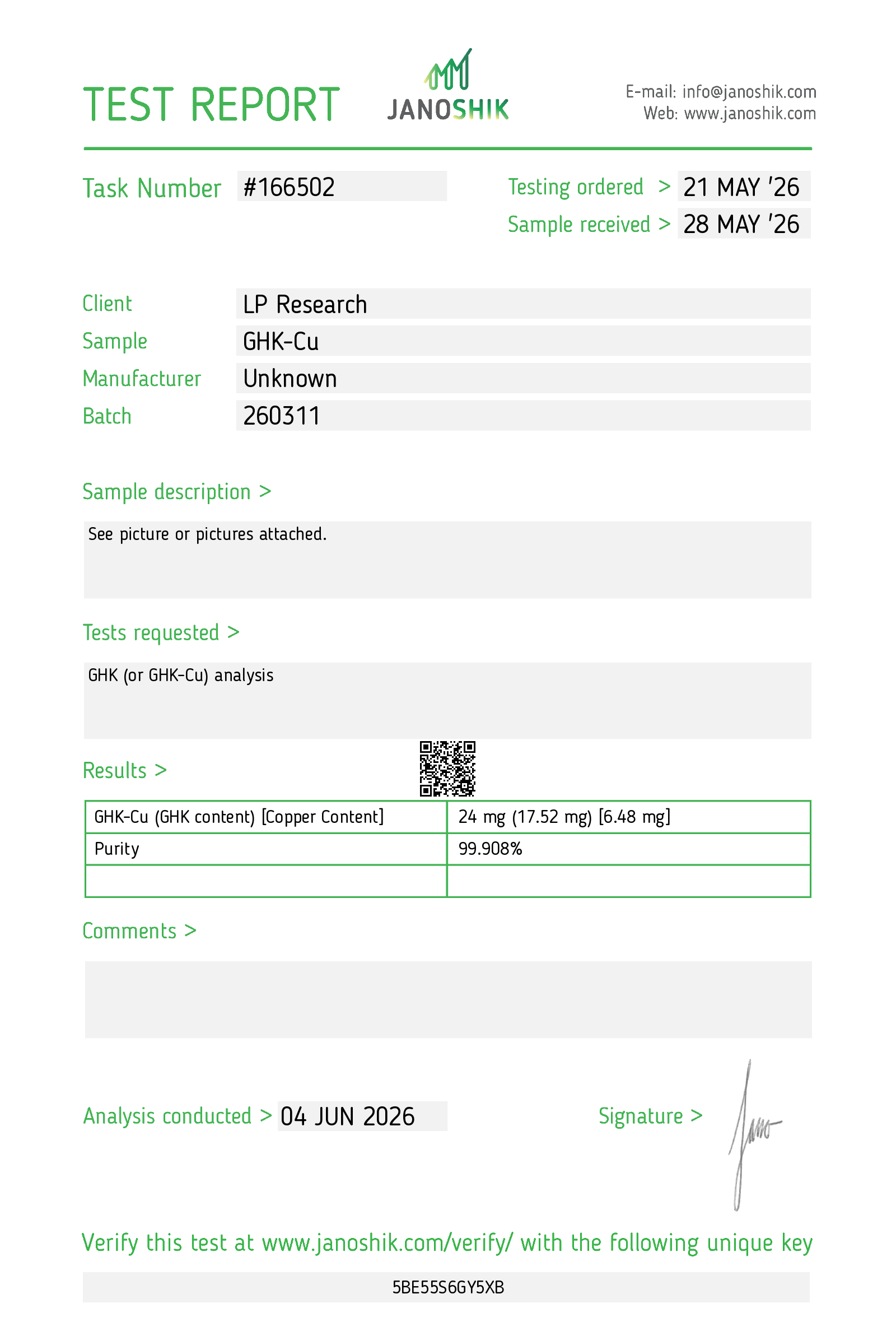
Each batch carefully lab tested after production (you can find Certificate of Analysis under product pictures).
Freeze-dried (lyophilized) for maximum stability and extended shelf life.
Sealed in sterile vials, ready for reconstitution.
Purity: ≥ 99% HPLC tested, independently confirmed high purity and identity consistency. View third-party verification.
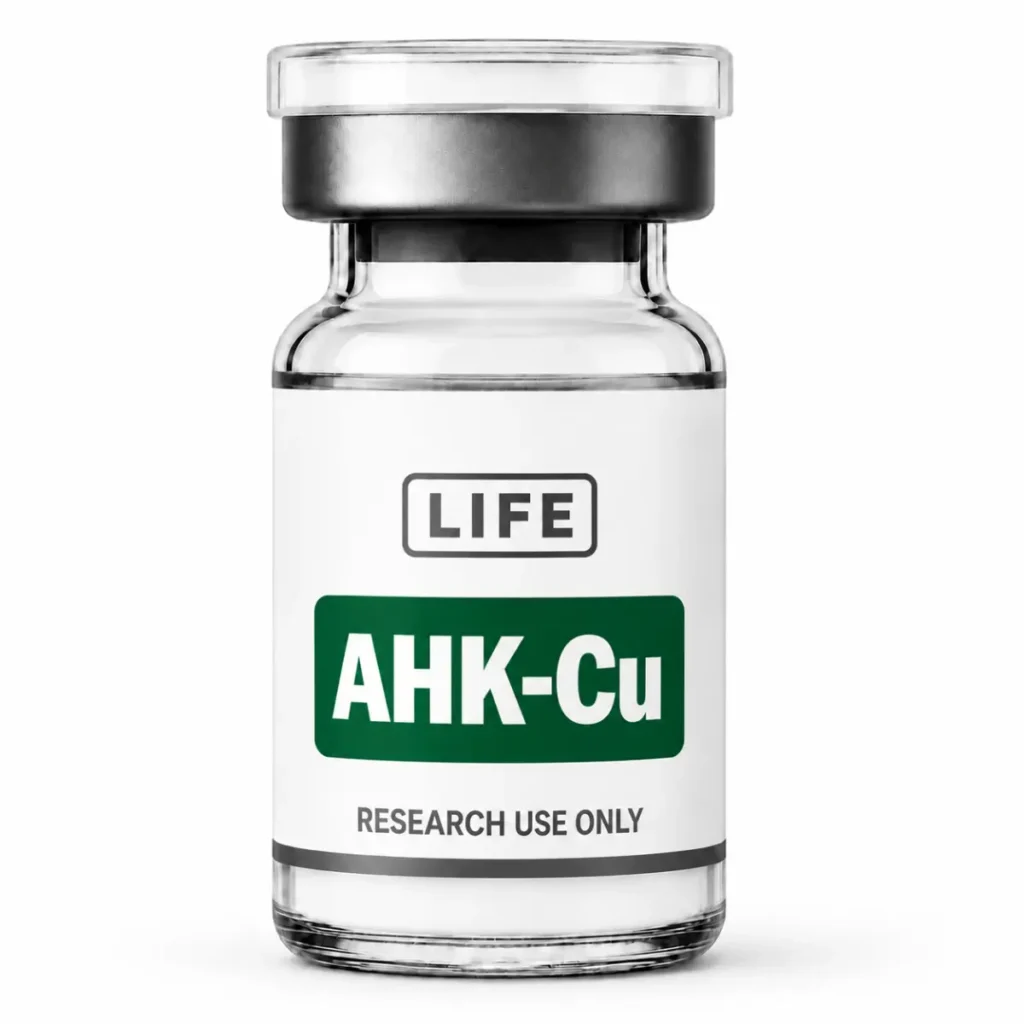
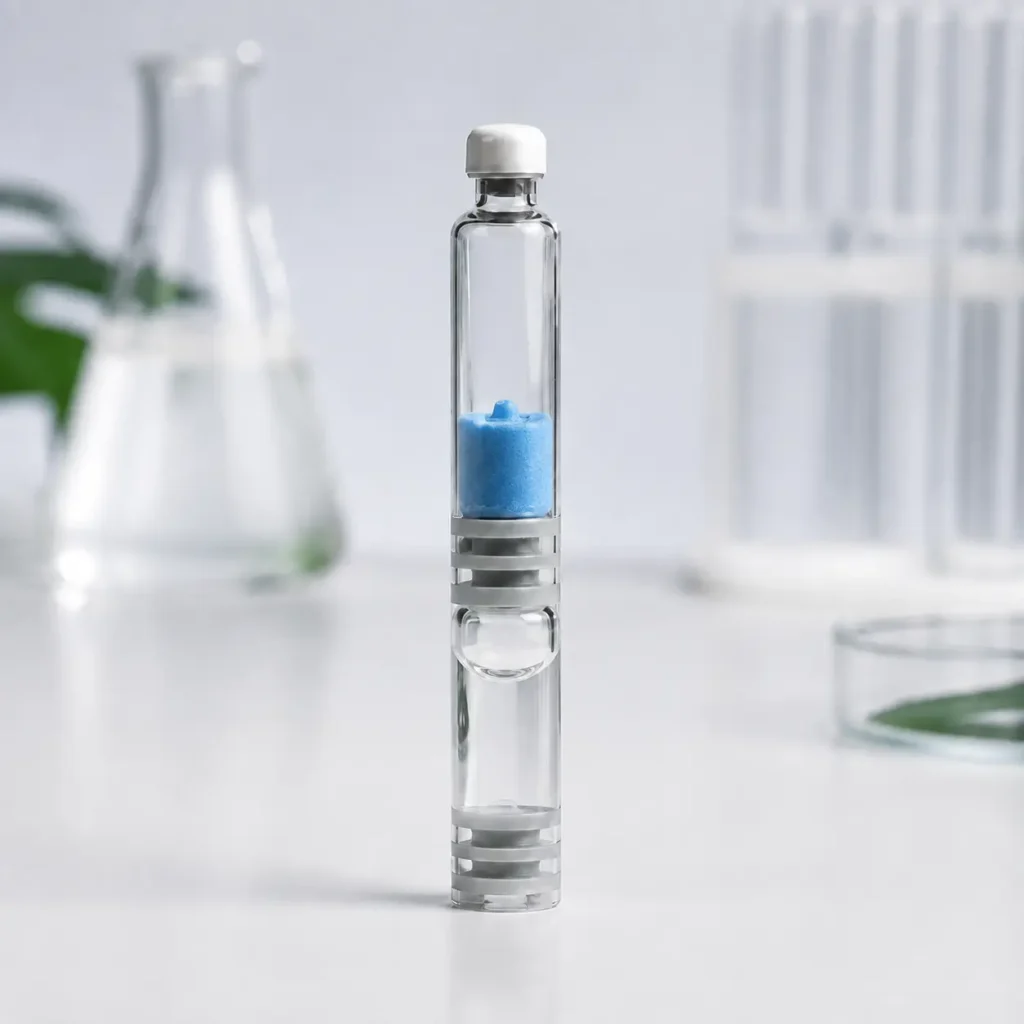
Appearance: Blue lyophilized powder
Molecular formula: C14H22CuN6O4
Molecular weight: 403.9 g/mol
Sequence: Gly-His-Lys:Cu(1:1,HOAc)
Storage: unopened lyophilized vials are best stored refrigerated at 2–8°C, which is the storage method confirmed by our manufacturing partner and suitable for up to 24 months. Refrigeration is preferred because it minimizes unnecessary freeze–thaw cycles during routine handling. If substantially longer-term storage is required, unopened lyophilized vials may also be kept frozen. Once reconstituted, always store at 2–8°C and do not freeze.
Reconstitution and handling
GHK-Cu is supplied as a lyophilised peptide and should be reconstituted using appropriate laboratory procedures suitable for peptide research. To help preserve structural integrity, add the chosen solvent slowly against the inside wall of the vial rather than directly onto the peptide cake, and avoid vigorous shaking. Gentle swirling is generally sufficient once the peptide has fully dissolved. Standard laboratory practice also includes allowing refrigerated vials to reach room temperature before reconstitution to minimise condensation inside the vial.
Most often GHK-Cu is reconstituted with bacteriostatic water before use. For sterile filtration of peptide solutions it is advised to use a 0.22 µm PES syringe filter. For other solvent selection, concentration planning and storage guidance, see the full Peptide Reconstitution Guide and Reconstitution Calculator.. These resources explain how different reconstitution volumes affect working concentration without recommending research protocols.
Key published studies
- Pickart L. The Human Tripeptide GHK and Tissue Remodelling. Journal of Biomaterials Science, 2008.
The foundational work describing the biological discovery of GHK and its role in tissue repair and regenerative signalling.
- Pickart L, Margolina A. Regenerative and Protective Actions of the GHK-Cu Peptide in the Light of the New Gene Data. International Journal of Molecular Sciences, 2018.
One of the landmark reviews demonstrating broad gene regulatory effects associated with GHK-Cu.
- Pickart L. The Human Tripeptide GHK-Cu in Prevention of Oxidative Stress and Tissue Repair. BioMed Research International, 2015.
A comprehensive overview of regenerative biology, wound repair and antioxidant mechanisms.
- Finkley MB et al. Copper Peptide and Skin Regeneration Research. Journal of Cosmetic Dermatology, 2015.
Clinical work examining GHK-Cu in dermatological research and skin physiology.
Frequently Asked Questions
What is GHK-Cu?
GHK-Cu is a naturally occurring copper-binding tripeptide present in human plasma and tissues. It has been extensively investigated for its role in tissue remodelling, extracellular matrix biology and regenerative signalling.
How does GHK-Cu differ from BPC-157?
BPC-157 is primarily investigated in injury and tendon-related models, whereas GHK-Cu has a much broader research profile involving collagen biology, extracellular matrix remodelling, wound healing, skin physiology and gene regulation.
How does GHK-Cu differ from TB-500?
TB-500 is mainly associated with cell migration and actin dynamics, while GHK-Cu is recognised for its effects on extracellular matrix biology, collagen metabolism and regenerative signalling.
Why is copper important in GHK-Cu?
Copper is an essential part of the GHK-Cu complex. Binding copper allows the peptide to participate in multiple biological processes related to cellular communication, tissue repair and extracellular matrix maintenance.
What research areas commonly investigate GHK-Cu?
Published studies have investigated GHK-Cu in tissue remodelling, skin physiology, wound healing, connective tissue biology, angiogenesis, inflammatory signalling, hair biology and regenerative medicine.
Can I buy GHK-Cu in Europe?
Yes. We ship GHK-Cu to most European countries using reliable courier services. Available shipping methods and delivery times are shown during checkout based on your destination.
Is this product intended for human use?
No. GHK-Cu supplied by LIFE Peptide is provided strictly for laboratory and analytical research. It is not intended for human consumption, diagnosis, treatment or prevention of disease. Any discussion of published studies summarises the scientific literature relating to the GHK-Cu molecule rather than the intended use of this product.
Related research context
GHK-Cu is part of the regenerative peptide and extracellular matrix (ECM) remodeling research class, commonly studied in models involving collagen synthesis, tissue regeneration, and metalloproteinase regulation. For broader context on angiogenesis, tissue repair pathways, and multi-compound interactions, see our Healing & recovery research guide.
For mechanistic comparison with cytoprotective and migration-modulating peptides, see our Copper peptides & tissue repair guide.
Browse all compounds in the Healing & recovery research category.
Researchers investigating tissue remodeling, repair signaling, and multi-pathway regeneration may also examine:
BPC-157 – peptide associated with angiogenesis and tissue repair pathways
Tb4 (Thymosin Beta-4 full sequence, aka TB500) – actin regulation and cellular migration
KPV (α-MSH fragment) – inflammation-modulating peptide fragment
SS-31 – investigated for mitochondrial function and cellular energy production.
NOTE: This is for educational reference only and does not constitute medical advice.
Disclaimer
This product is sold for research purposes only. It is not intended to diagnose, treat, cure, or prevent any disease. Buyer assumes full responsibility for proper handling and use.