Popis
GHRP-6 (Growth Hormone Releasing Peptide-6) je syntetický hexapeptid a jeden z původních členů rodiny sekretagog růstového hormonu (GHS). Na rozdíl od analogů GHRH, jako je CJC-1295, GHRP-6 stimuluje růstový hormon vydal aktivace ghrelinového receptoru (GHSR-1a) spíše než receptor pro GHRH.
Kromě svých endokrinních účinků se GHRP-6 stal v výzkumu známým také tím, že aktivace receptoru pro ghrelin ovlivňuje chuť k jídlu, gastrointestinální fyziologie a energetická bilance. Tento širší biologický profil jej odlišuje od novějších sekretagog, která se zaměřují primárně na uvolňování růstového hormonu.
Chcete si v Evropě koupit GHRP-6? Společnost Life Peptide dodává GHRP-6 vysoké čistoty pro laboratorní výzkum a zajišťuje spolehlivé doručení po celé EU.
Proč na GHRP-6 záleží ve výzkumu endokrinologie
Jedním z určujících rysů GHRP-6 je, že reprodukuje mnoho aspektů přirozená signalizace ghrelinu.
Publikovaný výzkum zkoumal GHRP-6 ve vztahu k:
- pulzatilní sekrece růstového hormonu
- biologie receptoru ghrelinu
- regulace chuti k jídlu
- příjem potravy
- fyziologie endokrinního systému
- Signaling IGF-1
- gastrointestinální motilita
- energetická bilance
Protože ghrelin reguluje mnohem více než jen sekreci růstového hormonu, zůstává GHRP-6 důležitým výzkumným nástrojem pro studium širšího signalizačního systému ghrelinu.
Jak funguje GHRP-6
Na rozdíl od analogů GHRH působí GHRP-6 stimulací receptor pro sekretagog růstového hormonu (GHSR-1a), nyní uznávaný jako ghrelinový receptor.
Publikovaný výzkum zkoumal jeho vztah s:
Sekrece růstového hormonu
Stimulace pulzatilního uvolňování GH prostřednictvím aktivace ghrelinového receptoru.
Regulace chuti k jídlu
GHRP-6 je jedním z nejintenzivněji zkoumaných sekretagog pro výzkum orexigenní signalizace a příjmu potravy.
Gastrointestinální fyziologie
Experimentální studie zkoumaly vyprázdnění žaludku, gastrointestinální motilitu a trávicí regulaci.
Energetická homeostáza
Výzkum se rovněž zabýval interakcemi mezi signalizací ghrelinu, složením těla a metabolickou regulací.
Proč je GHRP-6 široce zkoumán v B2B výzkumu chuti k jídlu
Mezi klasické látky podporující vylučování růstového hormonu, GHRP-6 je obzvláště uznáván pro své účinky na signalizaci související s chutí k jídlu.
Protože grelin je hlavním hormonem hladu v těle, stala se aktivace grelinového receptoru významnou oblastí výzkumu v:
- regulace chuti k jídlu
- příjem potravy
- výživová fyziologie
- výzkum kachexie
- energetická bilance
To činí GHRP-6 obzvláště zajímavým pro výzkumníky zabývající se endokrinní regulací nad rámec samotné sekrece růstového hormonu.
Lidský a preklinický výzkum
GHRP-6 je zkoumán již několik desetiletí jak v laboratorním, tak v lidském výzkumu.
Publikované studie prozkoumaly:
- fyziologie endokrinního systému
- uvolňování růstového hormonu
- regulace chuti k jídlu
- gastrointestinální funkce
- metabolická signalizace
Přולéhavá pozornost se sice v dnešní době přesunula k novějším sekretagogům, jako je Ipamorelin, GHRP-6 však zůstává jednou ze základních sloučenin ve výzkumu ghrelinového receptoru a nadále se na něj často odkazuje ve studiích biologie GHSR.
Jak se GHRP-6 liší od ostatních sekretagog růstového hormonu
GHRP-6
- Silný agonista ghrelinového receptoru
- Robustní uvolnění GH
- Signalizace chuti k jídlu
- Gastrointestinální výzkum
- Silný sekretagog růstového hormonu
- Menší stimulace chuti k jídlu
- Endokrinní fyziologie
- Ipamorelin
- Vysoce selektivní agonista ghrelinového receptoru
- Minimální vliv na chuť k jídlu
- Čistší endokrinní profil
- Analogon GHRH
- Odlišná dráha receptoru
- Často zkoumáno společně s GHRP
Tyto peptidy se vzájemně nenahrazují, ale představují různé přístupy k výzkumu fyziologie růstového hormonu a ghrelinové signalizace.
Publikované bezpečnostní poznatky
Publikované studie na lidech obecně popisují, že GHRP-6 vyvolává přechodné zvýšení sekrece růstového hormonu spolu s měřitelnými endokrinními odpověďmi odpovídajícími aktivaci receptoru pro ghrelin. Stejně jako u jiných sekretagog růstového hormonu, stimulace chuti k jídlu a zvýšení hladiny prolaktinu nebo kortizolu byly hlášeny také v některých experimentálních podmínkách.
Vlastnosti produktu
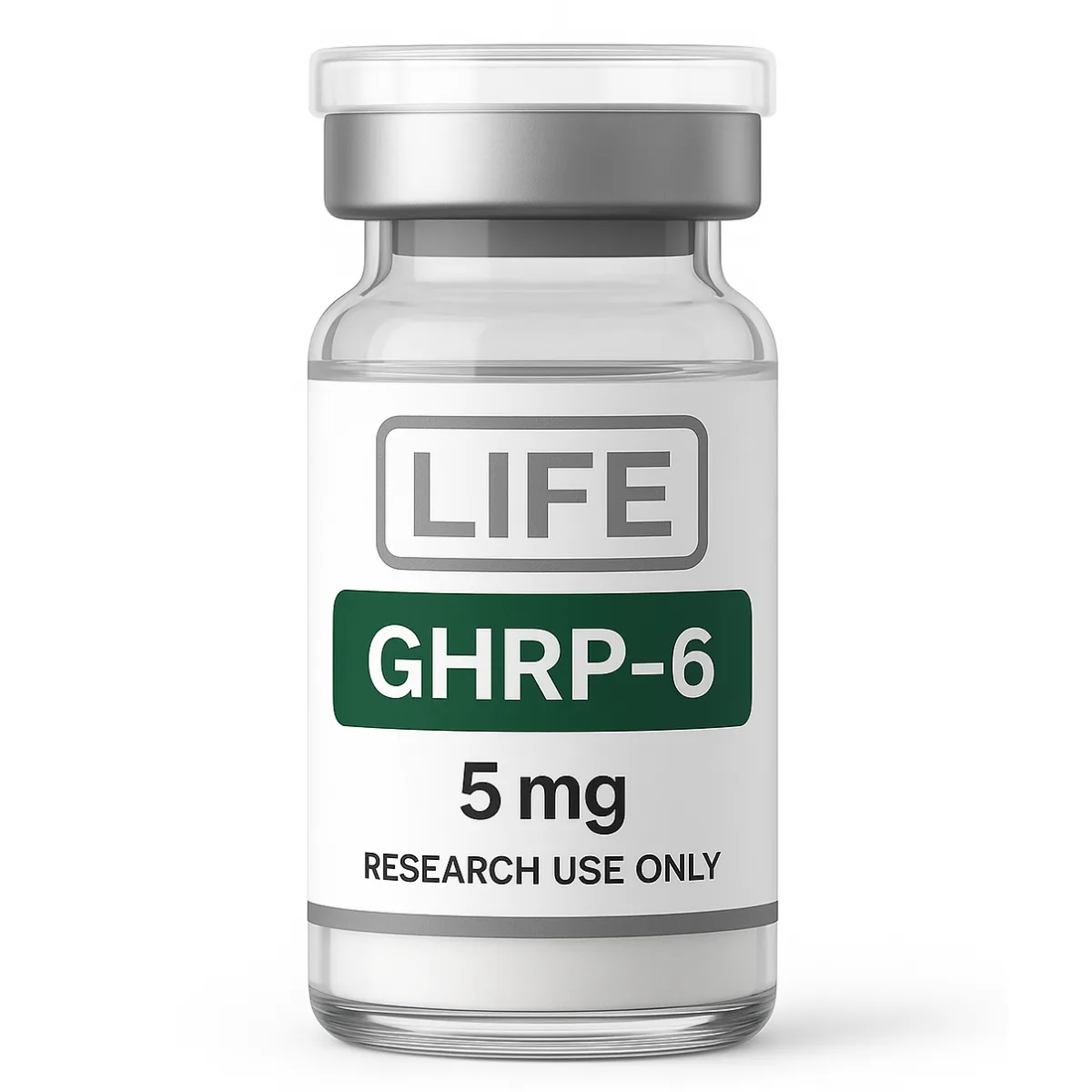
Aplikace: laboratorní a analytický výzkum
Použití omezené: není určeno k lidské spotřebě; pro lékařské, veterinární ani kosmetické použití
Vyrobeno v zařízeních splňujících správnou výrobní praxi (GMP) za přísných protokolů kontroly kvality.
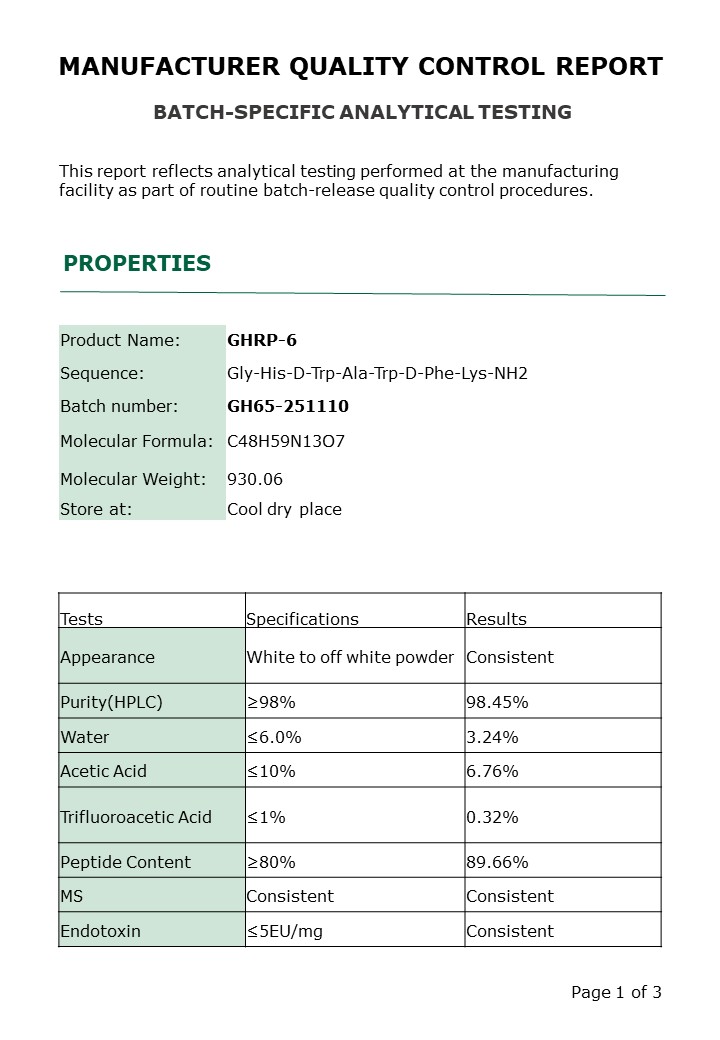
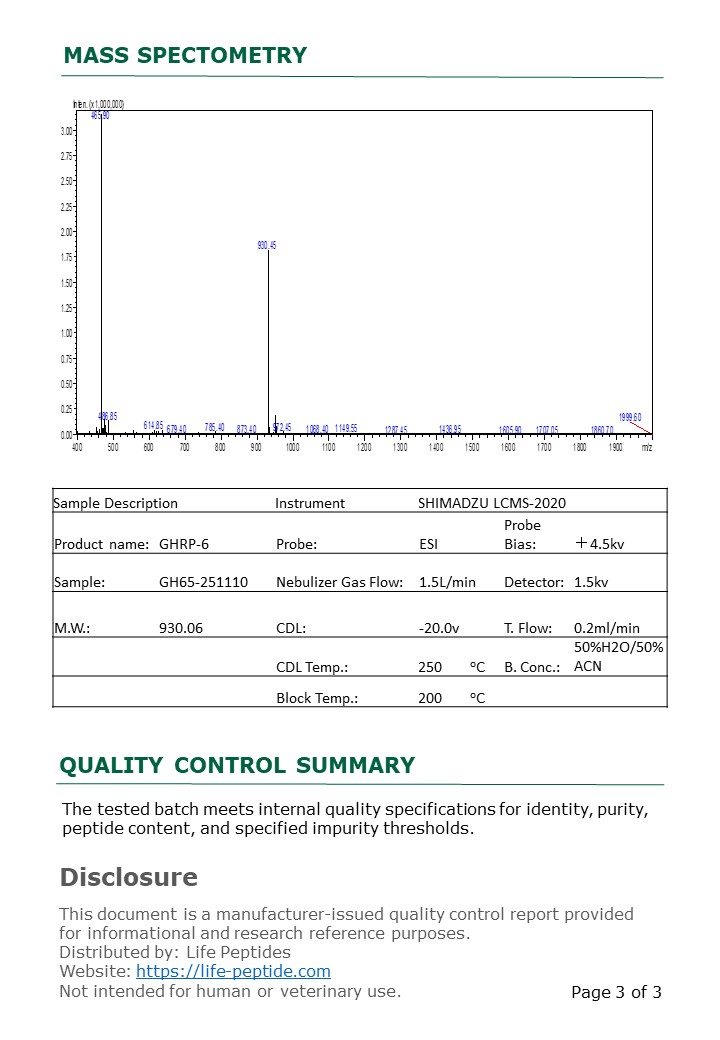
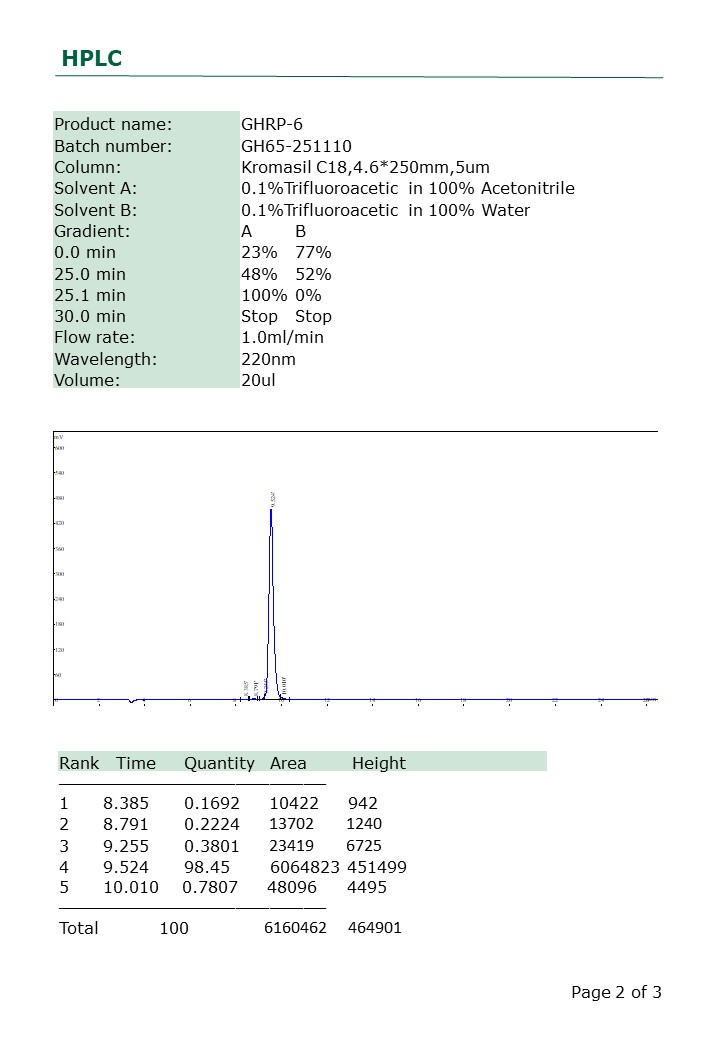
Každá šarže je po výrobě pečlivě laboratorně testována (Certifikát o analýze najdete pod obrázky produktů).
Lyofilizováno (sušeno mrazem) pro maximální stabilitu a prodlouženou trvanlivost.
Uzavřeno ve sterilních lahvičkách, připraveno k rekonstituci.
Čistota: ≥98% (testováno metodou HPLC)
Vzhled: Lyofilizovaný bílý/nebíle bílý prášek
Molekulární vzorec: C48H59N13O7
Molekulová hmotnost: 930,06
Sekvence: Gly-His-D-Trp-Ala-Trp-D-Phe-Lys-NH2
ÚložištěNeotevřené lyofilizované lahvičky jsou nejlépe skladovány chlazené při 2–8 °C, což je metoda skladování potvrzená naším výrobním partnerem a vhodná až po dobu 24 měsíců. Preferuje se chlazení, protože minimalizuje zbytečné cykly zmrazování a rozmrazování během běžné manipulace. Pokud je vyžadováno podstatně delší skladování, lze zmrazené uchovávat i neotevřené lyofilizované lahvičky. Po rekonstituci vždy skladujte při 2–8 °C a nezmrazujte.
Rekonstituce a manipulace
GHRP-6 je dodáván jako lyofilizovaná lahvička a mělo by s ním být zacházeno za použití standardních postupů rekonstituce peptidů vhodných pro výzkumné prostředí. Musí být rekonstituován pomocí bakteriostatická voda před použitím. Pro zachování strukturální integrity přidejte zvolené rozpouštědlo pomalu po vnitřní stěně lahvičky namísto přímo na peptidový prášek a vyhněte se prudkému protřepávání. Jemné kroužení je obecně dostačující, jakmile se peptid zcela rozpustí. Standardní laboratorní postupy zahrnují také ponechání chlazených lahviček dosáhnout pokojové teploty před rekonstitucí, aby se minimalizovala kondenzace uvnitř lahvičky.
Pro další pokyny k výběru rozpouštědla, plánování koncentrací a skladování viz úplné Průvodce rekonstitucí peptidů a Kalkulačka rekonstituce.
Klíčové publikované studie
- Bowers CY a kol. Peptidy uvolňující růstový hormon a jejich analogika. Frontiers in Neuroendocrinology, 1998
Základní přehled představující biologii GHRP a diferencující dráhu GHS od GHRH.
- Lengyel AMJ a kol. Peptidy uvolňující růstový hormon a ghrelin. Brazilian Journal of Medical and Biological Research, 2006
Komplexní přehled o GHRP-6, biologii ghrelinových receptorů a endokrinních mechanismech.
- Berlanga-Acosta J, a kol. Syntetické peptidy uvolňující růstový hormon (GHRP). Klinická věda, 2017
Komplexní přehled zabývající se farmakologií GHRP-6, jeho klinickým vývojem a terapeutickým výzkumem.
- Yin Y, Li Y, Zhang W. Receptor, 2014
Autoritativní přehled signalizace GHSR, biologie ghrelinu a farmakologie sekretagogů.
Často kladené otázky
Co je GHRP-6?
GHRP-6 je syntetický hexapeptid, který aktivuje ghrelinový receptor (GHSR-1a). Je předmětem rozsáhlého výzkumu v oblasti pulzní sekrece růstového hormonu, regulace chuti k jídlu a endokrinní fyziologie.
V čem se GHRP-6 liší od Ipamorelinu?
Oba aktivují ghrelinový receptor, avšak GHRP-6 je mnohem silněji spojován se signalizací chuti k jídlu, zatímco Ipamorelin je obecně zkoumán z hlediska selektivnějšího uvolňování růstového hormonu s nižší orexigenní aktivitou.
V čem se GHRP-6 liší od GHRP-2?
Oba patří do stejné rodiny peptidů a stimulují uvolňování růstového hormonu (GH) prostřednictvím receptoru GHSR-1a. GHRP-6 je obecně známý tím, že silněji stimuluje chuť k jídlu, zatímco GHRP-2 je často považován za účinnější sekretagog endokrinních hormonů.
Proč je GHRP-6 spojován s výzkumem chuti k jídlu?
GHRP-6 napodobuje ghrelin, hlavní hormon v těle podněcující chuť k jídlu. Díky tomu se stal důležitým výzkumným nástrojem pro studium regulace chuti k jídlu, příjmu potravy a energetické homeostázy.
V jakých oblastech výzkumu se běžně zkoumá GHRP-6?
Zveřejněné studie se zabývají vlivem GHRP-6 na sekreci růstového hormonu, biologii receptorů ghrelinu, regulaci chuti k jídlu, fyziologii zažívacího traktu, endokrinní signalizaci a energetickou bilanci.
Mohu si v Evropě koupit GHRP-6?
Ano. GHRP-6 zasíláme do většiny evropských zemí prostřednictvím spolehlivých kurýrních služeb. Dostupné způsoby dopravy a dodací lhůty se zobrazí při dokončování objednávky v závislosti na vaší destinaci.
Je tento produkt určen k lidskému použití?
Ne. GHRP-6 dodávaný společností Life Peptide je určen výhradně pro laboratorní a analytický výzkum. Není určen k lidské spotřebě, diagnostice, léčbě ani prevenci nemocí. Jakékoli zmínky o publikovaných studiích představují pouze shrnutí vědecké literatury týkající se molekuly GHRP-6, nikoli zamýšleného použití tohoto produktu.
Související výzkumný kontext
GHRP-6 patří do třídy sekretagogů růstového hormonu, což je skupina peptidů zkoumaných z hlediska jejich úlohy v signalizaci růstového hormonu, endokrinní modulaci a pulzním uvolňování hormonů.
Vědci zabývající se dynamikou osy GH mohou rovněž zkoumat:
Ipamorelin – selektivní peptid uvolňující růstový hormon
CJC-1295 (bez DAC) –krátkodobě působící analog GHRH
Tesamorelin – Peptidový analog odvozený od GHRH
GHRP-2 – silný peptid uvolňující růstový hormon
Procházet všechny sloučeniny v Sekre pagy růstového hormonu nebo prozkoumat širší endokrinní signální dráhy v Průvodce výzkumem růstových hormonových peptidů.
POZNÁMKA: Tento text slouží pouze pro vzdělávací účely a nepředstavuje lékařskou pomoc.
Upozornění:
Tento produkt je prodáván pouze pro výzkumné účely. Není určen k diagnostice, léčbě, vyléčení nebo prevenci jakýchkoli onemocnění. Kupující přebírá plnou odpovědnost za řádnou manipulaci a použití.