Beschreibung
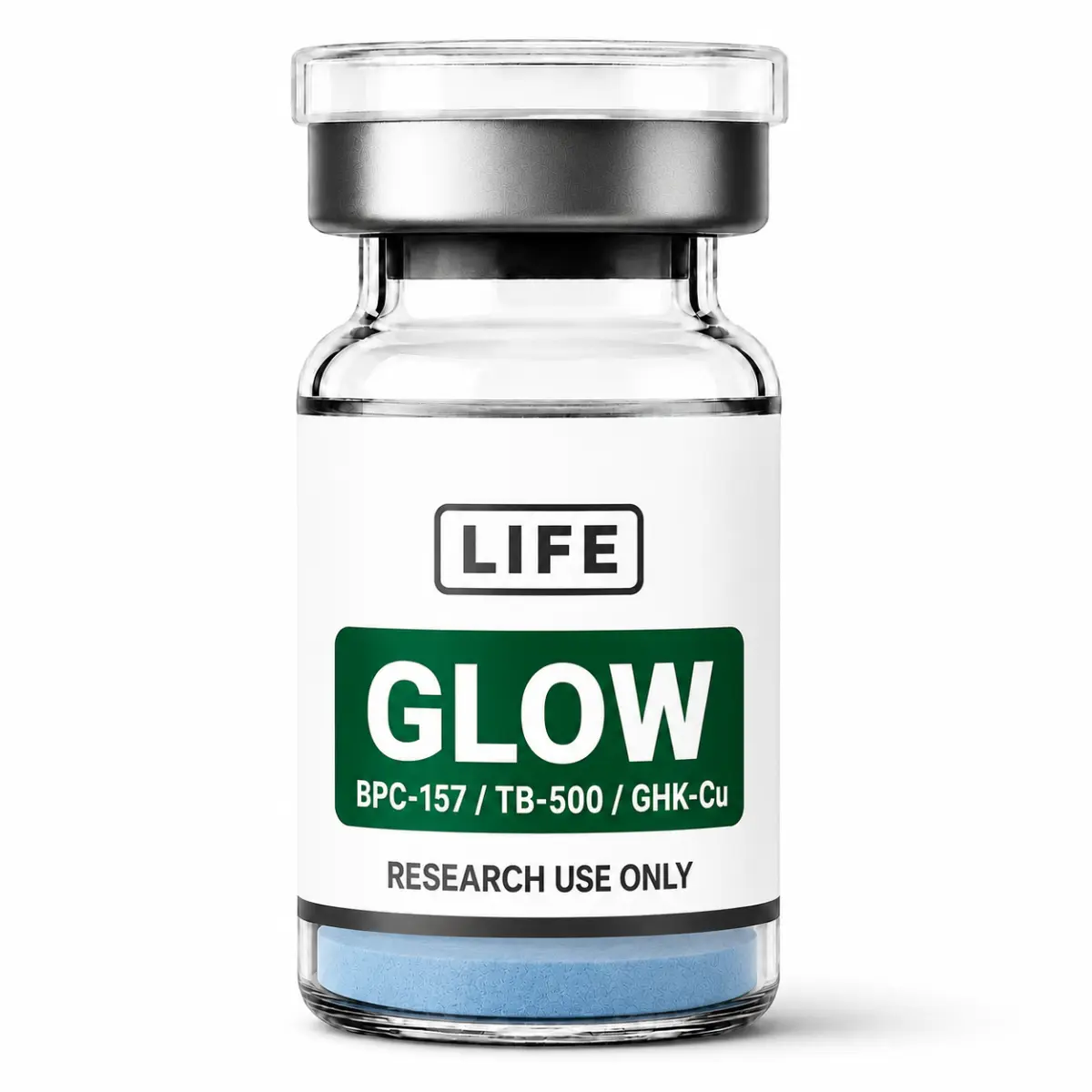
GLOW Blend ist eine Forschungsformulierung mit drei Peptiden, die Folgendes enthält:
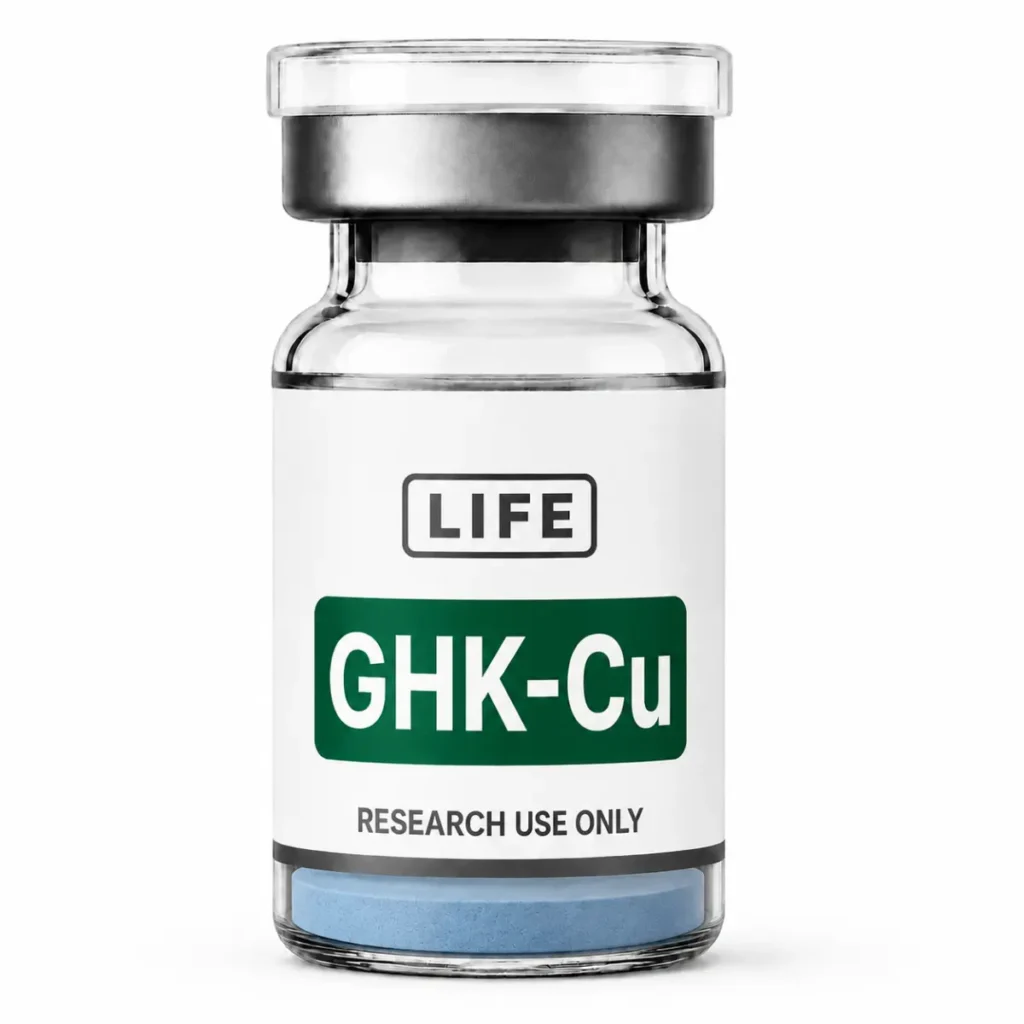
- GHK-Cu – 50 mg
- BPC-157 – 10 mg
- TB-500 (vollständige Sequenz Thymosin β4) – 10 mg
Anstatt ein neues Peptid zu repräsentieren, kombiniert GLOW drei etablierte regenerative Forschungsverbindungen in einer einzigen Formulierung. Jede Komponente verfügt über ein umfangreiches unabhängiges Forschungsprofil, das verschiedene Aspekte der Gewebebiologie abdeckt und es den Forschern ermöglicht, zu untersuchen mehrere regenerative Pfade innerhalb einer experimentellen Mischung.
Möchten Sie GLOW in Europa kaufen? Life Peptide liefert hochreines GLOW für die Laborforschung mit zuverlässigem Versand in die gesamte EU.
Warum GLOW in der regenerativen Forschung wichtig ist
Die Gewebereparatur beinhaltet eine komplexe Wechselwirkung zwischen Umbau der extrazellulären Matrix, Zellmigration, Angiogenese und Organisation des Bindegewebes. Aus diesem Grund untersucht die regenerative Forschung oft multiple biologische Signalwege anstelle eines einzelnen Signalmechanismus.
GLOW kombiniert drei der bekanntesten Peptide in der regenerativen Forschung:
- GHK-Cu – Regulation der extrazellulären Matrix, Kollagenbiologie und Physiologie des Bindegewebes.
- BPC-157 – Sehnen-, Band-, Muskel- und Magen-Darm-Forschung.
- TB-500 – Thymosin β4 Biologie, Zellmigration und Geweberegenerierung.
Jedes Peptid hat ein eigenes Forschungsprofil, was GLOW zu einer praktischen Formulierung für Labore macht, die an komplementäre regenerative Mechanismen statt eines einzelnen molekularen Ziels.
Die drei Komponenten von GLOW
GHK-Cu (50 mg)
Ein endogenes kupferbindendes Tripeptid, das in der extrazellulären Matrixbiologie, der Kollagenregulierung, der Hautphysiologie und dem Umbau des Bindegewebes ausgiebig untersucht wurde.
BPC-157 (10 mg)
Ein stabiles gastrisches Pentadecapeptid, das in der Forschung zu Sehnen, Bändern, Muskeln, Angiogenese und Magen-Darm-Trakt weit verbreitet ist.
TB-500 (10 mg)
Ein vollständiges Thymosin-β4-Peptid, untersucht in Zellmigration, Aktindynamik, Angiogenese und Gewebereparatur.
Zusammen stellen diese drei Peptide komplementäre Bereiche der regenerativen Biologie dar, behalten aber ihre eigenen unabhängigen Forschungsarbeiten bei.
Warum GLOW in der Gewebereparaturforschung weit verbreitet untersucht wird
Die einzelnen Komponenten von GLOW wurden jeweils in veröffentlichten Forschungsarbeiten untersucht, die Folgendes umfassten:
- Sehnen- und Bandbiologie
- Bindegewebsregeneration
- Skelettmuskelforschung
- Wundheilung
- Angiogenese
- Extrazelluläre Matrix-Remodellierung
- Hautphysiologie
- Bewegungsapparat-Forschung
Da sich diese Forschungsbereiche häufig überschneiden, wird die Kombination von GHK-Cu, BPC-157 und TB-500 in einer einzigen Formulierung in Laborforschungsprozessen immer üblicher. Veröffentlichte Beweise beziehen sich jedoch hauptsächlich auf die einzelnen Peptidkomponenten und sollten nicht als Nachweis für gleichwertige Ergebnisse für die kombinierte Mischung interpretiert werden.
Wie sich GLOW von KLOW unterscheidet
Obwohl beide Formulierungen auf derselben regenerativen Grundlage aufbauen, haben sie unterschiedliche Forschungsschwerpunkte.
GLOW Blend
- GHK-Cu – 50 mg
- BPC-157 – 10 mg
- TB-500 – 10 mg
Schwerpunkt:
- Bindegewebsbiologie
- Extrazelluläre Matrix-Remodellierung
- Bewegungsapparat-Forschung
- regenerative Signalgebung
Enthält die gleichen drei Peptide plus KPV (10 mg).
Die Addition von KPV erweitert den Forschungsumfang auf entzündliche und immunbezogene Signalwege einschließen, wodurch KLOW eine breitere Formulierung für Labore darstellt, die sowohl regenerative als auch entzündungsbedingte Biologie untersuchen.
Menschliche und präklinische Forschung
Derzeit gibt es keine speziellen klinischen Studien, die GLOW als Drei-Peptid-Formulierung bewerten.
Stattdessen basiert die wissenschaftliche Begründung für GLOW auf der umfangreichen veröffentlichten Literatur, die jeden seiner einzelnen Bestandteile beschreibt:
- GHK-Cu in der Biologie des Bindegewebes und der extrazellulären Matrix.
- BPC-157 in der gastrointestinalen und muskuloskelettalen Forschung.
- Thymosin β4/TB-500 bei Zellmigration und Geweberekonstruktion.
Forscher sollten daher die Ergebnisse entsprechend der für jedes Peptid verfügbaren Beweise interpretieren, anstatt additive oder synergistische Effekte für die Mischung selbst anzunehmen.
Veröffentlichte Sicherheitsaspekte
Die veröffentlichten Sicherheitsinformationen für GLOW stammen aus der verfügbaren Literatur über seine einzelnen Peptidkomponenten und nicht aus Studien mit der kombinierten Formulierung.
Daher sollten Beobachtungen, die für GHK-Cu, BPC-157 oder TB-500 berichtet werden, unabhängig voneinander betrachtet werden, wobei zu berücksichtigen ist, dass die vollständige Mischung nicht in dedizierten klinischen Studien evaluiert wurde.
Produkteigenschaften
Anwendung: Labor- und analytische Forschung
Verwendungseinschränkung: Nicht zum menschlichen Verzehr bestimmt; nicht für medizinische, veterinärmedizinische oder kosmetische Zwecke
Hergestellt in GMP-konformen Anlagen unter strengen Qualitätskontrollprotokollen.
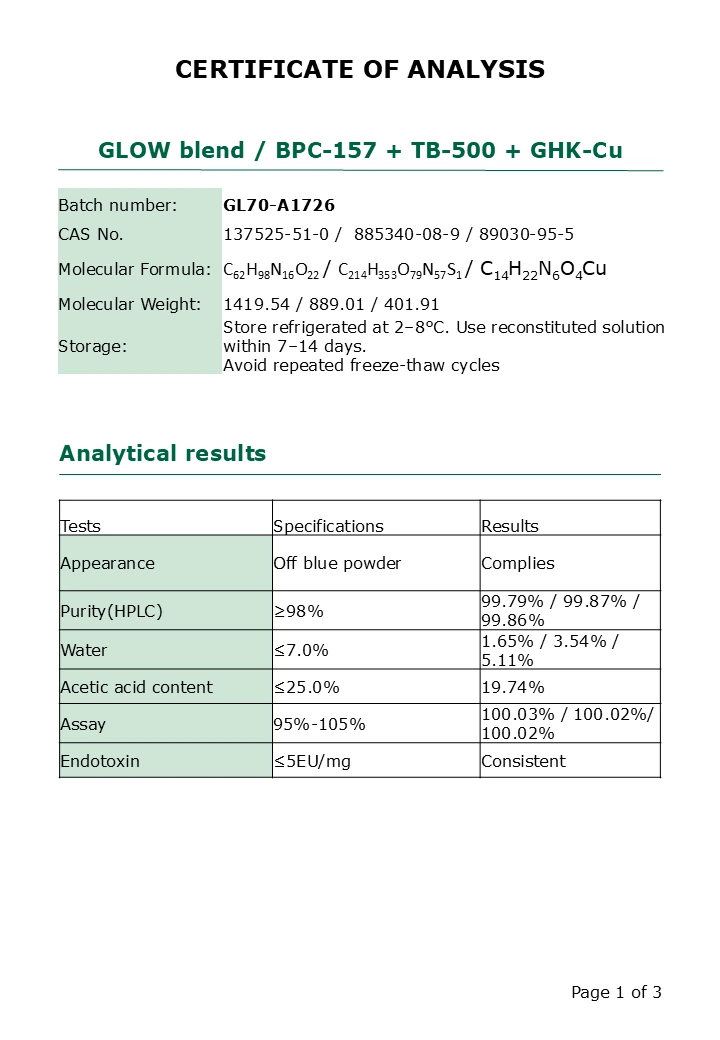
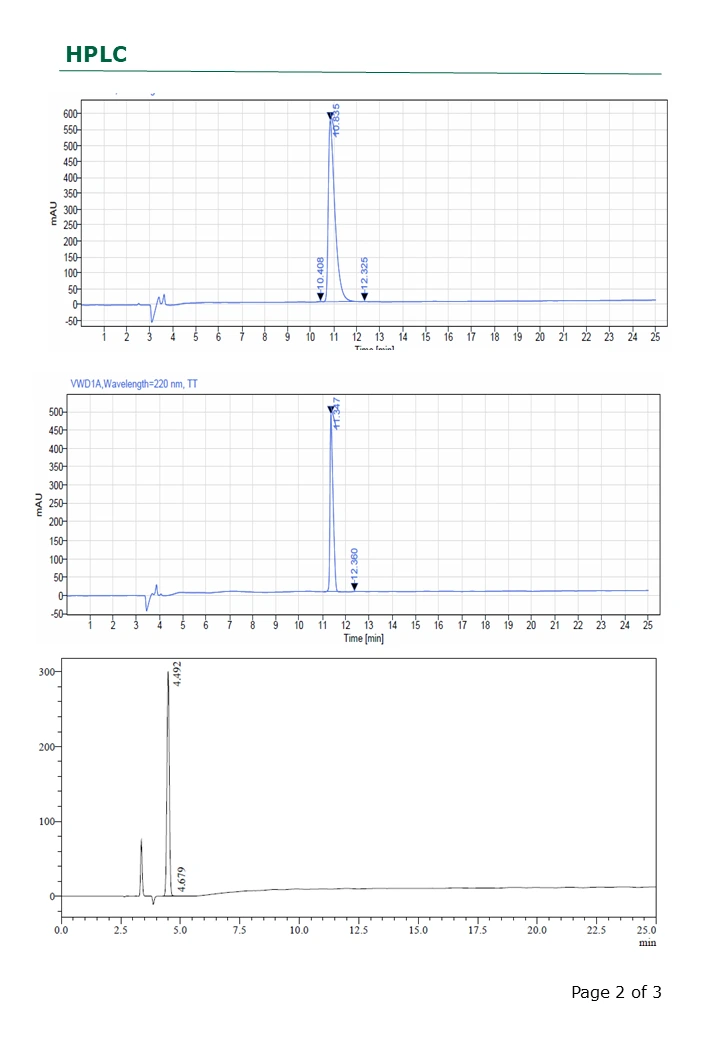
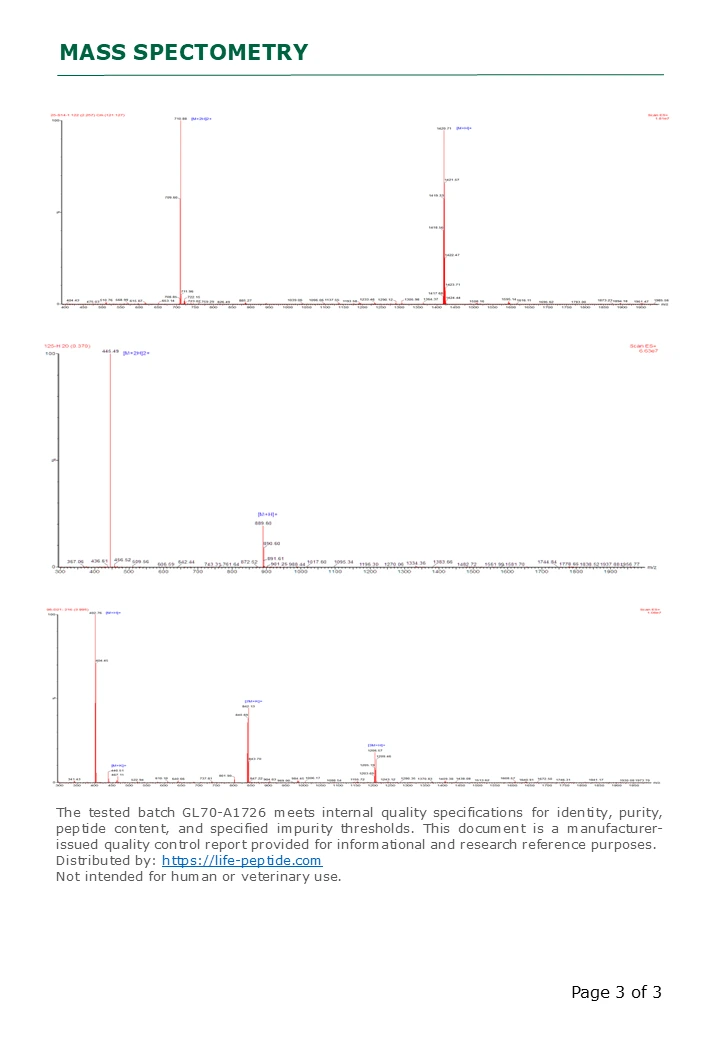
Jede Charge wird nach der Produktion sorgfältig im Labor getestet (das Analysezertifikat finden Sie unter den Produktbildern).
Gefriergetrocknet (lyophilisiert) für maximale Stabilität und längere Haltbarkeit.
Steril in Fläschchen abgefüllt, bereit zur Rekonstitution.
Reinheit: ≥ 98,1 % (HPLC)
Aussehen: hellblaues Lyophilisat (Pulver) (aufgrund des GHK-Cu-Gehalts)
Zusammensetzung: 50 mg GHK-Cu + 10 mg BPC-157 + 10 mg Tb4 pro Fläschchen
Molekülformel (GHK-Cu): C14H22Kupfernitrid6O4
Molekülformel (BPC-157): C62H98N16O22
Summenformel Thymosin Beta-4 (vollständige Sequenz): C214H353O79N57S1
Speicherungeöffnete gefriergetrocknete Vials werden am besten gelagert gekühlte Lagerung bei 2–8°C, welche die von unserem Fertigungspartner bestätigte Lagerungsmethode ist und sich für bis zu 24 Monate eignet. Kühlung wird bevorzugt, da sie unnötige Gefrier-Tau-Zyklen bei routinemäßiger Handhabung minimiert. Wenn eine deutlich längerfristige Lagerung erforderlich ist, können auch ungeöffnete gefriergetrocknete Vials gefroren aufbewahrt werden. Nach der Rekonstitution immer bei 2–8 °C lagern und nicht einfrieren.
Rekonstitution und Handhabung
KLOW wird in einer lyophilisierten Durchstechflasche geliefert und sollte nach Standardverfahren für die Rekonstitution von Peptiden, die für das Forschungsumfeld geeignet sind, gehandhabt werden. Muss rekonstituiert werden mit Bakteriostatisches Wasser Vor Gebrauch. Um die strukturelle Integrität zu erhalten, geben Sie das gewählte Lösungsmittel langsam an der Innenwand des Fläschchens hinzu und nicht direkt auf den Peptidkuchen, und vermeiden Sie kräftiges Schütteln. Sanftes Schwenken ist im Allgemeinen ausreichend, sobald sich das Peptid vollständig gelöst hat. Standardmäßige Laborpraxis beinhaltet auch, gekühlte Fläschchen Raumtemperatur erreichen zu lassen, bevor sie rekonstituiert werden, um die Kondensation im Fläschchen zu minimieren.
Für weitere Informationen zur Lösungsmittelauswahl, zur Konzentrationsplanung und zur Lagerung siehe das vollständige Leitfaden zur Peptidrekonstitution und Rekonstitutionsrechner.
Schlüsselstudien
- Pickart L, Margolina A. Regenerative und schützende Wirkungen des GHK-Cu-Peptids im Lichte neuer Gen-Daten. International Journal of Molecular Sciences, 2018.
Ein umfassender Überblick über die Rolle von GHK-Cu in der extrazellulären Matrixbiologie, der Kollagenregulation und der regenerativen Signalübertragung.
- Sikiric P, Seiwerth S, Rucman R, et al. Stabiles gastrisches Pentadecapeptid BPC 157: Neue Therapie im Magen-Darm-Trakt. Current Pharmaceutical Design, 2011.
Die grundlegende Überprüfung fasst die BPC-157-Forschung in den Bereichen Magen-Darm-Trakt, Angiogenese und regenerative Biologie zusammen.
- Goldstein AL, Kleinman HK. Thymosin β4: Struktur, Funktion und biologische Eigenschaften unterstützen aktuelle und zukünftige klinische Anwendungen. Annals of the New York Academy of Sciences, 2010.
Die wegweisende Übersichtsarbeit zu Thymosin β4-Biologie, Zellmigration, Angiogenese und Geweberekonstruktion.
Häufig gestellte Fragen
Was ist GLOW Blend?
GLOW Blend ist eine Forschungsformulierung, die GHK-Cu (50 mg), BPC-157 (10 mg) und TB-500 (10 mg) in einer einzigen lyophilisierten Durchstechflasche kombiniert. Jedes Peptid wurde in veröffentlichten Forschungsarbeiten unabhängig für verschiedene Aspekte der regenerativen Biologie untersucht, einschließlich des Umbaus von Bindegewebe, der Angiogenese und der muskuloskelettalen Forschung.
Welche Peptide sind in GLOW enthalten?
Jede Ampulle enthält:
- GHK-Cu – 50 mg
- BPC-157 – 10 mg
- TB-500 (vollständige Sequenz Thymosin β4) – 10 mg
Zusammen repräsentieren diese Peptide komplementäre Bereiche der regenerativen Forschung, die von der Biologie der extrazellulären Matrix und der Physiologie des Bindegewebes bis hin zur Zellwanderung und Reparatur von Weichgewebe reichen.
Warum werden GHK-Cu, BPC-157 und TB-500 kombiniert?
Jedes Peptid hat einen anderen Forschungsschwerpunkt. GHK-Cu wird in der Kollagenbiologie und der Umgestaltung des Bindegewebes breit untersucht, BPC-157 in der Sehnen-, Band- und Magen-Darm-Forschung und TB-500 in der Zellmigration und Gewebeumgestaltung. Ihre Kombination ermöglicht es Forschern, mehrere regenerative Wege innerhalb einer einzigen experimentellen Formulierung zu untersuchen. Die derzeit veröffentlichten Beweise beziehen sich auf die einzelnen Peptide und nicht auf die Mischung selbst.
Welche Forschungsbereiche untersuchen GLOW Blend häufig?
Basierend auf der veröffentlichten Literatur zu seinen Einzelkomponenten ist GLOW für die Forschung im Bereich Gewebereparatur, Sehnen- und Bandbiologie, Umbau des Bindegewebes, Angiogenese, muskuloskelettale Forschung, Wundheilung und Regulation der extrazellulären Matrix relevant.
Wie unterscheidet sich GLOW von KLOW?
GLOW kombiniert GHK-Cu, BPC-157 und TB-500. KLOW enthält die gleichen drei Peptide, beinhaltet aber zusätzlich KPV, wodurch der Forschungsbereich auf entzündungs- und immunbezogene Signalwege erweitert wird. GLOW konzentriert sich daher hauptsächlich auf regenerative Biologie, während KLOW eine zusätzliche entzündungsfokussierte Komponente hinzufügt.
Kann die Forschung an einzelnen Peptiden direkt auf GLOW Blend angewendet werden?
Nicht unbedingt. GHK-Cu, BPC-157 und TB-500 verfügen jeweils über eine umfangreiche unabhängige Forschungsliteratur, aber es gibt derzeit keine großen veröffentlichten klinischen Studien, die die kombinierte GLOW-Formulierung evaluieren. Die wissenschaftliche Begründung für die Mischung basiert auf der komplementären Biologie ihrer einzelnen Komponenten und nicht auf direkten Beweisen für die Mischung selbst.
Kann ich GLOW in Europa kaufen?
Ja. Wir versenden GLOW in die meisten europäischen Länder mit zuverlässigen Kurierdiensten. Verfügbare Versandmethoden und Lieferzeiten werden während des Bestellvorgangs je nach Bestimmungsort angezeigt.
Ist dieses Produkt für den menschlichen Gebrauch bestimmt?
Nein. GLOW Blend von LIFE Peptide wird ausschließlich für Labor- und analytische Forschungszwecke bereitgestellt. Es ist nicht zur menschlichen Einnahme, Diagnose, Behandlung oder Vorbeugung von Krankheiten bestimmt. Jegliche Erörterung veröffentlichter Studien fasst die wissenschaftliche Literatur zu den einzelnen Peptidkomponenten zusammen und nicht zur beabsichtigten Verwendung der kombinierten Formulierung.
Verwandter Forschungskontext
GLOW gehört zur Heilungs- und Erholungspeptid-Forschung Kategorie, kombinieren von Verbindungen, die häufig für komplementäre regenerative Signalwege untersucht werden.
Forscher, die Multi-Pathway-Erholungsmodelle untersuchen, können auch untersuchen:
BPC-157 — Gewebesignalisierung und Angiogenese-Forschung
Thymosin β4 (TB-500) — Migration und Signalübertragung im Zytoskelett
GHK-Cu Kupferpeptid und extrazelluläre Remodelling-Signalwege
Wolverine (BPC-157 + TB-500) — Dual-Pfad-Erholungsmischung
Suchen Sie nach weiteren Untersuchungen von entzündungsbezogenen Signalwegen? Sehen Sie sich KLOW Mischung.
Für breiteren Kontext siehe die Leitfaden für Forschung zu Heilung und Genesung.
ANMERKUNGDies dient ausschließlich zu Bildungszwecken und stellt keine medizinische Beratung dar.
Haftungsausschluss
Dieses Produkt wird ausschließlich zu Forschungszwecken verkauft. Es ist nicht dazu bestimmt, Krankheiten zu diagnostizieren, zu behandeln, zu heilen oder zu verhindern. Der Käufer übernimmt die volle Verantwortung für die ordnungsgemäße Handhabung und Verwendung.