Description
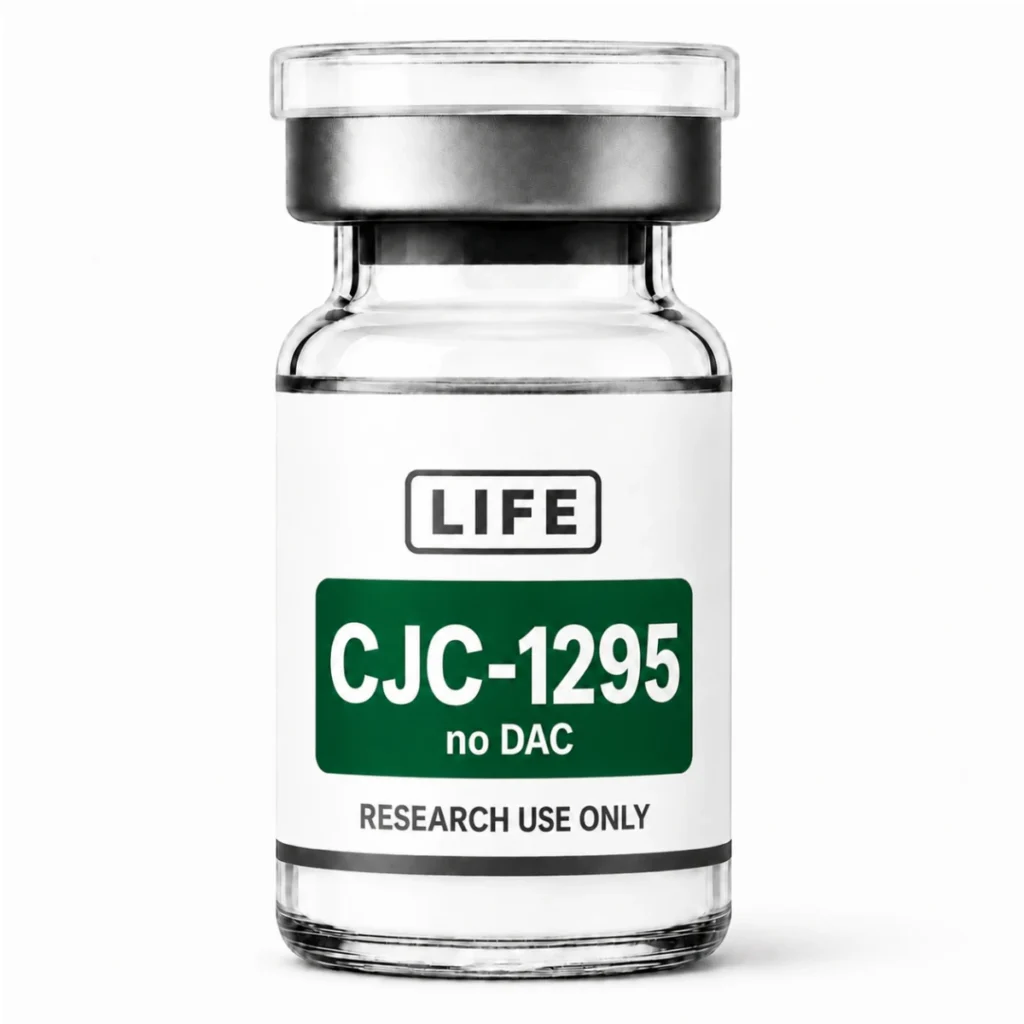
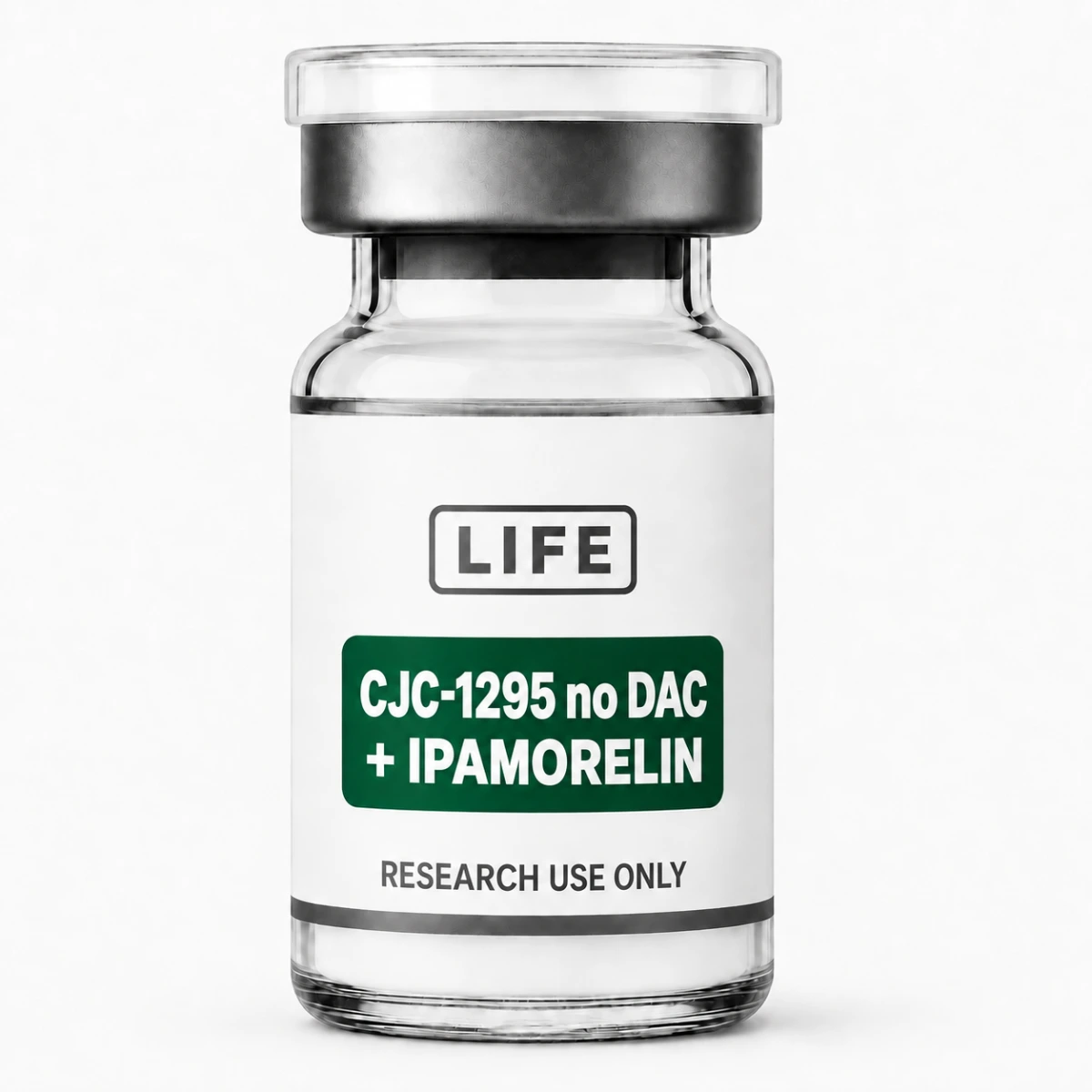
CJC-1295 no DAC + Ipamorelin blend in Europe | LIFE supplies CJC-1295 no DAC + Ipamorelin blend as a lyophilized research peptide with ≥99% purity and batch documentation. Orders are shipped from within the EU, with Economy, Standard Courier and Air Express options available depending on destination.
CJC-1295 no DAC + Ipamorelin combines two research peptides associated with different pathways involved in growth hormone release. CJC-1295 no DAC is a growth hormone-releasing hormone analogue, while Ipamorelin belongs to the growth hormone secretagogue group. Bringing these components together creates a combined format for laboratory investigations of their complementary signalling mechanisms.
The scientific interest in this pairing comes from a straightforward question: how does stimulation through two different receptors influence the resulting growth hormone response? Each component provides a different signal, allowing researchers to investigate interactions that cannot be assessed by examining either pathway alone.
LIFE RESEARCH supplies this blend in lyophilized form for laboratory and analytical use. Its research context includes GH secretion, receptor signalling, endocrine feedback and downstream processes associated with the GH–IGF-1 axis.
What is CJC-1295 no DAC?
CJC-1295 no DAC is the common commercial name for Modified GRF (1–29), a modified analogue of the first 29 amino acids of growth hormone-releasing hormone. GHRH is a signalling hormone involved in regulating the release of growth hormone from the pituitary gland.
Modified GRF (1–29) contains amino acid substitutions intended to improve resistance to enzymatic degradation compared with the unmodified fragment. It acts through the GHRH receptor, making it relevant to studies investigating how this receptor contributes to GH release.
The term “no DAC” identifies an important distinction. This form does not contain the albumin-binding Drug Affinity Complex associated with long-acting CJC-1295. The two names are often grouped together in commercial searches, but their pharmacokinetic behaviour and research interpretation should not be treated as interchangeable.
For this blend, the relevant component is the no-DAC form. Research findings describing prolonged exposure from CJC-1295 with DAC should therefore not be used to describe the expected behaviour of this product.
What is Ipamorelin?
Ipamorelin is a synthetic pentapeptide studied for its ability to stimulate growth hormone release through the growth hormone secretagogue receptor, commonly called the ghrelin receptor or GHS-R1a.
Although both Ipamorelin and GHRH analogues are associated with GH secretion, they do not act through the same receptor. This distinction is central to understanding why researchers investigate combinations involving these peptide classes.
Early preclinical studies examined Ipamorelin’s GH-releasing activity and compared its effects with other growth hormone-releasing peptides. These experiments reported a selective hormonal response under the conditions tested, contributing to continued interest in its pharmacology.
Ipamorelin has also been investigated in human pharmacokinetic and pharmacodynamic research. Those studies help describe the relationship between exposure and GH response, but they do not establish the safety or effectiveness of every formulation containing Ipamorelin.
In particular, findings involving Ipamorelin alone should be distinguished from evidence involving a finished CJC-1295 no DAC + Ipamorelin blend.
Why combine CJC-1295 no DAC and Ipamorelin?
The main rationale for combining these peptides is their action through complementary receptor pathways.
CJC-1295 no DAC provides GHRH-receptor stimulation. Ipamorelin provides growth hormone secretagogue-receptor stimulation. Studying both together allows researchers to examine how these signals interact within the wider system controlling GH release.
Research involving GHRH and other growth hormone-releasing peptides has demonstrated that combined stimulation can produce responses different from those observed with either stimulus alone. This provides background for investigating paired pathways. However, findings from another peptide combination cannot establish the size or consistency of a response from this particular blend.
The distinction matters when discussing “synergy.” It is a scientific possibility to investigate through an appropriate study design, rather than a guaranteed property that can be assigned to every combined product.
A fixed blend provides both components together. Its practical value depends on whether the supplied ratio matches the experimental design and whether the study requires combined exposure throughout the investigation.
Published clinical findings
Ipamorelin: growth hormone response in human volunteers
Gobburu et al. (1999) investigated Ipamorelin in healthy male volunteers using five dose levels, with eight participants at each level. The study measured circulating Ipamorelin and growth hormone following a 15-minute intravenous infusion.
Ipamorelin stimulated GH release at all tested dose levels. The response peaked at approximately 40 minutes, then declined. The estimated terminal elimination half-life of Ipamorelin was approximately two hours under these study conditions.
These findings demonstrate an acute hormonal response to Ipamorelin alone. The study did not establish improvements in muscle growth, recovery, sleep or body composition, and did not evaluate a CJC-1295 no DAC + Ipamorelin blend.
Ipamorelin: postoperative gastrointestinal research
Beck et al. (2014) evaluated Ipamorelin in a randomized, double-blind, placebo-controlled trial following bowel-resection surgery. The study enrolled 117 patients, with 114 included in the safety and modified intention-to-treat analyses.
Median time to tolerance of a standardized solid meal was 25.3 hours with Ipamorelin versus 32.6 hours with placebo. However, the difference was not statistically significant, so the result did not establish efficacy for that endpoint. This trial investigated gastrointestinal recovery rather than performance or body-composition outcomes.
Relevance to the combined formulation
The studies summarized here evaluated Ipamorelin alone. They do not establish clinical efficacy for the finished CJC-1295 no DAC + Ipamorelin blend. Research involving long-acting CJC-1295 with DAC must also be distinguished from research involving the no-DAC component.
Published safety and tolerability findings
In the postoperative trial, the authors described the studied Ipamorelin regimen as well tolerated. Nevertheless, treatment-emergent adverse events occurred in 87.5% of Ipamorelin recipients and 94.8% of placebo recipients. These figures describe events occurring during a postoperative study; they do not mean that all events were caused by the study drug.
The short observation period, surgical population and intravenous route limit how these results can be applied elsewhere. The findings do not establish long-term safety, safety through other administration routes, or safety when Ipamorelin is combined with CJC-1295 no DAC.
Earlier preclinical research reported that Ipamorelin stimulated GH release with less ACTH and cortisol stimulation than certain comparator secretagogues under the conditions tested. This was an animal finding, not proof that hormonal effects or adverse reactions are absent in humans.
Published dosing schedules
The following schedules describe Ipamorelin administered in published clinical studies. They are included as literature context, not as instructions for using this research product.
| Published study | Compound and study population | Reported schedule |
| Gobburu et al. (1999) | Ipamorelin alone; healthy male volunteers | A 15-minute intravenous infusion at one of five dose levels: 4.21, 14.02, 42.13, 84.27 or 140.45 nmol/kg. |
| Beck et al. (2014) | Ipamorelin alone; adults following bowel-resection surgery | 0.03 mg/kg intravenously twice daily, beginning on postoperative day 1 and continuing through day 7 or until hospital discharge. |
The first study examined acute exposure and GH responses; the second assessed a short postoperative treatment course. Neither schedule describes administration of the combined CJC-1295 no DAC + Ipamorelin formulation.
The cited literature does not establish a dosing schedule, component ratio or cycle length for this blend. These intravenous study regimens should not be converted into a subcutaneous blend protocol, and schedules for long-acting CJC-1295 with DAC should not be transferred to the no-DAC formulation.
CJC-1295 no DAC versus CJC-1295 with DAC
The distinction between these forms is one of the most important points when selecting a CJC-related research product.
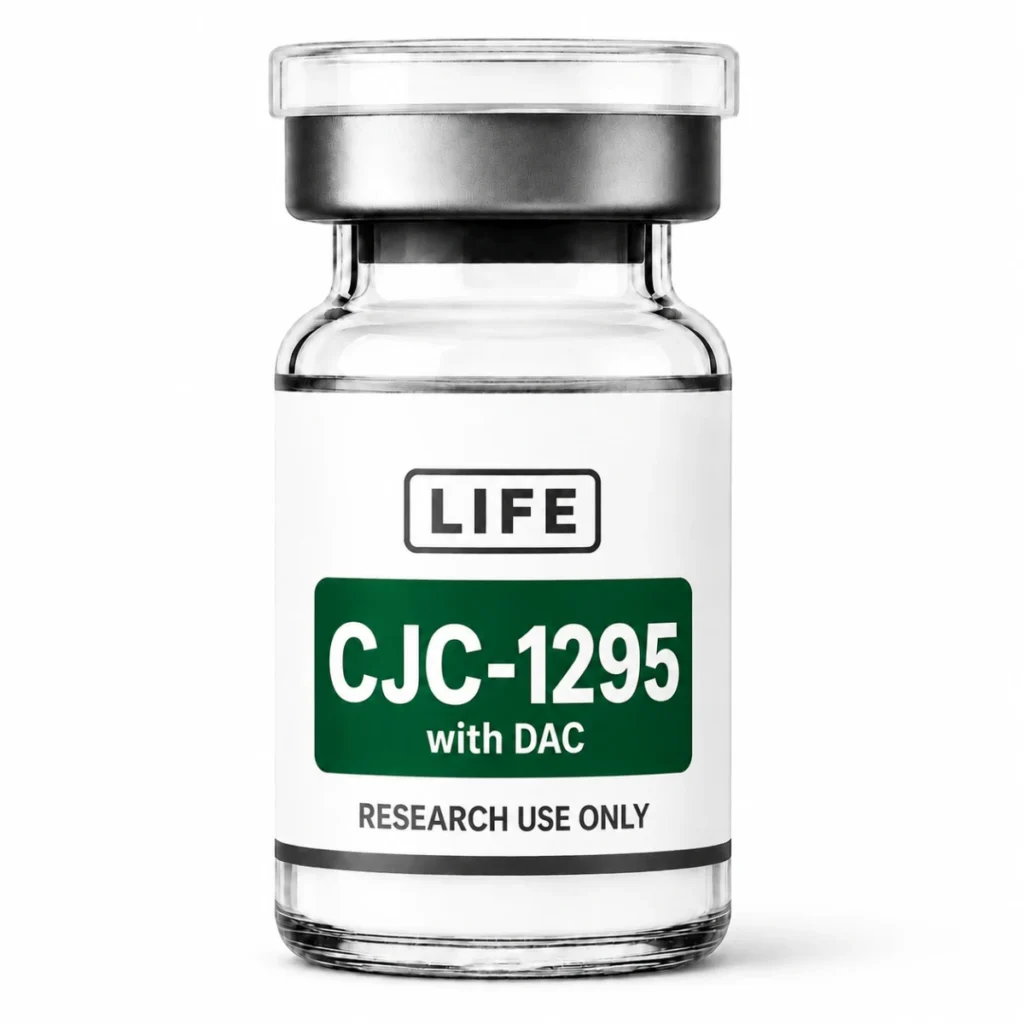
CJC-1295 no DAC, commonly called Modified GRF (1–29), does not contain the albumin-binding modification used in the long-acting form. CJC-1295 with DAC incorporates a Drug Affinity Complex designed to support albumin binding and prolong exposure. Published studies of this long-acting molecule concern a different formulation from the no-DAC component supplied in this blend.
Consequently, the prolonged GH and IGF-1 responses discussed in DAC studies should not be presented as findings for Modified GRF (1–29) or this combination.
The appropriate selection depends on the research question. A study concerned with long-acting exposure differs from one examining a non-albumin-binding GHRH analogue alongside a secretagogue.
For a fuller explanation, read our CJC-1295 with DAC versus no DAC comparison.
Blend or separate peptides: which format suits the research?
A combined vial supplies both peptides in a fixed composition. This can simplify preparation when the experimental design consistently requires the same ratio of CJC-1295 no DAC to Ipamorelin.
However, a fixed blend also introduces a limitation: the amount of one component cannot be changed independently of the other. Increasing or decreasing the quantity of blend changes both components together.
Separate peptides are more suitable when a study requires:
- Independent adjustment of each component.
- Comparison of different component ratios.
- Single-peptide control conditions.
- Separate assessment of each peptide’s analytical behaviour.
The blend format is therefore a practical formulation choice, rather than evidence that combined peptides are inherently superior to individual products.
Researchers considering separate components can also explore our CJC-1295 no DAC product.
Product characteristics
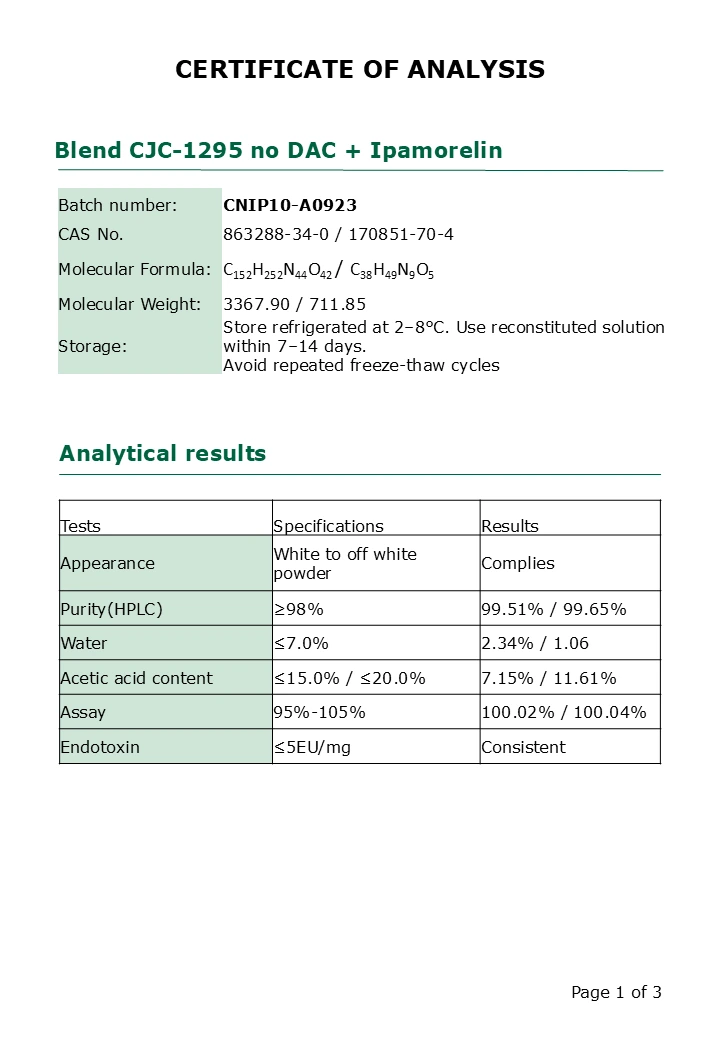
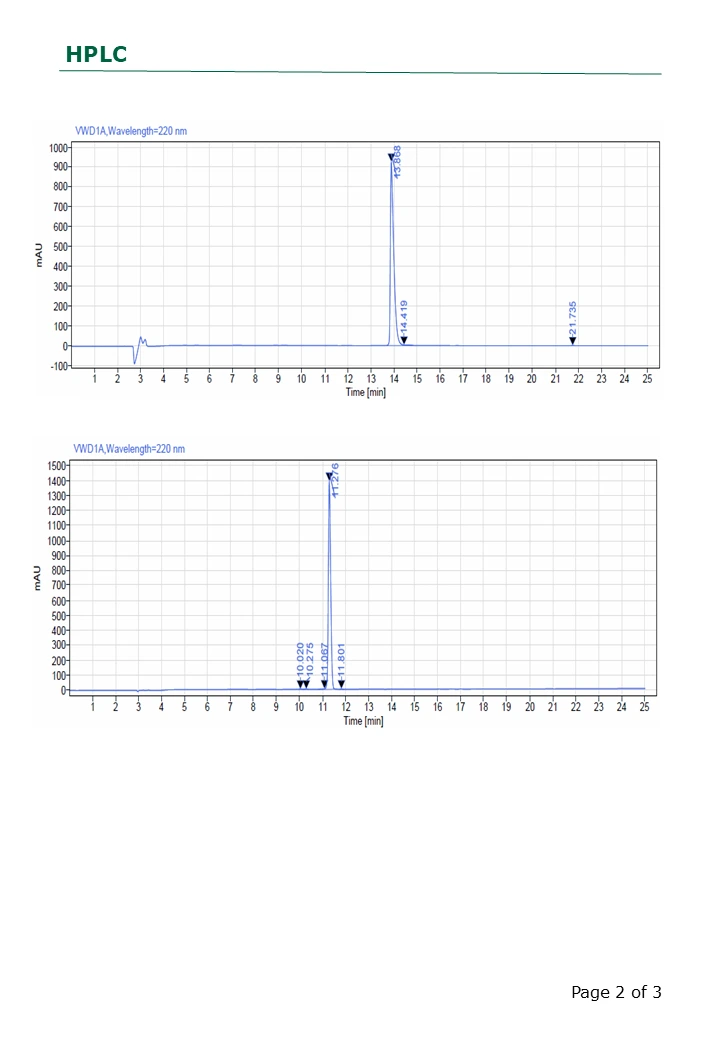
Purity CJC-1295 no DAC: ≥ 99.51% (HPLC) with batch-specific COA
Purity Ipamorelin: ≥ 99.65% (HPLC) with batch-specific COA
Appearance: white lyophilized powder
Molecular formula CJC-1295 no DAC: C152H252N44O42
Molecular formula Ipamorelin: C38H49N9O5
Molecular weight CJC-1295 no DAC: 3367.90
Molecular weight Ipamorelin: 711.85
Produced in GMP-compliant facilities under strict QC protocols.
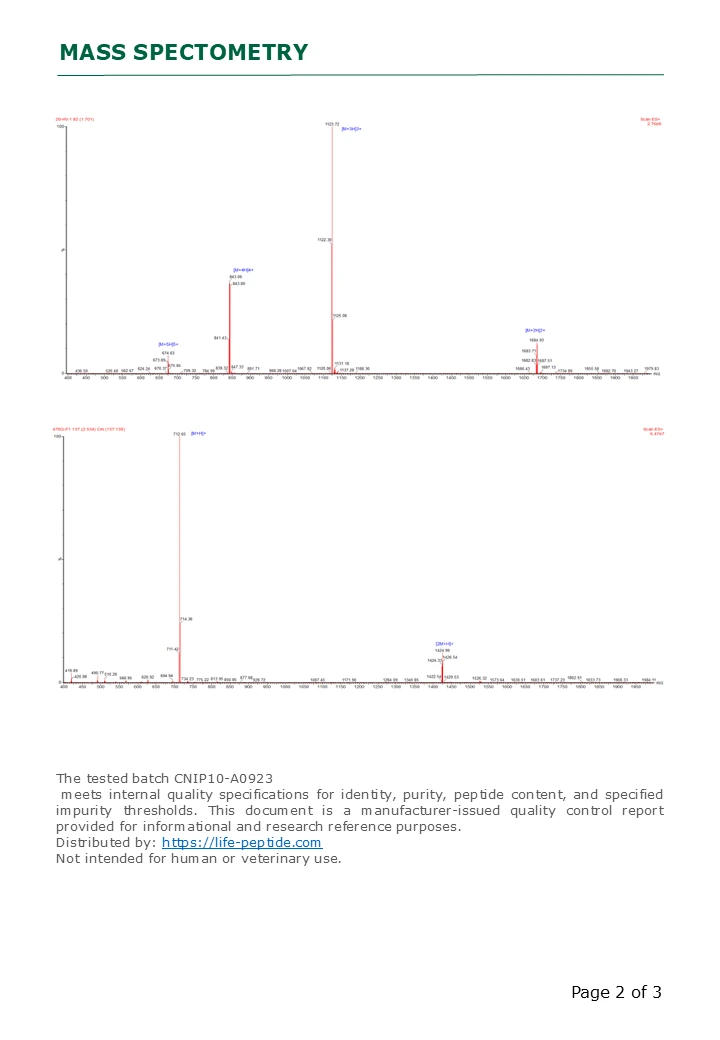
Each batch carefully lab tested after production (you can find Certificate of Analysis under product pictures).
Freeze-dried (lyophilized) for maximum stability and extended shelf life.
Sealed in sterile vials, ready for reconstitution.
Application: laboratory and analytical research
Storage: unopened lyophilized vials are best stored refrigerated at 2–8°C, which is the storage method confirmed by our manufacturing partner and suitable for up to 24 months. Refrigeration is preferred because it minimizes unnecessary freeze–thaw cycles during routine handling. If substantially longer-term storage is required, unopened lyophilized vials may also be kept frozen. Once reconstituted, always store at 2–8°C and do not freeze.
Reconstitution and handling
Blend CJC-295 + Ipamorelin is supplied as a lyophilised vial and should be handled using standard peptide reconstitution procedures appropriate to the research setting. It must be reconstituted with bacteriostatic water before use.
For other solvent selection, concentration planning and storage guidance, see the full Peptide Reconstitution Guide and Reconstitution Calculator
Selected research references
- Raun et al. Preclinical investigation of Ipamorelin’s growth hormone-releasing activity and hormonal selectivity. European Journal of Endocrinology. 1998
- Gobburu et al. Pharmacokinetic and pharmacodynamic modelling of Ipamorelin in human volunteers. Pharmaceutical Research. 1999
- Cheng et al. Experimental investigation of combined GHRP-6 and GRF stimulation. This study provides background on complementary pathways, rather than direct evidence for the present blend. 1989
Frequently asked questions
What does CJC-1295 no DAC + Ipamorelin contain?
The blend contains a GHRH analogue commonly called Modified GRF (1–29), together with the growth hormone secretagogue Ipamorelin. Both components are supplied in the same lyophilized preparation. Refer to the product label for the declared quantity of each peptide.
Does this blend contain growth hormone?
No. The ingredients are research peptides associated with pathways regulating growth hormone release. They are not growth hormone itself.
Is CJC-1295 no DAC the same as Modified GRF (1–29)?
Modified GRF (1–29) is commonly marketed under the name CJC-1295 no DAC. This terminology should be distinguished from CJC-1295 with DAC, the long-acting albumin-binding molecule discussed in a separate body of research.
Why is Ipamorelin paired with a GHRH analogue?
The ingredients act through different receptors involved in GH secretion. This provides a rationale for investigating combined stimulation and comparing it with the activity of either pathway alone.
Is a blend better than separate peptides?
The suitable format depends on the study. A blend provides a fixed composition, while separate peptides allow independent adjustment and individual control conditions. Neither format is universally preferable.
Does research establish benefits for muscle growth, sleep or recovery?
The studies cited here do not establish such benefits for this finished blend. Evidence about hormone release or receptor activity should not be treated as proof of improvements in performance, recovery, sleep or other clinical outcomes.
Has the finished blend been clinically validated?
The selected references concern individual peptides or related signalling systems. They do not establish the safety or efficacy of this specific combined formulation in humans.
Related research context
JC-1295 no DAC + Ipamorelin sits within the broader field of growth hormone secretagogue research, which examines how different signals influence GH release and downstream endocrine activity.
For related compounds and formulation comparisons, explore:
CJC-1295 no DAC — the individual GHRH-analogue component, allowing separate investigation and independent adjustment.
CJC-1295 with DAC — a different, long-acting formulation whose research findings should be distinguished from those for the no-DAC form.
CJC-1295 with DAC versus no DAC — an explanation of the formulation differences and their relevance to interpreting research.
Growth hormone secretagogues — related compounds for exploring GH-associated signalling pathways.
NOTE: This is for educational reference only and does not constitute medical advice.
Disclaimer
This product is sold for research purposes only. It is not intended to diagnose, treat, cure, or prevent any disease. Buyer assumes full responsibility for proper handling and use.