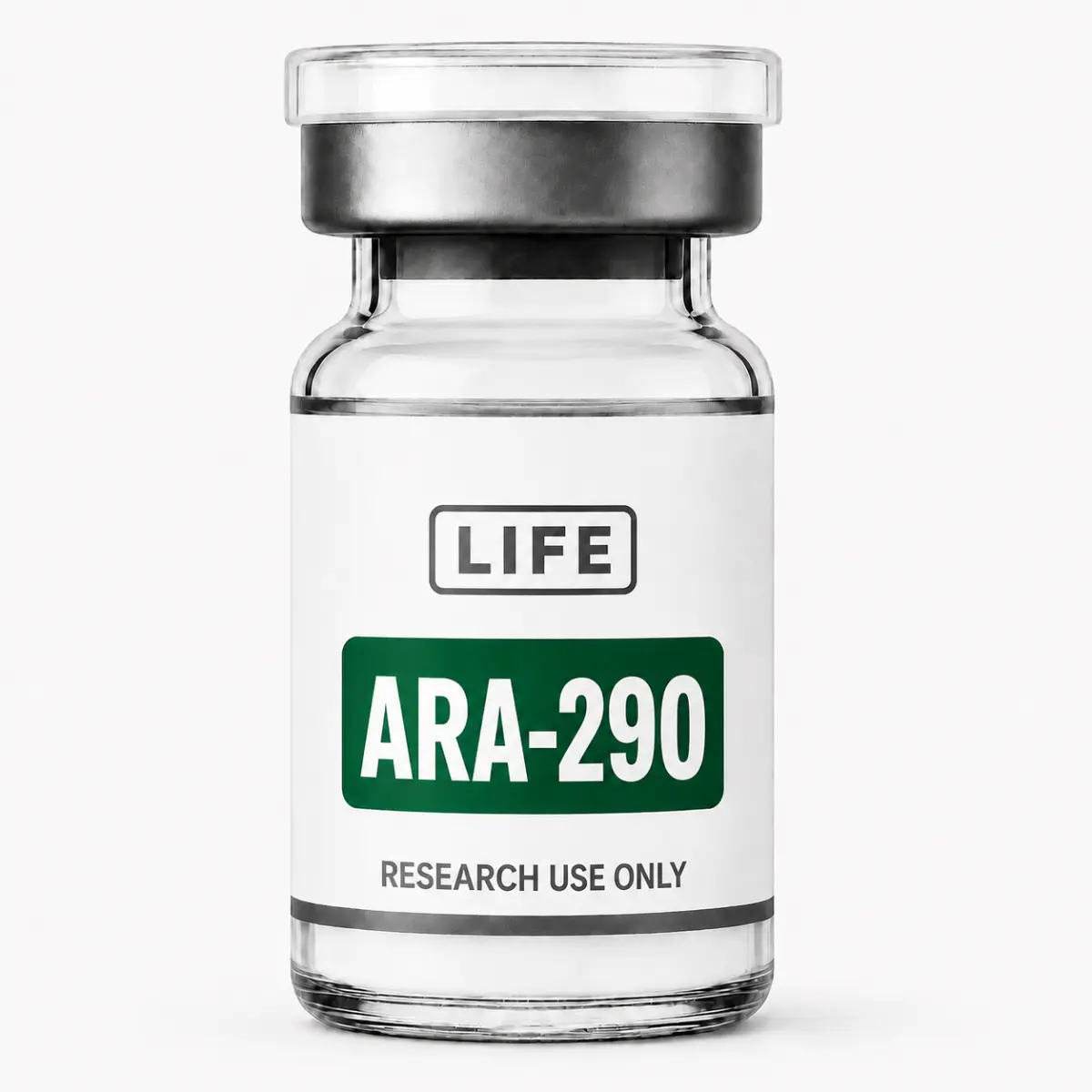
Description
ARA-290, also known as Cibinetide, is a synthetic 11-amino-acid peptide derived from the tissue-protective region of erythropoietin (EPO).
Rather than stimulating red blood cell production like EPO, ARA-290 selectively activates the Innate Repair Receptor (IRR), a receptor complex that becomes active following tissue injury, inflammation or metabolic stress. This makes it one of the few research peptides designed specifically to investigate the body’s natural healing and repair response without affecting haematopoiesis.
Because of this unique mechanism, ARA-290 has attracted considerable attention in research involving peripheral nerve injury, inflammatory disorders, tissue protection and chronic pain.
Looking to buy ARA-290 in Europe? LIFE Peptide supplies high-purity ARA-290 for laboratory research with reliable EU-wide shipping.
Why ARA-290 is widely investigated
Published research has investigated ARA-290 in relation to:
- nerve repair
- healing biology
- tissue protection
- inflammatory signalling
- peripheral neuropathy
- small fiber neuropathy
- autonomic dysfunction
- metabolic injury
- innate repair mechanisms
Unlike many recovery peptides that primarily investigate connective tissue regeneration, ARA-290 focuses on activating the body’s intrinsic repair pathways, particularly following inflammatory or neurological injury.
How ARA-290 works
ARA-290 has one of the most distinctive mechanisms among healing peptides.
Activating the Innate Repair Receptor
Rather than binding the classical erythropoietin receptor, ARA-290 selectively activates the Innate Repair Receptor (IRR), a receptor complex formed by the erythropoietin receptor and CD131. Importantly, this receptor is expressed mainly after tissue damage or inflammatory stress, allowing researchers to investigate biological repair processes that are activated specifically during injury.
Supporting tissue protection
Activation of the IRR has been associated with reduced inflammatory signalling, decreased cell death and improved tissue resilience in experimental models. Unlike growth factors that stimulate cell proliferation, ARA-290 appears to support the body’s own repair mechanisms by restoring tissue homeostasis following injury.
Nerve repair research
One of the strongest areas of published research involves small fiber neuropathy, where ARA-290 has demonstrated improvements in neuropathic symptoms together with evidence of small nerve fiber regeneration in early clinical studies. This has established ARA-290 as one of the leading investigational peptides for nerve repair research.
Immune and inflammatory regulation
Current evidence also suggests that activation of the Innate Repair Receptor can reduce excessive inflammatory signalling while promoting the transition from tissue injury toward physiological repair.
Why ARA-290 is different from other healing peptides
Many healing peptides investigate how tissues regenerate.
ARA-290 investigates how damaged tissues initiate repair.
Instead of primarily stimulating angiogenesis, collagen production or cell migration, ARA-290 focuses on activating the body’s innate repair response through the Innate Repair Receptor. This unique biology has made it particularly interesting for research involving neurological injury, chronic inflammation and peripheral nerve disorders, where impaired repair mechanisms may contribute to long-term dysfunction.
Human and preclinical research
ARA-290 is supported by both extensive preclinical research and early human clinical studies.
Published investigations have focused on small fiber neuropathy associated with sarcoidosis and type 2 diabetes, where improvements in neuropathic symptoms, autonomic function and evidence of corneal nerve fiber regeneration have been reported.
Researchers have also explored ARA-290 in models of ischemic injury, inflammatory disorders and metabolic disease, reflecting the broad biological role of the Innate Repair Receptor.
Although the findings are encouraging, larger placebo-controlled studies remain necessary to further define its clinical potential.
Published safety observations
One of the principal goals behind the development of ARA-290 was to preserve erythropoietin’s tissue-protective properties while eliminating its effects on red blood cell production.
Early clinical studies have generally reported favourable tolerability without increases in haematocrit or haemoglobin. However, larger and longer-term human studies are still needed to fully characterise its safety profile.
Product characteristics
Application: laboratory and analytical research
Use restriction: not for human consumption; not for medical, veterinary or cosmetic use
Produced in GMP-compliant facilities under strict QC protocols.
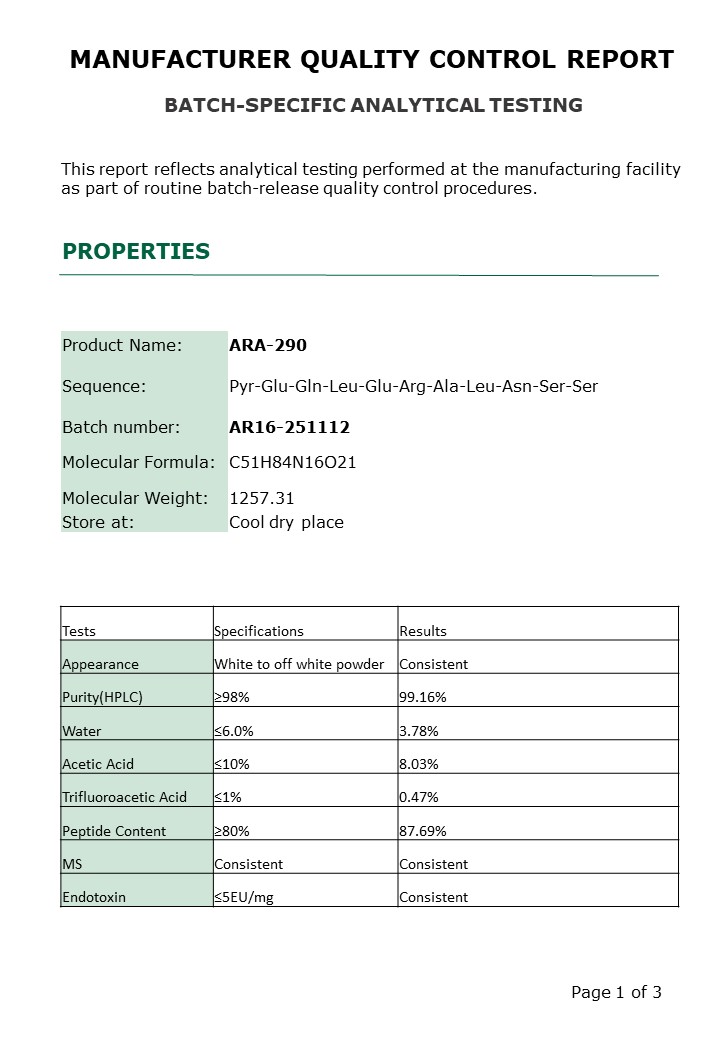
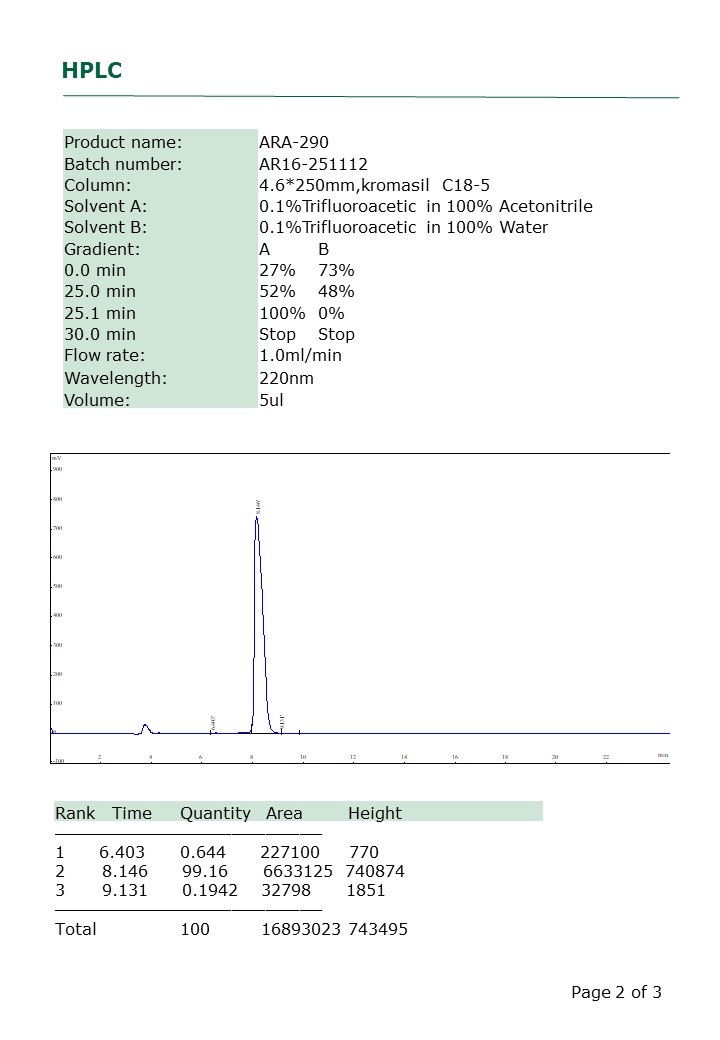
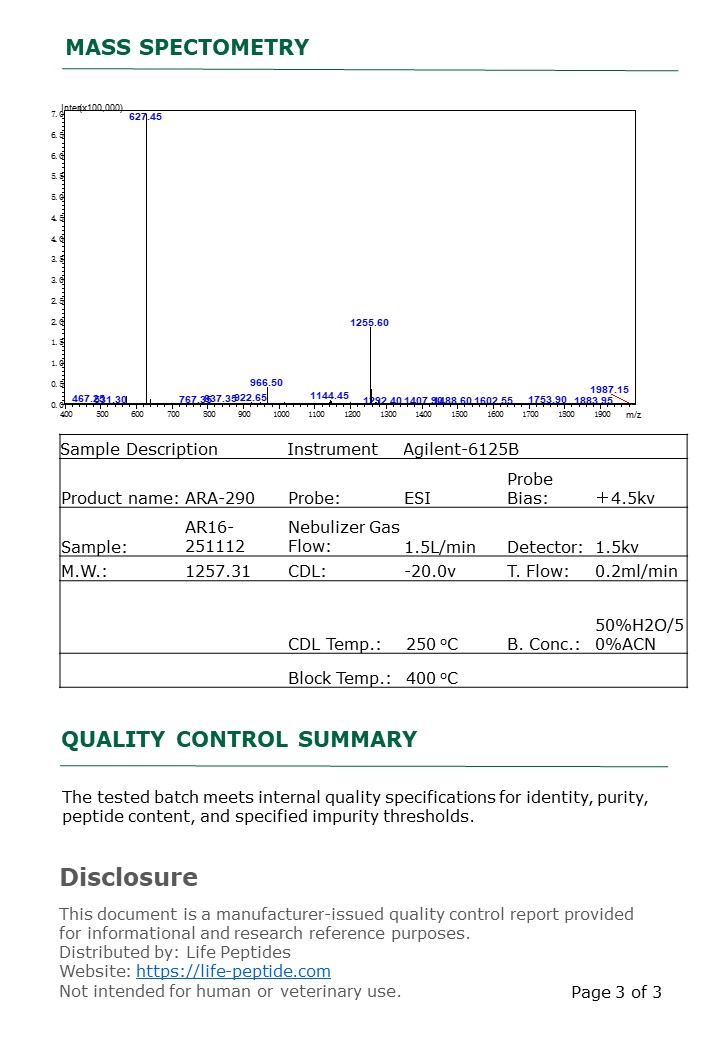
Each batch carefully lab tested after production (you can find Certificate of Analysis under product pictures).
Freeze-dried (lyophilized) for maximum stability and extended shelf life.
Sealed in sterile vials, ready for reconstitution.
Purity: ≥99% (HPLC-tested)
Appearance: Lyophilized white/off-white powder
Molecular formula: C51H84N16O21
Molecular weight: 1257.31
Sequence: Pyr-Glu-Gln-Leu-Glu-Arg-Ala-Leu-Asn-Ser-Ser
Storage: unopened lyophilized vials are best stored refrigerated at 2–8°C, which is the storage method confirmed by our manufacturing partner and suitable for up to 24 months. Refrigeration is preferred because it minimizes unnecessary freeze–thaw cycles during routine handling. If substantially longer-term storage is required, unopened lyophilized vials may also be kept frozen. Once reconstituted, always store at 2–8°C and do not freeze.
Reconstitution and handling
ARA-290 is supplied as a lyophilised vial and should be handled using standard peptide reconstitution procedures appropriate to the research setting. Must be reconstituted using appropriate laboratory technique. Due to its physicochemical properties, ARA-290 requires reconstitution with buffered saline. Inadequate pH conditions or improper handling may result in incomplete dissolution or a whitish/opalescent appearance. To help preserve structural integrity, add the chosen solvent slowly against the inside wall of the vial rather than directly onto the peptide cake, and avoid vigorous shaking. Gentle swirling is generally sufficient once the peptide has fully dissolved. Standard laboratory practice also includes allowing refrigerated vials to reach room temperature before reconstitution to minimise condensation inside the vial.
For other solvent selection, concentration planning and storage guidance, see the full Peptide Reconstitution Guide and Reconstitution Calculator.
Selected research references
- Brines M, Cerami A. The Innate Repair Receptor: A New Target for Tissue Protection and Repair. Pharmacology & Therapeutics (2015).
The landmark review describing the biology of the Innate Repair Receptor and the development of ARA-290 as a tissue-protective peptide.
- Heij L, et al. Targeting the Innate Repair Receptor to Treat Neuropathy. Neural Regeneration Research (2018).
A review summarising clinical and preclinical evidence supporting ARA-290 in peripheral nerve repair and neuropathy research.
- Brines M, et al. ARA-290 Improves Symptoms in Patients with Sarcoidosis-Associated Small Fiber Neuropathy. Molecular Medicine (2011).
One of the first clinical studies demonstrating improvements in neuropathic symptoms following ARA-290 treatment.
- Recent Reviews (2023–2025)
Modern reviews continue to investigate ARA-290 in inflammatory disease, metabolic dysfunction and neurological repair, highlighting the growing interest in Innate Repair Receptor biology.
Frequently Asked Questions
What is ARA-290?
ARA-290 (Cibinetide) is an 11-amino-acid peptide derived from erythropoietin. It is widely investigated as a healing peptide for nerve repair, tissue protection and innate repair signalling.
Why is ARA-290 considered a healing peptide?
Unlike peptides that mainly stimulate tissue regeneration, ARA-290 investigates the biological pathways that activate the body’s own repair response after injury. This has made it an important research tool in tissue protection and recovery.
Why is ARA-290 different from erythropoietin?
ARA-290 selectively activates the Innate Repair Receptor without activating the erythropoietin receptor responsible for red blood cell production. This allows researchers to investigate tissue protection independently of erythropoiesis.
How does ARA-290 differ from BPC-157?
Although both are healing peptides, BPC-157 primarily investigates connective tissue repair and angiogenesis, whereas ARA-290 focuses on nerve repair, tissue protection and activation of innate repair pathways. Their mechanisms are complementary rather than overlapping.
What research areas commonly investigate ARA-290?
Current research includes peripheral nerve injury, small fiber neuropathy, inflammatory signalling, tissue protection, autonomic dysfunction and metabolic injury.
Can I buy ARA-290 in Europe?
Yes. We ship ARA-290 to most European countries using reliable courier services. Available shipping methods and delivery times are shown during checkout based on your destination.
Is this product intended for human use?
No. ARA-290 supplied by LIFE Peptide is intended strictly for laboratory and analytical research. It is not intended for human consumption, diagnosis, treatment or prevention of disease.
Related research context
ARA-290 is frequently discussed alongside other healing peptides investigating recovery, tissue repair and inflammation, although each peptide targets a different aspect of the healing process.
BPC-157 – investigated primarily for connective tissue healing, tendon biology, angiogenesis and gastrointestinal repair.
TB-500 (Thymosin β4) – studied for cell migration, regeneration and wound healing.
KPV – focuses on immune regulation and inflammatory signalling, particularly in gut and epithelial tissues.
GHK-Cu – investigated for extracellular matrix remodelling, skin repair and tissue regeneration.
Wolverine Blend – combines BPC-157 and TB-500 for multi-pathway connective tissue recovery research.
SS-31 – studied for mitochondrial protection and cellular resilience.
While these peptides all contribute to healing research, ARA-290 stands apart through its selective activation of the Innate Repair Receptor and its strong focus on nerve repair and tissue protection.
For broader context, see the Healing & recovery research guide.
NOTE: This is for educational reference only and does not constitute medical advice.
Disclaimer:
This product is sold for research purposes only. It is not intended to diagnose, treat, cure, or prevent any disease. Buyer assumes full responsibility for proper handling and use.