Description
Delta Sleep-Inducing Peptide (DSIP) is a naturally occurring nine-amino-acid neuropeptide first isolated during sleep research in the 1970s. Since its discovery, it has become one of the earliest peptides investigated for sleep regulation and remains widely referenced in research exploring sleep architecture, stress physiology and neuroendocrine signalling.
Although originally identified because of its potential role in promoting delta sleep, later research suggested that DSIP may influence a broader range of physiological processes, including circadian biology, stress responses, pain modulation and hormonal regulation. Despite decades of investigation, its precise mechanism of action remains incompletely understood, making it an interesting subject for ongoing research.
Looking to buy DSIP in Europe? LIFE Peptide supplies high-purity DSIP for laboratory research with reliable EU-wide shipping.
Why DSIP is widely investigated
Published research has investigated DSIP in relation to:
- sleep quality
- sleep architecture
- delta sleep
- stress adaptation
- neuroendocrine regulation
- circadian rhythm
- pain modulation
- recovery physiology
- autonomic nervous system function
Unlike sedative compounds, DSIP has primarily been investigated as a peptide involved in the physiological regulation of sleep rather than direct sedation.
How DSIP works
The exact biological mechanism of DSIP remains uncertain, and no specific receptor has been conclusively identified.
Current research has explored its relationship with:
Sleep physiology
DSIP has been investigated for its influence on sleep architecture, particularly slow-wave (delta) sleep, although published findings have been mixed across different studies.
Stress regulation
Researchers have explored potential interactions between DSIP and the hypothalamic-pituitary-adrenal (HPA) axis, examining its possible role in physiological responses to stress.
Neuroendocrine signalling
Published studies have investigated possible effects on hormone regulation, circadian biology and central nervous system function.
Recovery research
Because restorative sleep plays a central role in recovery, DSIP has also been investigated in studies examining physical recovery, stress resilience and fatigue.
Why DSIP remains relevant in sleep research
DSIP occupies a unique position among research peptides.
Unlike newer compounds that primarily target growth hormone secretion or metabolic pathways, DSIP was developed specifically to investigate the biological mechanisms underlying sleep itself.
Although modern evidence remains limited and sometimes inconsistent, DSIP continues to attract scientific interest because of its potential role in regulating natural sleep architecture rather than producing pharmacological sedation.
Human and preclinical research
DSIP has been investigated in laboratory models and human studies for more than forty years.
Published research includes sleep physiology, insomnia, stress biology, pain, opioid withdrawal and neuroendocrine regulation. While early findings generated considerable interest, subsequent studies have produced mixed results, and further research is needed to clarify its physiological role and therapeutic potential.
How DSIP differs from related peptides
| Research objective | Recommended peptide |
|---|---|
| Sleep physiology & recovery research | DSIP |
| Growth hormone & sleep research | Ipamorelin / CJC-1295 No DAC |
| Stress & mitochondrial metabolism | MOTS-c |
| Cognitive performance | Semax |
Unlike growth hormone secretagogues, DSIP is investigated primarily for sleep physiology and neuroendocrine regulation, rather than stimulation of the GH axis.
Published safety observations
Published human studies generally reported good short-term tolerability, although the overall clinical evidence remains limited. The most significant limitation of DSIP research is not safety, but inconsistency of efficacy across studies. Current evidence does not yet fully explain its mechanism of action or identify which populations may respond most consistently.
Product characteristics
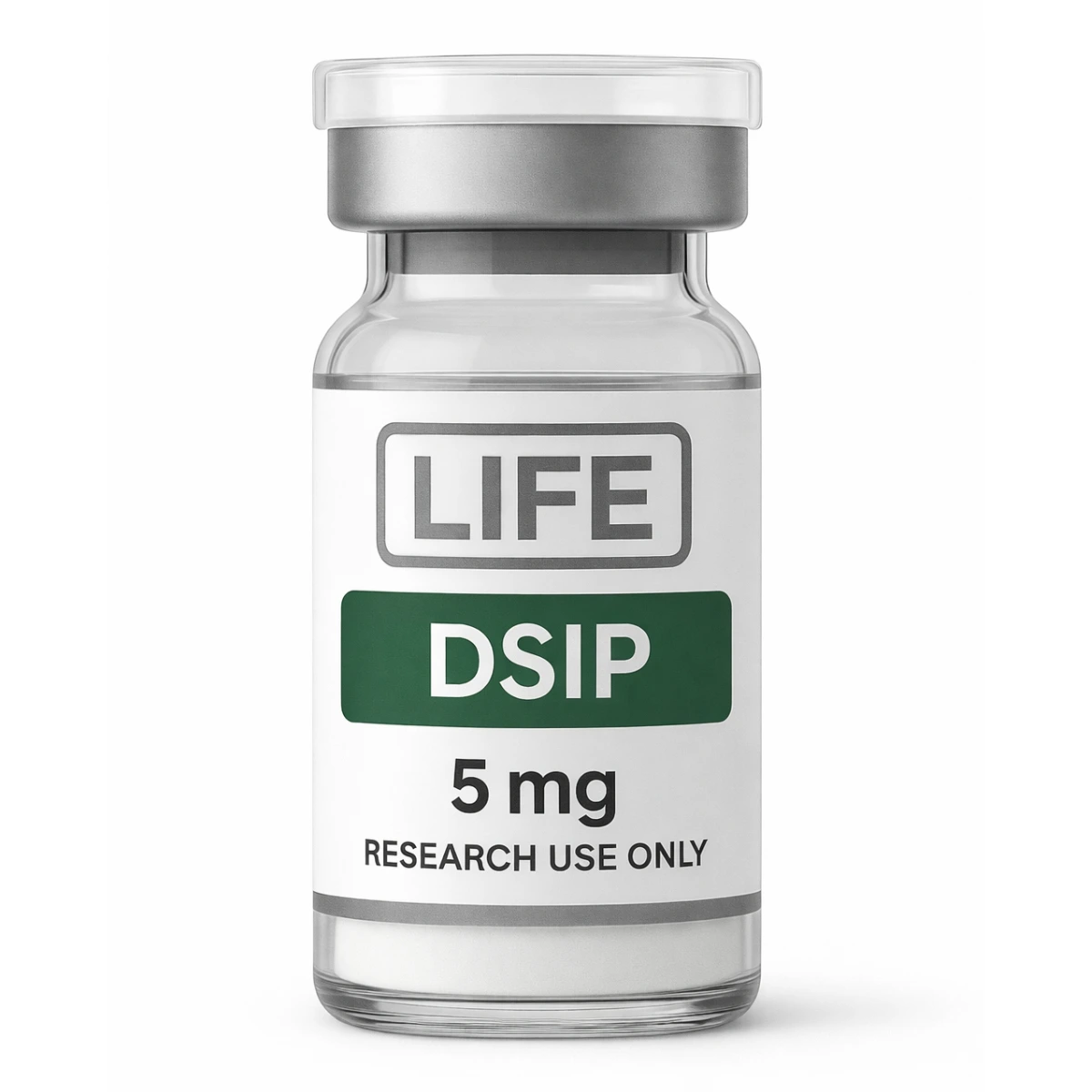
Application: laboratory and analytical research
Use restriction: not for human consumption; not for medical, veterinary or cosmetic use
Produced in GMP-compliant facilities under strict QC protocols.
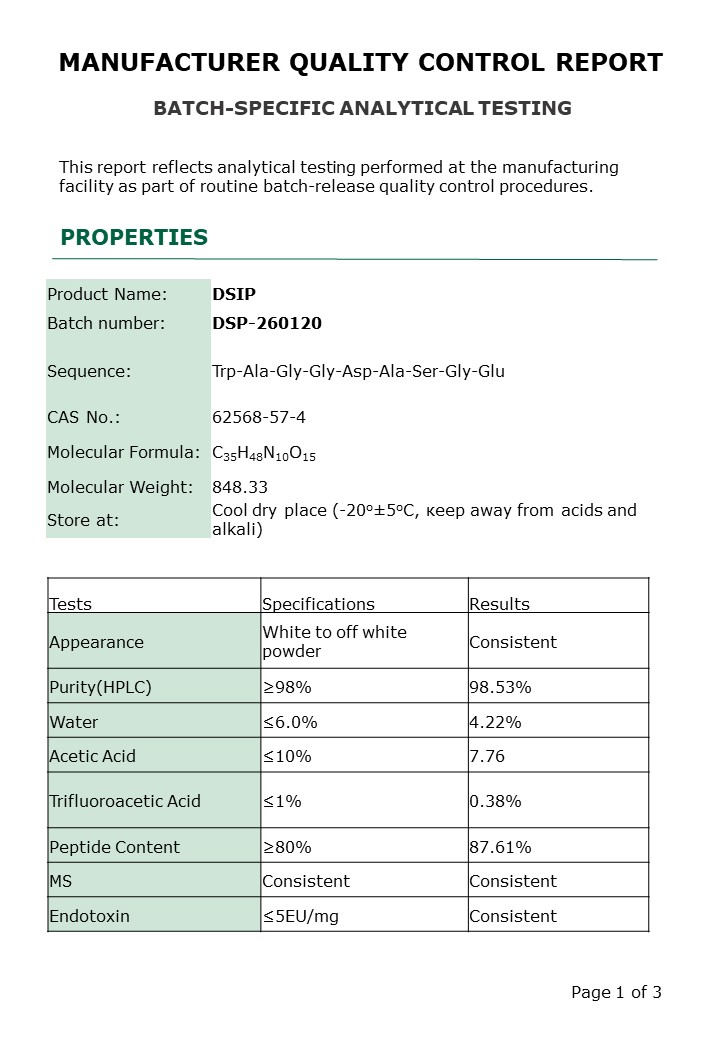
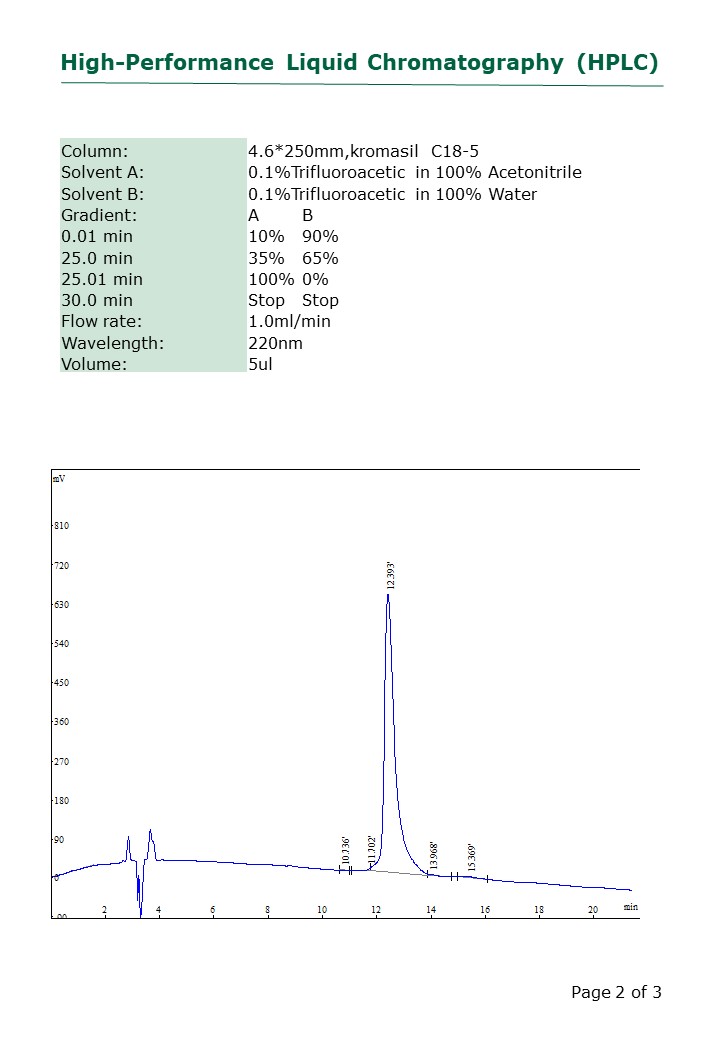
Each batch carefully lab tested after production (you can find Certificate of Analysis under product pictures).
Freeze-dried (lyophilized) for maximum stability and extended shelf life.
Sealed in sterile vials, ready for reconstitution.
Purity: ≥98.5% (HPLC-tested)
Appearance: Lyophilized white/off-white powder
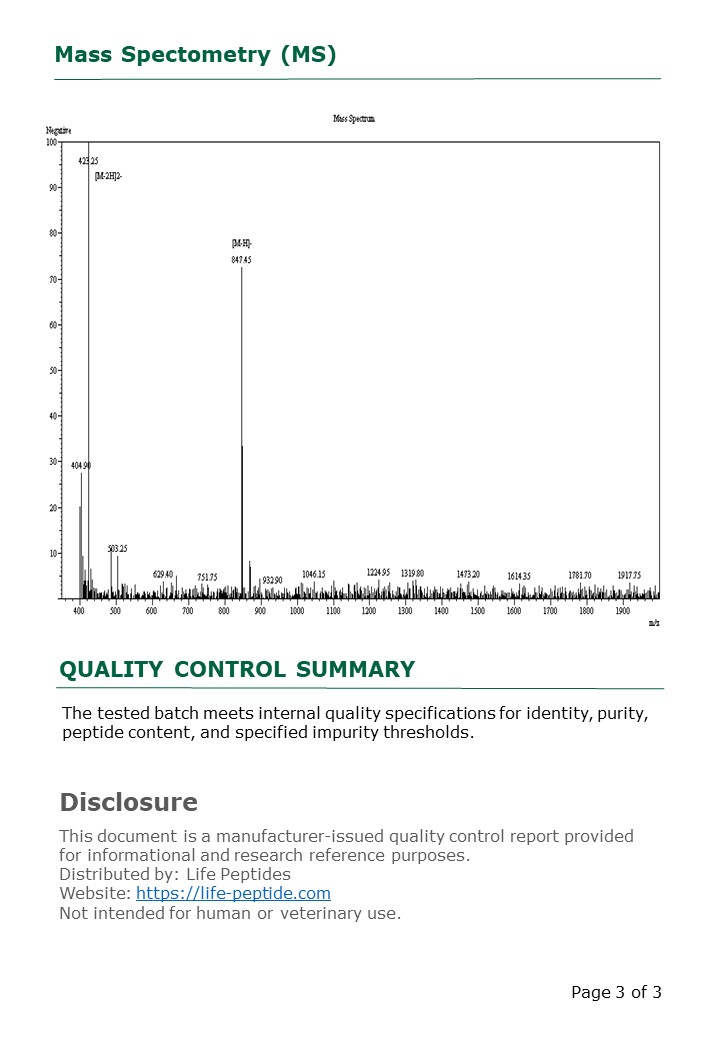
Molecular formula: C35H48N10O15
Molecular weight: 848.33
Sequence: Trp-Ala-Gly-Gly-Asp-Ala-Ser-Gly-Glu
Storage: unopened lyophilized vials are best stored refrigerated at 2–8°C, which is the storage method confirmed by our manufacturing partner and suitable for up to 24 months. Refrigeration is preferred because it minimizes unnecessary freeze–thaw cycles during routine handling. If substantially longer-term storage is required, unopened lyophilized vials may also be kept frozen. Once reconstituted, always store at 2–8°C and do not freeze.
Reconstitution and handling
DSIP is supplied as a lyophilised vial and should be handled using standard peptide reconstitution procedures appropriate to the research setting. Must be reconstituted with bacteriostatic water before use. To help preserve structural integrity, add the chosen solvent slowly against the inside wall of the vial rather than directly onto the peptide cake, and avoid vigorous shaking. Gentle swirling is generally sufficient once the peptide has fully dissolved. Standard laboratory practice also includes allowing refrigerated vials to reach room temperature before reconstitution to minimise condensation inside the vial.
For other solvent selection, concentration planning and storage guidance, see the full Peptide Reconstitution Guide and Reconstitution Calculator.
Selected research references
- Graf MV, Kastin AJ. Delta Sleep-Inducing Peptide (DSIP): A Review, Neuroscience & Biobehavioral Reviews, 1984
The landmark review summarising the discovery, biological distribution and early experimental findings relating to DSIP.
- Graf MV, Kastin AJ. Delta Sleep-Inducing Peptide (DSIP): An Update, Peptides, 1986
An expanded review covering sleep, stress, pain, withdrawal and neuroendocrine research published after the initial wave of DSIP investigations.
- Schoenenberger GA, et al. The Delta Sleep-Inducing Peptide (DSIP): Comparative Properties of the Original and Synthetic Nonapeptide, Experientia, 1977
The original publication describing synthetic DSIP and confirming its biological similarity to the naturally isolated peptide.
- Kastin AJ. Delta Sleep-Inducing Peptide: Historical Perspectives and Future Directions, Various review publications.
Frequently Asked Questions
What is DSIP?
DSIP (Delta Sleep-Inducing Peptide) is a naturally occurring neuropeptide first identified during sleep research in the 1970s. It is widely investigated for sleep physiology, stress regulation and neuroendocrine signalling.
Why is DSIP associated with sleep research?
DSIP was originally isolated because of its potential relationship with slow-wave (delta) sleep. Since then, published research has investigated its role in sleep architecture, although results have been mixed and its precise biological mechanism remains uncertain.
Is DSIP a sedative?
No. Published research generally investigates DSIP as a regulator of physiological sleep processes rather than as a direct sedative. This distinguishes it from compounds that induce sleep through pharmacological sedation.
What research areas commonly investigate DSIP?
Current research includes sleep physiology, stress biology, circadian rhythm, neuroendocrine signalling, recovery, pain modulation and autonomic nervous system function.
How does DSIP differ from GH secretagogues?
DSIP is investigated primarily for sleep regulation and neuroendocrine physiology, whereas peptides such as Ipamorelin, GHRP-2 or CJC-1295 primarily investigate growth hormone secretion through the GH axis.
Why is DSIP still researched despite mixed results?
Although clinical findings have not always been consistent, DSIP remains one of the few peptides developed specifically to investigate natural sleep regulation. Its unique history and broad physiological distribution continue to make it an interesting subject for sleep and neuroendocrine research.
Can I buy DSIP in Europe?
Yes. We ship DSIP to most European countries using reliable courier services. Available shipping methods and delivery times are shown during checkout based on your destination.
Is this product intended for human use?
No. DSIP supplied by LIFE Peptide is provided strictly for laboratory and analytical research. It is not intended for human consumption, diagnosis, treatment or prevention of disease. Any discussion of published studies summarises the current scientific literature relating to the DSIP molecule rather than the intended use of this product.
Related research context
DSIP is frequently discussed alongside other research peptides that investigate sleep, recovery, stress adaptation and cognitive function. Although these peptides target different biological pathways, researchers often compare them depending on the physiological system under investigation.
Semax – investigated primarily for cognitive performance, neuroprotection and neuroplasticity research.
Selank – studied in relation to stress responses, anxiety-related behaviour and neuroendocrine regulation.
MOTS-c – focuses on mitochondrial metabolism, exercise adaptation and cellular energy homeostasis rather than sleep itself.
Ipamorelin and CJC-1295 No DAC – growth hormone secretagogues commonly investigated in research on recovery, body composition and the GH/IGF-1 axis.
KPV – investigated for immune regulation and inflammatory signalling, representing a different approach to recovery research.
Although these peptides are sometimes mentioned together in recovery-focused discussions, they investigate distinct physiological systems and should not be considered interchangeable research compounds.
Browse all compounds in the Cognitive research category.
NOTE: This is for educational reference only and does not constitute medical advice.
Disclaimer:
This product is sold for research purposes only. It is not intended to diagnose, treat, cure, or prevent any disease. Buyer assumes full responsibility for proper handling and use.