
Description
GHRP-2 (Growth Hormone Releasing Peptide-2), also known as Pralmorelin, is a synthetic hexapeptide belonging to the growth hormone secretagogue (GHS) family. Like GHRP-6, it stimulates growth hormone release through activation of the growth hormone secretagogue receptor (GHSR-1a), commonly known as the ghrelin receptor.
Among the classic GHRPs, GHRP-2 has become particularly well known because of its high potency in stimulating pulsatile growth hormone secretion. This has made it a cornerstone compound in endocrine research exploring the physiology of the GH/IGF-1 axis and neuroendocrine regulation.
Why GHRP-2 matters in endocrine research
One of GHRP-2’s defining characteristics is its robust activation of the ghrelin receptor, resulting in a pronounced pulsatile release of growth hormone.
Published research has investigated GHRP-2 in relation to:
- growth hormone secretion
- IGF-1 physiology
- endocrine regulation
- ghrelin receptor biology
- funkce hypofýzy
- neuroendocrine signalling
- appetite physiology
- metabolic regulation
Unlike GHRP-6, whose literature frequently emphasises appetite regulation, GHRP-2 is more commonly recognised for its endocrine potency and GH-releasing characteristics.
How GHRP-2 works
Rather than stimulating the GHRH receptor, GHRP-2 activates the growth hormone secretagogue receptor (GHSR-1a), producing physiological pulses of growth hormone through the ghrelin signalling pathway.
Publikovaný výzkum zkoumal jeho vztah s:
Growth hormone secretion
GHRP-2 is one of the most potent synthetic secretagogues investigated for stimulating pulsatile GH release, producing rapid endocrine responses in both laboratory and human studies.
Regulace IGF-1
Repeated GH pulses have been investigated for their downstream influence on insulin-like growth factor-1 physiology and endocrine adaptation.
Neuroendocrine signalling
Researchers have examined how GHRP-2 interacts with hypothalamic and pituitary regulation of hormone secretion.
Ghrelin receptor biology
Because GHRP-2 directly activates GHSR-1a, it has become an important experimental tool for understanding ghrelin receptor function beyond endogenous ghrelin itself.
Why GHRP-2 is widely investigated in GH physiology research
Among the classic growth hormone secretagogues, GHRP-2 is recognised for its strong and reproducible GH-releasing profile.
Published studies have investigated:
- pulsatile GH secretion
- funkce hypofýzy
- fyziologie endokrinního systému
- Regulace IGF-1
- growth hormone deficiency testing
- neuroendocrine responses
- ghrelin receptor activation
Because of this robust endocrine activity, GHRP-2 has served as a reference compound in many studies evaluating growth hormone secretagogues and their interaction with the GH/IGF-1 axis.
Lidský a preklinický výzkum
GHRP-2 has been investigated extensively in both laboratory models and human studies over several decades.
Published research includes endocrine physiology, diagnostic stimulation testing, growth hormone secretion, ghrelin receptor pharmacology and appetite regulation. Compared with many newer secretagogues, GHRP-2 has one of the longest research histories within the GHS class.
How GHRP-2 differs from other GH secretagogues
GHRP-2
- High-potency GH secretagogue
- Strong pulsatile GH release
- Endokrinní fyziologie
- Ghrelin receptor research
- Agonista ghrelinového receptoru
- Greater emphasis on appetite research
- Gastrointestinální fyziologie
- Endocrine signalling
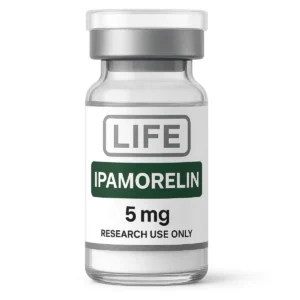
Ipamorelin
- More selective ghrelin receptor agonist
- Minimal appetite stimulation
- Cleaner hormonal profile
- Growth hormone research
- Analogon GHRH
- Different receptor pathway
- Frequently investigated alongside GHRPs because of complementary mechanisms.
Publikované bezpečnostní poznatky
Published human studies have generally reported transient increases in growth hormone following GHRP-2 administration, together with endocrine changes consistent with ghrelin receptor activation. As with other classic growth hormone secretagogues, transient increases in prolactin, cortisol and appetite have also been described in some research settings.
Vlastnosti produktu
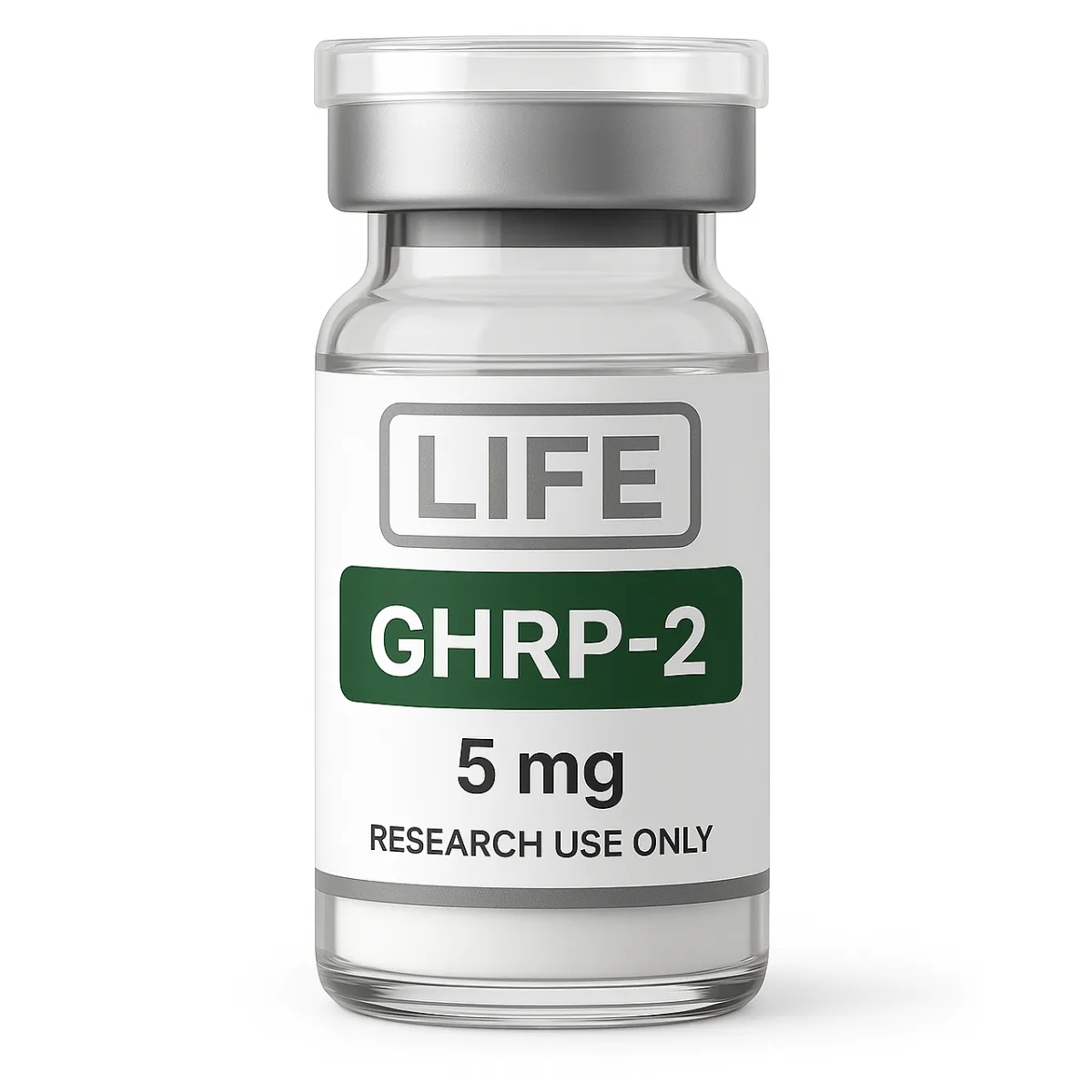
Aplikace: laboratorní a analytický výzkum
Použití omezené: není určeno k lidské spotřebě; pro lékařské, veterinární ani kosmetické použití
Vyrobeno v zařízeních splňujících správnou výrobní praxi (GMP) za přísných protokolů kontroly kvality.
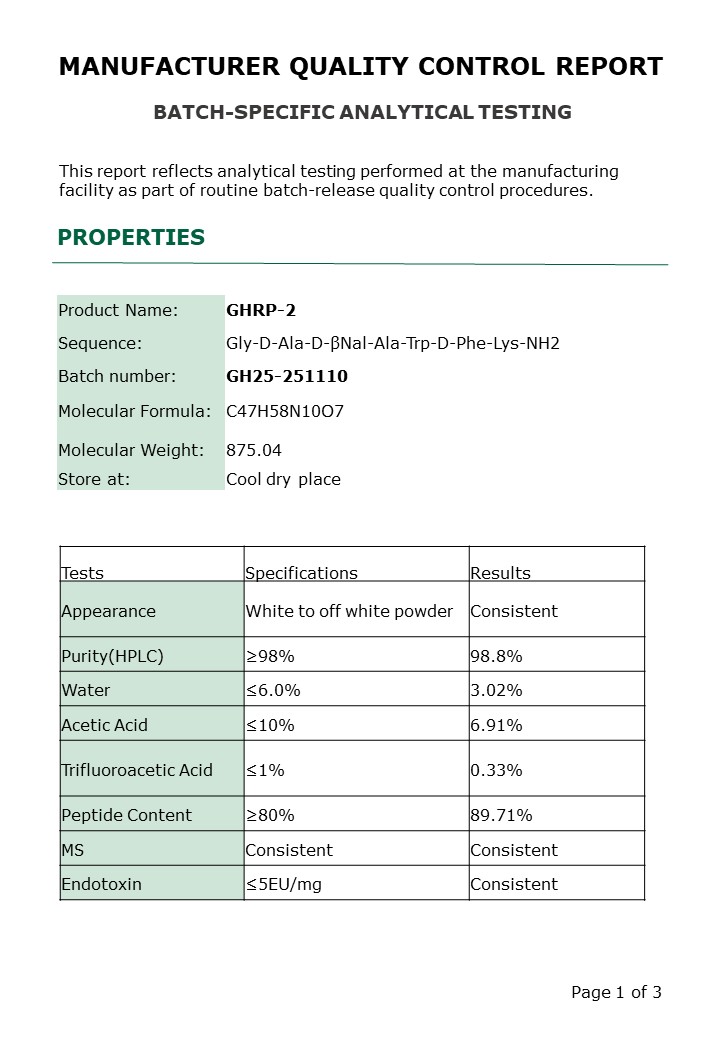
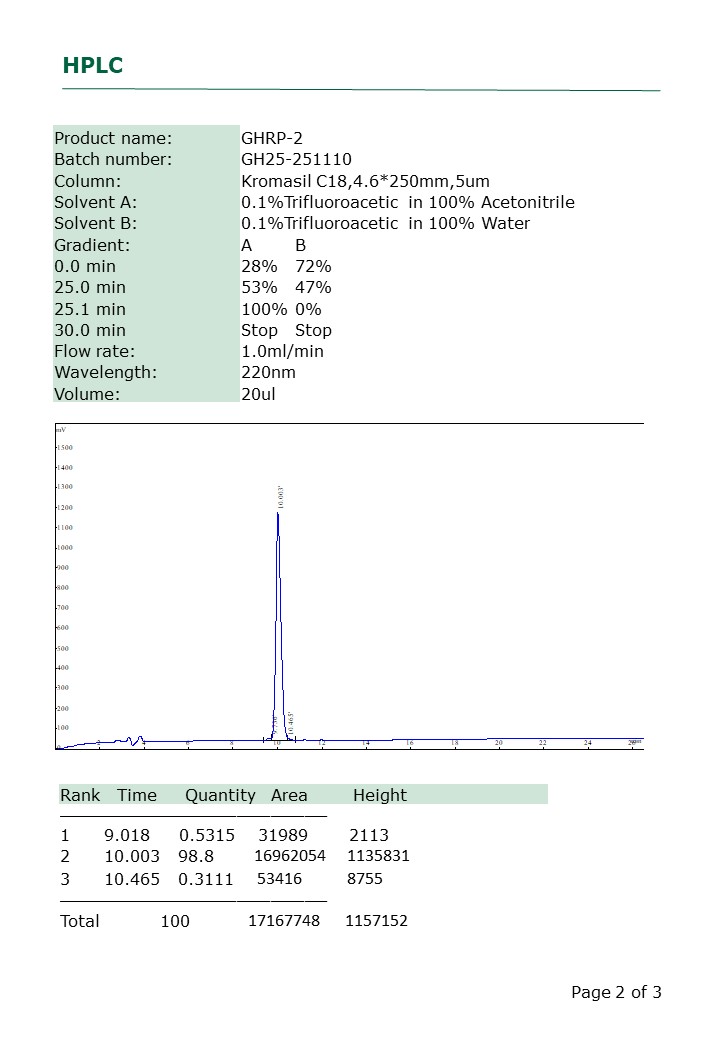
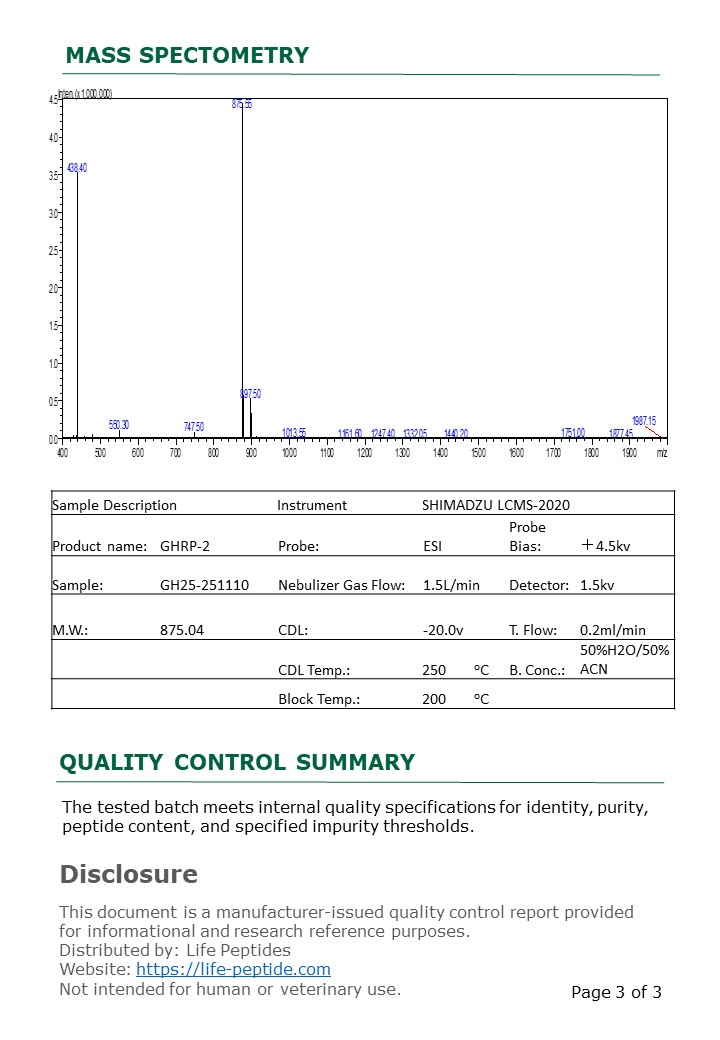
Každá šarže je po výrobě pečlivě laboratorně testována (Certifikát o analýze najdete pod obrázky produktů).
Lyofilizováno (sušeno mrazem) pro maximální stabilitu a prodlouženou trvanlivost.
Uzavřeno ve sterilních lahvičkách, připraveno k rekonstituci.
Purity: ≥98% (HPLC-tested)
Appearance: Lyophilized white/off-white powder
Molekulární vzorec: C47H58N10O7
Molecular weight: 818.0 g/mol
Sequence: Gly-D-Ala-D-βNal-Ala-Trp-D-Phe-Lys-NH2
ÚložištěNeotevřené lyofilizované lahvičky jsou nejlépe skladovány chlazené při 2–8 °C, což je metoda skladování potvrzená naším výrobním partnerem a vhodná až po dobu 24 měsíců. Preferuje se chlazení, protože minimalizuje zbytečné cykly zmrazování a rozmrazování během běžné manipulace. Pokud je vyžadováno podstatně delší skladování, lze zmrazené uchovávat i neotevřené lyofilizované lahvičky. Po rekonstituci vždy skladujte při 2–8 °C a nezmrazujte.
Rekonstituce a manipulace
ГХРП-2 is supplied as a lyophilised vial and should be handled using standard peptide reconstitution procedures appropriate to the research setting. Must be reconstituted with bakteriostatická voda před použitím. Pro zachování strukturální integrity přidejte zvolené rozpouštědlo pomalu po vnitřní stěně lahvičky namísto přímo na peptidový prášek a vyhněte se prudkému protřepávání. Jemné kroužení je obecně dostačující, jakmile se peptid zcela rozpustí. Standardní laboratorní postupy zahrnují také ponechání chlazených lahviček dosáhnout pokojové teploty před rekonstitucí, aby se minimalizovala kondenzace uvnitř lahvičky.
Pro další pokyny k výběru rozpouštědla, plánování koncentrací a skladování viz úplné Průvodce rekonstitucí peptidů a Kalkulačka rekonstituce.
Klíčové publikované studie
- Laferrère B, Abraham C, Russell CD, et al. Growth Hormone Releasing Peptide-2 (GHRP-2), Like Ghrelin, Increases Food Intake in Healthy Men. Journal of Clinical Endocrinology & Metabolism, 2005.
A landmark human study confirming robust GH secretion following GHRP-2 administration while also demonstrating activation of ghrelin-related appetite pathways.
- Yin Y, Li Y, Zhang W. Receptor, 2014.
A comprehensive review of GHSR biology, ghrelin signalling and the mechanisms through which peptides such as GHRP-2 regulate endocrine function.
- Berlanga-Acosta J, et al. Synthetic Growth Hormone-Releasing Peptides (GHRPs). Clinical Science, 2017.
A broad review summarising the pharmacology, physiology and research applications of the GHRP family, including GHRP-2.
- Cheng J, et al. Growth Hormone Releasing Peptides: A Comparison of the Activity of GHRP-2 and GHRP-6. Life Sciences, 1997.
One of the classic comparative studies describing similarities and differences between GHRP-2 and GHRP-6 in growth hormone secretion.
Často kladené otázky
What is GHRP-2?
GHRP-2 (Growth Hormone Releasing Peptide-2), also known as Pralmorelin, is a synthetic hexapeptide that activates the growth hormone secretagogue receptor (GHSR-1a), also known as the ghrelin receptor. It is widely investigated in endocrine research involving pulsatile growth hormone secretion, pituitary physiology, IGF-1 regulation and neuroendocrine signalling.
How does GHRP-2 stimulate growth hormone release?
Unlike GHRH analogues, GHRP-2 stimulates growth hormone secretion by activating the ghrelin receptor (GHSR-1a). This receptor is naturally involved in regulating growth hormone release through the ghrelin signalling pathway. Published studies have shown that GHRP-2 produces robust pulsatile GH responses, making it one of the best-characterised growth hormone secretagogues in endocrine research.
How does GHRP-2 differ from GHRP-6?
Both peptides belong to the same family and activate the GHSR-1a receptor, but they are commonly investigated for different reasons. GHRP-2 is generally recognised for producing stronger growth hormone release, whereas GHRP-6 is more closely associated with appetite and ghrelin-related physiology because of its more pronounced orexigenic effects. Both continue to play important roles in growth hormone and endocrine research.
How does GHRP-2 differ from Ipamorelin?
Both peptides stimulate growth hormone secretion through the ghrelin receptor, but Ipamorelin is more selective, with relatively limited effects on other pituitary hormones. GHRP-2 has traditionally been investigated as a more potent growth hormone secretagogue, while Ipamorelin is often chosen for research focused on selective ghrelin receptor activation.
Can GHRP-2 be combined with CJC-1295 in research?
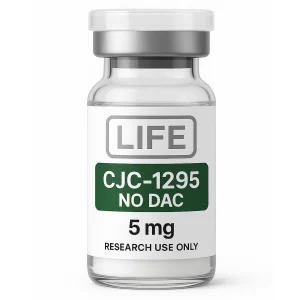
Yes. In experimental endocrine research, GHRP-2 and CJC-1295 (No DAC) are frequently investigated together because they stimulate growth hormone release through different physiological pathways. GHRP-2 activates the ghrelin receptor, while CJC-1295 acts through the GHRH receptor. This complementary biology has made the combination a common research model for studying pulsatile GH secretion.
What research areas commonly investigate GHRP-2?
Published studies have investigated GHRP-2 in relation to growth hormone secretion, endocrine physiology, pituitary function, IGF-1 regulation, ghrelin receptor biology, neuroendocrine signalling, metabolic regulation and diagnostic growth hormone stimulation testing.
Je tento produkt určen k lidskému použití?
No. GHRP-2 supplied by LIFE Peptide is provided strictly for laboratory and analytical research. It is not intended for human consumption, diagnosis, treatment or prevention of disease. Any discussion of published studies summarises the current scientific literature relating to the GHRP-2 molecule rather than the intended use of this product.
Související výzkumný kontext
GHRP-2 belongs to the growth hormone secretagogue research class, which includes peptides investigated for endocrine signaling, GH-axis modulation, and pulsatile hormone release mechanisms.
Pro širší přehled signálních drah GH a srovnávacích mechanismů peptidů viz naše Průvodce výzkumem růstových hormonových peptidů.
Výzkumníci studující interakce osy GH se mohou také zabývat:
Ipamorelin
CJC-1295 (bez DAC)
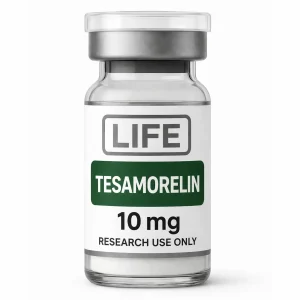
Tesamorelin
GHRP-6
Procházet všechny sloučeniny v Sekre pagy růstového hormonu.
Výzkumníci zkoumající endokrinní regulaci mohou také zkoumat sloučeniny v Metabolický výzkum, včetně GLP-1 a agonistů inkretinů s více dráhami.
NOTE: This is for educational reference only and does not constitute medical advice.
Disclaimer:
Tento produkt je prodáván pouze pro výzkumné účely. Není určen k diagnostice, léčbě, vyléčení nebo prevenci jakýchkoli onemocnění. Kupující přebírá plnou odpovědnost za řádnou manipulaci a použití.

Reviews
There are no reviews yet.