Descrizione
Vuoi acquistare l'ipamorelin in Europa? Life Peptide fornisce ipamorelin ad alta purezza per la ricerca di laboratorio, con spedizioni affidabili in tutta l'Unione Europea.
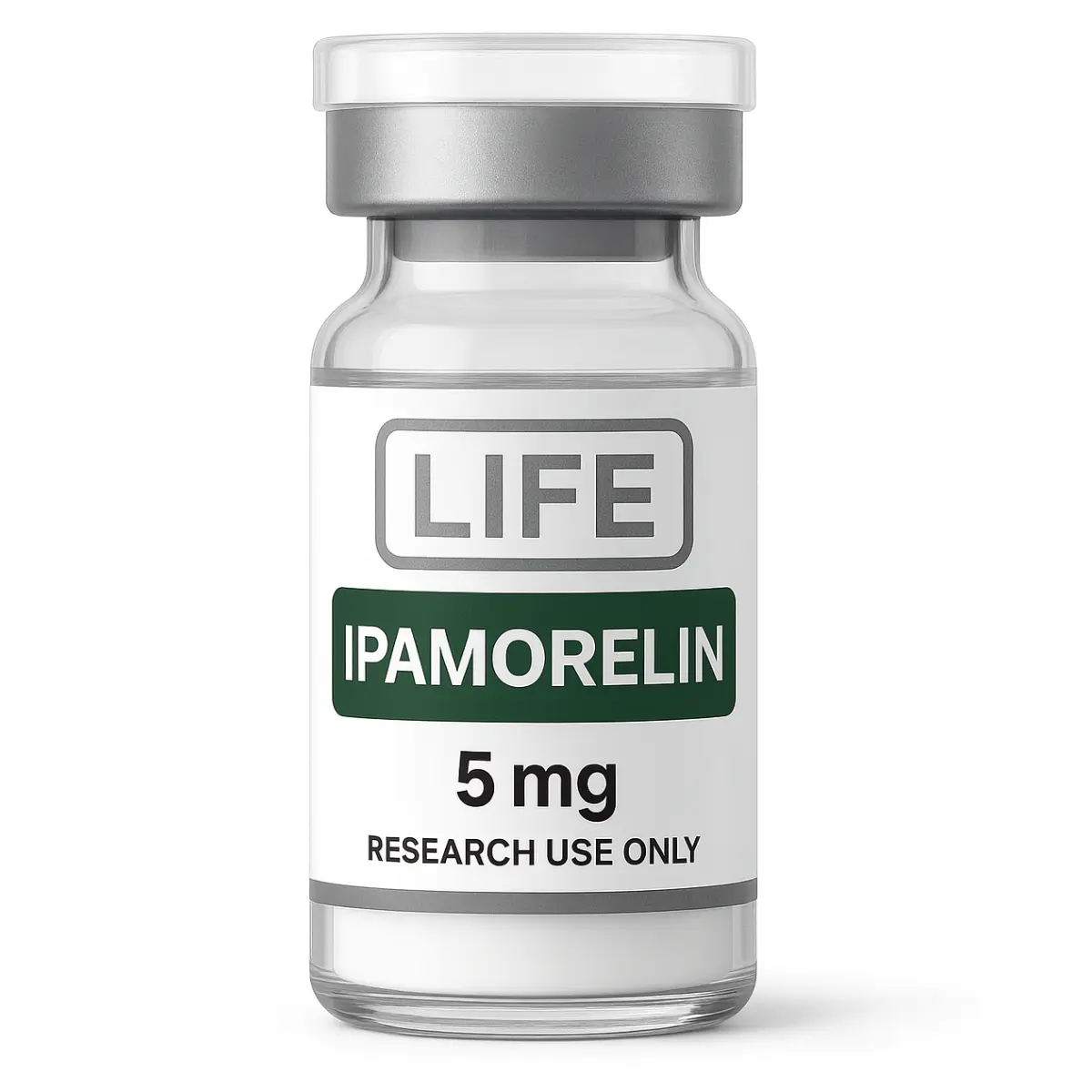
Ipamorelin è un secretagogo selettivo dell'ormone della crescita e recettore della ghrelina (GHSR-1a) agonista appartenente alla famiglia dei GHRP (peptide di rilascio dell'ormone della crescita). A differenza dell'ormone della crescita ricombinante, l'Ipamorelin stimola la secrezione pulsatile di ormone della crescita del corpo stesso attraverso l'attivazione del recettore della grelina, consentendo ai ricercatori di indagare rilascio fisiologico di GH piuttosto che la terapia ormonale sostitutiva diretta.
Una delle caratteristiche distintive di Ipamorelin è la sua elevata selettività recettoriale. Rispetto ai precedenti secretagoghi dell'ormone della crescita come GHRP-2 e GHRP-6, studi endocrini pubblicati hanno riportato sostanzialmente minore stimolazione di ACTH, cortisolo e prolattina, rendendo l'Ipamorelin uno dei composti più selettivi all'interno di questa classe di peptidi.
Perché Ipamorelin è importante nella ricerca sull'ormone della crescita
L'Ipamorelin è diventato un importante peptide di ricerca perché consente agli investigatori di studiare la fisiologia dell'ormone della crescita producendo un'attivazione relativamente limitata di altri percorsi ormonali ipofisari.
La ricerca pubblicata ha studiato l'Ipamorelin in relazione a:
- rilascio fisiologico dell'ormone della crescita
- Regolazione dell'IGF-1
- Segnalazione del recettore della grelina
- fisiologia endocrina
- composizione corporea
- metabolismo delle proteine muscolari
- fisiologia del recupero
- alterazioni endocrine legate all'invecchiamento
A differenza di molti GHRP precedenti, l'Ipamorelin è apprezzato principalmente per la sua selettività piuttosto che per l'entità assoluta del rilascio di GH, rendendolo un importante termine di paragone nella ricerca endocrina.
Come funziona Ipamorelin
L'ipamorelin si lega selettivamente al recettore della secretagogo dell'ormone della crescita (GHSR-1a), noto anche come recettore della grelina. L'attivazione di questo recettore stimola secrezione pulsatile dell'ormone della crescita endogeno dall'ipofisi anteriore. A differenza della somministrazione diretta di GH, questo meccanismo mantiene la regolazione endocrina del corpo e sistemi di feedback, rendendo Ipamorelin utile per indagare le dinamiche fisiologiche dell'ormone della crescita piuttosto che la terapia farmacologica sostitutiva dell'ormone.
Studi endocrini pubblicati hanno costantemente evidenziato un'altra caratteristica distintiva: minima stimolazione di ACTH, cortisolo e prolattina rispetto ai precedenti GHRP.
Cosa rende l'Ipamorelin diverso dagli altri secretagoghi dell'ormone della crescita?
Ipamorelin
- agonista selettivo del recettore della grelina
- rilascio di GH altamente selettivo
- stimolazione ACTH minima
- risposta minima del cortisolo
- risposta minima di prolattina
- rilascio GH più forte in generale
- stimolazione ipofisaria più ampia
- maggiore cross-attivazione endocrina
- stimola il rilascio di GH
- spesso associata a una marcata stimolazione dell'appetito
- profilo ormonale più ampio
- Analogo del GHRH
- stimola l'ormone della crescita attraverso un percorso recettoriale diverso
- indagato frequentemente insieme a Ipamorelin perché i meccanismi si completano a vicenda
Ricerca clinica ed endocrinologica umana
A differenza dei agonisti del recettore GLP-1, l'Ipamorelin non è stato studiato attraverso grandi programmi sugli esiti cardiovascolari o sull'obesità. Invece, studi umani pubblicati si sono concentrati principalmente sulla fisiologia endocrina, sulla farmacologia dei recettori e sulla secrezione dell'ormone della crescita.
Le indagini cliniche hanno dimostrato che l'Ipamorelin produce aumenti dose-dipendenti dell'ormone della crescita endogeno rilascio, mostrando una selettività endocrina sostanzialmente maggiore rispetto ai secretagoghi dell'ormone della crescita precedenti. In molteplici studi sull'uomo, poco o nessuna stimolazione clinicamente rilevante del cortisolo, dell'ACTH o della prolattina è stato osservato, distinguendo Ipamorelin da diversi GHRP di prima generazione.
Sebbene l'Ipamorelin sia stato successivamente studiato per l'ileo postoperatorio, tale programma non ha dimostrato un'efficacia sufficiente per ulteriori sviluppi farmaceutici. Il suo valore scientifico oggi risiede principalmente nella ricerca endocrina e sull'ormone della crescita, piuttosto che come agente terapeutico approvato.
Osservazioni di sicurezza pubblicate
Gli studi umani pubblicati descrivono generalmente l'Ipamorelin come ben tollerato durante l'indagine clinica. Gli eventi avversi riportati sono stati tipicamente lievi, con un profilo di sicurezza complessivo che riflette la sua attività recettoriale relativamente selettiva.
Da una prospettiva endocrina, una delle osservazioni più importanti è stata la limitata stimolazione del cortisolo, dell'ACTH e della prolattina rispetto a diversi secretagoghi dell'ormone della crescita precedenti. Questa selettività endocrina rimane una delle caratteristiche distintive dell'Ipamorelin nella letteratura pubblicata.
Protocolli di ricerca riportati in letteratura
Studi clinici pubblicati hanno indagato l'Ipamorelin utilizzando molteplici strategie di dosaggio a seconda degli obiettivi dello studio, tra cui fisiologia endocrina, recupero postoperatorio e valutazione farmacodinamica.
Invece di supportare un singolo protocollo standard, la letteratura pubblicata riflette una serie di disegni sperimentali volti a caratterizzare la secrezione dell'ormone della crescita, la selettività dei recettori e le risposte endocrine in condizioni controllate.
Le tempistiche di dosaggio riportate negli studi pubblicati sono riassunti della metodologia di ricerca e non sono istruzioni per l'uso di questo prodotto.
Studi chiave pubblicati
- Raun K et al. Ipamorelin, il primo secretagogo selettivo dell'ormone della crescita. European Journal of Endocrinology. 1998.
Il documento fondamentale che introduce l'Ipamorelin e ne dimostra la stimolazione altamente selettiva del rilascio dell'ormone della crescita con effetti minimi su ACTH, cortisolo e prolattina.
- Svensson J et al. Modellazione farmacocinetica-farmacodinamica dell'Ipamorelin in volontari sani. Ricerca Farmaceutica. 1999.
Uno studio umano fondamentale che descrive le relazioni dose-risposta, il rilascio dell'ormone della crescita e le caratteristiche farmacodinamiche.
- Bowers CY. Secretagoghi dell'ormone della crescita.
Una revisione completa che copre la fisiologia degli agonisti del recettore della grelina, la biologia del recettore e il ruolo di peptidi come l'Ipamorelin all'interno della più ampia famiglia dei secretagoghi GH.
- Ghigo E et al. Secretagoghi dell'ormone della crescita: farmacologia clinica e fisiologia endocrina.
Una panoramica sui meccanismi endocrini, la farmacologia dei recettori e lo sviluppo clinico della classe dei secretagoghi dell'ormone della crescita.
Domande frequenti
Cos'è l'Ipamorelin?
Ipamorelin è un secretagogo selettivo dell'ormone della crescita che attiva il recettore della grelina (GHSR-1a) per stimolare il rilascio fisiologico dell'ormone della crescita endogeno. A differenza del GH ricombinante, promuove la secrezione pulsatile di GH propria dell'organismo attraverso la segnalazione ipofisaria.
Come differisce l'Ipamorelin dal GHRP-2 e dal GHRP-6?
Ipamorelin è considerato il membro più selettivo della classica famiglia GHRP. Studi endocrini pubblicati hanno mostrato una stimolazione minima di ACTH, cortisolo e prolattina rispetto ai precedenti secretagoghi dell'ormone della crescita, rendendolo particolarmente prezioso per la ricerca focalizzata sul rilascio selettivo di GH.
Perché Ipamorelin viene spesso combinato con CJC-1295?
Sebbene entrambi i peptidi influenzino la secrezione dell'ormone della crescita, agiscono attraverso diversi sistemi recettoriali. CJC-1295 è un analogo del GHRH, mentre l'Ipamorelin attiva il recettore della grelina. I ricercatori hanno studiato questa attivazione recettoriale complementare per comprendere meglio la pulsazione fisiologica del GH e la segnalazione endocrina.
Le aree di ricerca che comunemente investigano l'Ipamorelin comprendono:
La ricerca pubblicata ha esplorato l'Ipamorelin nella fisiologia endocrina, nella regolazione dell'ormone della crescita, nella segnalazione dell'IGF-1, nella composizione corporea, nel metabolismo muscolare, nei cambiamenti endocrini legati all'invecchiamento e nella biologia del recettore della grelina. La sua selettività recettoriale lo rende uno dei peptidi più studiati nella classe dei secretagoghi GH.
Posso comprare Ipamorelin in Europa?
Sì. Spediamo Ipamorelin nella maggior parte dei paesi europei utilizzando corrieri affidabili. I metodi di spedizione disponibili e i tempi di consegna vengono visualizzati durante il checkout in base alla tua destinazione.
Ipamorelin è destinato all'uso umano?
No. L'ipamorelin fornito da Life Peptide è destinato esclusivamente alla ricerca di laboratorio e analitica. Non è destinato al consumo umano, né alla diagnosi, al trattamento o alla prevenzione di malattie. Qualsiasi riferimento a studi pubblicati presente in questa pagina riassume la letteratura scientifica relativa alla molecola dell'ipamorelin, piuttosto che all'uso previsto di questo prodotto.
Caratteristiche del prodotto
Applicazione: ricerca di laboratorio e analitica
Uso limitato: non per il consumo umano; non per uso medico, veterinario o cosmetico
Prodotto in stabilimenti conformi alle GMP secondo rigidi protocolli di controllo qualità.
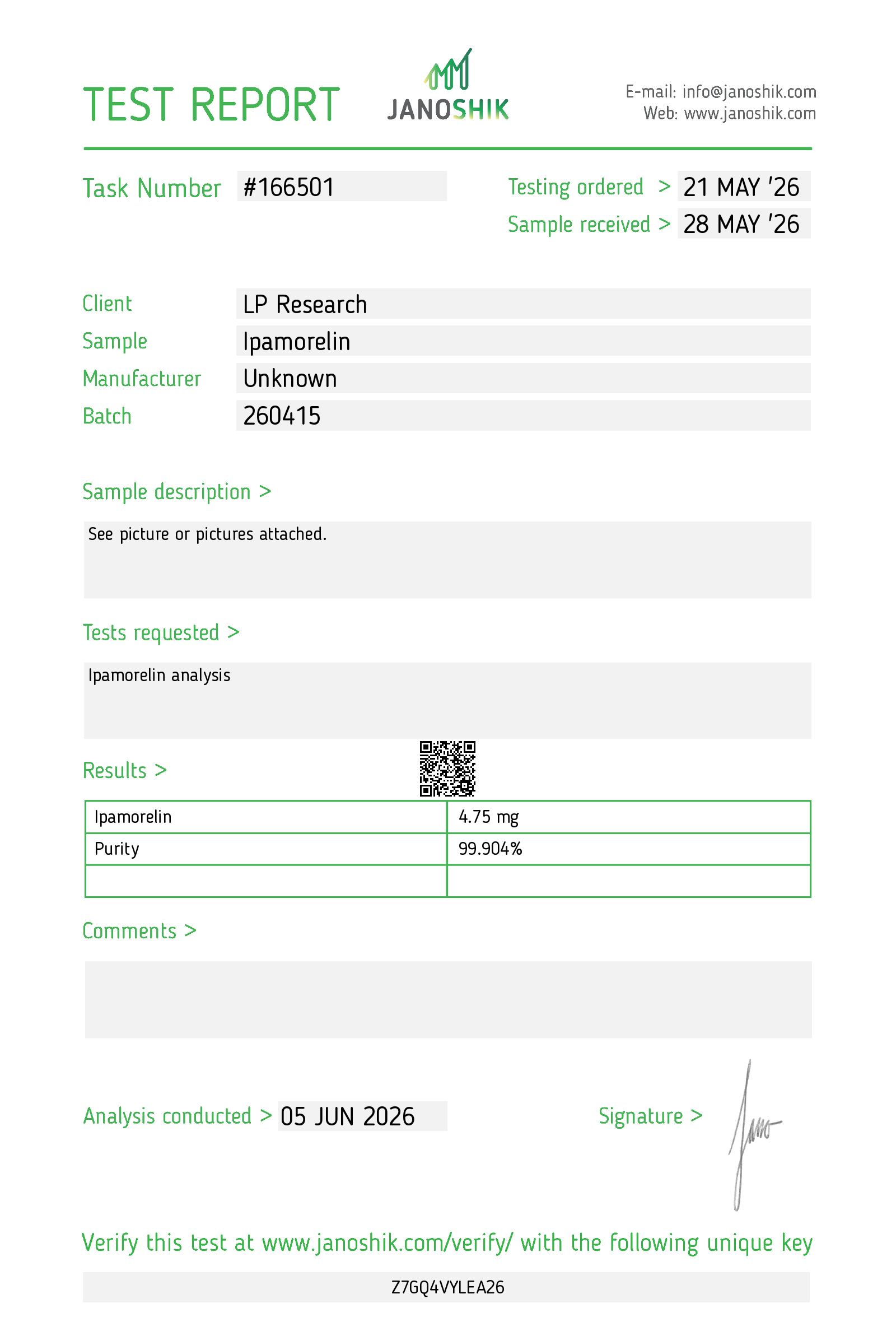
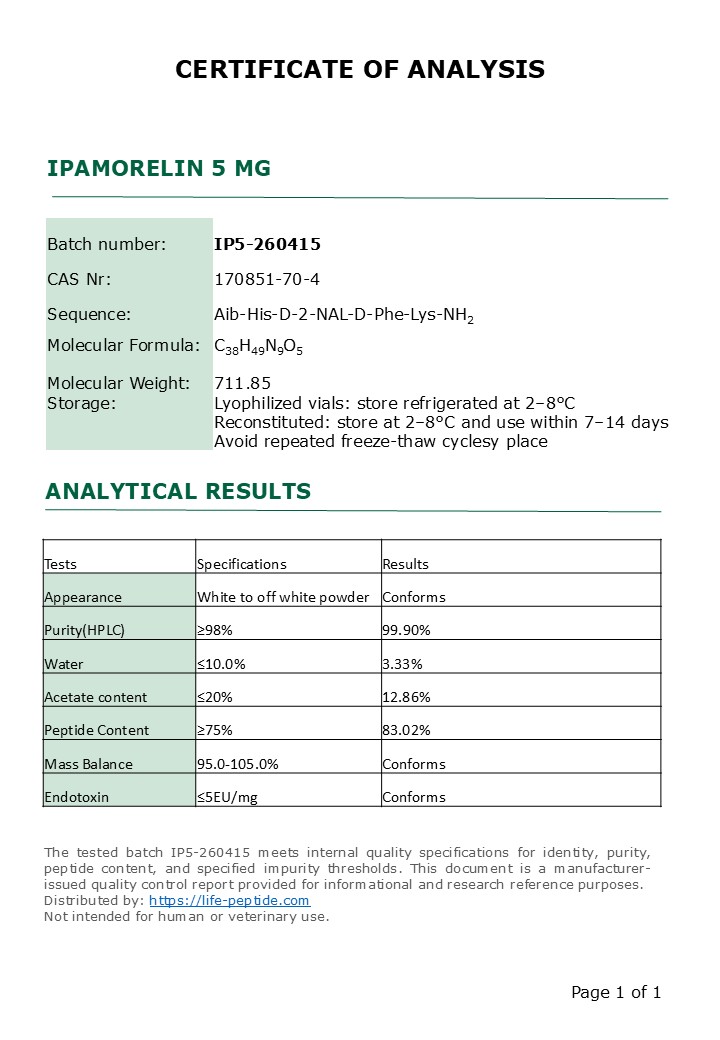
Ogni lotto viene accuratamente testato in laboratorio dopo la produzione (puoi trovare il Certificato di Analisi sotto le immagini del prodotto).
Liofilizzato (liofilizzato) per la massima stabilità e una lunga durata di conservazione.
Sigillato in fiale sterili, pronto per la ricostituzione.
Purezza: ≥ 99,901 TP4T, testata mediante HPLC; elevata purezza e coerenza dell'identità confermate da organismi indipendenti. Visualizza verifica di terze parti.
Aspetto: polvere liofilizzata bianca
Formula molecolare: C40H52N10O6
Peso molecolare: 768,93
Archiviazioneflaconcini liofilizzati non aperti sono meglio conservati refrigerato a 2–8°C, che è il metodo di conservazione confermato dal nostro partner di produzione e adatto fino a 24 mesi. Si preferisce la refrigerazione perché minimizza inutili cicli di congelamento-scongelamento durante la manipolazione di routine. Se è necessaria una conservazione a termine sostanzialmente più lungo, i flaconcini liofilizzati non aperti possono anche essere conservati congelati. Una volta ricostituita, conservare sempre a 2-8°C e non congelare.
Ricostituzione e manipolazione
Ipamorelin è fornito in una fiala liofilizzata e deve essere maneggiato utilizzando le procedure standard di ricostituzione dei peptidi appropriate per l'ambiente di ricerca. Deve essere ricostituito con acqua batteriostatica prima dell'uso. Per aiutare a preservare l'integrità strutturale, aggiungere il solvente scelto lentamente contro la parete interna del flaconcino piuttosto che direttamente sulla polvere del peptide, ed evitare agitazioni vigorose. Il delicato movimento rotatorio è generalmente sufficiente una volta che il peptide si è completamente sciolto. La pratica standard di laboratorio include anche il far raggiungere ai flaconcini refrigerati la temperatura ambiente prima della ricostituzione per minimizzare la condensa all'interno del flaconcino.
Per altre indicazioni sulla scelta del solvente, sulla pianificazione della concentrazione e sullo stoccaggio, consultare il pieno Guida alla Ricostituzione dei Peptidi e Calcolatore di Ricostituzione.
Riferimenti di ricerca selezionati
- Raun K et al. “Ipamorelin, il primo secretagogo selettivo dell'ormone della crescita. European Journal of Endocrinology, 1998.
- Smith RG et al. “Secretagoghi dell'ormone della crescita: fisiologia e rilevanza clinica.” Trends in Endocrinology & Metabolism, 2005.
- Bowers CY. “Peptidi di rilascio dell'ormone della crescita - struttura e cinetica.” Journal of Pediatric Endocrinology and Metabolism, 1993.
- Hansen BS et al. “Ipamorelin, un nuovo e potente peptide che rilascia l'ormone della crescita.” American Journal of Physiology, 1999.
Contesto di ricerca correlato
Ipamorelin appartiene alla classe di ricerca dei secretagoghi dell'ormone della crescita, che include composti studiati per la segnalazione endocrina e la modulazione dell'asse GH.
Per una visione più ampia delle vie di segnalazione GH e dei meccanismi peptidici comparativi, consulta il nostro Guida alla ricerca sui peptidi dell'ormone della crescita.
I ricercatori che studiano l'interazione del percorso GH possono anche esaminare:
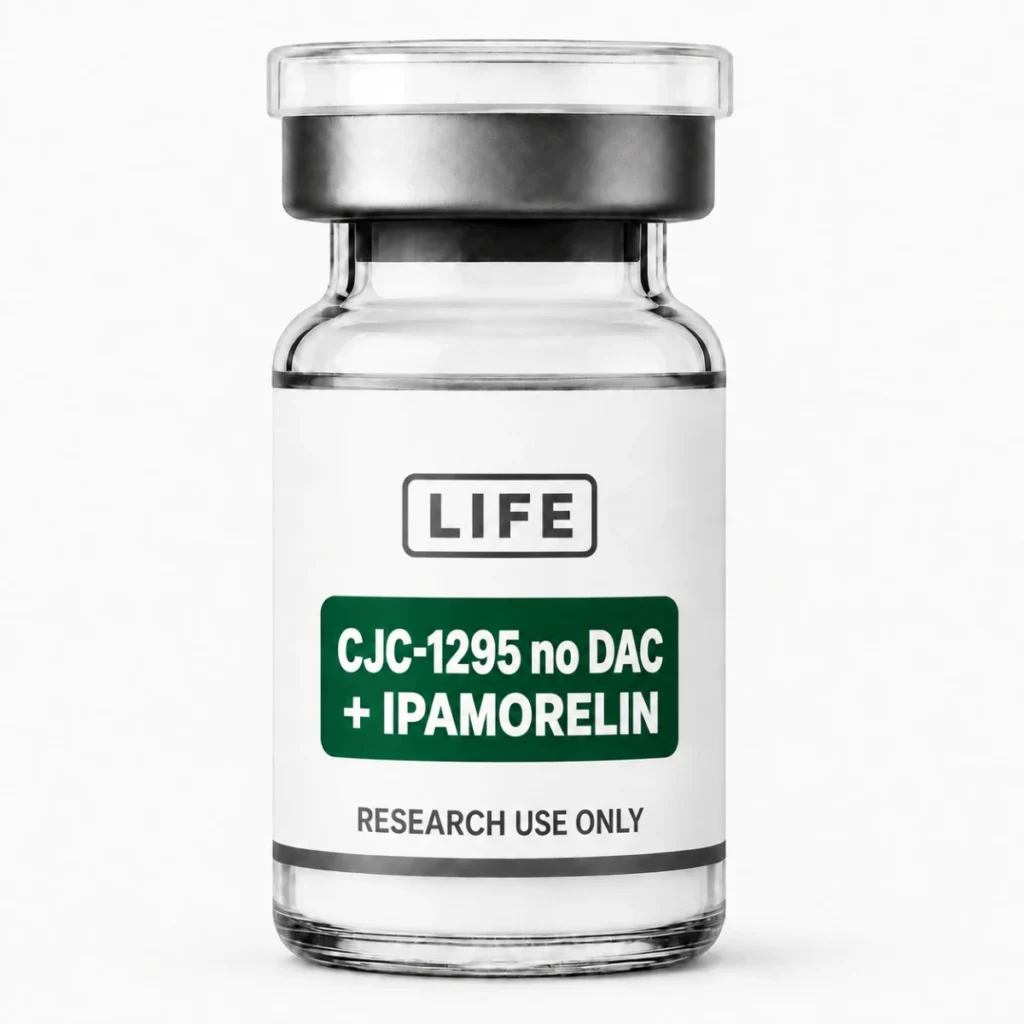
Blend CJC-1295 senza DAC + Ipamorelin – una formulazione sinergica pratica
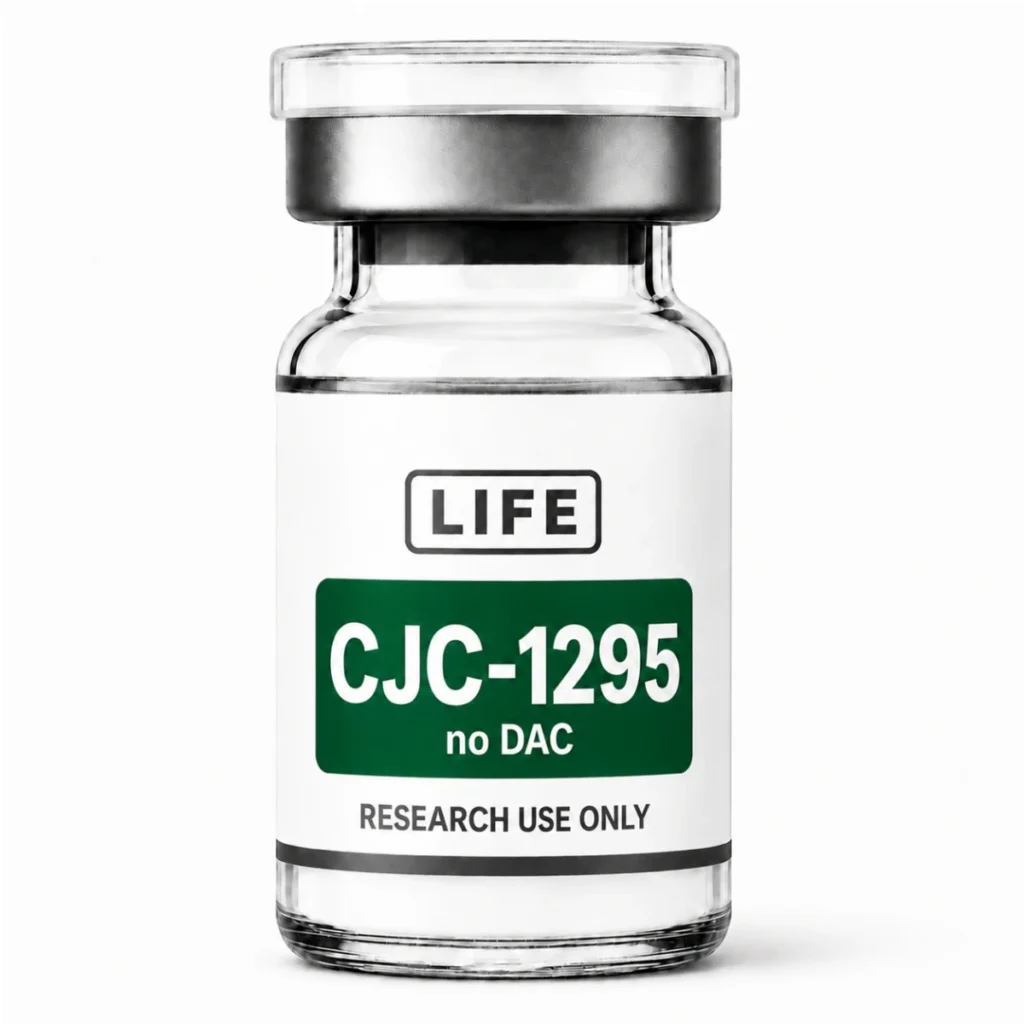
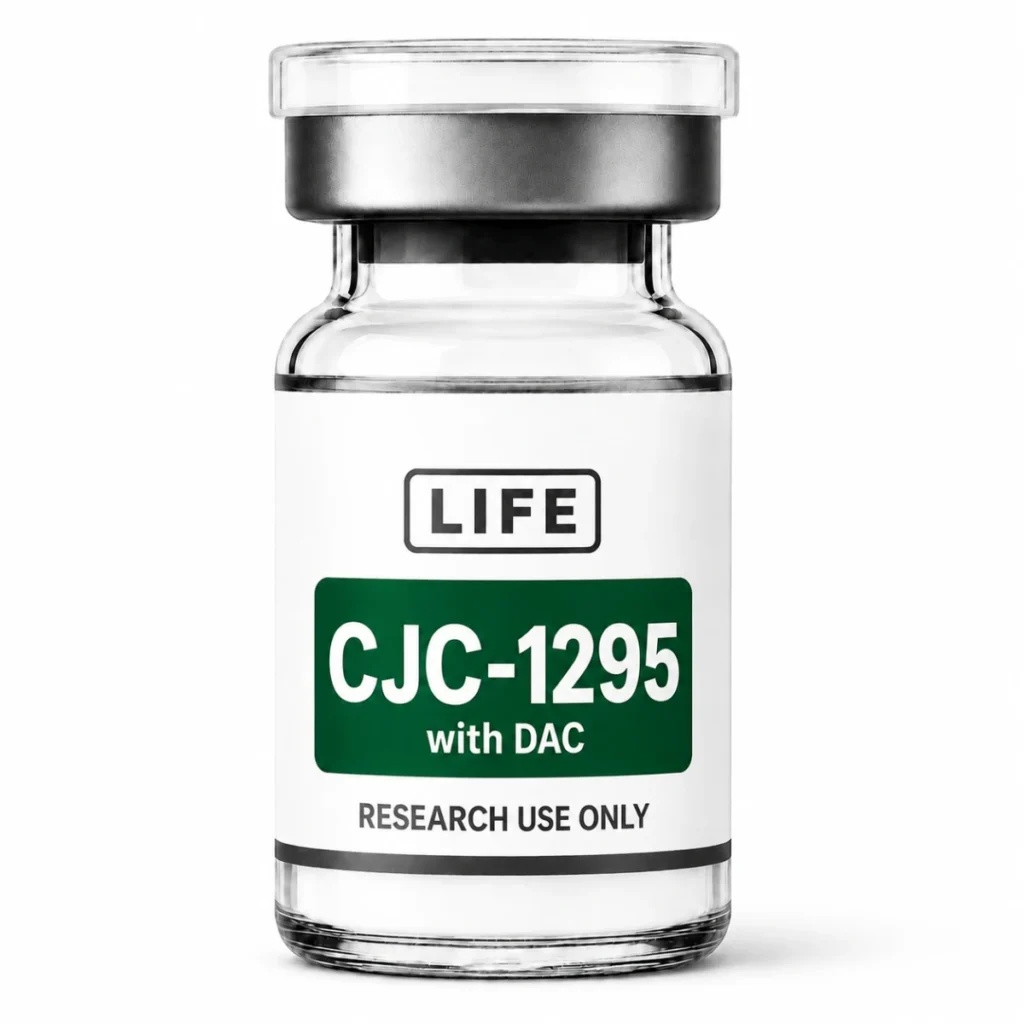
CJC-1295 (Peptide di ricerca analogo del GHRH)
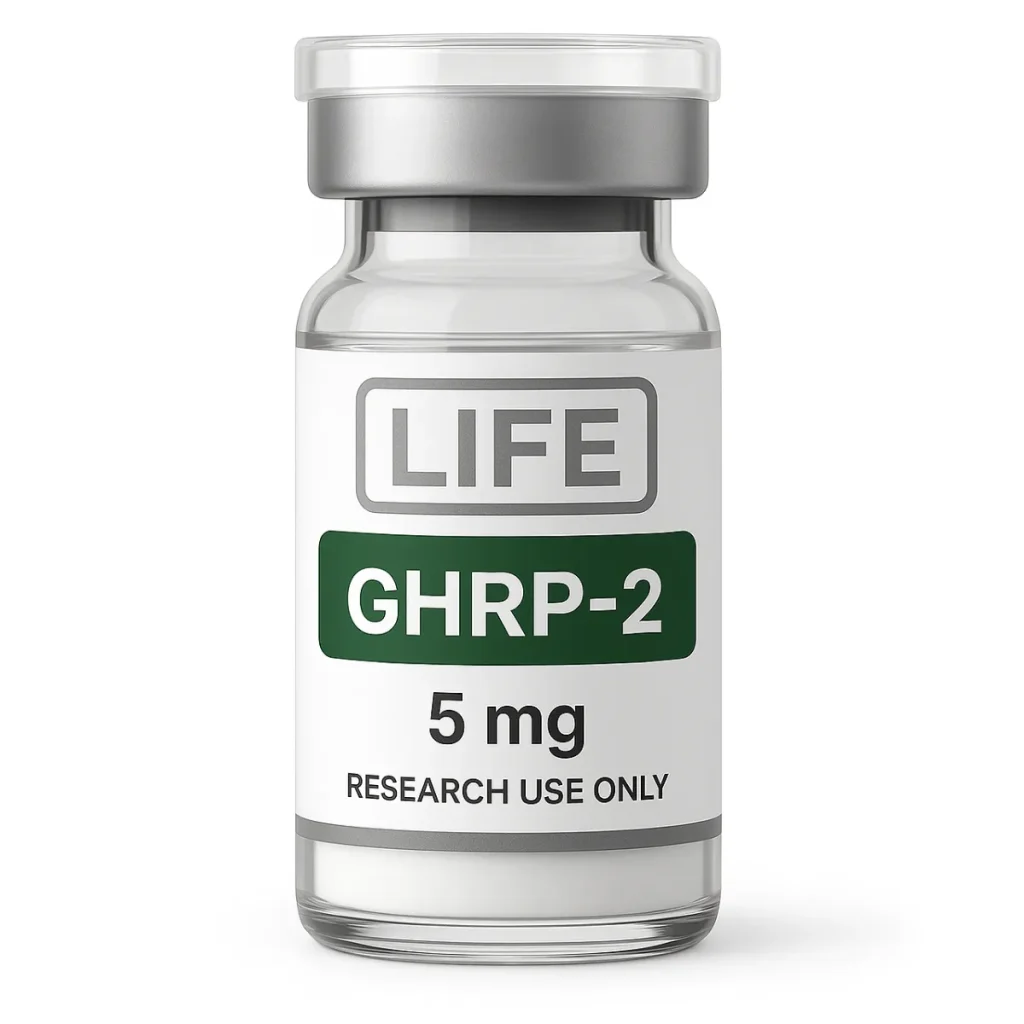
GHRP-2
GHRP-6
Sfoglia tutti i composti in Categoria dei secretagoghi dell'ormone della crescita.
Ricercatori che studiano la regolazione endocrina possono anche esplorare composti in Ricerca metabolica, incluso GLP-1 e agonisti incretinici multipathway.
NOTA: Questo è solo a scopo didattico e non costituisce parere medico.
Disclaimer
Questo prodotto è venduto esclusivamente a scopo di ricerca. Non è destinato a diagnosticare, trattare, curare o prevenire alcuna malattia. L'acquirente si assume la piena responsabilità per la corretta manipolazione e utilizzo.