Descrizione
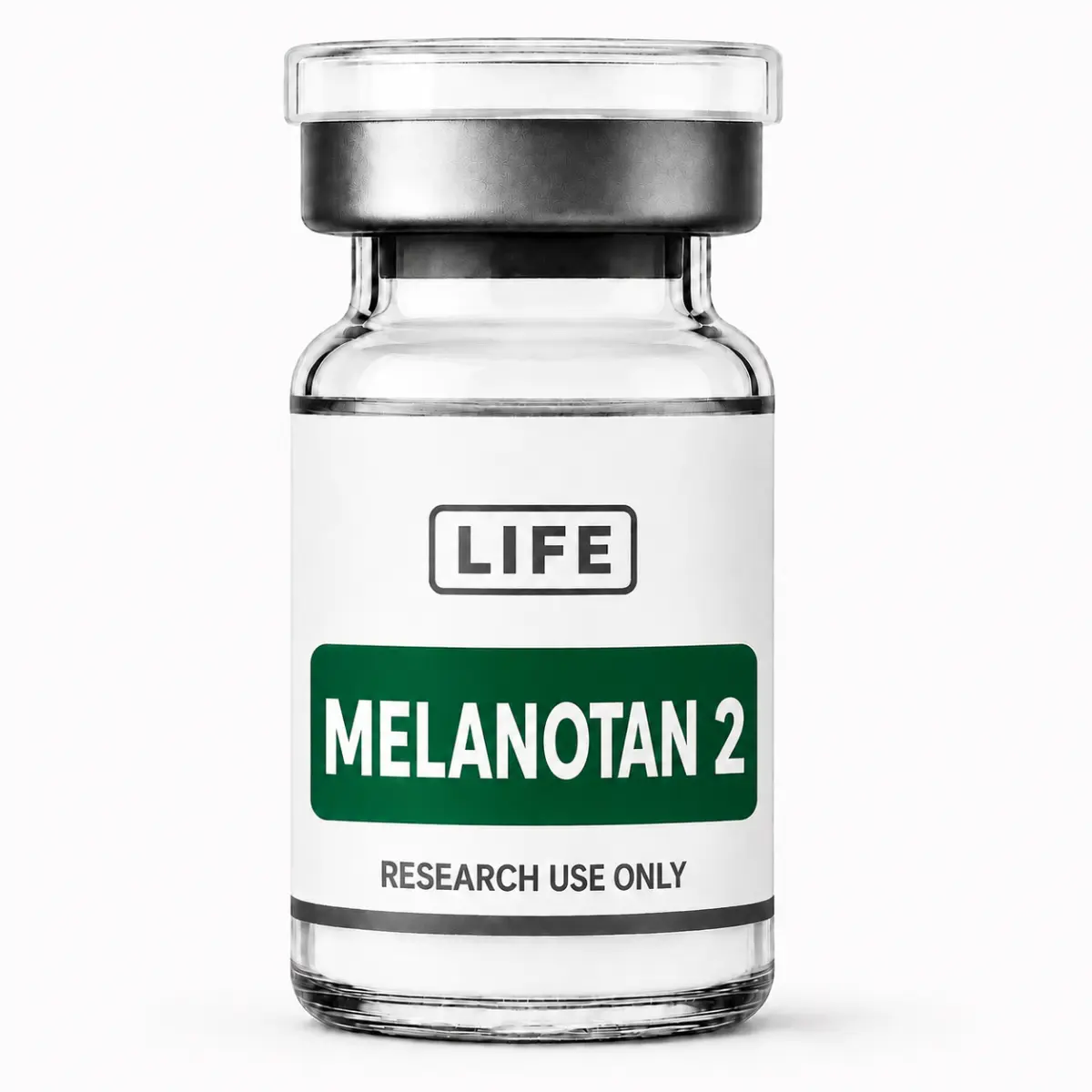
Melanotan 2 (noto anche come Melanotan II o MT2) è uno dei peptidi da ricerca più noti per studi sull'abbronzatura e sulla pigmentazione. È un sintetico analogo dell'ormone alfa-melanocito-stimolante ($\alpha$-MSH), sviluppato per investigare come la segnalazione della melanocortina regola la produzione di melanina e la risposta fisiologica della pelle all'esposizione ai raggi ultravioletti (UV).
Oltre alla ricerca sulla pigmentazione, il Melanotan 2 ha svolto un ruolo importante nell'accrescere la nostra comprensione del sistema melanocortinico. Durante le prime indagini cliniche, i ricercatori hanno osservato effetti che andavano oltre la pigmentazione cutanea, portando al successivo sviluppo di PT-141 (Bremelanotide), un peptide melanocortinico più selettivo progettato specificamente per la ricerca sulla funzione sessuale.
Oggi il Melanotan 2 rimane uno dei peptidi più ampiamente studiati per la biologia della pigmentazione, la segnalazione dei recettori della melanocortina e la fisiologia neuroendocrina.
Vuoi acquistare Melanotan 2 in Europa? Life Peptide fornisce Melanotan 2 ad alta purezza per la ricerca di laboratorio, con spedizioni affidabili in tutta l'Unione Europea.
Perché il Melanotan 2 è ampiamente studiato
La ricerca pubblicata ha studiato il Melanotan 2 in relazione a:
- ricerca sull'abbronzatura
- pigmentazione della pelle
- produzione di melanina
- melanogenesi
- pigmentazione indipendente dai raggi UV
- biologia dei melanociti
- segnalazione del recettore della melanocortina
- regolazione dell'appetito
- fisiologia neuroendocrina
La sua ampia attività recettoriale ha reso il Melanotan 2 uno dei peptidi di ricerca fondamentali per comprendere il sistema melanocortinico.
Come il Melanotan 2 promuove la pigmentazione
La ricerca pubblicata dimostra che il Melanotan 2 principalmente attiva il recettore della melanocortina MC1, che regola la produzione di melanina all'interno dei melanociti.
La ricerca ne ha esplorato la relazione con:
Produzione di melanina
Attivazione dei melanociti e aumento della sintesi di melanina, rendendo il Melanotan 2 uno dei peptidi più noti nella ricerca sulla pigmentazione.
Risposta ai raggi UV
Indagine sulla relazione tra segnalazione dei melanocortine, produzione di melanina e risposta fisiologica della pelle all'esposizione ai raggi ultravioletti.
Biologia della pigmentazione
Studi che esaminano come i recettori della melanocortina regolano la pigmentazione attraverso diversi tipi di pelle e modelli sperimentali.
Poiché il Melanotan 2 attiva anche altri recettori della melanocortina, i ricercatori hanno studiato ulteriori vie fisiologiche che coinvolgono la regolazione dell'appetito, il bilancio energetico e la segnalazione del sistema nervoso centrale.
Perché il Melanotan 2 è diventato importante oltre la ricerca sull'abbronzatura
Sebbene il Melanotane 2 sia stato originariamente sviluppato per la ricerca sulla pigmentazione, i ricercatori hanno successivamente scoperto che l'attivazione dei recettori della melanocortina influenzava anche i percorsi del sistema nervoso centrale coinvolti nel comportamento sessuale.
Questi risultati hanno infine portato allo sviluppo di PT-141 (Bremelanotide), un peptide melanocortinico più selettivo che si concentra sulla ricerca del desiderio sessuale e dell'eccitazione piuttosto che sulla pigmentazione.
Questo rende il Melanotan 2 uno dei peptidi più influenti nella storia della ricerca sui melanocortine.
Ricerca umana e preclinica
Il Melanotan 2 è stato ampiamente studiato sia in laboratorio che nell'uomo.
Pubblicata ricerca include:
- fisiologia dell'abbronzatura
- biologia della pigmentazione
- melanogenesi
- Risposta ai raggi UV
- farmacologia dei recettori della melanocortina
- regolazione dell'appetito
- segnalazione neuroendocrina
Sebbene successivamente siano stati sviluppati analoghi della melanocortina più recenti per applicazioni più specifiche, il Melanotan 2 rimane uno dei principali composti di ricerca per lo studio della famiglia dei recettori della melanocortina.
In che modo il Melanotan 2 si differenzia dai peptidi correlati
| Obiettivo della ricerca | Peptide consigliato |
|---|---|
| Ricerca sull'abbronzatura e sulla pigmentazione | Melanotan 2 |
| Ricerca sul desiderio e sull'eccitazione sessuale | PT-141 (Bremelanotide) |
| Regolazione degli ormoni riproduttivi | Kisspeptina-10 |
| Legame sociale e comportamento neuroendocrino | Ossitocina |
Sebbene il Melanotan 2 e il PT-141 condividano una storia di sviluppo comune, ora vengono studiati per differenti obiettivi di ricerca. Il Melanotan 2 si concentra principalmente sulla pigmentazione e sulla biologia dei melanocortini, mentre il PT-141 indaga i percorsi centrali coinvolti nel desiderio sessuale e nell'eccitazione.
Osservazioni di sicurezza pubblicate
Gli studi umani pubblicati hanno riportato più comunemente nausea, vampate al volto, sbadigli e aumenti transitori della pigmentazione cutanea. I ricercatori hanno anche osservato una maggiore pigmentazione delle lentiggini e dei nei esistenti, che è diventata un'area di continua indagine. Le conoscenze attuali si basano principalmente su studi clinici controllati e ricerche sperimentali, e la sicurezza a lungo termine rimane un argomento attivo nella letteratura scientifica.
Caratteristiche del prodotto
Applicazione: ricerca di laboratorio e analitica
Uso limitato: non per il consumo umano; non per uso medico, veterinario o cosmetico
Prodotto in stabilimenti conformi alle GMP secondo rigidi protocolli di controllo qualità.
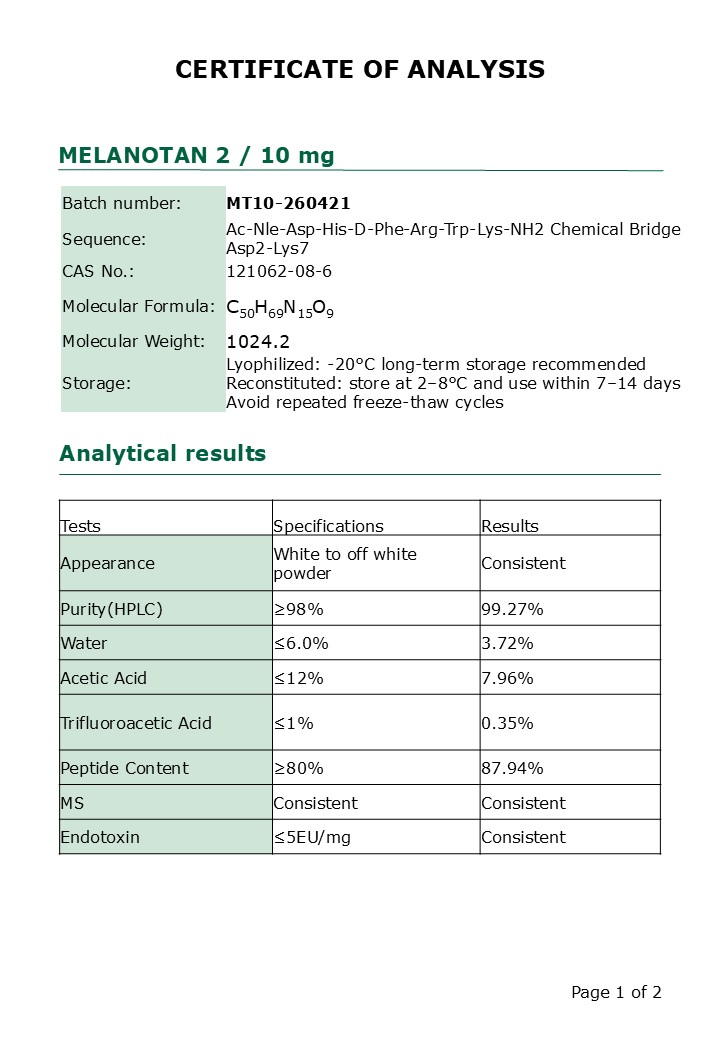
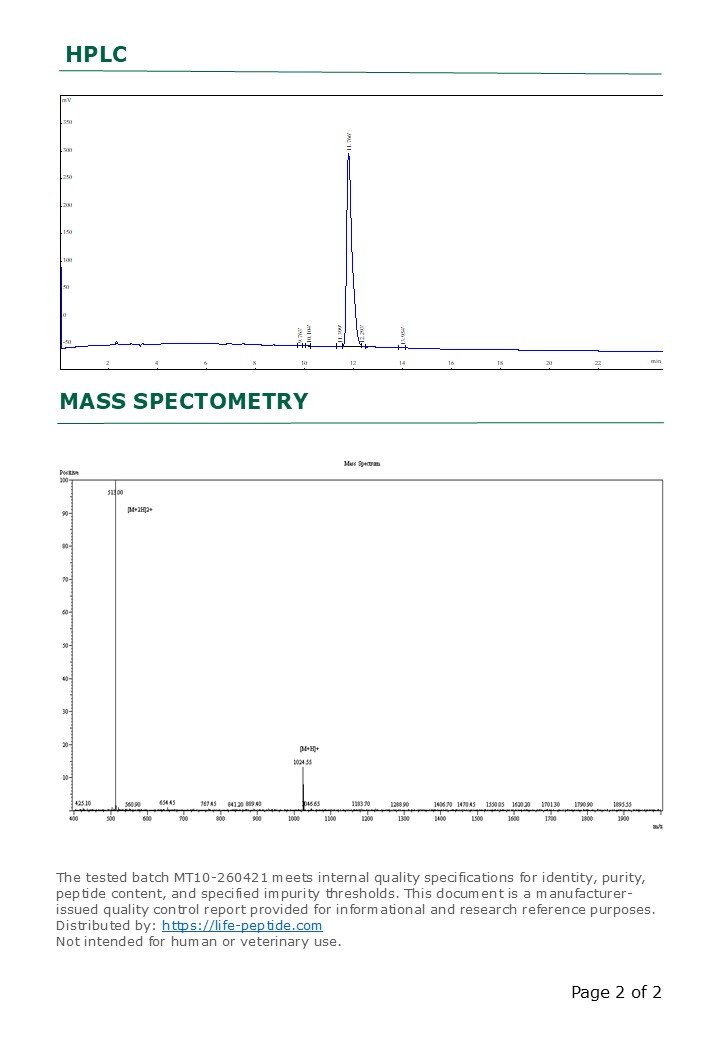
Ogni lotto viene accuratamente testato in laboratorio dopo la produzione (puoi trovare il Certificato di Analisi sotto le immagini del prodotto).
Liofilizzato (liofilizzato) per la massima stabilità e una lunga durata di conservazione.
Sigillato in fiale sterili, pronto per la ricostituzione.
Purezza: ≥ 99% (HPLC)
Aspetto: polvere liofilizzata bianca
Formula molecolare: C50H69N15O9
Peso molecolare: 1024,2
N. CAS: 121062-08-6
Archiviazioneflaconcini liofilizzati non aperti sono meglio conservati refrigerato a 2–8°C, che è il metodo di conservazione confermato dal nostro partner di produzione e adatto fino a 24 mesi. Si preferisce la refrigerazione perché minimizza inutili cicli di congelamento-scongelamento durante la manipolazione di routine. Se è necessaria una conservazione a termine sostanzialmente più lungo, i flaconcini liofilizzati non aperti possono anche essere conservati congelati. Una volta ricostituita, conservare sempre a 2-8°C e non congelare.
Ricostituzione e manipolazione
Il Melanotan 2 viene fornito come flaconcino liofilizzato e deve essere manipolato utilizzando le procedure standard di ricostituzione dei peptidi appropriate per il contesto di ricerca. Deve essere ricostituito con acqua batteriostatica prima dell'uso. Per aiutare a preservare l'integrità strutturale, aggiungere il solvente scelto lentamente contro la parete interna del flaconcino piuttosto che direttamente sulla polvere del peptide, ed evitare agitazioni vigorose. Il delicato movimento rotatorio è generalmente sufficiente una volta che il peptide si è completamente sciolto. La pratica standard di laboratorio include anche il far raggiungere ai flaconcini refrigerati la temperatura ambiente prima della ricostituzione per minimizzare la condensa all'interno del flaconcino.
Per altre indicazioni sulla scelta del solvente, sulla pianificazione della concentrazione e sullo stoccaggio, consultare il pieno Guida alla Ricostituzione dei Peptidi e Calcolatore di Ricostituzione.
Riferimenti di ricerca selezionati
- Hadley ME. Terapie peptidiche a base di melanocortina: tappe storiche, studi clinici e commercializzazione, peptidi, 2006
Una revisione completa che descrive lo sviluppo dei peptidi Melanotan, la ricerca sulla pigmentazione e la successiva evoluzione del PT-141 dal Melanotan 2.
- Dorr RT, et al. Valutazione del Melanotane-II, un peptide melanotropo ciclico superpotente in uno studio clinico pilota di fase I, Life Sciences, 1996
Il primo studio clinico sull'uomo che valuta il Melanotan 2 e i suoi effetti sulla pigmentazione.
- Habbema L, Halk AB, Neumann M, Bergman W. Rischi dell'uso non regolamentato di analoghi dell'ormone melanotropo alfa: una rassegna, International Journal of Dermatology, 2017
Una revisione che riassume le prove pubblicate sugli analoghi del melanotan, sugli effetti di pigmentazione e sulle considerazioni di sicurezza riportate.
- Wessells H, et al. Agonisti dei recettori della melanocortina e funzione sessuale umana, International Journal of Impotence Research, 2000
Uno dei primi studi sugli esseri umani che ha mostrato effetti sul sistema nervoso centrale oltre alla pigmentazione, contribuendo al successivo sviluppo del PT-141.
Domande Frequenti
Cos'è il Melanotan 2?
Il Melanotan 2 è un analogo sintetico dell'ormone alfa-melanotropo (α-MSH). È uno dei peptidi di ricerca più ampiamente studiati al mondo per l'abbronzatura, la pigmentazione e la biologia dei recettori della melanocortina.
In che modo il Melanotan 2 promuove la pigmentazione?
Il Melanotan 2 attiva principalmente il recettore della melanocortina MC1, che regola la produzione di melanina all'interno dei melanociti. Questo lo ha reso uno dei principali peptidi di ricerca per gli studi sulla pigmentazione e sull'abbronzatura.
In che modo il Melanotan 2 differisce dal PT-141?
Sebbene il PT-141 sia stato sviluppato dal Melanotan 2, i due peptidi sono studiati per scopi differenti. Il Melanotan 2 si concentra principalmente sulla pigmentazione e sulla biologia dei melanocortini, mentre il PT-141 è un peptide melanocortinico più selettivo, studiato principalmente per la ricerca sul desiderio e sull'eccitazione sessuale.
Perché il Melanotan 2 è associato alla ricerca sull'appetito e sulla funzione sessuale?
Il Melanotan 2 attiva diversi sottotipi di recettori della melanocortina oltre a MC1R, inclusi i recettori coinvolti nella regolazione dell'appetito e nella segnalazione del sistema nervoso centrale. I primi studi hanno osservato inaspettatamente effetti sulla funzione sessuale, che hanno contribuito al successivo sviluppo del PT-141.
Quali aree di ricerca investigano comunemente il Melanotan 2?
La ricerca pubblicata comprende la fisiologia dell'abbronzatura, la pigmentazione cutanea, la melanogenesi, la risposta ai raggi UV, la segnalazione del recettore della melanocortina, la regolazione dell'appetito e la fisiologia neuroendocrina.
In che modo il Melanotano 2 differisce dal Melanotano 1 (Afamelanotide)?
Entrambi i peptidi derivano dall'α-MSH, ma il Melanotano 2 attiva molteplici sottotipi di recettori della melanocortina, mentre l'Afamelanotide è notevolmente più selettivo per il MC1R. Questa più ampia attività recettoriale ha reso il Melanotano 2 utile in una gamma più vasta di argomenti di ricerca sulla melanocortina.
Posso comprare il Melanotan 2 in Europa?
Sì. Spediamo Melanotan 2 nella maggior parte dei paesi europei utilizzando corrieri affidabili. I metodi di spedizione disponibili e i tempi di consegna vengono mostrati durante il pagamento in base alla vostra destinazione.
Questo prodotto è destinato all'uso umano?
No. Il Melanotan 2 fornito da Life Peptide è destinato esclusivamente alla ricerca di laboratorio e analitica. Non è destinato al consumo umano, né alla diagnosi, al trattamento o alla prevenzione di malattie. Qualsiasi riferimento a studi pubblicati riporta una sintesi dell’attuale letteratura scientifica relativa alla molecola del Melanotan 2, piuttosto che all’uso previsto di questo prodotto.
Contesto di ricerca correlato
Il Melanotan 2 appartiene alla più ampia Categoria di ricerca sui peptidi melanocortinici e neuroendocrini, concentrandosi sui percorsi di pigmentazione e sui meccanismi centrali di segnalazione della melanocortina.
I ricercatori che esplorano modelli correlati della via della melanocortina possono anche esaminare:
• PT-141 (Bremelanotide) — ricerca sulla segnalazione selettiva dei recettori della melanocortina
• Peptidi per la ricerca cognitiva e neuroscientifica — Modelli di segnalazione peptidica del SNC
NOTA: Questo è solo a scopo didattico e non costituisce parere medico.
Disclaimer
Questo prodotto è venduto esclusivamente a scopo di ricerca. Non è destinato a diagnosticare, trattare, curare o prevenire alcuna malattia. L'acquirente si assume la piena responsabilità per la corretta manipolazione e utilizzo.