Descrizione
La kisspeptina-10 è il frammento biologicamente attivo più corto della famiglia dei peptidi endogeni delle kisspeptine e una delle molecole di segnalazione più importanti nell'endocrinologia riproduttiva.
Piuttosto che agire direttamente sui testicoli o sulle ovaie, la kisspeptina-10 stimola il Recettore KISS1 (GPR54) sui neuroni ipotalamici, avviando il rilascio di ormone di rilascio delle gonadotropine (GnRH). Questo attiva l'intero asse ipotalamo-ipofisi-gonadi (HPG), regolando la produzione dell'ormone luteinizzante (LH), dell'ormone follicolo-stimolante (FSH) e degli ormoni riproduttivi a valle.
A causa di questo ruolo centrale, la kisspeptina è diventata uno dei peptidi più ampiamente studiati nella ricerca sulla fertilità, nell'endocrinologia riproduttiva e nella fisiologia neuroendocrina.
Vuoi acquistare la kisspeptina in Europa? Life Peptide fornisce kisspeptina ad alta purezza per la ricerca di laboratorio, con spedizioni affidabili in tutta l'Unione Europea.
Perché la kisspeptina-10 è importante nella ricerca sulla fertilità
A differenza dei composti che sostituiscono direttamente gli ormoni, la Kisspeptina-10 agisce attivando il sistema del corpo segnale ormonale riproduttivo naturale percorso.
La ricerca pubblicata ha studiato la kisspeptina-10 in relazione a:
- ricerca sulla fertilità
- regolazione degli ormoni riproduttivi
- Segnalazione del GnRH
- secrezione di LH e FSH
- fisiologia dell'ovulazione
- endocrinologia riproduttiva maschile
- endocrinologia riproduttiva femminile
- regolazione della pubertà
- funzione dell'asse ipotalamo-ipofisi-gonadi (HPG)
Poiché la kisspeptina si trova all'apice della cascata degli ormoni riproduttivi, è diventata un peptide fondamentale nella moderna ricerca riproduttiva.
Come agisce la Kisspeptina-10
A differenza dei peptidi che agiscono direttamente sulle ghiandole endocrine, la Kisspeptina-10 funziona attraverso il recettore KISS1, attivando i neuroni ipotalamici di GnRH.
La ricerca pubblicata ha esplorato la sua relazione con:
secrezione di GnRH
La kisspeptina è riconosciuta come il principale innesco fisiologico per il rilascio di GnRH e la successiva segnalazione degli ormoni riproduttivi.
Regolazione di LH e FSH
L'attivazione dei neuroni del GnRH porta alla secrezione pulsatile dell'ormone luteinizzante e dell'ormone follicolo-stimolante da parte dell'ipofisi.
Pubertà e maturazione riproduttiva
La ricerca ha dimostrato che la segnalazione della kisspeptina svolge un ruolo centrale nell'inizio della pubertà e nel mantenimento della funzione riproduttiva.
Integrazione neuroendocrina
Gli studi hanno investigato come la kisspeptina integri lo stato nutrizionale, i segnali metabolici e la fisiologia riproduttiva all'interno dell'ipotalamo.
Perché la kisspeptina-10 è ampiamente studiata nella ricerca sulla fertilità
La kisspeptina occupa una posizione unica perché regola l'asse degli ormoni riproduttivi al suo massimo livello fisiologico.
Studi pubblicati hanno esplorato:
- fertilità
- procreazione medicalmente assistita (PMA)
- secreto di ormoni riproduttivi
- induzione dell'ovulazione
- fisiologia della fertilità
- ormoni riproduttivi maschili
- ormoni riproduttivi femminili
- amenorrea ipotalamica
- pubertà ritardata
- neuroendocrinologia riproduttiva
Più di recente, i ricercatori hanno anche indagato la relazione tra la segnalazione della kisspeptina, il comportamento sessuale e l'elaborazione emotiva, espandendo il suo ruolo oltre la endocrinologia riproduttiva classica.
Ricerca umana e preclinica
La kisspeptina ha una delle basi di evidenza umana più forti tra i peptidi neuroendocrini.
Le indagini cliniche hanno dimostrato una stimolazione prevedibile degli ormoni riproduttivi attraverso l'attivazione fisiologica dell'asse HPG, mentre studi più recenti ne hanno esaminato gli effetti sull'elaborazione neurale correlata all'attrazione, alle risposte emotive e al comportamento sessuale. La ricerca continua a esplorare le potenziali applicazioni nei disturbi riproduttivi, nell'infertilità e nella regolazione neuroendocrina.
In che modo la kisspeptina-10 differisce dagli altri peptidi riproduttivi
Kisspeptina-10
- Fertilità e regolazione degli ormoni riproduttivi
- Regolazione del GnRH
- Ricerca sull'asse HPG
- Agonista dei recettori della melanocortina
- Ricerca sull'eccitazione sessuale
- Segnalazione del sistema nervoso centrale
- Legame sociale
- Legame di coppia
- Comportamento materno
- Segnalazione neuroendocrina
Sebbene questi peptidi siano spesso discussi insieme, essi regolano diversi aspetti della biologia riproduttiva. La kisspeptina controlla principalmente segnalazione degli ormoni riproduttivi, mentre il PT-141 influenza motivazione sessuale, L'ossitocina regola comportamento sociale, e il Melanotan II influisce principalmente pigmentazione.
Osservazioni di sicurezza pubblicate
Gli studi clinici pubblicati sull'uomo hanno generalmente riportato che la somministrazione di kisspeptina è ben tollerata in contesti di ricerca controllati. Poiché stimola la cascata ormonale riproduttiva fisiologica anziché sostituire direttamente gli ormoni, le indagini attuali si sono concentrate sulle risposte endocrine transitorie e sulla regolazione neuroendocrina. La ricerca in corso continua a valutarne il più ampio potenziale terapeutico.
Caratteristiche del prodotto
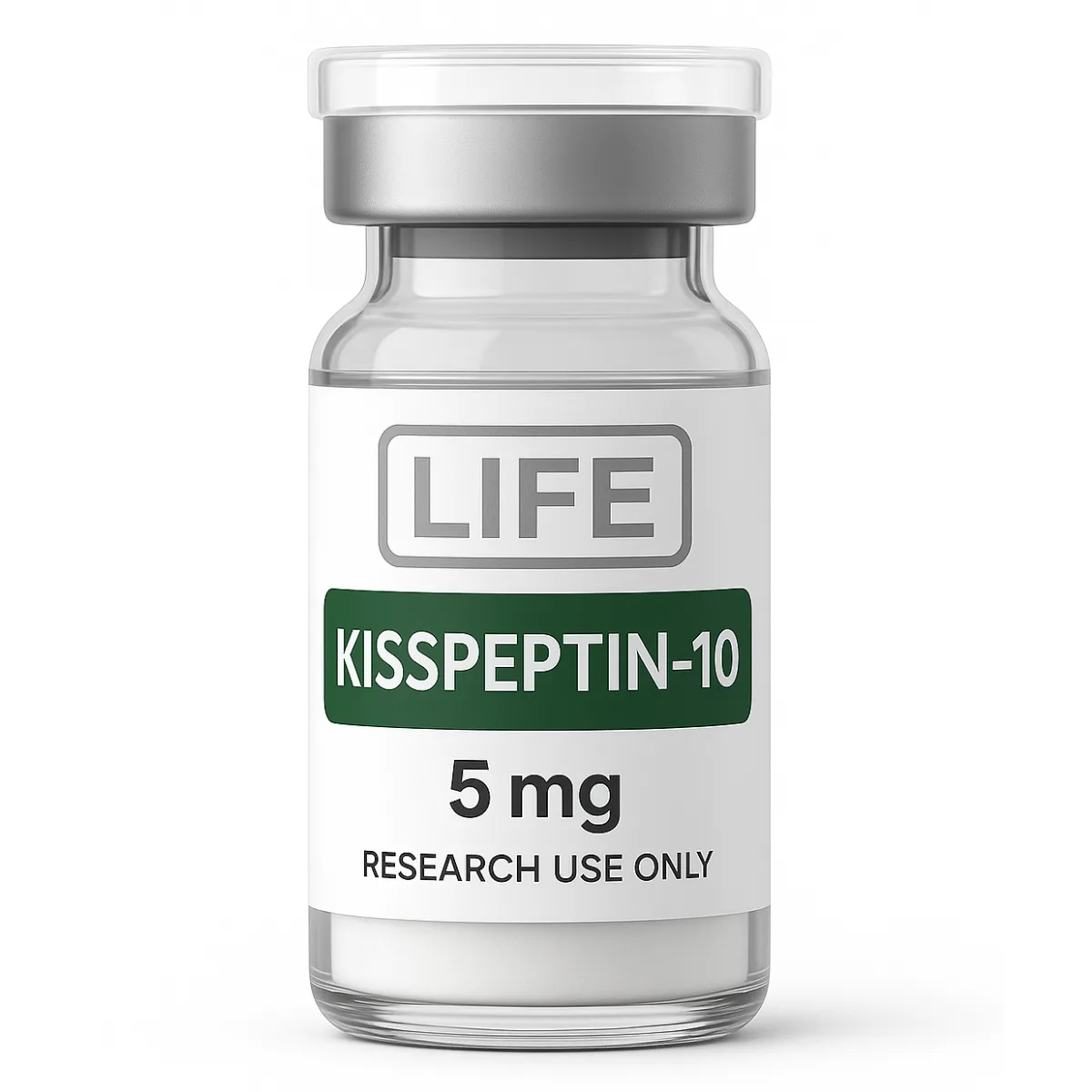
Applicazione: ricerca di laboratorio e analitica
Uso limitato: non per il consumo umano; non per uso medico, veterinario o cosmetico
Prodotto in stabilimenti conformi alle GMP secondo rigidi protocolli di controllo qualità.
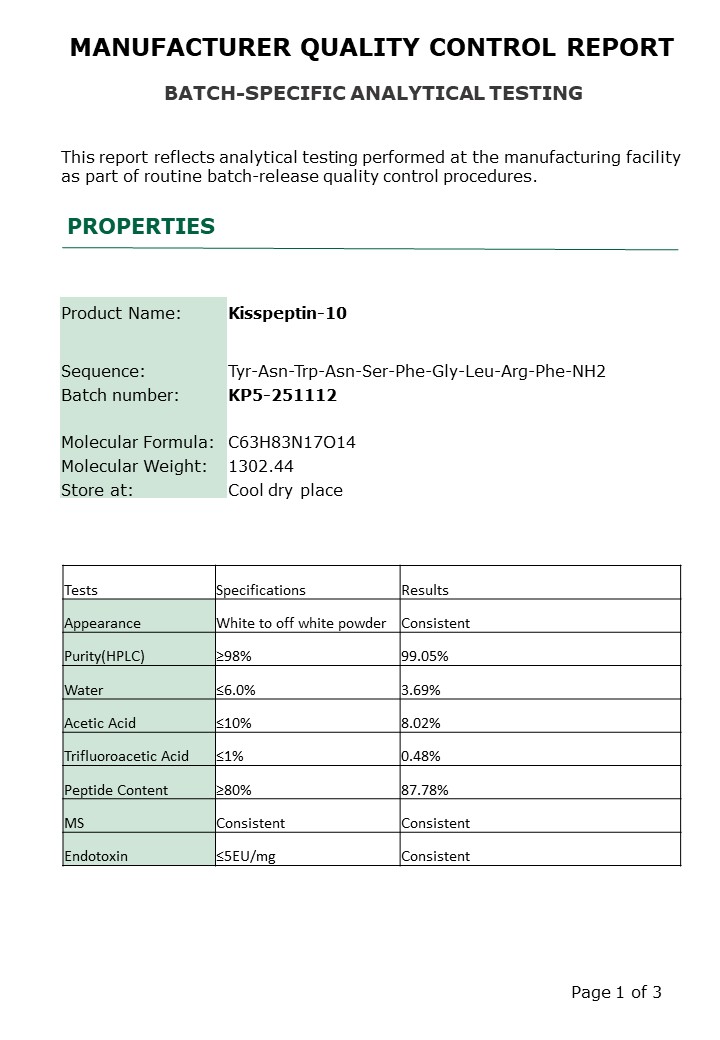
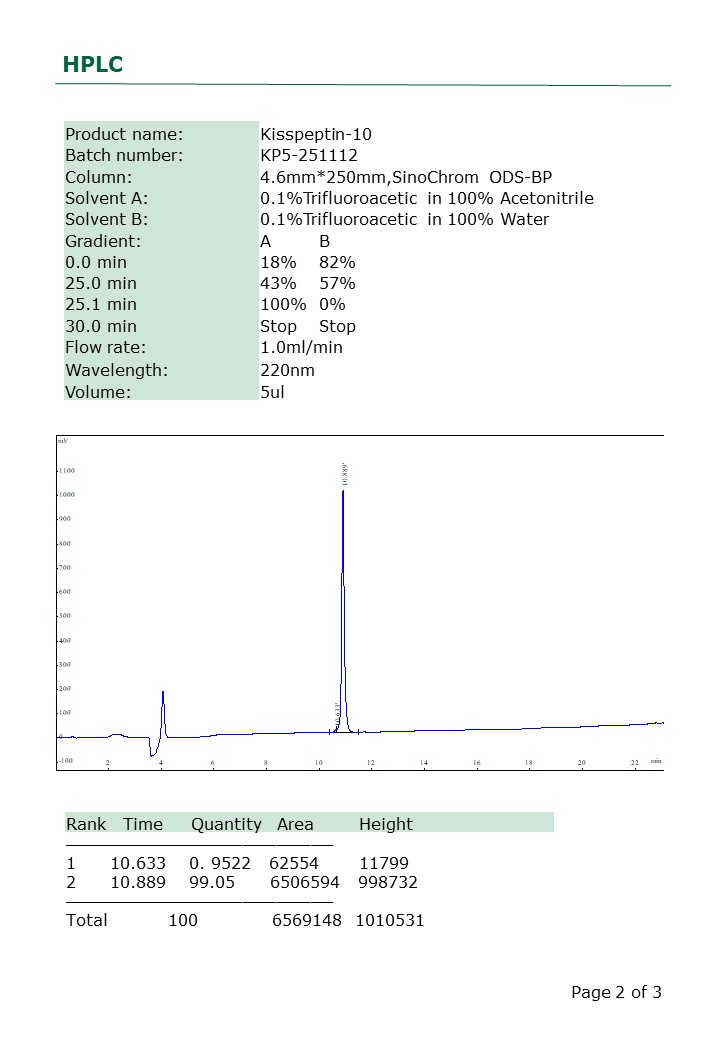
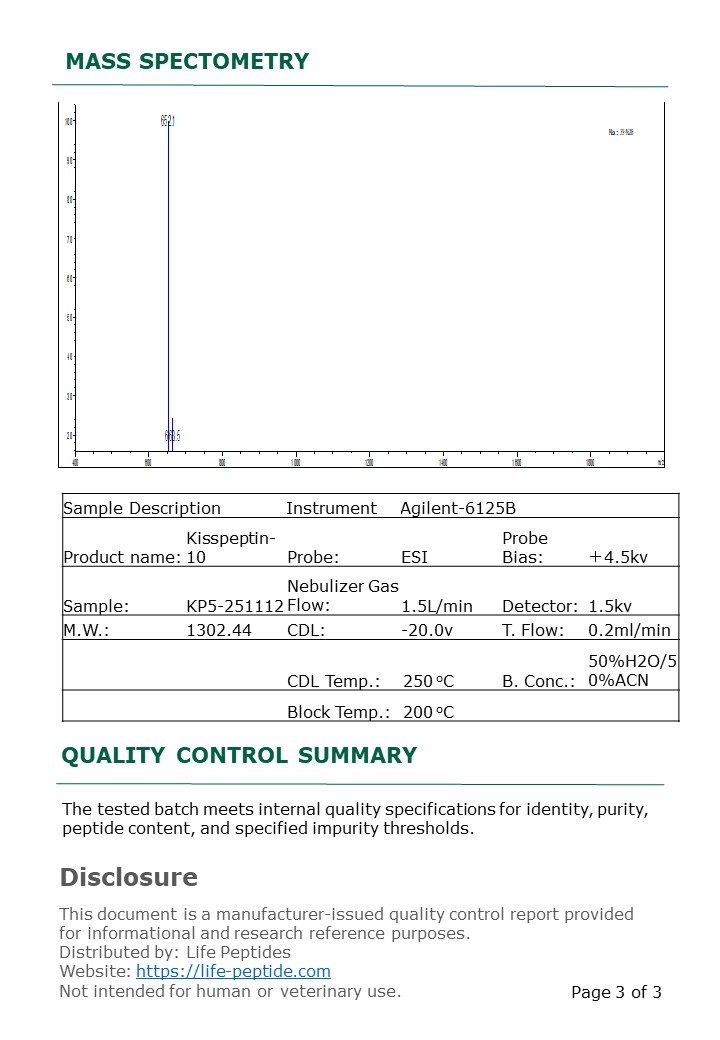
Ogni lotto viene accuratamente testato in laboratorio dopo la produzione (puoi trovare il Certificato di Analisi sotto le immagini del prodotto).
Liofilizzato (liofilizzato) per la massima stabilità e una lunga durata di conservazione.
Sigillato in fiale sterili, pronto per la ricostituzione.
Purezza: ≥99% (testato mediante HPLC)
Aspetto: polvere liofilizzata bianca/bianco sporco
Formula molecolare: C63H83N17O14
Peso molecolare: 1302,44
Sequenza: Tyr-Asn-Trp-Asn-Ser-Phe-Gly-Leu-Arg-Phe-NH2
Archiviazioneflaconcini liofilizzati non aperti sono meglio conservati refrigerato a 2–8°C, che è il metodo di conservazione confermato dal nostro partner di produzione e adatto fino a 24 mesi. Si preferisce la refrigerazione perché minimizza inutili cicli di congelamento-scongelamento durante la manipolazione di routine. Se è necessaria una conservazione a termine sostanzialmente più lungo, i flaconcini liofilizzati non aperti possono anche essere conservati congelati. Una volta ricostituita, conservare sempre a 2-8°C e non congelare.
Ricostituzione e manipolazione
La kisspeptina è fornita in un flaconcino liofilizzato e deve essere manipolata utilizzando le procedure standard di ricostituzione dei peptidi appropriate per l'ambiente di ricerca. Deve essere ricostituita con acqua batteriostatica prima dell'uso. Per aiutare a preservare l'integrità strutturale, aggiungere il solvente scelto lentamente contro la parete interna del flaconcino piuttosto che direttamente sulla polvere del peptide, ed evitare agitazioni vigorose. Il delicato movimento rotatorio è generalmente sufficiente una volta che il peptide si è completamente sciolto. La pratica standard di laboratorio include anche il far raggiungere ai flaconcini refrigerati la temperatura ambiente prima della ricostituzione per minimizzare la condensa all'interno del flaconcino.
Per altre indicazioni sulla scelta del solvente, sulla pianificazione della concentrazione e sullo stoccaggio, consultare il pieno Guida alla Ricostituzione dei Peptidi e Calcolatore di Ricostituzione.
Studi chiave pubblicati
- Dhillo WS, Comninos AN, et al. Regolazione neuroendocrina del comportamento riproduttivo e del controllo emotivo da parte della kisspeptina. Journal of Clinical Endocrinology & Metabolism, 2025.
Una rassegna completa sul ruolo della kisspeptina nell'endocrinologia riproduttiva, nell'elaborazione emotiva e nel comportamento sessuale.
- Stojnev N, Kumanov P. Sistema della kisspeptina – Fisiologia e prospettive cliniche. Annales d’Endocrinologie, 2025.
Una revisione moderna della fisiologia della kisspeptina, dell'endocrinologia riproduttiva e delle applicazioni cliniche emergenti.
- Chakraborty AP, Banerjee A. Isoforme di kisspeptina: attori versatili nella riproduzione e oltre. Journal of Molecular Endocrinology, 2025.
Una recensione dettagliata che spiega le isoforme della kisspeptina, la biologia dei recettori e la regolazione dell'asse HPG.
- Comninos AN, et al. La somministrazione di kisspeptina stimola gli ormoni riproduttivi ma non influisce sull'ansia negli esseri umani. Journal of Clinical Endocrinology & Metabolism, 2025.
La ricerca umana che esamina le risposte endocrine e i risultati comportamentali a seguito della somministrazione di Kisspeptina.
Domande Frequenti
Che cos'è la Kisspeptina-10?
Kisspeptin-10 è il frammento biologicamente attivo più breve della famiglia di peptidi della kisspeptina. Attiva il recettore KISS1 (GPR54) e funge da innesco naturale dell'organismo per il rilascio di GnRH, rendendolo uno dei peptidi più importanti nella ricerca sugli ormoni riproduttivi.
Perché la kisspeptina-10 è importante nella ricerca sulla fertilità?
La kisspeptina regola la cascata degli ormoni riproduttivi stimolando la secrezione di GnRH. Questo successivamente controlla il rilascio di LH e FSH, rendendo la kisspeptina un peptide centrale negli studi sulla fertilità, sull'ovulazione e sull'endocrinologia riproduttiva.
In che modo la Kisspeptina-10 differisce dal PT-141?
Sebbene entrambi i peptidi siano studiati nell'ambito della ricerca riproduttiva, hanno scopi differenti. La kisspeptina-10 regola la segnalazione degli ormoni riproduttivi attraverso l'asse HPG, mentre il PT-141 agisce principalmente sui recettori della melanocortina coinvolti nel desiderio sessuale e nell'eccitazione.
La kisspeptina-10 può influenzare il testosterone o gli estrogeni?
La kisspeptina non stimola direttamente la produzione di testosterone o estrogeni. Invece, attiva il rilascio di GnRH, che successivamente regola la secrezione di LH e FSH e la produzione a valle di ormoni sessuali attraverso i normali percorsi endocrini dell'organismo.
Quali aree di ricerca investigano comunemente la Kisspeptina-10?
La ricerca pubblicata comprende la fertilità, la regolazione degli ormoni riproduttivi, la segnalazione del GnRH, la secrezione di LH e FSH, l'ovulazione, la pubertà, l'endocrinologia riproduttiva, l'amenorrea ipotalamica e la fisiologia neuroendocrina.
La kisspeptina-10 può influenzare la funzione cerebrale oltre agli ormoni riproduttivi?
Sì. Studi recenti hanno investigato la relazione tra la segnalazione della kisspeptina e l'elaborazione emotiva, l'attrazione, l'umore e il comportamento riproduttivo, ampliando la sua ricerca oltre la endocrinologia riproduttiva classica.
Posso comprare la kisspeptina in Europa?
Sì. Spediamo Kisspeptin nella maggior parte dei paesi europei utilizzando corrieri affidabili. I metodi di spedizione disponibili e i tempi di consegna vengono mostrati durante il pagamento in base alla vostra destinazione.
Questo prodotto è destinato all'uso umano?
No. La kisspeptina-10 fornita da Life Peptide è destinata esclusivamente alla ricerca di laboratorio e analitica. Non è destinata al consumo umano, né alla diagnosi, al trattamento o alla prevenzione di malattie. Qualsiasi riferimento a studi pubblicati riassume la letteratura scientifica attuale relativa alla molecola della kisspeptina-10 e non l’uso previsto di questo prodotto.
Contesto di ricerca correlato
La kisspeptina-10 appartiene alla più ampia categoria di ricerca sulla segnalazione neuroendocrina e peptidica, concentrandosi sulla regolazione ipotalamica e sulle vie di comunicazione endocrina riproduttiva.
I ricercatori che esplorano modelli di segnalazione neuroendocrina correlati possono anche esaminare:
- PT-141 ricerca sulla segnalazione neuroendocrina mediata dalla melanocortina
- Secretagoghi dell'ormone della crescita interazione tra asse ipotalamico e ipofisario
- Peptidi per la ricerca cognitiva e neuroscientifica — Modelli di segnalazione peptidica del SNC
NOTA: Questo è solo a scopo didattico e non costituisce parere medico.
Dichiarazione di non responsabilità:
Questo prodotto è venduto esclusivamente a scopo di ricerca. Non è destinato a diagnosticare, trattare, curare o prevenire alcuna malattia. L'acquirente si assume la piena responsabilità per la corretta manipolazione e utilizzo.