Descriere
Tesamorelin este un analog sintetic al hormon eliberator al hormonului de creștere uman (GHRH) constând din secvența GHRH completă de 44 de aminoacizi, cu modificări structurale care îmbunătățesc stabilitatea și rezistența la degradarea enzimatică.
Spre deosebire de peptidele GHRP, care stimulează receptorul grelinei (GHSR-1a), Tesamorelin acționează direct pe receptorul GHRH din adenohipofiză, promovând secreția pulsatilă fiziologică a hormonului de creștere endogen. Această selectivitate a receptorilor a făcut din Tesamolerină unul dintre cele mai aprofundat investigate peptide în fiziologia hormonului de creștere și în cercetarea metabolică.
Doriți să cumpărați Tesamorelin în Europa? Life Peptide furnizează Tesamorelin de înaltă puritate pentru cercetare de laborator, cu livrare fiabilă în toată Uniunea Europeană.
De ce contează Tesamorelin în cercetarea endocrină
Tesamorelin diferit de mulți secretagogi deoarece acesta imită îndeaproape semnalizarea naturală a GHRH din organism decât să activeze căile grelinei.
Cercetările publicate au investigat tesamorelin în legătură cu:
- secreția pulsatilă a hormonului de creștere
- Reglarea IGF-1
- compoziție corporală
- țesut adipos visceral
- steatoză hepatică
- Fiziologie endocrină
- reglare metabolică
- funcția hipofizară
Baza sa extendență de dovezi umane a stabilit Tesamorelin ca fiind unul dintre cei mai bine caracterizați analogi GHRH disponibili pentru cercetarea metabolică și endocrină.
Cum funcționează Tesamorelin
Spre deosebire de peptidele GHRP, Tesamorelin activează receptorul hormonului de eliberare a hormonului de creștere (GHRHR).
Cercetările publicate au explorat relația sa cu:
Secreția de hormon de creștere
Tesamorelina stimulează eliberarea pulsatilă fiziologică a hormonului de creștere endogen prin activarea directă a receptorilor hipofizari ai GHRH.
Reglarea IGF-1
Studiile clinice demonstrează în mod constant o creștere a IGF-1 circulant în urma administrării de Tesamorelin, ceea ce îl face un instrument de cercetare important pentru fiziologia axei GH.
Compoziția corporală
Un domeniu major de cercetare a fost reprezentat de relația dintre stimularea hormonului de creștere endogen și modificările țesutului adipos visceral și a masei slabe a corpului.
Fiziologie metabolică
Cercetătorii au investigat, de asemenea, metabolismul grăsimilor hepatice, reglarea lipidelor și adaptările metabolice mai ample asociate cu eliberarea fiziologică a GH.
De ce tesamorelina este investigată pe scară largă în cercetarea metabolică
Printre secretagogii hormonului de creștere, Tesamorelin ocupă o poziție unică deoarece o mare parte din cercetările sale s-au concentrat pe sănătate metabolică, mai degrabă decât doar deficiență de hormon de creștere.
Studii publicate au explorat:
- țesut adipos visceral
- steatoză hepatică
- compoziție corporală
- sindrom metabolic
- Fiziologia IGF-1
- reglare endocrină
- Lipodistrofie asociată cu HIV
Această amplă evidență clinică a făcut din Tesamorelin unul dintre cei mai importanți peptide pentru studiul interacțiunii dintre axa hormonului de creștere și fiziologia metabolică.
Cercetare umană și preclinică
Tesamorelin are una dintre cea mai puternică dovadă clinică baze dintre toți secretagogii hormonului de creștere.
Mai multe studii de faza a III-a i-au investigat efectele asupra secreției de hormon de creștere, țesutului adipos visceral, metabolismului lipidic și grăsimii hepatice. Spre deosebire de mulți peptide de cercetare, Tesamorelin a primit, de asemenea, aprobarea de reglementare pentru o indicație clinică specifică, rezultând date extinse pe termen lung privind siguranța și eficacitatea la om.
Cum diferă tesamorelinul de alți secretagogi ai hormonului de creștere
Tesamorelin
- Analog GHRH
- Activarea directă a receptorului GHRH
- Dovadă clinică puternică
- Cercetare metabolică amplă
- Analog GHRH
- Timp de înjumătățire mai lung pentru cercetare
- În principal experimental
- Agonist al receptorului pentru grelină
- Secretagog GH selectiv
- Efecte minime asupra apetitului
- Agonist potent de receptor pentru grelină
- Pulse robuste de GH
- Fiziologie endocrină
- Agonist al receptorului pentru grelină
- Apetit și cercetare GH
- Fiziologie gastrointestinală
- Observații de siguranță publicate
Studiile clinice publicate au raportat în general că Tesamorelin este bine tolerat. Cele mai frecvent raportate evenimente adverse au inclus [cele de] la nivelul locului de injectare reacții, artralgie, edem periferic și creșteri tranzitorii ale IGF-1, efectele gastrointestinale apărând mai puțin frecvent decât în cazul multor peptide metabolice moderne. Datele privind siguranța provin din studii clinice controlate, efectuate în principal la pacienți cu lipodistrofie asociată HIV.
Caracteristicile produsului
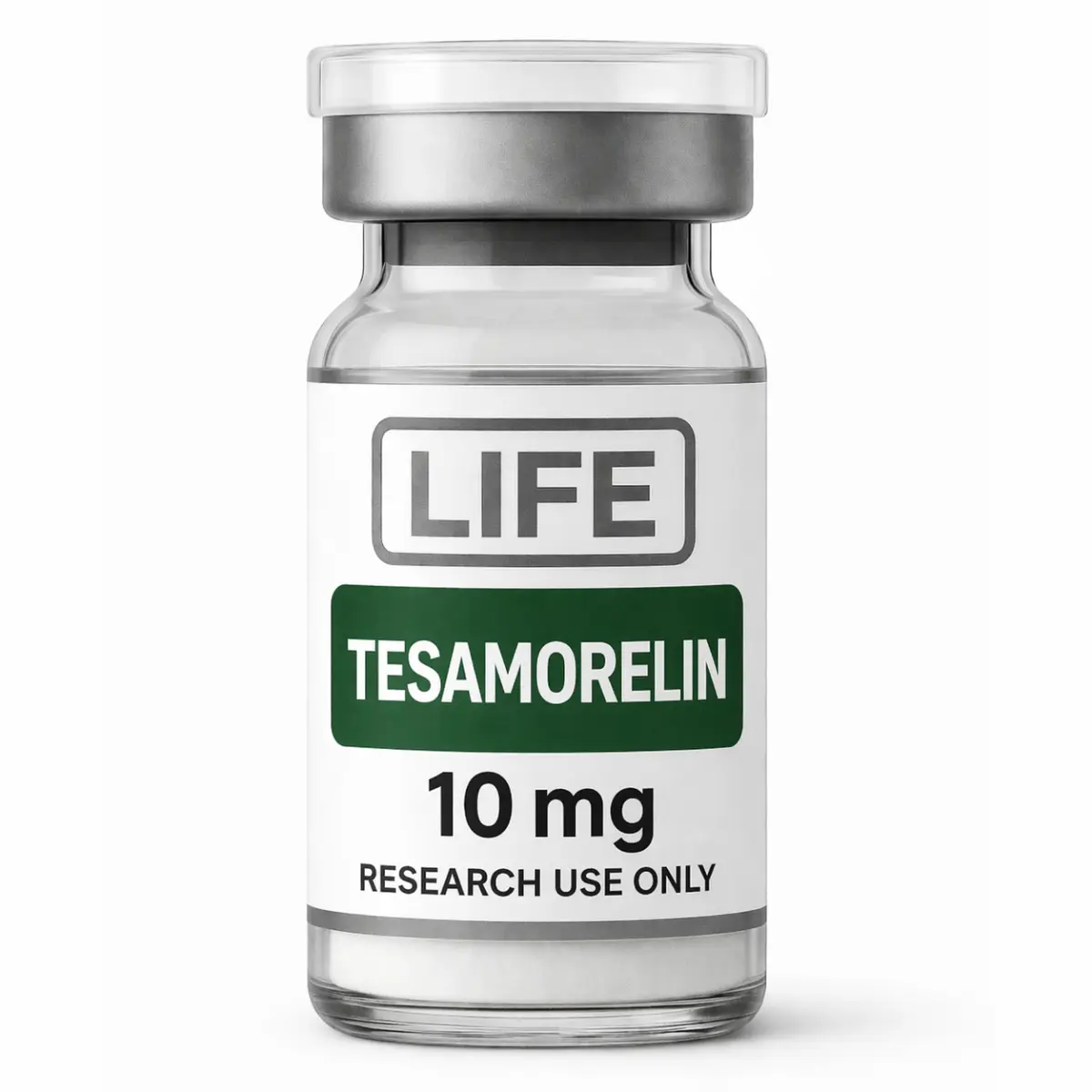
Aplicație: cercetare de laborator și analitică
A nu se consuma de către oameni; nu pentru uz medical, veterinar sau cosmetic
Produs în facilități conforme GMP, sub protocoale stricte de control al calității.
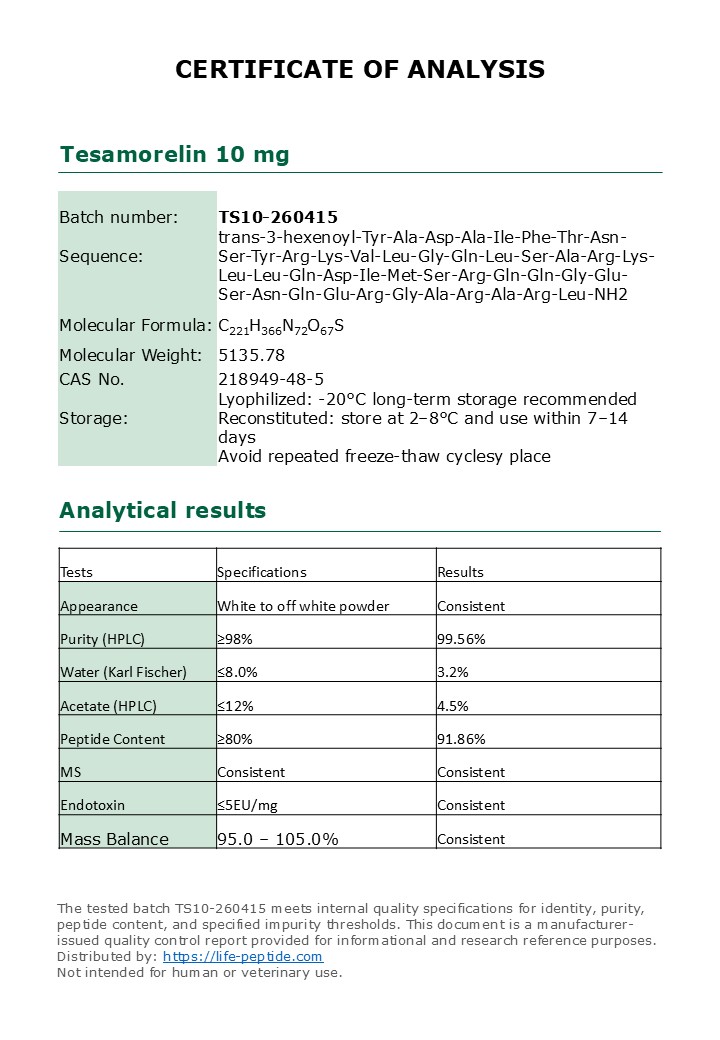
Fiecare lot este testat cu atenție în laborator după producție (puteți găsi Certificatul de Analiză sub imaginile produsului).
Liofilizat (uscat prin congelare) pentru stabilitate maximă și termen de valabilitate extins.
Sigilate în fiole sterile, gata pentru reconstituire.
Puritate: ≥ 99% (HPLC)
Aspect: pulbere albă liofilizată
Formula moleculară: C221H366N72O67S
Greutatea moleculară: 5135.78
Nr. CAS: 218949-48-5
Depozitare: fiolele liofilizate nedeschise sunt cel mai bine păstrate refrigerat la 2–8°C, care este metoda de stocare confirmată de partenerul nostru de producție și potrivită pentru până la 24 de luni. Se preferă refrigerarea deoarece minimizează ciclurile inutile de îngheț-dezgheț în timpul manipulării de rutină. Dacă este necesară o depozitare pe termen mult mai lung, fiolele liofilizate nedeschise pot fi păstrate și congelate. După reconstituire, depozitați întotdeauna la 2–8°C și nu congelați.
Reconstituire și manipulare
Tesamorelin este furnizat sub formă de flacon liofilizat și trebuie manipulat utilizând procedurile standard de reconstituire a the peptidei adecvate mediului de cercetare. Trebuie reconstituit cu apă bacteriostatică înainte de utilizare. Pentru a ajuta la păstrarea integrității structurale, adăugați solventul ales.
Pentru alte informații despre selecția solvenților, planificarea concentrației și depozitare, consultați complet Ghid de Reconstituire a Peptidelor și Calculator de Reconstituire.
Studii cheie publicate
- Falutz J, Allas S, Blot K, et al. Efectele metabolice ale unui factor de eliberare a hormonului de creștere la pacienții cu HIV. New England Journal of Medicine, 2007.
Studiul pivotant de faza a III-a care demonstrează reduceri ale țesutului adipos visceral în urma tratamentului cu Tesamorelin, menținând în același timp masa corporală slabă.
- Stanley TL, Feldpausch MN, Oh J, et al. Efectul tesamorelinului asupra grăsimii viscerale și a grăsimii hepatice la pacienții infectați cu HIV cu acumulare de grăsime abdominală. JAMA, 2014.
Un studiu de referință care arată reduceri ale grăsimii viscerale și hepatice, extinzând cercetarea Tesamorelin în fiziologia hepatică metabolică.
- Spooner LM, et al. Tesamorelin: Un analog al factorului de eliberare a hormonului de creștere pentru lipodistrofia asociată cu HIV. Medicamente, 2012.
O analiză cuprinzătoare care acoperă farmacologia, mecanismul de acțiune și dezvoltarea clinică a Tesamorelinului.
- Badran AS, et al. Compoziția corporală, grăsimea hepatică, rezultatele metabolice și de siguranță ale tesamorelinei: O meta-analiză a studiilor controlate randomizate. Obesity Research & Clinical Practice, 2026.
O meta-analiză recentă care sintetizează evidențele clinice privind compoziția corporală, grăsimea hepatică și rezultatele metabolice din studiile cu Tesamolerină.
Întrebări Frecvente
Ce este Tesamorelin?
Tesamorelinul este un analog sintetic al hormonului uman de eliberare a hormonului de creștere (GHRH). Acesta stimulează glanda pituitară prin receptorul GHRH, promovând eliberarea pulsatilă fiziologică a hormonului de creștere endogen. Este investigat pe scară largă în cercetarea endocrină și metabolică care implică axa GH/IGF-1, compoziția corporală și țesutul adipos visceral.
Cum diferă Tesamorelin de CJC-1295?
Atât Tesamorelin, cât și CJC-1295 sunt analogi GHRH care activează aceeași cale a receptorilor. Tesamorelin are o bază extinsă de dovezi clinice, incluzând aprobarea de reglementare pentru lipodistrofia asociată HIV, în timp ce CJC-1295 rămâne în principal un peptid de cercetare experimentală. Mecanismul lor de acțiune la nivelul receptorilor este similar, dar dezvoltarea lor clinică diferă substanțial.
Cum diferă Tesamorelin de Ipamorelin sau de peptidele GHRP?
Tesamorelinul stimulează eliberarea hormonului de creștere prin receptorul GHRH, în timp ce Ipamorelinul, GHRP-2 și GHRP-6 activează receptorul ghrelinei (GHSR-1a). Acestea sunt căi fiziologice complementare, motiv pentru care analogii de GHRH și peptidele GHRP sunt investigate frecvent împreună în cercetarea endocrinologică.
De ce este tesamorelinul cercetat pe scară largă în cercetarea metabolică?
Dincolo de fiziologia hormonului de creștere, Tesamorelin a fost studiat în mod extensiv pentru efectele sale asupra compoziției corporale, țesutului adipos visceral, grăsimii hepatice, metabolismului lipidic și reglării IGF-1. Această dovadă clinică largă îl distinge de mulți alți secretagogi ai hormonului de creștere.
Ce domenii de cercetare investighează în mod obișnuit Tesamorelin?
Studii publicate au investigat tesamorelinul în ceea ce privește secreția de hormon de creștere, reglarea IGF-1, fiziologia pituitară, compoziția corporală, țesutul adipos visceral, grăsimea hepatică, reglarea metabolică și semnalizarea endocrină.
Poate Tesamorelin fi combinat cu peptide GHRP în cercetare?
Da. Deoarece Tesamorelin activează receptorul GHRH, în timp ce peptidele GHRP activează receptorul grelinei, cercetătorii investighează frecvent aceste căi împreună pentru a studia mecanismele complementare care reglează secreția pulsatilă de hormon de creștere. Designul studiilor individuale variază, iar concluziile trebuie interpretate în contextul cercetărilor publicate.
Pot cumpăra Tesamorelin în Europa?
Da. Expediem Tesamorelin în majoritatea țărilor europene folosind servicii de curierat de încredere. Metodele de livrare disponibile și timpii de livrare sunt afișați în timpul finalizării comenzii, în funcție de destinația dumneavoastră.
Este acest produs destinat uzului uman?
Nu. Tesamorelinul furnizat de Life Peptide este destinat exclusiv cercetării de laborator și analitice. Acesta nu este destinat consumului uman, diagnosticării, tratării sau prevenirii bolilor. Orice referire la studii publicate prezintă o sinteză a literaturii științifice referitoare la molecula de tesamorelin, și nu la utilizarea prevăzută a acestui produs.
Context de cercetare aferent
Tesamorelin aparține clasei de cercetare a analogilor GHRH și a semnalizării hormonului de creștere, care include peptide investigate pentru reglarea endocrină, modularea axei GH și mecanismele de eliberare pulsatilă a hormonilor.
Pentru o prezentare mai largă a căilor de semnalizare GH și a mecanismelor peptidice comparative, consultați-ne Ghid de cercetare privind peptidele hormonului de creștere.
Cercetătorii care studiază interacțiunea axei GH pot examina, de asemenea:
CJC-1295 (fără DAC)
Ipamorelin
GHRP-2
GHRP-6
Răsfoiește toate compușii din Categoria secretagogilor hormonului de creștere.
Cercetătorii care investighează reglarea endocrină pot explora, de asemenea, compuși în Categoria de cercetare metabolică, inclusiv GLP-1 și agoniști incretinici cu căi multiple.
NOTĂ: Aceasta este doar în scopuri educaționale și nu constituie sfat medical.
Renunțarea la răspundere
Acest produs este vândut exclusiv în scopuri de cercetare. Nu este destinat diagnosticării, tratării, vindecării sau prevenirii vreunei boli. Cumpărătorul își asumă întreaga responsabilitate pentru manipularea și utilizarea corespunzătoare.