X

Tirzepatide 10 mg

80,00 

Tirzepatide is a research-grade dual incretin agonist supplied in lyophilised form for laboratory use. It acts on both GLP-1 and GIP receptors and has become a central reference compound in metabolic research, especially in models of appetite regulation, body-weight change, glycaemic control and incretin signalling.

Pureza ≥99% | Envíos a la UE a partir de 5 € | Posibilidad de elegir envío gratuito | Se aceptan pagos con tarjeta

En stock

Descripción

Tirzepatide is a research-grade dual incretin agonist supplied in lyophilised form for laboratory use. It acts on both GLP-1 and GIP receptors and has become a central reference compound in metabolic research, especially in models of appetite regulation, body-weight change, glycaemic control and incretin signalling.

Tirzepatide belongs to a newer class of investigational metabolic peptides designed to engage more than one incretin pathway at the same time, rather than targeting GLP-1 alone. This dual-receptor profile makes it especially relevant in research focused on obesity, glucose homeostasis, insulin signalling, energy balance and next-generation metabolic therapeutics. Tirzepatide is supplied as a lyophilised vial for laboratory and analytical use only.

What is Tirzepatide?

Tirzepatide is an investigational dual incretin receptor agonist designed to activate two key receptor systems involved in metabolic regulation:

  • Receptor GLP-1
  • Receptor GIP

This receptor profile places Tirzepatide between Semaglutida y Retatrutida in mechanistic breadth. Semaglutide primarily targets GLP-1 alone, while Retatrutide extends beyond GLP-1/GIP into agonismo del receptor de glucagón. Tirzepatide occupies the middle ground: broader than classical GLP-1 analogues, but more selective than triple agonists.

Because of that positioning, Tirzepatide has become one of the most important benchmark compounds in current metabolic research. It is widely used as a comparison point in studies examining single-, dual- and triple-receptor incretin strategies. Lilly and peer-reviewed clinical literature consistently describe Tirzepatide as a once-weekly dual GIP/GLP-1 receptor agonist with strong effects on glycaemic and body-weight outcomes in human studies.

Why Tirzepatide matters in metabolic research

Tirzepatide is important because it combines GLP-1 signalling with GIP receptor activity, creating a broader incretin profile than GLP-1 agonists alone while remaining more focused than triple agonists such as Retatrutide.

In the literature, Tirzepatide has been studied in relation to:

  • regulación del peso corporal y señalización del apetito
  • metabolismo de la glucosa y marcadores glucémicos
  • insulin signalling and nutrient handling
  • energy balance and systemic metabolic regulation
  • comparative incretin research across GLP-1, dual agonist and triple agonist models

For researchers building a metabolic peptide panel, Tirzepatide often serves as the central comparator molecule between Semaglutide and Retatrutide. It is one of the clearest examples of how expanding from a single-pathway GLP-1 agonist to a dual incretin agonist can change the metabolic profile under investigation. Your current page already points in this direction; the difference here is that we’re making the comparison logic and search surface much more explicit.

How Tirzepatide works

Tirzepatide is designed to activate two receptor systems involved in metabolic control.

Actividad del receptor GLP-1

La señalización del GLP-1 se asocia con la reducción del apetito, el retraso del vaciamiento gástrico y el soporte de insulina dependiente de la glucosa. Esta es la vía que la mayoría de los investigadores ya conocen de compuestos como la Semaglutida.

Actividad del receptor GIP

GIP signalling is thought to influence insulin secretion, nutrient handling, adipose metabolism and the overall incretin response to food intake. In dual-agonist research, GIP activity is one of the major reasons Tirzepatide is mechanistically broader than GLP-1-only compounds.

Dual incretin profile

The combination of GLP-1 and GIP activity gives Tirzepatide a different metabolic profile from both Semaglutide and Retatrutide. Compared with Semaglutide, it expands the signalling scope beyond GLP-1 alone. Compared with Retatrutide, it remains more selective because it does not include glucagon receptor agonism.

That makes Tirzepatide particularly useful in research focused on:

  • GLP-1 vs dual agonist comparisons
  • body-weight and appetite outcomes
  • glucose homeostasis and insulin dynamics
  • the transition from single-pathway to multi-pathway incretin modulation

Published clinical findings on Tirzepatide

Tirzepatide has become one of the most closely followed metabolic peptides because published human studies have reported substantial effects on body weight, glycaemic control and broader cardiometabolic markers. In the SURMOUNT-1 trial published in the New England Journal of Medicine, once-weekly Tirzepatide produced dose-dependent reductions in body weight over 72 weeks in adults with obesity or overweight, with the highest-dose arm showing some of the strongest weight-loss outcomes reported at the time for an incretin-based therapy.

Tirzepatide has also shown strong glycaemic effects in type 2 diabetes research. In SURPASS-2, Tirzepatide was compared directly with once-weekly Semaglutide and demonstrated greater HbA1c reduction and greater weight reduction across the studied dose arms. Additional SURPASS studies have further established Tirzepatide as one of the key dual agonists in the current metabolic literature. Your current page already cites the most important trials — SURMOUNT-1, SURPASS-2 and related diabetes work — which is exactly the right evidence base for this section.

Taken together, these trials are the main reason Tirzepatide is so often used as a reference point in modern obesity and diabetes research. It sits at the centre of the comparison between GLP-1 agonists, dual GLP-1/GIP agonists, and newer triple agonist approaches.

Resultados publicados de seguridad y tolerabilidad

Published clinical studies on Tirzepatide indicate that the most commonly reported adverse events are gastrointestinal, especially nausea, diarrhoea, decreased appetite, vomiting and constipation. As with other incretin-based agents, these events were generally more common than with placebo and were often relacionado con la dosis, particularly during the dose-escalation phase of treatment.

Across the major clinical programs, most gastrointestinal events were described as leve a moderado in severity, and discontinuation rates were still an important part of how Tirzepatide’s overall profile was evaluated. This is one of the reasons published Tirzepatide research is typically discussed not only in terms of efficacy, but also in terms of tolerabilidad durante la escalada, GI event burden and the balance between metabolic benefit and dropout risk.

This section summarises published findings on investigational and clinical Tirzepatide research, not instructions or expectations for use of this product.

Published dosing schedules used in Tirzepatide research

Published Tirzepatide studies generally used once-weekly administration with stepwise dose escalation rather than starting at the final target dose immediately. In the major obesity and diabetes trials, Tirzepatide was typically studied at 5 mg, 10 mg and 15 mg maintenance doses, with escalation from a lower starting dose over a period of weeks to improve tolerability. Your current reference list already points to the core trials that established this structure.

In practical terms, the published research design for Tirzepatide is important because it shows that efficacy and tolerability were studied together. Researchers did not simply test “one Tirzepatide dose”; they tested staged escalation strategies leading to different maintenance doses. That is one of the reasons Tirzepatide remains such a useful comparator compound in metabolic peptide research.

Example of the maintenance-dose structure commonly used in major trials

Published study contextInitial dosing approach in the trialMaintenance dose arms studiedFrecuenciaDuration
Obesity / diabetes clinical trialsstepwise escalation from lower starting dose5 mguna vez por semanavaried by trial
Obesity / diabetes clinical trialsstepwise escalation from lower starting dose10 mguna vez por semanavaried by trial
Obesity / diabetes clinical trialsstepwise escalation from lower starting dose15 mguna vez por semanavaried by trial

Estos esquemas se incluyen como un resumen del diseño de investigación publicado y no como instrucciones para el uso de este producto.

Tirzepatide vs Semaglutide vs Retatrutide

Researchers often compare these three compounds because they sit on the same metabolic spectrum, but they are not interchangeable.

Tirzepatida

  • Agonista dualGLP-1 + GIP
  • Central benchmark for dual incretin research
  • A menudo se discute en relación con body-weight outcomes, glycaemic control and incretin signalling

Semaglutida

  • Agonista únicoGLP-1
  • More selective and mechanistically narrower
  • Punto de referencia común para Investigación sobre la vía del GLP-1

Retatrutida

  • Agonista triple: GLP-1 + GIP + glucagón
  • Broader receptor profile than Tirzepatide
  • A menudo se discute en relación con weight loss, energy expenditure and next-generation multi-pathway metabolic modulation

For researchers comparing incretin classes, Tirzepatide often functions as the middle reference point between single-pathway GLP-1 agonists and broader triple-agonist designs.

Características del producto

Aplicación: investigación de laboratorio y análisis
Uso restringido: no apto para consumo humano; no apto para uso médico, veterinario o cosmético
Producido en instalaciones que cumplen con GMP bajo estrictos protocolos de control de calidad.
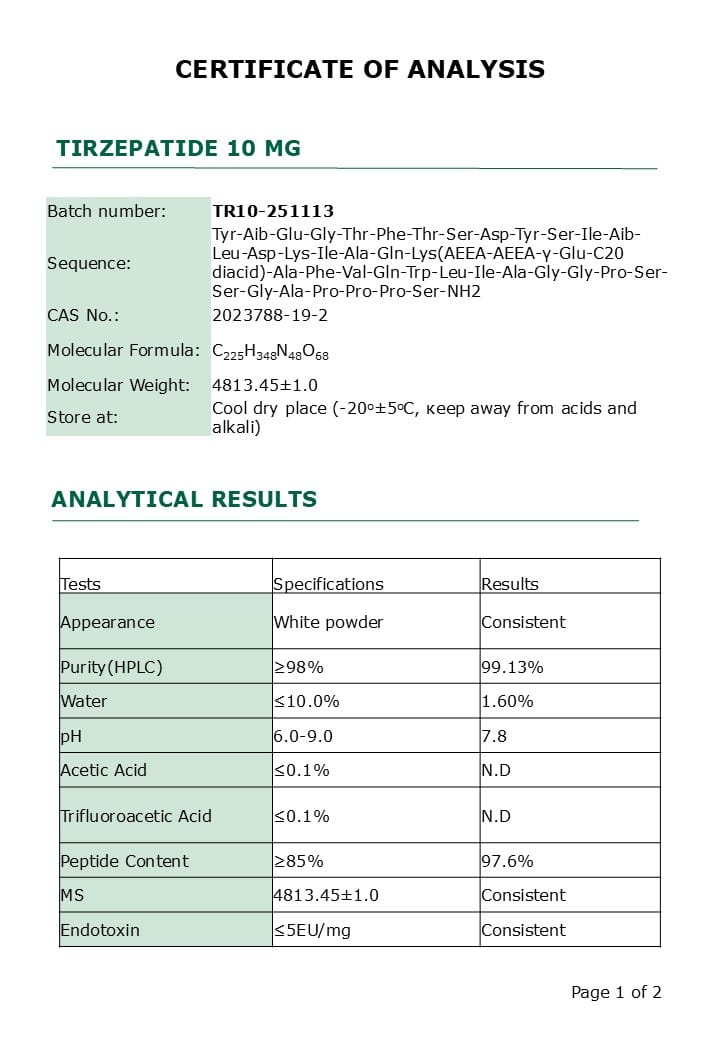
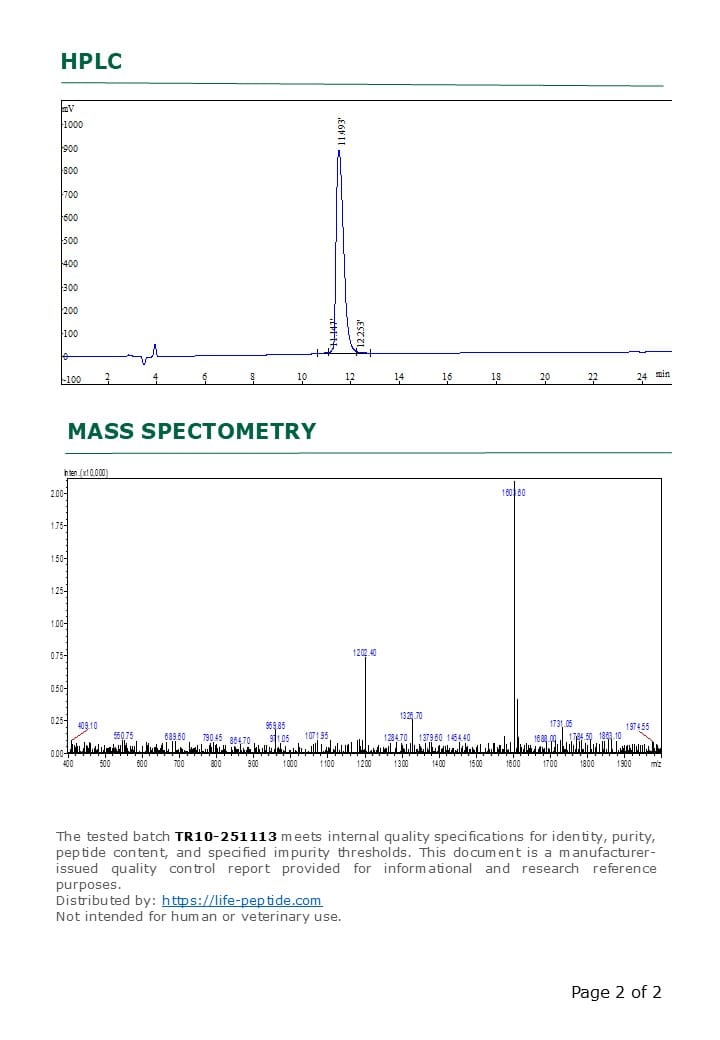
Cada lote se somete a pruebas de laboratorio exhaustivas después de la producción (puede encontrar el Certificado de Análisis debajo de las imágenes del producto).
Liofilizado (liofilizado) para máxima estabilidad y vida útil prolongada.
Sellado en viales estériles, listo para la reconstitución.
Purity: ≥99% (HPLC-tested)
Appearance: Lyophilized white/off-white powder
Fórmula molecular: C225H348N48O68
Molecular weight: 4813.45
Sequence: Tyr-Aib-Glu-Gly-Thr-Phe-Thr-Ser-Asp-Tyr-Ser-Ile-Aib-Leu-Asp-Lys-Ile-Ala-Gln-Lys(AEEA-AEEA-γ-Glu-C20 diacid)-Ala-Phe-Val-Gln-Trp-Leu-Ile-Ala-Gly-Gly-Pro-Ser-Ser-Gly-Ala-Pro-Pro-Pro-Ser-NH2
Almacenamiento: los viales liofilizados sin abrir se almacenan mejor refrigerar a 2–8 °C, que es el método de almacenamiento confirmado por nuestro socio de fabricación y adecuado para hasta 24 meses. Se prefiere la refrigeración porque minimiza los ciclos innecesarios de congelación y descongelación durante la manipulación rutinaria. Si se requiere un almacenamiento a más largo plazo, los viales liofilizados sin abrir también pueden mantenerse congelados. Una vez reconstituidos, almacene siempre a 2–8 °C y no congele.

Verificación independiente por terceros

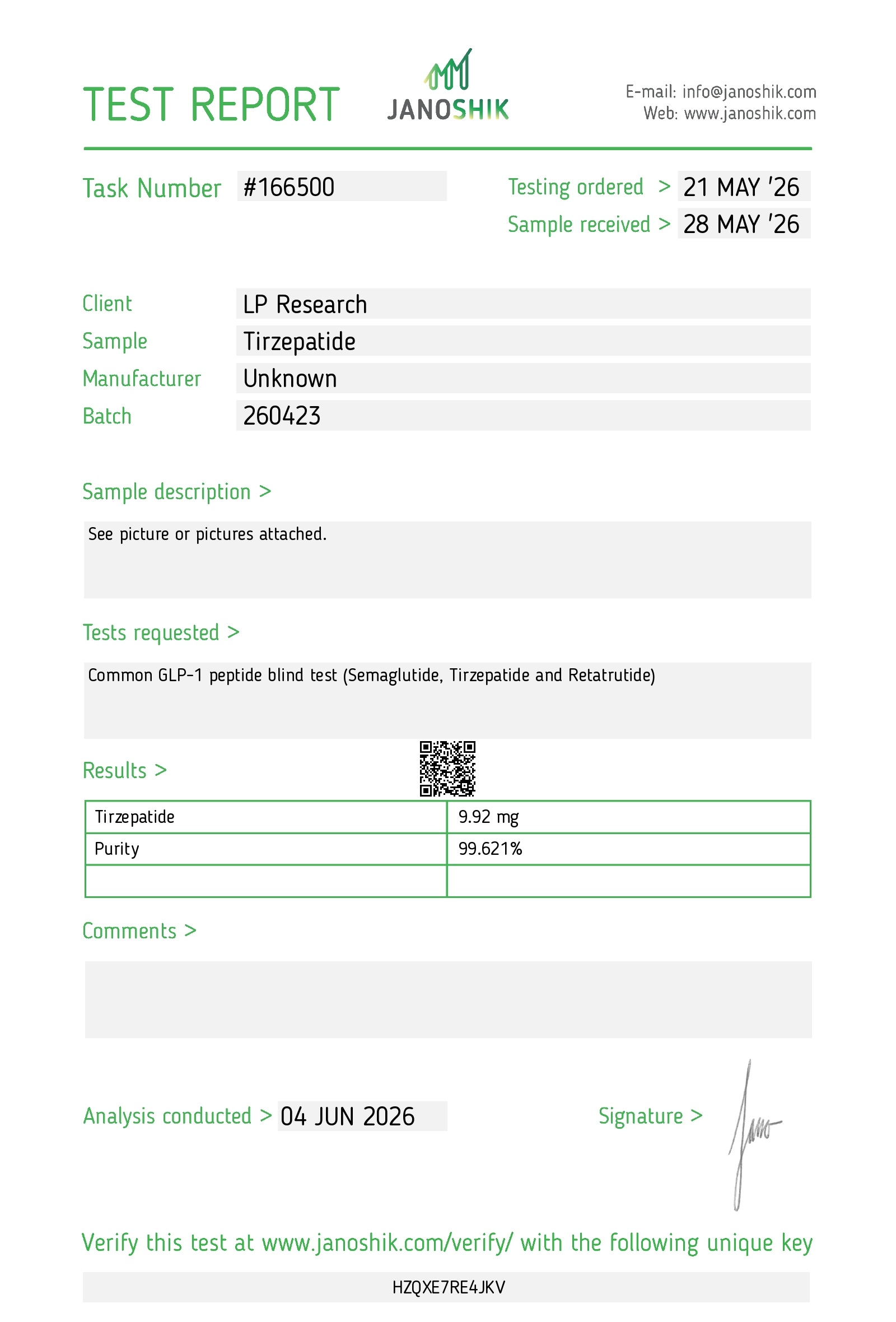
Este lote ha sido sometido a una verificación analítica adicional por parte de terceros a través de Janoshik Analytical
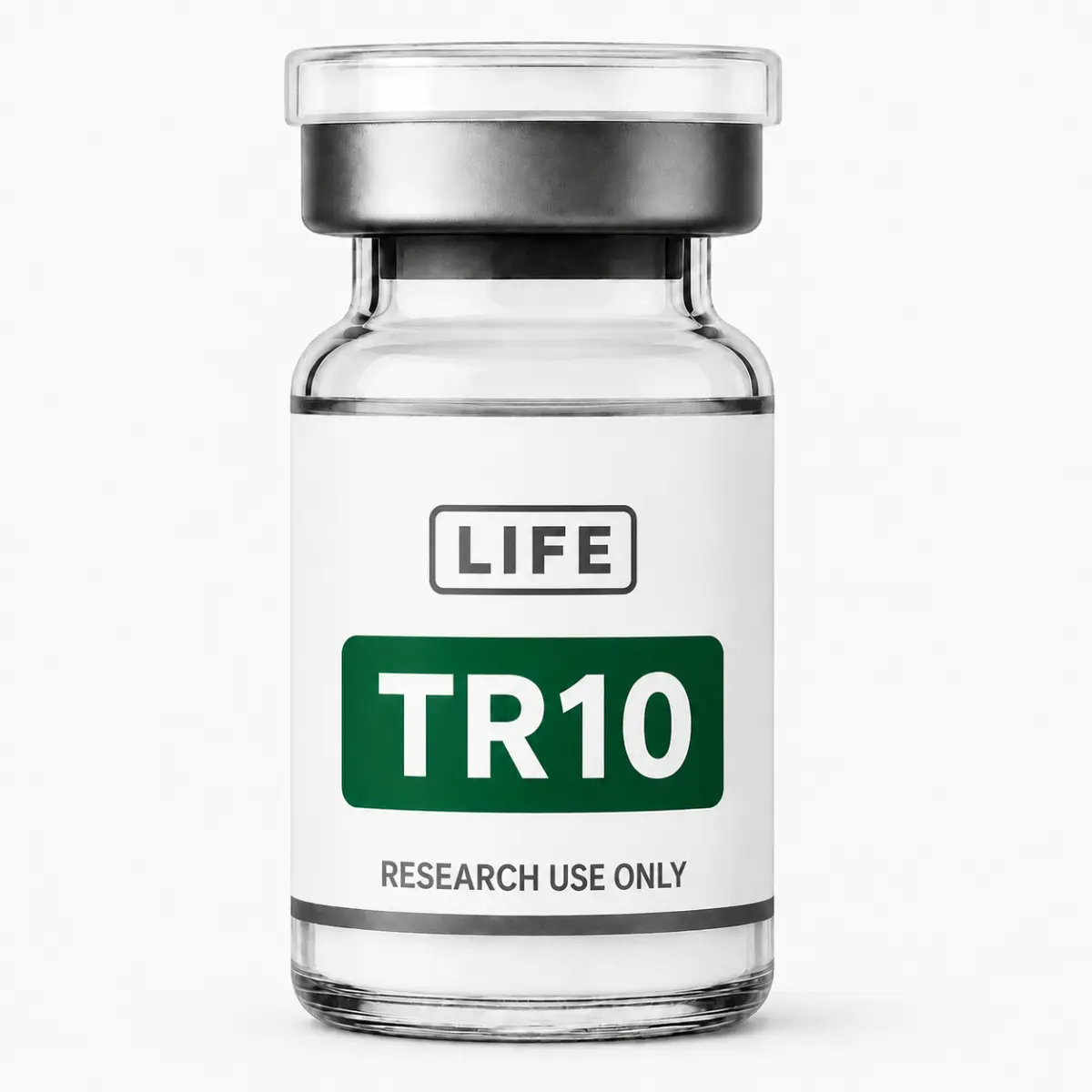
Batch: TR10-260423
Internal HPLC purity: 99.13%
Third-party verification: 99.62% independently confirmed high purity and identity consistency. Verificar terceros.

Reconstitución y manipulación

Tirzepatide is supplied as a lyophilised vial and should be handled using standard peptide reconstitution procedures appropriate to the research setting. Must be reconstituted with agua bacteriostática Antes de usar. Los péptidos de la clase GLP-1 a veces tardan en disolverse y requieren una reconstitución muy suave para evitar la formación de espuma o que queden ligeramente turbios.

Para otras guías sobre selección de solventes, planificación de concentraciones y almacenamiento, consulte el completo Guía de Reconstitución de Péptidos y Calculadora de Reconstitución.

Referencias de investigación seleccionadas

  • Jastreboff AM et al. “Tirzepatide Once Weekly for the Treatment of Obesity.” New England Journal of Medicine, 2022.
  • Frias JP et al. “Tirzepatide versus Semaglutide Once Weekly in Patients with Type 2 Diabetes.” New England Journal of Medicine, 2021.
  • Ludvik B et al. “Once-weekly tirzepatide versus once-daily insulin degludec as add-on to metformin.” The Lancet, 2021.
  • Coskun T y cols. “LY3298176, a novel dual GIP and GLP-1 receptor agonist for the treatment of type 2 diabetes mellitus.” Molecular Metabolism, 2018.

Preguntas frecuentes

What kind of peptide is Tirzepatide?

Tirzepatide is an investigational dual incretin agonist designed to activate GLP-1 and GIP receptors.

How is Tirzepatide different from Semaglutide?

Semaglutide primarily targets GLP-1 alone, while Tirzepatide combines GLP-1 and GIP receptor activity, giving it a broader incretin signalling profile.

How is Tirzepatide different from Retatrutide?

Retatrutide is a triple agonist that adds glucagon receptor activity to the GLP-1/GIP profile. Tirzepatide remains more selective as a dual GLP-1/GIP agonist.

What research areas is Tirzepatide associated with?

Tirzepatide has been studied in the literature in relation to body-weight outcomes, appetite regulation, glycaemic control, insulin signalling and incretin biology.

¿Está este producto destinado al uso humano?

No. Este producto se suministra estrictamente para uso en investigación únicamente y no está destinado al consumo humano ni a uso terapéutico.

Contexto de investigación relacionado

Tirzepatide is part of the dual incretin receptor agonist (GLP-1/GIP) metabolic research class. For mechanistic comparison with single-pathway GLP-1 agonists and triple-agonist compounds, see our Guía de investigación metabólica de GLP-1.

Explorar todos los compuestos en el Categoría de investigación metabólica.

Los investigadores que comparan la activación de múltiples receptores también pueden examinar:

NOTE: This is for educational reference only and does not constitute medical advice.

Disclaimer:
Este producto se vende únicamente para fines de investigación. No está destinado a diagnosticar, tratar, curar ni prevenir ninguna enfermedad. El comprador asume toda la responsabilidad por su manipulación y uso adecuados.
Valoraciones

No hay valoraciones aún.

Sé el primero en valorar “Tirzepatide 10 mg”

Tu dirección de correo electrónico no será publicada. Los campos obligatorios están marcados con *

Productos relacionados