Descrizione
KPV (Lis-Pro-Val) è un composto naturale frammento di tre amminoacidi dell'ormone stimolante i melanociti alfa (α-MSH). Nonostante le sue piccole dimensioni, conserva gran parte dell'ormone genitore attività antinfiammatoria pur mantenendo gli effetti di pigmentazione associati all'α-MSH a lunghezza intera.
A differenza di molti peptidi immunomodulatori, KPV sembra regolare la segnalazione infiammatoria senza sopprimere ampiamente la funzione immunitaria. Ciò ne ha fatto uno dei peptidi investigativi più interessanti per la ricerca sulle malattie infiammatorie, sulla funzione di barriera epiteliale e sull'immunità delle mucose.
Vuoi acquistare KPV in Europa? Life Peptide fornisce KPV ad alta purezza per la ricerca di laboratorio, con spedizioni affidabili in tutta l'Unione Europea.
Perché KPV è ampiamente studiato
La ricerca pubblicata ha studiato KPV in relazione a:
- regolazione immunitaria
- segnalazione infiammatoria
- ricerca sulla salute intestinale
- funzione di barriera intestinale
- infiammazione della pelle
- biologia epiteliale
- guarigione delle ferite
- immunità mucosale
- Segnalazione NF-κB
A causa delle sue dimensioni ridotte e del suo meccanismo unico, KPV è diventato uno dei peptidi di ricerca più conosciuti che mirano alle vie infiammatorie piuttosto che alla riparazione dei tessuti strutturali.
Come funziona KPV
A differenza di BPC-157 o TB-500, KPV è principalmente studiato per i suoi effetti su segnalazione immunitaria piuttosto che rigenerazione tissutale.
La ricerca pubblicata ha esplorato la sua relazione con:
Segnalazione infiammatoria
La KPV è stata ampiamente studiata per la sua capacità di ridurre l'attivazione delle vie infiammatorie, incluso NF-κB, con conseguente riduzione della produzione di molteplici mediatori pro-infiammatori in modelli sperimentali.
Ricerca sulla barriera intestinale
Una delle aree di indagine più ampie si concentra sulle cellule epiteliali intestinali e sui modelli sperimentali di malattie infiammatorie intestinali, dove KPV ha dimostrato effetti sull'integrità epiteliale e sulla segnalazione infiammatoria.
Biologia della pelle
I ricercatori hanno anche esplorato il KPV nei modelli di condizioni infiammatorie della pelle e nella riparazione delle ferite a causa dei suoi effetti sui tessuti epiteliali.
Modulazione immunitaria
Le prove attuali suggeriscono che KPV modula le risposte immunitarie piuttosto che produrre un'immunosoppressione generalizzata, rendendolo un candidato interessante per studi sulla regolazione fisiologica dell'infiammazione.
Perché KPV sta diventando sempre più importante
L'interesse per KPV è aumentato significativamente negli ultimi anni perché rappresenta un approccio diverso alla ricerca sull'infiammazione.
Piuttosto che concentrarsi principalmente sulla riparazione dei tessuti strutturali come BPC-157 o rigenerazione sistemica come TB-500, KPV indaga vie di segnalazione che iniziano e mantengono l'infiammazione.
Questa biologia complementare ha reso il KPV sempre più popolare nella ricerca che coinvolge le malattie infiammatorie intestinali, la biologia della pelle e la funzione della barriera epiteliale.
Ricerca umana e preclinica
La maggior parte delle prove pubblicate per KPV proviene da colture cellulari e modelli animali.
La ricerca ha indagato costantemente il segnale infiammatorio nell'intestino, nella pelle, nei polmoni e nei tessuti epiteliali, mentre l'evidenza clinica umana rimane limitata. Sebbene i dati preclinici siano incoraggianti, sono necessarie ulteriori ricerche sull'uomo prima di poter trarre conclusioni riguardo alle applicazioni cliniche.
Osservazioni di sicurezza pubblicate
Le conoscenze attuali sul KPV derivano prevalentemente da ricerche di laboratorio e precliniche. Gli studi pubblicati riportano generalmente una buona tollerabilità nei modelli sperimentali, ma le prove cliniche controllate sull'uomo rimangono limitate. Come per molti peptidi di ricerca emergenti, sono necessari ulteriori studi per caratterizzare appieno l'efficacia e la sicurezza a lungo termine.
Caratteristiche del prodotto
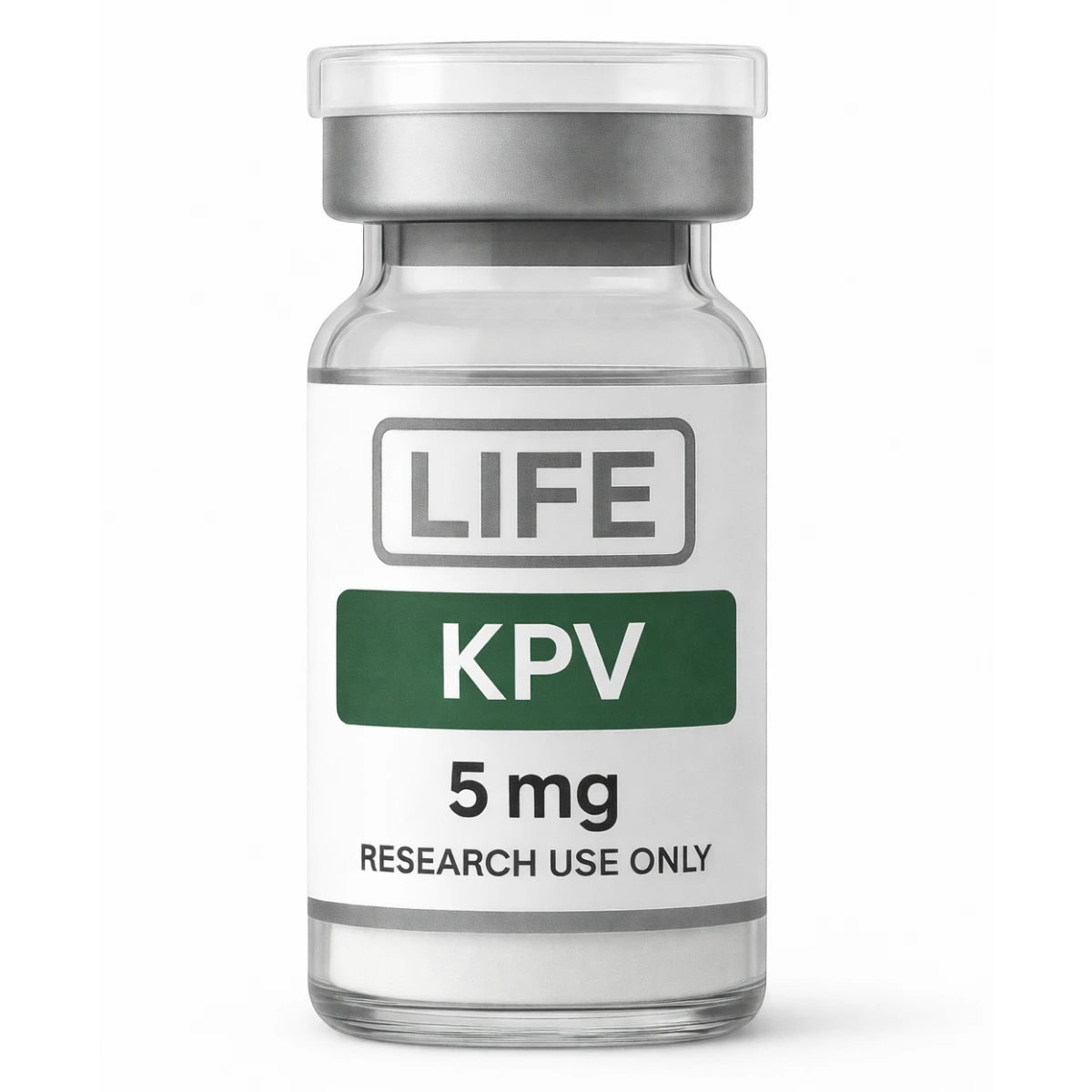
Applicazione: ricerca di laboratorio e analitica
Uso limitato: non per il consumo umano; non per uso medico, veterinario o cosmetico
Prodotto in stabilimenti conformi alle GMP secondo rigidi protocolli di controllo qualità.
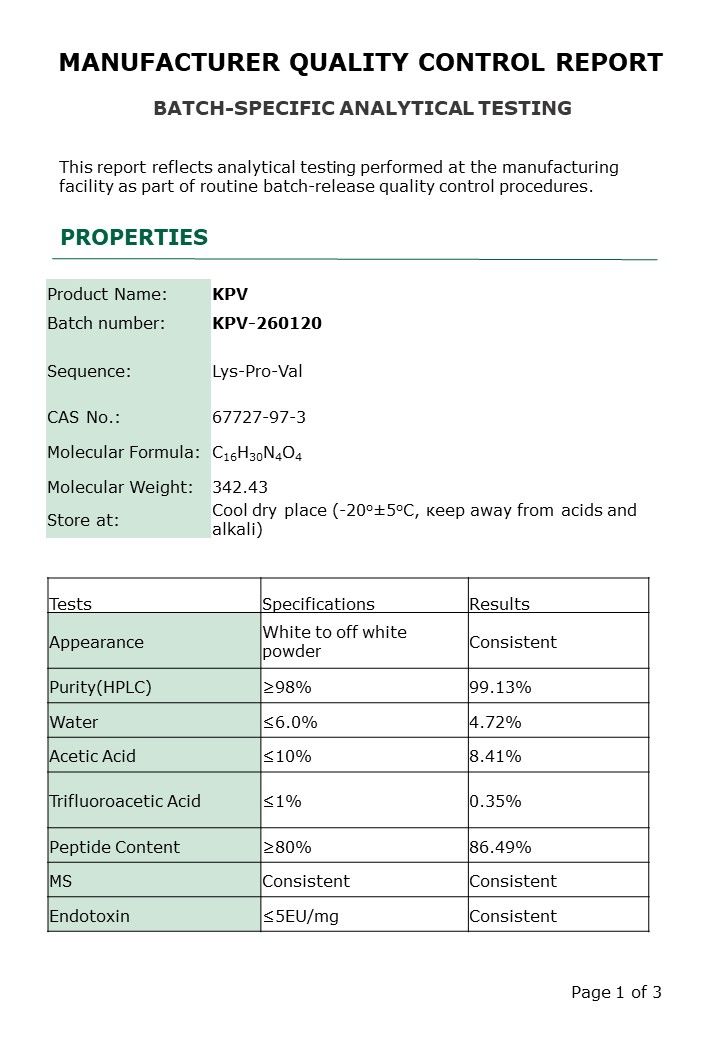
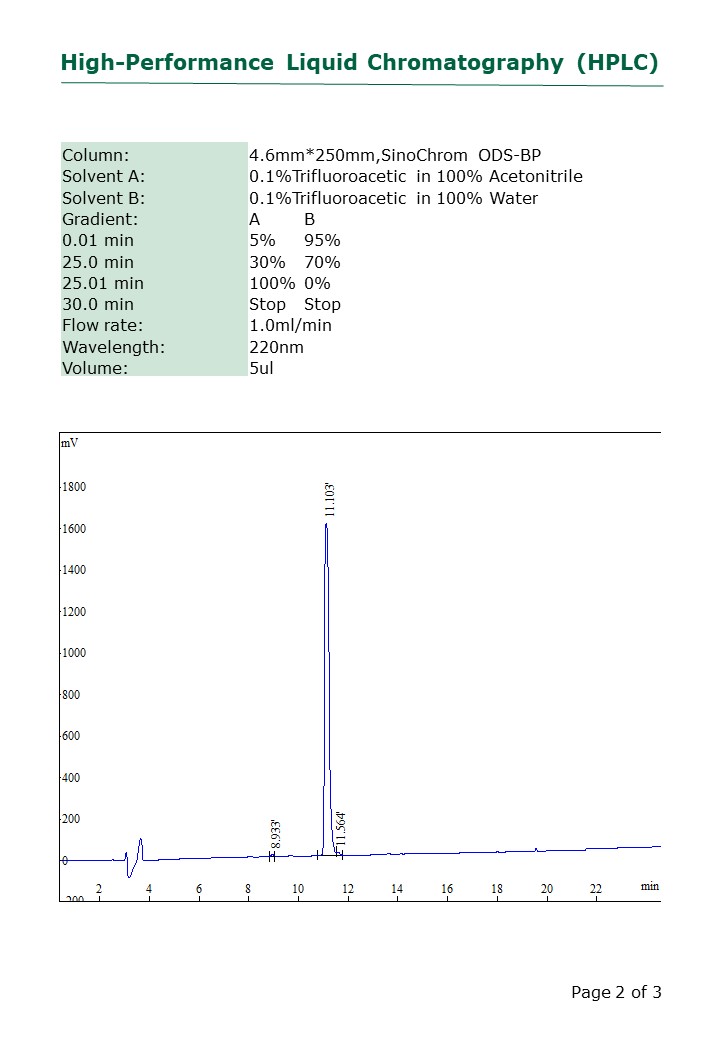
Ogni lotto viene accuratamente testato in laboratorio dopo la produzione (puoi trovare il Certificato di Analisi sotto le immagini del prodotto).
Liofilizzato (liofilizzato) per la massima stabilità e una lunga durata di conservazione.
Sigillato in fiale sterili, pronto per la ricostituzione.
Purezza: ≥99% (testato mediante HPLC)
Aspetto: polvere liofilizzata bianca/bianco sporco
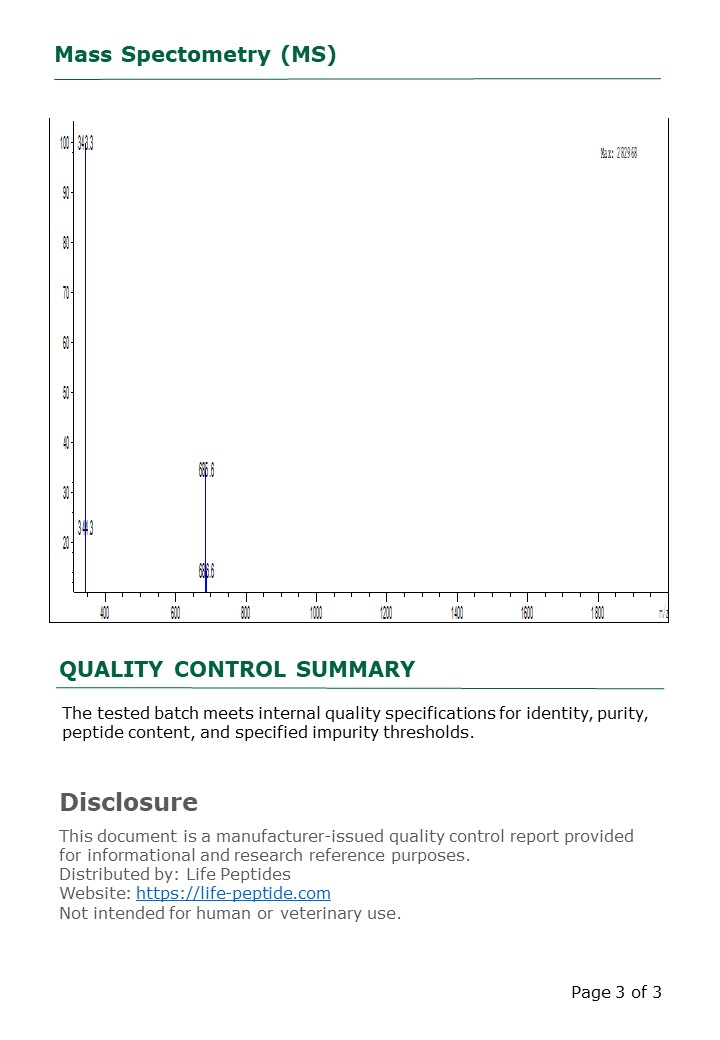
Formula molecolare: C16H30N4O4
Peso molecolare: 342.43
Lis-Pro-Val
Archiviazioneflaconcini liofilizzati non aperti sono meglio conservati refrigerato a 2–8°C, che è il metodo di conservazione confermato dal nostro partner di produzione e adatto fino a 24 mesi. Si preferisce la refrigerazione perché minimizza inutili cicli di congelamento-scongelamento durante la manipolazione di routine. Se è necessaria una conservazione a termine sostanzialmente più lungo, i flaconcini liofilizzati non aperti possono anche essere conservati congelati. Una volta ricostituita, conservare sempre a 2-8°C e non congelare.
Ricostituzione e manipolazione
KPV è fornito in una fiala liofilizzata e deve essere maneggiato utilizzando le procedure standard di ricostituzione dei peptidi appropriate per il contesto di ricerca. Deve essere ricostituito con acqua batteriostatica prima dell'uso. Per aiutare a preservare l'integrità strutturale, aggiungere il solvente scelto lentamente contro la parete interna del flaconcino piuttosto che direttamente sulla polvere del peptide, ed evitare agitazioni vigorose. Il delicato movimento rotatorio è generalmente sufficiente una volta che il peptide si è completamente sciolto. La pratica standard di laboratorio include anche il far raggiungere ai flaconcini refrigerati la temperatura ambiente prima della ricostituzione per minimizzare la condensa all'interno del flaconcino.
Per altre indicazioni sulla scelta del solvente, sulla pianificazione della concentrazione e sullo stoccaggio, consultare il pieno Guida alla Ricostituzione dei Peptidi e Calcolatore di Ricostituzione.
Riferimenti di ricerca selezionati
- Dalmasso G, et al. Assorbimento del tripeptide KPV mediato da PepT1 riduce l'infiammazione intestinale, Molecular Therapy, 2011
Uno studio fondamentale che dimostra l'assorbimento epiteliale di KPV e la riduzione della segnalazione infiammatoria nell'infiammazione intestinale sperimentale.
- Kannengiesser K, et al. KPV protegge dalla colite sperimentale attraverso la modulazione delle vie infiammatorie, Gastroenterology Research, 2017
Ricerca che dimostra effetti protettivi del KPV in modelli sperimentali di malattia infiammatoria intestinale.
- Brzoska T, Luger TA, et al. Alpha-MSH e il Tripeptide C-Terminale KPV nell'Infiammazione, Journal of Investigative Dermatology, 2003
Una revisione fondamentale che spiega perché il frammento KPV mantiene una potente attività antinfiammatoria nonostante sia privo della sequenza completa di α-MSH.
- Merlin D, et al. Regolazione Immunitaria Epiteliale e KPV, varie pubblicazioni
Una serie di studi che esplorano il trasporto di KPV attraverso PepT1 e la regolazione della segnalazione infiammatoria epiteliale.
Domande Frequenti
Cos'è KPV?
KPV è un tripeptide presente in natura derivato dall'ormone stimolante i melanociti alfa (α-MSH). È ampiamente studiato per la regolazione immunitaria, la segnalazione infiammatoria e la ricerca sulla barriera epiteliale.
Perché KPV è diverso da BPC-157?
Sebbene entrambi i peptidi siano frequentemente discussi nella ricerca sul recupero, il BPC-157 è principalmente studiato per la riparazione dei tessuti, mentre il KPV si concentra sulla regolazione immunitaria e sulla segnalazione infiammatoria. I loro bersagli biologici sono complementari piuttosto che identici.
Perché KPV è associato alla ricerca sulla salute intestinale?
Gran parte della letteratura pubblicata ha indagato sul KPV nelle cellule epiteliali intestinali e nei modelli sperimentali di malattie infiammatorie intestinali a causa dei suoi effetti sulla segnalazione infiammatoria e sulla funzione di barriera epiteliale.
Quali aree di ricerca indagano comunemente il KPV?
La ricerca attuale include la regolazione immunitaria, l'infiammazione intestinale, la biologia epiteliale, la guarigione delle ferite, l'infiammazione cutanea, l'immunità delle mucose e la segnalazione infiammatoria.
Il KPV agisce attraverso i recettori della melanocortina?
Le prove attuali suggeriscono che molti degli effetti antinfiammatori di KPV si verificano indipendentemente dalla segnalazione classica dei recettori dei melanocortine, rendendolo meccanicisticamente distinto dall'α-MSH a lunghezza intera.
Posso comprare KPV in Europa?
Sì. Spediamo KPV nella maggior parte dei paesi europei utilizzando servizi di corriere affidabili. I metodi di spedizione disponibili e i tempi di consegna vengono visualizzati durante il checkout in base alla tua destinazione.
Questo prodotto è destinato all'uso umano?
Il KPV fornito da Life Peptide è destinato esclusivamente alla ricerca di laboratorio e analitica. Non è destinato al consumo umano, né alla diagnosi, al trattamento o alla prevenzione di malattie. Qualsiasi riferimento a studi pubblicati riporta una sintesi della letteratura scientifica relativa alla molecola KPV e non all’uso previsto di questo prodotto.
Contesto di ricerca correlato
KPV appartiene a Ricerca sui peptidi per la guarigione e il recupero, con un'attenzione maggiore sulla segnalazione infiammatoria e sull'indagine delle vie epiteliali. Il KPV viene spesso discusso insieme ad altri peptidi di ricerca che studiano la regolazione immunitaria, la riparazione e il recupero dei tessuti:
BPC-157 – studiato principalmente per la riparazione dei tessuti, la biologia dei tendini e l'angiogenesi.
TB-500 (Timosina β4) – studiata per la migrazione cellulare, la rigenerazione e la guarigione delle ferite.
Miscela Luminosa – combina GHK-Cu, BPC-157 e TB-500 per la ricerca sul recupero multipathway.
Miscela Wolverine – combina BPC-157 e TB-500 per studi sul tessuto connettivo e sulla rigenerazione.
GHK-Cu – studiato nella biologia della pelle, nel rimodellamento della matrice extracellulare e nella riparazione delle ferite.
Sebbene questi peptidi siano spesso raggruppati nella ricerca sul recupero, KPV si distingue concentrandosi principalmente sulla regolazione immunitaria e sulla segnalazione infiammatoria anziché sulla rigenerazione dei tessuti strutturali.
Per un contesto più ampio, vedi Guida alla ricerca sulla guarigione e il recupero.
NOTA: Questo è solo a scopo didattico e non costituisce parere medico.
Dichiarazione di non responsabilità:
Questo prodotto è venduto esclusivamente a scopo di ricerca. Non è destinato a diagnosticare, trattare, curare o prevenire alcuna malattia. L'acquirente si assume la piena responsabilità per la corretta manipolazione e utilizzo.