Descrizione
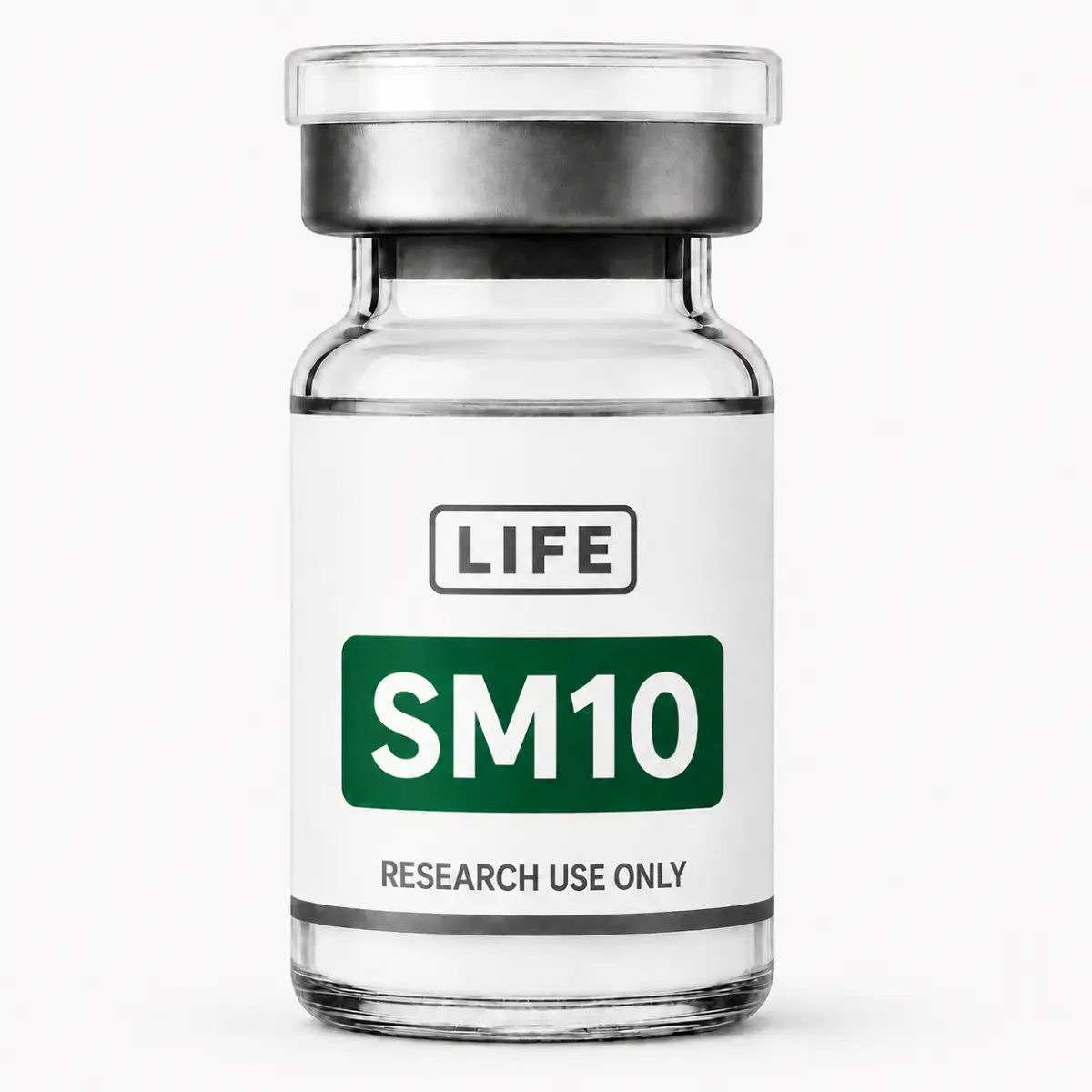
Semaglutide 10 mg in Europa Vuoi acquistare il semaglutide in Europa? Life Peptide fornisce semaglutide ad alta purezza per la ricerca di laboratorio, con spedizioni affidabili in tutta l'Unione Europea.
Semaglutide è un agonista del recettore GLP-1 a lunga durata d'azione progettato per mimare l'attività del glucagon-like peptide-1 endogeno, fornendo al contempo un'attività biologica sostanzialmente più lunga rispetto all'ormone nativo. A differenza di Tirzepatide e Retatrutide, la semaglutide attiva solo il recettore GLP-1, rendendola il membro più semplice della generazione attuale di peptidi incretinici. Questo meccanismo selettivo ha reso la semaglutide uno dei peptidi metabolici più ampiamente studiati in entrambe le ricerche precliniche e cliniche nell'ultimo decennio.
A causa di questo vasto corpus di prove, la semaglutide è frequentemente utilizzata come il composto di riferimento nella valutazione dei più recenti agonisti a doppio e triplo recettore.
Perché la semaglutide rimane importante nella ricerca metabolica
Sebbene i più recenti agonisti multirecettoriali abbiano attirato notevole attenzione, la semaglutide continua a fungere da punto di riferimento scientifico per la biologia del GLP-1.
La ricerca pubblicata ha indagato la semaglutide in relazione a:
- regolazione dell'appetito
- riduzione del peso corporeo
- controllo glicemico
- secrezione di insulina
- svuotamento gastrico
- esiti cardiovascolari
- sindrome metabolica
- steatosi epatica non alcolica
- segnalazione incretinica a lungo termine
La sua vasta letteratura clinica rende la semaglutide una delle molecole di confronto più importanti nella ricerca sull'obesità e sul metabolismo. Molti studi moderni che valutano la tirzepatide, la retatrutide e le emergenti combinazioni di GLP-1 utilizzano la semaglutide come lo standard di riferimento.
Come funziona la semaglutide
Semaglutide attiva selettivamente il recettore del GLP-1, un regolatore chiave dell'appetito, dell'omeostasi del glucosio e della segnalazione gastrointestinale.
L'attivazione dei recettori del GLP-1 è stata associata in ricerche pubblicate a:
- secrezione di insulina glucosio-dipendente
- soppressione del rilascio di glucagone
- svuotamento gastrico ritardato
- riduzione dell'apporto alimentare
- alterato segnale centrale dell'appetito
- miglioramenti in diversi marcatori metabolici
A differenza della tirzepatide, la semaglutide fa non attiva i recettori GIP. A differenza di Retatrutide, ha niente glucagone attività del recettore.
Il suo valore risiede quindi nel fornire un ben caratterizzato Modello GLP-1 a singola via, rendendolo il comparatore logico per i nuovi composti incretinici.
Semaglutide vs Tirzepatide vs Retatrutide
Semaglutide
- Agonista del recettore GLP-1
- singolo meccanismo recettoriale
- maggiore base di prove cliniche
- composto di riferimento per la ricerca sul GLP-1
Tirzepatide
- GLP-1 + GIP doppio agonista
- segnalazione incretinica più ampia
- frequentemente confrontato direttamente con il Semaglutide
Retatrutide
- GLP-1 + GIP + glucagone triplo agonista
- profilo recettoriale più ampio
- rappresenta l'ultima generazione di peptidi metabolici multirecettoriali
Per i ricercatori che studiano la biologia delle incretine, il semaglutide costituisce la base di partenza per la valutazione di composti agonisti doppi e tripli.
Caratteristiche del prodotto
Applicazione: ricerca di laboratorio e analitica
Uso limitato: non per il consumo umano; non per uso medico, veterinario o cosmetico
Prodotto in stabilimenti conformi alle GMP secondo rigidi protocolli di controllo qualità.
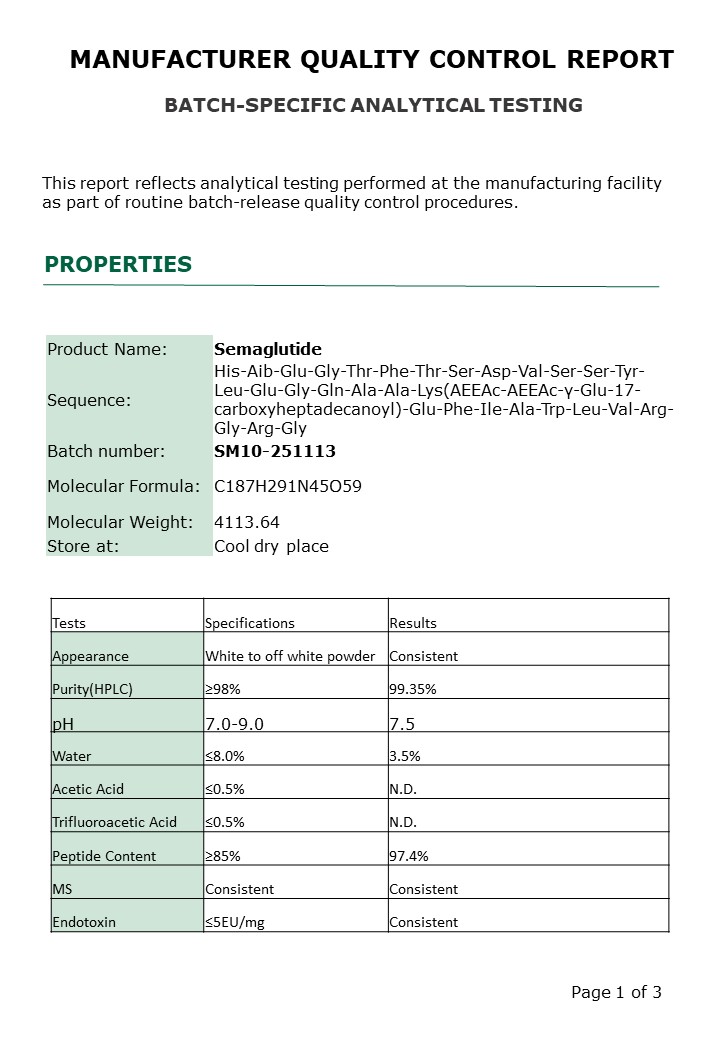
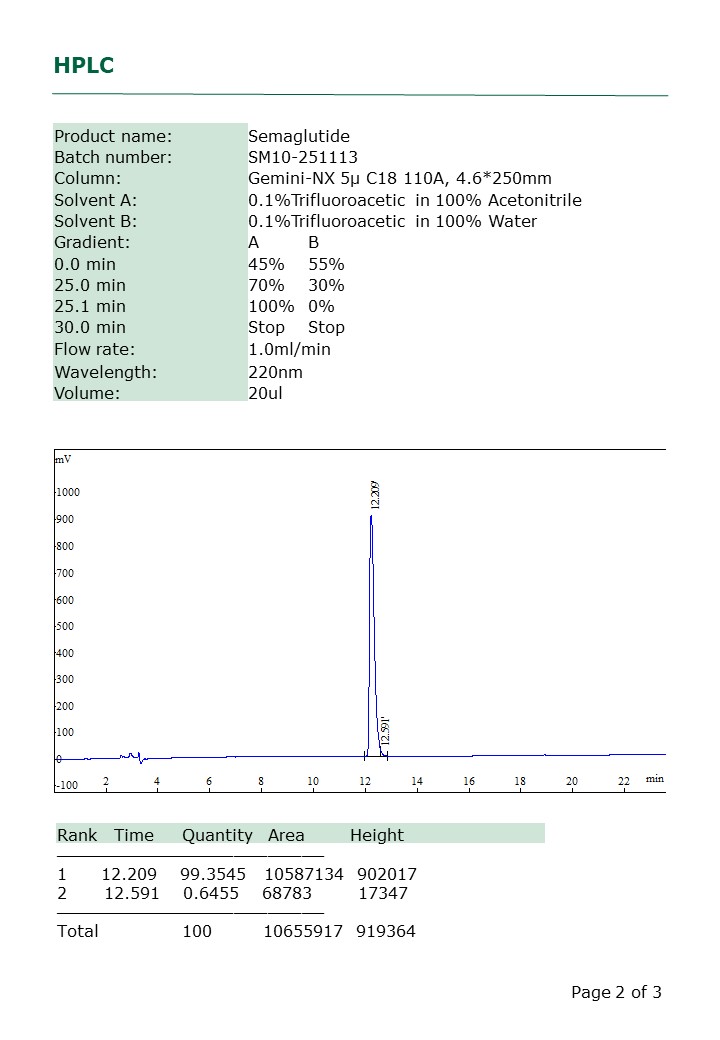
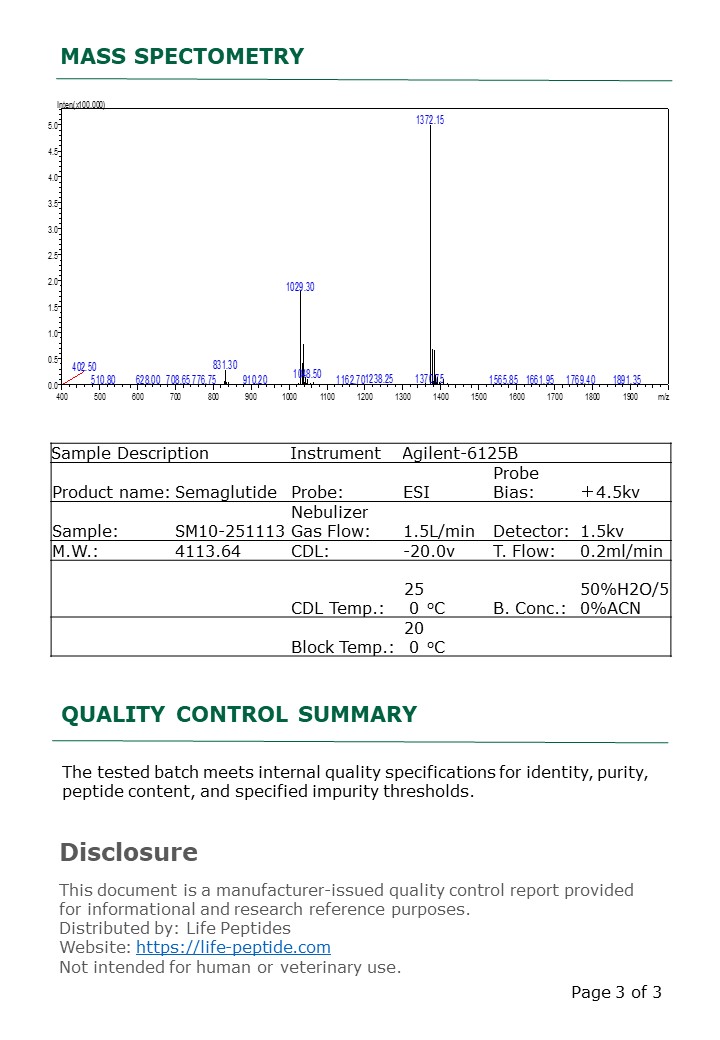
Ogni lotto viene accuratamente testato in laboratorio dopo la produzione (puoi trovare il Certificato di Analisi sotto le immagini del prodotto).
Liofilizzato (liofilizzato) per la massima stabilità e una lunga durata di conservazione.
Sigillato in fiale sterili, pronto per la ricostituzione.
Purezza: ≥99% (testato mediante HPLC)
Aspetto: polvere liofilizzata bianca/bianco sporco
Formula molecolare: C187H291N45O59
Peso molecolare: 4113,64
Sequenza: His-Aib-Glu-Gly-Thr-Phe-Thr-Ser-Asp-Val-Ser-Ser-Tyr-Leu-Glu-Gly-Gln-Ala-Ala-Lys(AEEAc-AEEAc-γ-Glu-17-carbossieptadecanoil)-Glu-Phe-Ile-Ala-Trp-Leu-Val-Arg-Gly-Arg-Gly
Archiviazioneflaconcini liofilizzati non aperti sono meglio conservati refrigerato a 2–8°C, che è il metodo di conservazione confermato dal nostro partner di produzione e adatto fino a 24 mesi. Si preferisce la refrigerazione perché minimizza inutili cicli di congelamento-scongelamento durante la manipolazione di routine. Se è necessaria una conservazione a termine sostanzialmente più lungo, i flaconcini liofilizzati non aperti possono anche essere conservati congelati. Una volta ricostituita, conservare sempre a 2-8°C e non congelare.
Ricostituzione e manipolazione
La semaglutide è fornita in una fiala liofilizzata e deve essere manipolata utilizzando le procedure standard di ricostituzione dei peptidi appropriate per l'ambiente di ricerca. Deve essere ricostituita con acqua batteriostatica prima dell'uso. I peptidi della classe GLP-1 a volte sono lenti a sciogliersi e richiedono una ricostituzione molto delicata per evitare la formazione di schiuma o che rimangano leggermente torbidi.
Per altre indicazioni sulla scelta del solvente, sulla pianificazione della concentrazione e sullo stoccaggio, consultare il pieno Guida alla Ricostituzione dei Peptidi e Calcolatore di Ricostituzione.
Studi chiave pubblicati
- Wilding JPH et al. “Semaglutide settimanale in adulti in sovrappeso o con obesità.” New England Journal of Medicine, 2021.
- Frias JP, Davies MJ, Rosenstock J, et al. Tirzepatide rispetto a Semaglutide una volta alla settimana in pazienti con diabete di tipo 2 (SURPASS-2). New England Journal of Medicine. 2021.
- Lincoff AM, Brown-Frandsen K, Colhoun HM, et al. Semaglutide e esiti cardiovascolari nell'obesità senza diabete (SELECT). New England Journal of Medicine. 2023.
- Aroda VR. Una recensione del programma di trial clinico SUSTAIN. Diabete, obesità e metabolismo. 2019.
Domande Frequenti
Cos'è il semaglutide?
Il semaglutide è un agonista del recettore del GLP-1 a lunga durata d'azione che imita l'attività dell'ormone incretinico naturale GLP-1 (glucagon-like peptide-1). È diventato uno dei peptidi metabolici più ampiamente studiati e funge da composto di riferimento per la moderna ricerca sul GLP-1. Gli studi pubblicati hanno analizzato il semaglutide in relazione alla regolazione dell'appetito, all'omeostasi del glucosio, ai risultati sul peso corporeo e a più ampi segnali cardiometabolici.
Come funziona il Semaglutide?
Il semaglutide attiva selettivamente il recettore del GLP-1, una via coinvolta nella regolazione della secrezione di insulina, del rilascio di glucagone, dello svuotamento gastrico e dei segnali dell'appetito. A differenza dei più recenti agonisti a doppio e triplo recettore, agisce solo sui recettori del GLP-1, rendendolo un'importante molecola di riferimento per i ricercatori che confrontano diverse strategie terapeutiche basate sulle incretine.
In che modo il semaglutide è diverso dal tirzepatide?
Il semaglutide attiva solo il recettore del GLP-1, mentre la tirzepatide è un doppio agonista dei recettori GLP-1/GIP. Entambrambi i composti appartengono alla classe delle incretine, ma la tirzepatide estende il meccanismo oltre la segnalazione del GLP-1. Di conseguenza, il semaglutide viene spesso utilizzato come punto di riferimento rispetto al quale vengono valutati i doppi agonisti nella ricerca metabolica.
In che modo il semaglutide è diverso dal retatrutide?
Retatrutide è un triplo agonista che agisce sui recettori del GLP-1, del GIP e del glucagone, conferendogli il profilo recettoriale più ampio attualmente in fase di studio tra i peptidi incretinici. Semaglutide, al contrario, si concentra esclusivamente sull'attivazione del recettore del GLP-1. Ciò rende Semaglutide la molecola di riferimento fondamentale per la biologia del GLP-1, mentre Retatrutide rappresenta la nuova generazione della ricerca metabolica a recettori multipli.
Perché la semaglutide è ancora importante quando esistono peptidi più recenti?
Sebbene i più recenti peptidi a doppio e triplo agonista abbiano suscitato notevole interesse, il Semaglutide rimane uno dei composti più importanti nella ricerca metabolica perché possiede la più ampia e matura mole di evidenze cliniche pubblicate. Molti studi che valutano Tirzepatide, Retatrutide e altri peptidi sperimentali continuano a utilizzare il Semaglutide come principale termine di paragone, rendendolo fondamentale per comprendere in che modo le terapie a base di incretina più recenti differiscano dal consolidato agonismo del recettore del GLP-1.
Quali sono le aree di ricerca che comunemente studiano il semaglutide?
Studi pubblicati hanno indagato il semaglutide in un'ampia gamma di aree di ricerca metabolica, tra cui l'obesità, la regolazione del peso corporeo, la segnalazione dell'appetito, il metabolismo del glucosio, il diabete di tipo 2, gli esiti cardiovascolari, la steatosi epatica e la biologia a lungo termine delle incretine. La sua vasta base di evidenze lo rende uno dei peptidi più citati nella moderna ricerca metabolica.
Come viene fornito il semaglutide?
Questo prodotto viene fornito come 10 mg di Semaglutide liofilizzata in una fiala sterile per ricerca. Ciascun lotto è accompagnato da un Certificato di Analisi (COA) e la verifica analitica indipendente di terze parti è disponibile per lotti selezionati. Il prodotto è destinato esclusivamente alla ricerca di laboratorio e analitica.
Posso comprare la semaglutide in Europa?
Sì. Spediamo Semaglutide nella maggior parte dei paesi europei utilizzando servizi di corriere affidabili. I metodi di spedizione disponibili e i tempi di consegna vengono mostrati durante il pagamento in base alla vostra destinazione.
Questo prodotto è destinato all'uso umano?
No. Il semaglutide fornito da Life Peptide è destinato esclusivamente a fini di ricerca. Non è destinato al consumo umano, né alla diagnosi, al trattamento o alla prevenzione di malattie. Qualsiasi riferimento a studi clinici pubblicati presente in questa pagina è incluso esclusivamente per riassumere l'attuale letteratura scientifica relativa alla molecola del semaglutide.
Contesto di ricerca correlato
Il semaglutide appartiene alla classe degli agonisti del recettore del GLP-1 nell'ambito della ricerca metabolica basata sulle incretine. Per un confronto meccanicistico con gli agonisti duplici e tripli, consultare il nostro Guida alla ricerca metabolica sui GLP-1.
Sfoglia tutti i composti in Categoria di ricerca metabolica.
Per il confronto dei percorsi:
Doppi agonisti: Tirzepatide (GLP-1/GIP)
Tripli agonisti: Retatrutide (GLP-1/GIP/glucagone)
NOTA: Questo è solo a scopo didattico e non costituisce parere medico.
Dichiarazione di non responsabilità:
Questo prodotto è venduto esclusivamente a scopo di ricerca. Non è destinato a diagnosticare, trattare, curare o prevenire alcuna malattia. L'acquirente si assume la piena responsabilità per la corretta manipolazione e utilizzo.