Description
Semaglutide 10 mg in Europe | Looking to buy Semaglutide in Europe? LIFE Peptide supplies high-purity Semaglutide for laboratory research with reliable EU-wide shipping.
Semaglutide is a long-acting GLP-1 receptor agonist engineered to mimic the activity of endogenous glucagon-like peptide-1 while providing substantially longer biological activity than the native hormone. Unlike Tirzepatide and Retatrutide, Semaglutide activates only the GLP-1 receptor, making it the simplest member of the current generation of incretin peptides. This selective mechanism has made Semaglutide one of the most extensively investigated metabolic peptides in both preclinical and clinical research over the past decade.
Because of this large body of evidence, Semaglutide is frequently used as the reference compound when evaluating newer dual- and triple-receptor agonists.
Why Semaglutide remains important in metabolic research
Although newer multi-receptor agonists have attracted considerable attention, Semaglutide continues to serve as the scientific benchmark for GLP-1 biology.
Published research has investigated Semaglutide in relation to:
- appetite regulation
- body-weight reduction
- glycaemic control
- insulin secretion
- gastric emptying
- cardiovascular outcomes
- metabolic syndrome
- non-alcoholic fatty liver disease
- long-term incretin signalling
Its extensive clinical literature makes Semaglutide one of the most important comparator molecules in obesity and metabolic research. Many modern studies evaluating Tirzepatide, Retatrutide and emerging GLP-1 combinations use Semaglutide as the reference standard.
How Semaglutide works
Semaglutide selectively activates the GLP-1 receptor, a key regulator of appetite, glucose homeostasis and gastrointestinal signalling.
Activation of GLP-1 receptors has been associated in published research with:
- glucose-dependent insulin secretion
- suppression of glucagon release
- delayed gastric emptying
- reduced food intake
- altered central appetite signalling
- improvements in several metabolic markers
Unlike Tirzepatide, Semaglutide does not activate GIP receptors. Unlike Retatrutide, it has no glucagon receptor activity.
Its value therefore lies in providing a well-characterised single-pathway GLP-1 model, making it the logical comparator for newer incretin compounds.
Semaglutide vs Tirzepatide vs Retatrutide
Semaglutide
- GLP-1 receptor agonist
- single receptor mechanism
- largest clinical evidence base
- reference compound for GLP-1 research
Tirzepatide
- GLP-1 + GIP dual agonist
- broader incretin signalling
- frequently compared directly with Semaglutide
Retatrutide
- GLP-1 + GIP + glucagon triple agonist
- broadest receptor profile
- represents the newest generation of multi-receptor metabolic peptides
For researchers investigating incretin biology, Semaglutide provides the foundation from which dual- and triple-agonist compounds can be evaluated.
Product characteristics
Application: laboratory and analytical research
Use restriction: not for human consumption; not for medical, veterinary or cosmetic use
Produced in GMP-compliant facilities under strict QC protocols.
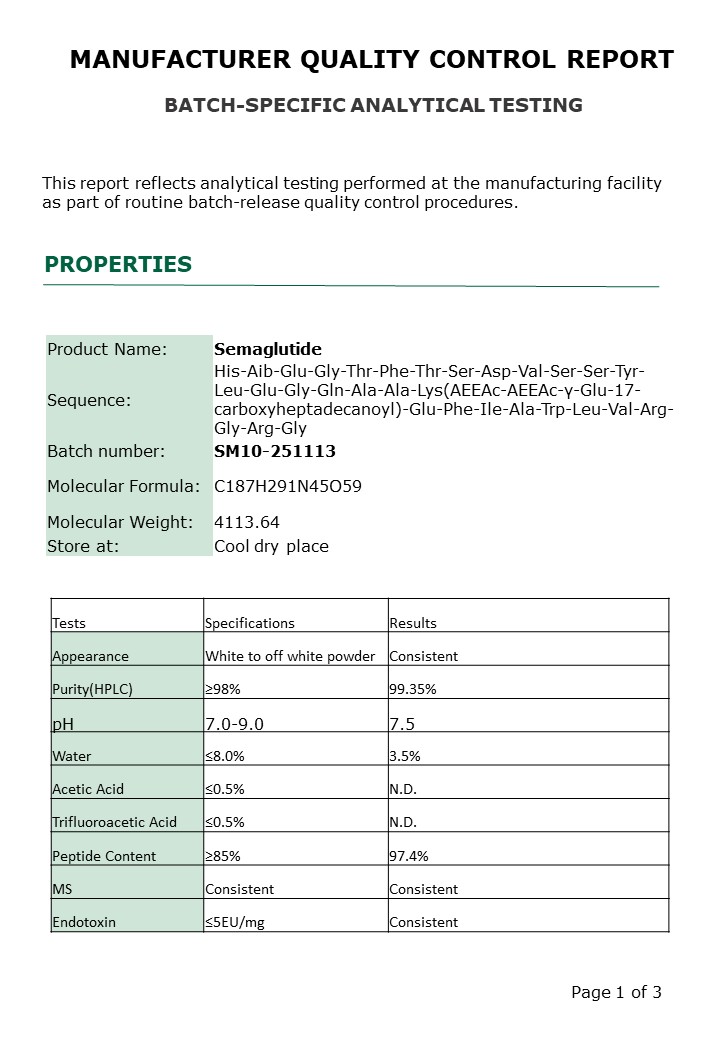
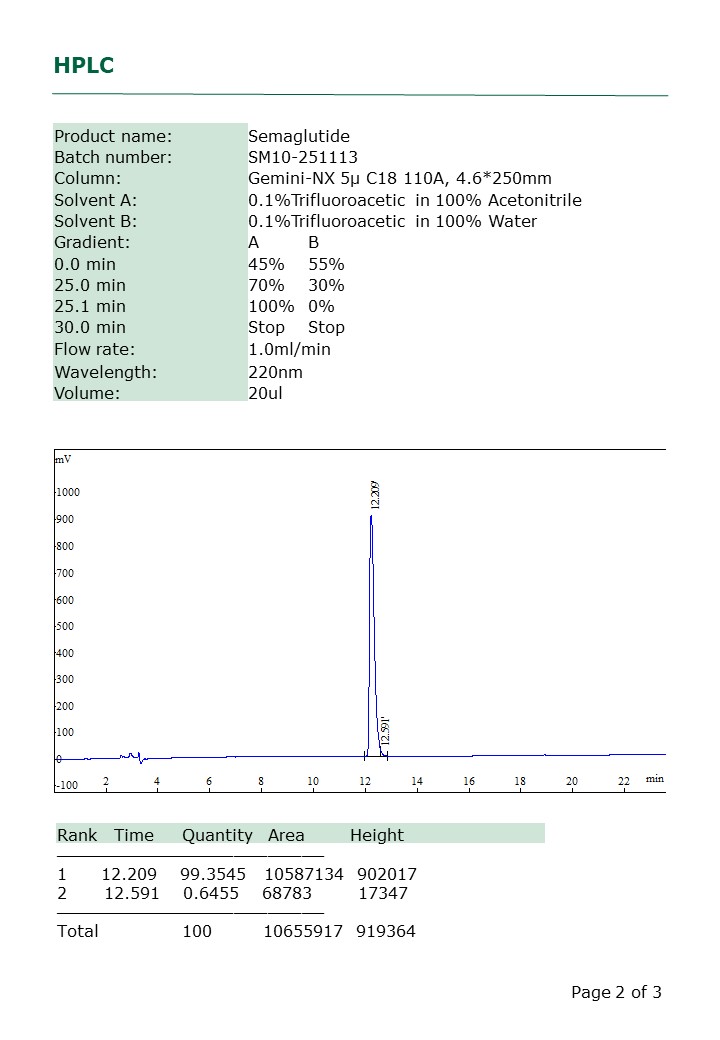
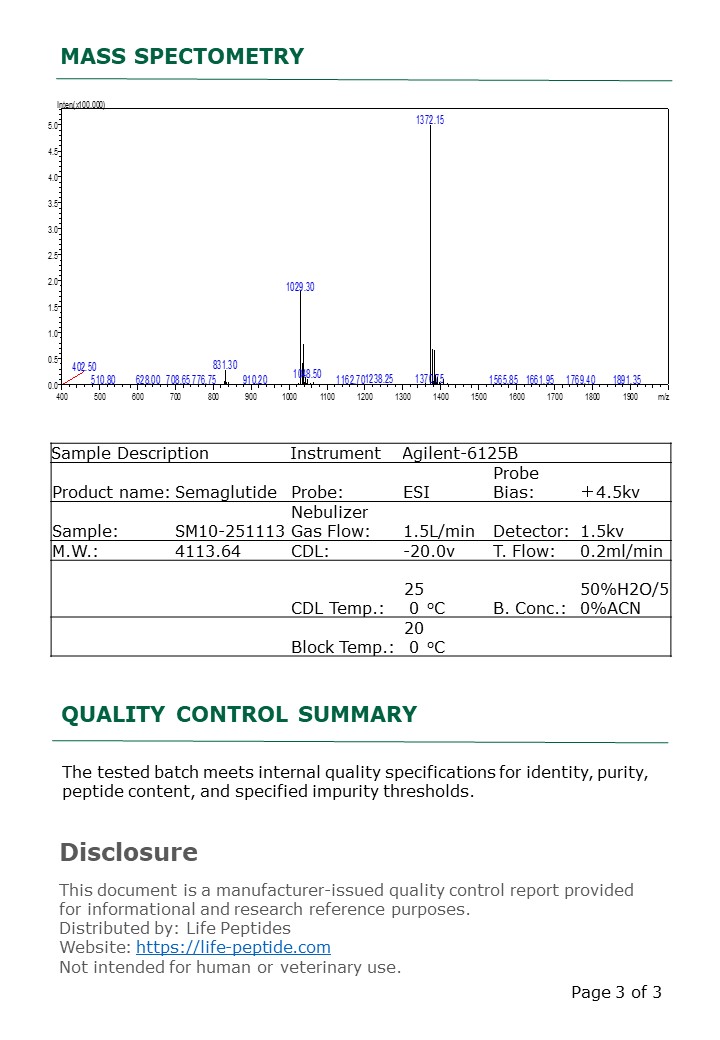
Each batch carefully lab tested after production (you can find Certificate of Analysis under product pictures).
Freeze-dried (lyophilized) for maximum stability and extended shelf life.
Sealed in sterile vials, ready for reconstitution.
Purity: ≥99% (HPLC-tested)
Appearance: Lyophilized white/off-white powder
Molecular formula: C187H291N45O59
Molecular weight: 4113.64
Sequence: His-Aib-Glu-Gly-Thr-Phe-Thr-Ser-Asp-Val-Ser-Ser-Tyr-Leu-Glu-Gly-Gln-Ala-Ala-Lys(AEEAc-AEEAc-γ-Glu-17-carboxyheptadecanoyl)-Glu-Phe-Ile-Ala-Trp-Leu-Val-Arg-Gly-Arg-Gly
Storage: unopened lyophilized vials are best stored refrigerated at 2–8°C, which is the storage method confirmed by our manufacturing partner and suitable for up to 24 months. Refrigeration is preferred because it minimizes unnecessary freeze–thaw cycles during routine handling. If substantially longer-term storage is required, unopened lyophilized vials may also be kept frozen. Once reconstituted, always store at 2–8°C and do not freeze.
Reconstitution and handling
Semaglutide is supplied as a lyophilised vial and should be handled using standard peptide reconstitution procedures appropriate to the research setting. Must be reconstituted with bacteriostatic water before use. GLP-1 class peptides are sometimes slow to dissolve and require very gentle reconstitution to avoid foaming or remaining slightly cloudy.
For other solvent selection, concentration planning and storage guidance, see the full Peptide Reconstitution Guide and Reconstitution Calculator.
Key published studies
- Wilding JPH et al. “Once-Weekly Semaglutide in Adults with Overweight or Obesity.” New England Journal of Medicine, 2021.
- Frias JP, Davies MJ, Rosenstock J, et al. Tirzepatide versus Semaglutide Once Weekly in Patients with Type 2 Diabetes (SURPASS-2). New England Journal of Medicine. 2021.
- Lincoff AM, Brown-Frandsen K, Colhoun HM, et al. Semaglutide and Cardiovascular Outcomes in Obesity without Diabetes (SELECT). New England Journal of Medicine. 2023.
- Aroda VR. A Review of the SUSTAIN Clinical Trial Programme. Diabetes, Obesity and Metabolism. 2019.
Frequently Asked Questions
What is Semaglutide?
Semaglutide is a long-acting GLP-1 receptor agonist that mimics the activity of the naturally occurring incretin hormone glucagon-like peptide-1. It has become one of the most extensively studied metabolic peptides and serves as the reference compound for modern GLP-1 research. Published studies have investigated Semaglutide in relation to appetite regulation, glucose homeostasis, body-weight outcomes and broader cardiometabolic signalling.
How does Semaglutide work?
Semaglutide selectively activates the GLP-1 receptor, a pathway involved in regulating insulin secretion, glucagon release, gastric emptying and appetite signalling. Unlike newer dual- and triple-receptor agonists, it acts only on GLP-1 receptors, making it an important reference molecule for researchers comparing different incretin-based therapeutic strategies.
How is Semaglutide different from Tirzepatide?
Semaglutide activates only the GLP-1 receptor, whereas Tirzepatide is a dual GLP-1/GIP agonist. Both compounds belong to the incretin class, but Tirzepatide expands the mechanism beyond GLP-1 signalling. As a result, Semaglutide is often used as the benchmark against which dual agonists are evaluated in metabolic research.
How is Semaglutide different from Retatrutide?
Retatrutide is a triple agonist that targets GLP-1, GIP and glucagon receptors, giving it the broadest receptor profile currently under investigation among incretin peptides. Semaglutide, by contrast, focuses exclusively on GLP-1 receptor activation. This makes Semaglutide the foundational reference molecule for GLP-1 biology, while Retatrutide represents the next generation of multi-receptor metabolic research.
Why is Semaglutide still important when newer peptides exist?
Although newer dual- and triple-agonist peptides have generated considerable interest, Semaglutide remains one of the most important compounds in metabolic research because it has the largest and most mature body of published clinical evidence. Many studies evaluating Tirzepatide, Retatrutide and other investigational peptides continue to use Semaglutide as the primary comparator, making it central to understanding how newer incretin therapies differ from established GLP-1 receptor agonism.
What research areas commonly investigate Semaglutide?
Published studies have investigated Semaglutide across a broad range of metabolic research areas, including obesity, body-weight regulation, appetite signalling, glucose metabolism, type 2 diabetes, cardiovascular outcomes, fatty liver disease and long-term incretin biology. Its extensive evidence base makes it one of the most frequently referenced peptides in modern metabolic research.
How is Semaglutide supplied?
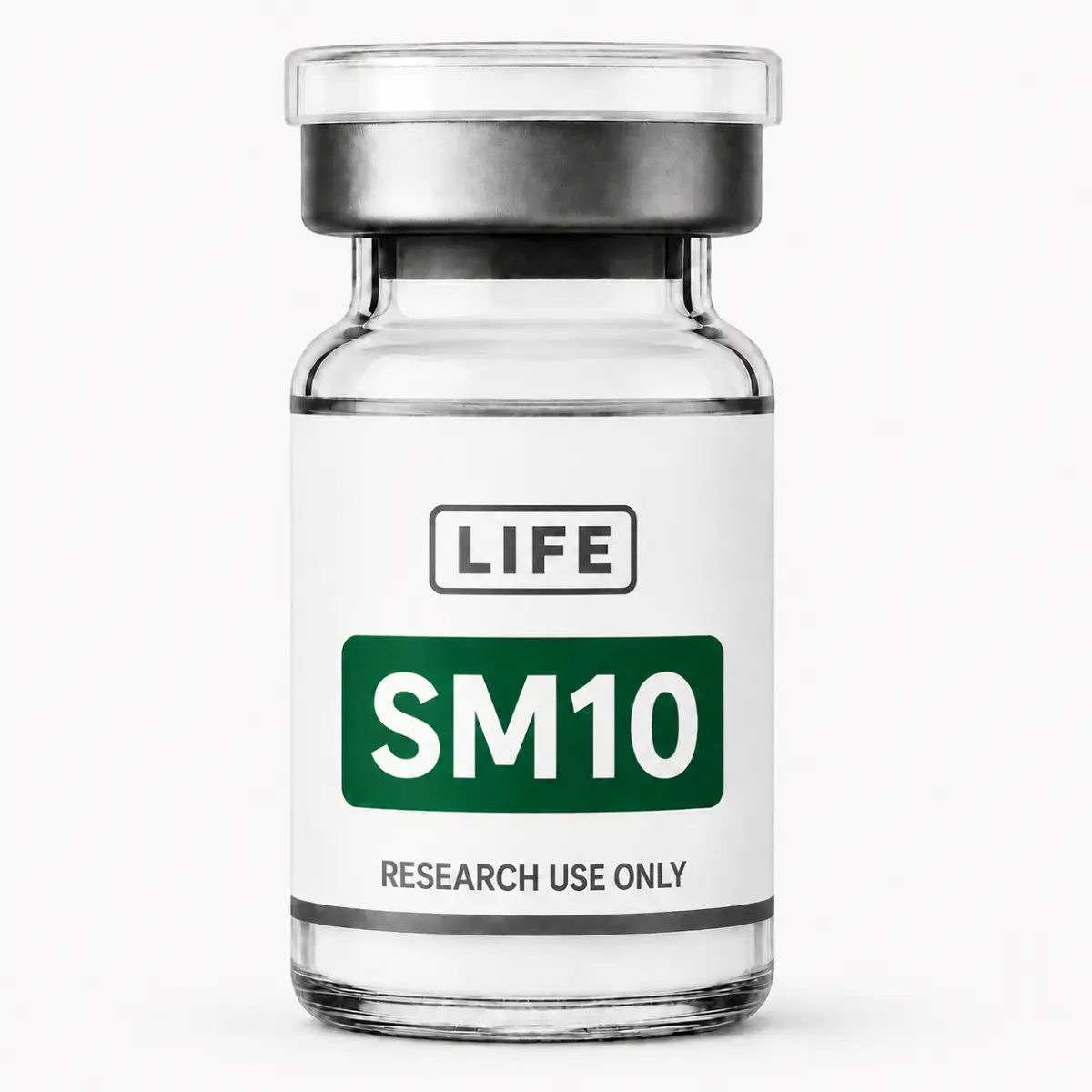
This product is supplied as 10 mg of lyophilised Semaglutide in a sterile research vial. Each batch is accompanied by a Certificate of Analysis (COA), and independent third-party analytical verification is available for selected batches. The product is intended exclusively for laboratory and analytical research.
Can I buy Semaglutide in Europe?
Yes. We ship Semaglutide to most European countries using reliable courier services. Available shipping methods and delivery times are shown during checkout based on your destination.
Is this product intended for human use?
No. Semaglutide supplied by LIFE Peptide is provided strictly for research use only. It is not intended for human consumption, diagnosis, treatment or prevention of disease. Any discussion of published clinical studies on this page is included solely to summarise the current scientific literature surrounding the Semaglutide molecule.
Related research context
Semaglutide belongs to the GLP-1 receptor agonist class within incretin-based metabolic research. For mechanistic comparison with dual and triple agonists, see our GLP-1 metabolic research guide.
Browse all compounds in the Metabolic research category.
For pathway comparison:
Dual agonists: Tirzepatide (GLP-1/GIP)
Triple agonists: Retatrutide (GLP-1/GIP/glucagon)
NOTE: This is for educational reference only and does not constitute medical advice.
Disclaimer:
This product is sold for research purposes only. It is not intended to diagnose, treat, cure, or prevent any disease. Buyer assumes full responsibility for proper handling and use.