Popis
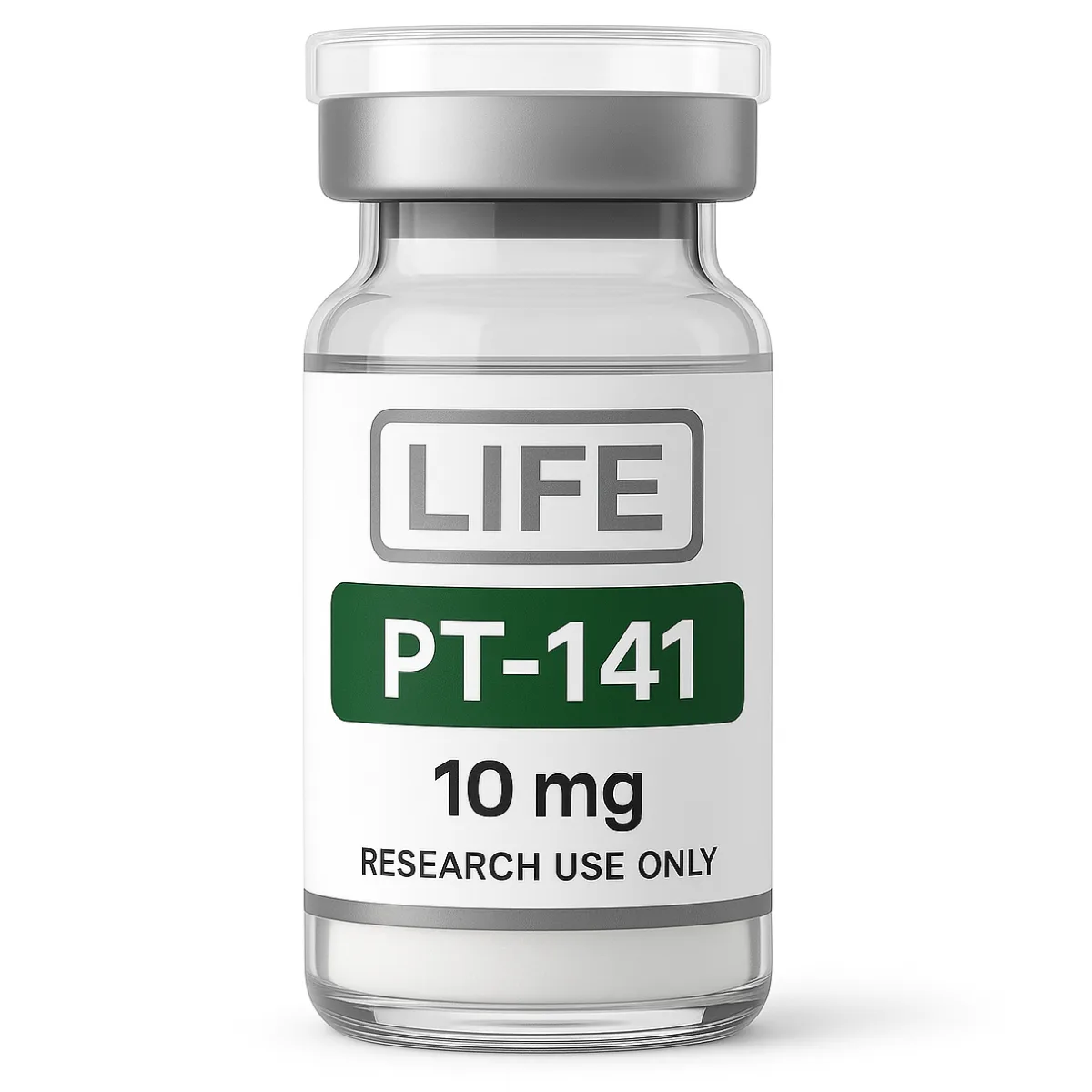
PT-141 (Bremelanotid) je jedním z nejrozsáhleji zkoumaných výzkumných peptidů v výzkum sexuálních funkcí a vzrušení.
PT-141, původně vyvinutý z melanokortinového peptidu Melanotan II, byl navržen tak, aby selektivně zkoumal melanokortinové dráhy zapojené do sexuální motivace, a zároveň minimalizoval účinky na pigmentaci spojené s dřívějšími melanokortinovými analogy.
Na rozdíl od sloučenin, jako je sildenafil nebo tadalafil, PT-141 primárně nezkoumá průtok krve ani vaskulární funkce. Publikovaný výzkum se místo toho soustředí na centrální nervové dráhy regulující sexuální touhu, motivaci a vzrušení, čímž se PT-141 stává jedním z nejvýraznějších peptidů ve výzkumu sexuální medicíny.
Chcete si v Evropě koupit PT-141? Společnost Life Peptide dodává PT-141 vysoké čistoty pro laboratorní výzkum a zajišťuje spolehlivou dopravu po celé EU.
Proč je PT-141 široce zkoumán
PT-141 se stal klíčovým výzkumným peptidem, protože cílí na centrální melanokortinové signalizování, dráha, která se zásadně liší od vaskulárních přístupů k sexuální funkci.
Publikované studie zkoumaly PT-141 ve vztahu k:
- sexuální touha
- sexuální vzrušení
- ženská sexuální funkce
- mužská sexuální funkce
- biologie melanokortinových receptorů
- signálování centrální nervové soustavy
- neuroendokrinní regulace
Protože tyto dráhy vycházejí v mozku PT-141 si namísto cévního systému získal značnou pozornost ve výzkumu neurověd a sexuální medicíny.
Jak funguje PT-141
Na rozdíl od inhibitorů PDE-5 se PT-141 primárně zkoumá pro své účinky na melanokortinové receptory, zejména MC4R a v menší míře MC3R.
Publikovaný výzkum zkoumal jeho vztah s:
Melanokortinová signalizace
Aktivace melanokortinových drah zapojených do sexuální motivace a behaviorálních odpovědí.
Centrální dráhy povzbuzení
Vyšetřování hypotalamických okruhů spojených se sexuální touhou a vzrušením.
Dopaminergní signalizace
Výzkumy naznačují, že aktivace melanokortinů ovlivňuje následné neurochemické dráhy zapojené do motivace a odměny.
Neuroendokrinní regulace
Experimentální práce zkoumala, jak PT-141 interaguje s centrálními nervovými sítěmi zapojenými do sexuálního chování.
Proč je PT-141 široce zkoumáno v sexuální medicíně
PT-141 se liší od mnoha zkoumaných sloučenin v sexuální medicíně tím, že jeho primární mechanismus je centrální spíše než periferní.
Publikovaný klinický výzkum zkoumal:
- hypoaktivní porucha sexuální touhy (HSDD)
- ženské sexuální vzrušení
- mužská erektilní funkce
- sexuální motivace
- centrální melanokortinové signalizování
Toto rozlišení učinilo z PT-141 důležitý výzkumný nástroj pro studium neurobiologie sexuálních funkcí, nikoli pouze vaskulární fyziologie.
Lidský a preklinický výzkum
Ve srovnání s mnoha výzkumnými peptidy má PT-141 rozsáhlá klinická důkazní základna.
Několik studií fáze II a III zkoumalo bremelanotid u žen s hypoaktivní poruchou sexuální touhy, zatímco dřívější klinické programy zkoumaly jeho účinky u mužů s erektilní dysfunkcí. Tyto studie společně zavedly PT-141 jako jedna z nejvíce klinicky zkoumaných peptidů cílení na melanokortinové dráhy.
Proč se PT-141 liší od Viagry® a Cialisu®
Jednou z určujících vlastností PT-141 je, že zkoumá centrální dráhy sexuální touhy spíše než vaskulární fyziologii.
| PT-141 | Inhibitory PDE-5 |
|---|---|
| Melanokortinová signalizace | Cesta oxidu dusnatého |
| Výzkum sexuální touhy | Fyziologie erekce |
| Centrální nervový systém | Periferní krevní oběh |
| Zkoumáno u mužů i žen | Primárně zkoumaná u mužské erektilní funkce |
Protože se tyto mechanismy liší, představuje PT-141 zcela odlišnou oblast výzkumu sexuální medicíny, nikoli další vaskulární přístup.
Publikované bezpečnostní poznatky
Mezi nejčastěji hlášené nežádoucí účinky v publikovaných klinických studiích patřily nevolnost, zarudnutí a bolest hlavy, zvláště během časná správa. Většina událostí byla popsána jako mírné až středně závažné, ačkoli snášenlivost se lišila mezi studiemi a populacemi a měla tendenci s opakovaným použitím zcela vymizet.
Vlastnosti produktu
Aplikace: laboratorní a analytický výzkum
Použití omezené: není určeno k lidské spotřebě; pro lékařské, veterinární ani kosmetické použití
Vyrobeno v zařízeních splňujících správnou výrobní praxi (GMP) za přísných protokolů kontroly kvality.
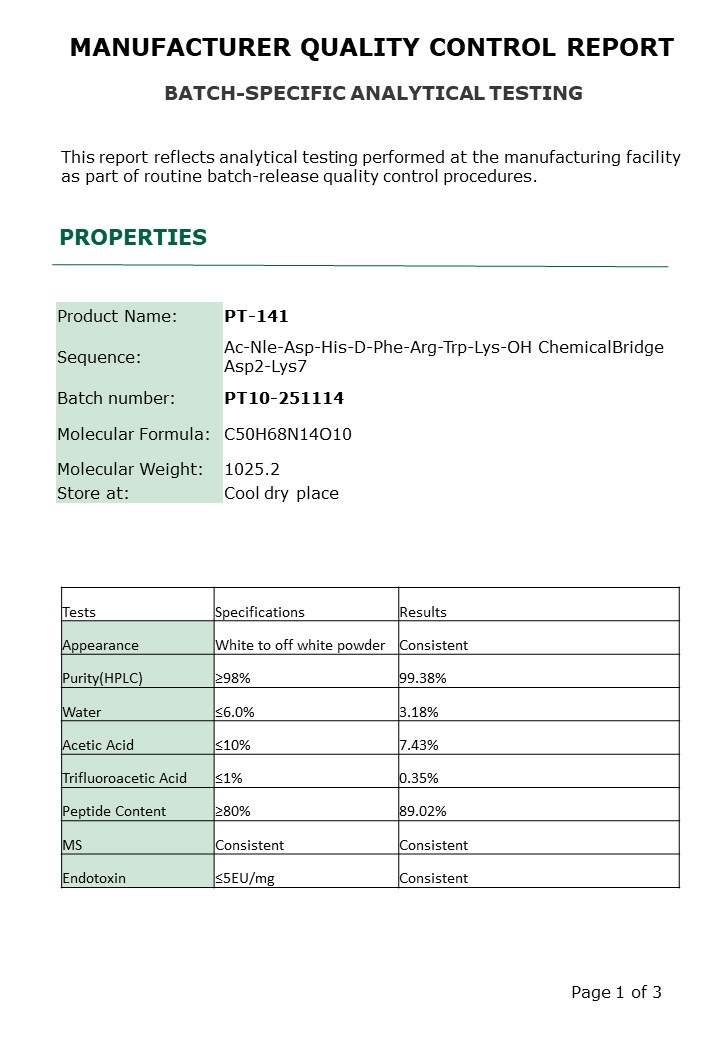
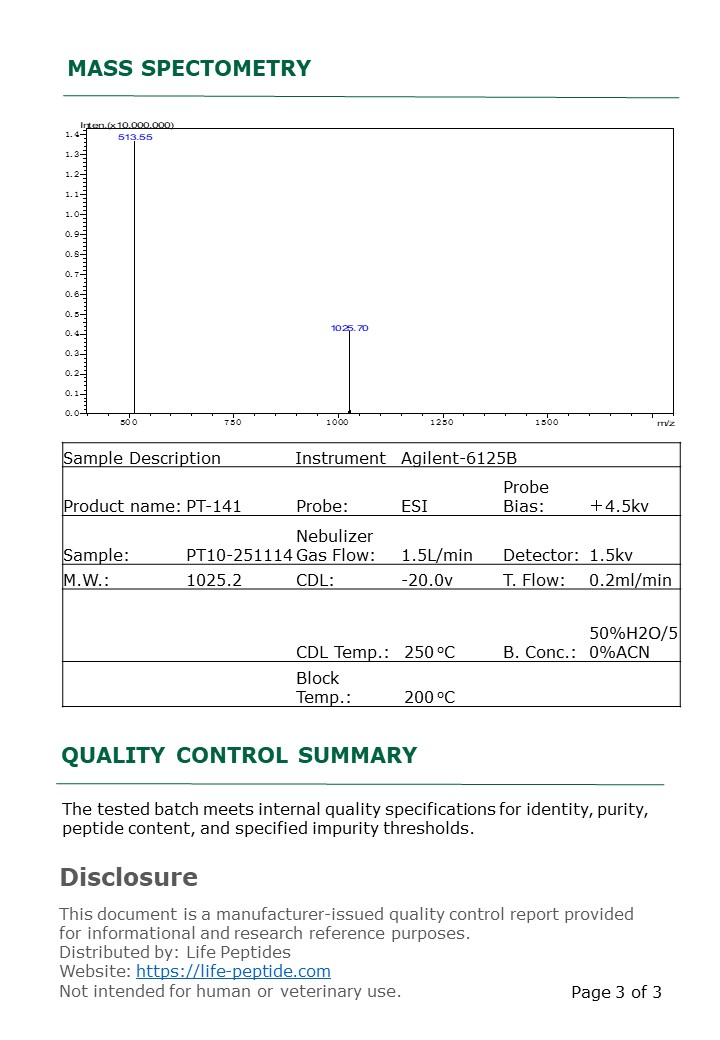
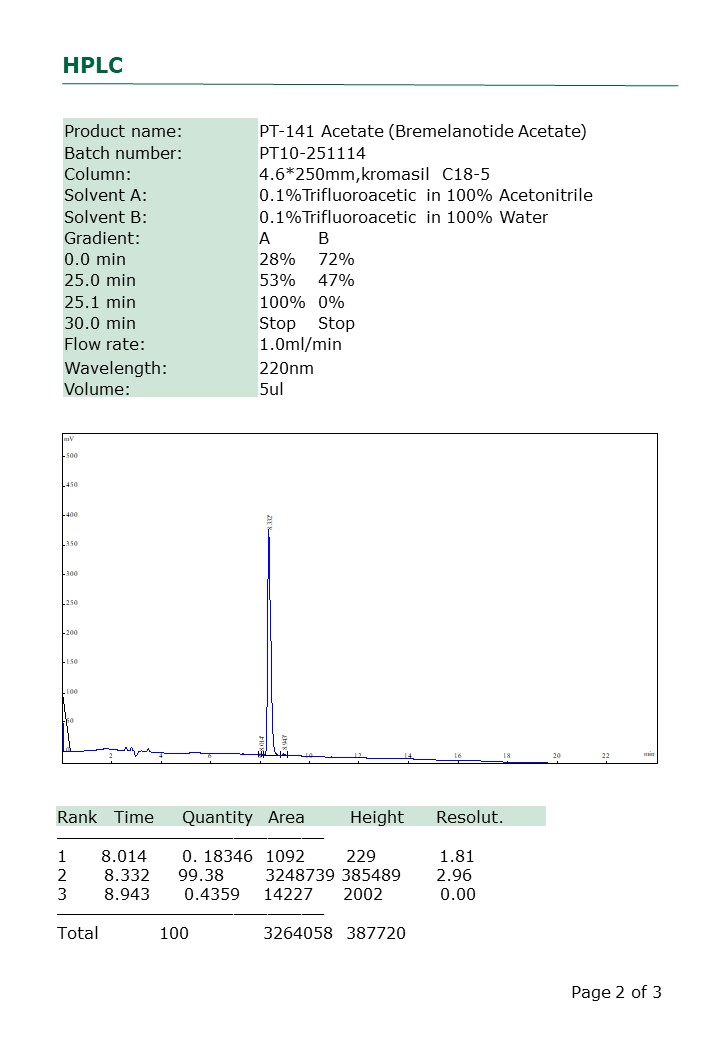
Každá šarže je po výrobě pečlivě laboratorně testována (Certifikát o analýze najdete pod obrázky produktů).
Lyofilizováno (sušeno mrazem) pro maximální stabilitu a prodlouženou trvanlivost.
Uzavřeno ve sterilních lahvičkách, připraveno k rekonstituci.
Čistota: ≥99% (testováno metodou HPLC)
Vzhled: Lyofilizovaný bílý/nebíle bílý prášek
Molekulární vzorec: C50H68N14O10
Molekulová hmotnost: 1025,2
Sekvence: Ac-Nle-Asp-His-D-Phe-Arg-Trp-Lys-OH Chemický most Asp2-Lys7
ÚložištěNeotevřené lyofilizované lahvičky jsou nejlépe skladovány chlazené při 2–8 °C, což je metoda skladování potvrzená naším výrobním partnerem a vhodná až po dobu 24 měsíců. Preferuje se chlazení, protože minimalizuje zbytečné cykly zmrazování a rozmrazování během běžné manipulace. Pokud je vyžadováno podstatně delší skladování, lze zmrazené uchovávat i neotevřené lyofilizované lahvičky. Po rekonstituci vždy skladujte při 2–8 °C a nezmrazujte.
Rekonstituce a manipulace
PT-141 je dodáván jako lyofilizovaná lahvička a měl by se s ním zacházet podle standardních postupů pro rekonstituci peptidů vhodných pro výzkumné prostředí. Musí být rekonstituován s bakteriostatická voda před použitím. Pro zachování strukturální integrity přidejte zvolené rozpouštědlo pomalu po vnitřní stěně lahvičky namísto přímo na peptidový prášek a vyhněte se prudkému protřepávání. Jemné kroužení je obecně dostačující, jakmile se peptid zcela rozpustí. Standardní laboratorní postupy zahrnují také ponechání chlazených lahviček dosáhnout pokojové teploty před rekonstitucí, aby se minimalizovala kondenzace uvnitř lahvičky.
Pro další pokyny k výběru rozpouštědla, plánování koncentrací a skladování viz úplné Průvodce rekonstitucí peptidů a Kalkulačka rekonstituce.
Klíčové publikované studie
- Molinoff PB, Shadiack AM, Earle D a kol. PT-141: Melanokortinový agonista pro léčbu sexuální dysfunkce. Annals of the New York Academy of Sciences, 2003.
Základní práce představující PT-141 a popisující jeho mechanismus jako centrálně působícího agonisty melanokortinových receptorů pro výzkum sexuálních funkcí.
- Diamond LE, Earle DC, Heiman JR, a kol. Účinek bremelanotidu (PT-141) na subjektivní sexuální odezvu premenopauzálních žen s poruchou ženské sexuální vzrušivosti. Journal of Sexual Medicine, 2006.
Převratná klinická studie zkoumající PT-141 u žen s ženskou poruchou sexuálního vzrušení.
- Kingsberg SA, Clayton AH, Portman D, a kol. Bremelanotid k léčbě poruchy hypomneilního sexuálního touhy. Obstetrika a gynekologie, 2019.
Jedna z klíčových studií fáze III podporujících moderní důkazní základ pro bremelanotid u HSDD.
- Edinoff AN a kol. Bremelanotid pro léčbu ženské hypoaktivní poruchy sexuální touhy. Neurology International, 2022.
Komplexní přehled zahrnující farmakologii, mechanismus účinku, klinickou účinnost a bezpečnost PT-141.
Často kladené otázky
Co je PT-141?
PT-141 (bremelanotid) je syntetický agonista melanokortinových receptorů odvozený od α-MSH. Je široce zkoumán ve výzkumu sexuální touhy, vzrušení a signalizace centrálního nervového systému.
PT-141 je někdy nazýván Bremelanotid, protože Bremelanotid je název pro lék, jehož účinnou látkou je PT-141. PT-141 je chemický název sloučeniny, zatímco Bremelanotid je obchodní název léku, který tuto sloučeninu obsahuje.
Bremelanotid je mezinárodní nechráněný název (INN) pro PT-141. Většina publikovaných klinických studií používá název Bremelanotid, zatímco výzkumníci a dodavatelé peptidů běžně označují stejnou molekulu jako PT-141.
Je PT-141 stejný jako Melanotan II?
Ne. PT-141 byl vyvinut z Melanotanu II, ale je navržen tak, aby selektivněji zkoumal melanokortinové dráhy zapojené do sexuálních funkcí a zároveň snižoval aktivitu související s pigmentací. Ačkoli oba peptidy sdílejí společnou historii vývoje, nyní se používají pro různé oblasti výzkumu.
PT-141 se liší od Viagry® nebo Cialisu® způsobem účinku. Zatímco Viagra® a Cialis® působí na cévy a zvyšují průtok krve do penisu, PT-141 působí na centrální nervový systém prostřednictvím receptorů melanokortinu.
PT-141 působí primárně prostřednictvím centrálních melanokortinových drah, zatímco inhibitory PDE-5 fungují posílením průtoku krve vaskulárními mechanismy. Tyto představují odlišné biologické přístupy k výzkumu sexuálních funkcí.
PT-141 se také nazývá bremelanotid.
Bremelanotid je mezinárodní nechráněný název (INN) pro PT-141. Většina publikovaných klinických studií používá název Bremelanotid, zatímco komunita výzkumníků peptidů často označuje tuto molekulu jako PT-141.
Výzkum PT-141 se běžně zaměřuje na následující oblasti:* Léčba sexuálních dysfunkcí, zejména erektilní dysfunkce a sníženého libida u žen. * Potenciální využití v léčbě obezity a metabolických poruch. * Mechanismus účinku na melanokortinové receptory v mozku. * Vývoj nových terapeutických přístupů pro různé další stavy.
Publikované studie zkoumaly PT-141 v souvislosti se sexuální touhou, sexuálním vzrušením, poruchou hypózy sexuální touhy, mužskou sexuální funkcí, biologií melanokortinových receptorů a neuroendokrinní signalizací.
Funguje PT-141 přes oxid dusnatý jako inhibitory PDE-5?
Ne. Současné důkazy naznačují, že PT-141 působí primárně prostřednictvím aktivace centrálních melanokortinových receptorů, spíše než že by přímo zesiloval vaskulární dráhu zprostředkovanou oxidem dusnatým, na kterou se zaměřují inhibiční přípravky PDE-5.
Můžu koupit PT-141 v Evropě?
Ano. PT-141 zasíláme do většiny evropských zemí pomocí spolehlivých kurýrních služeb. Dostupné způsoby dopravy a dodací lhůty se zobrazí během dokončení objednávky na základě vaší cílové destinace.
Je tento produkt určen k lidskému použití?
Produkt PT-141 dodávaný společností Life Peptide je určen výhradně pro laboratorní a analytický výzkum. Není určen k lidské spotřebě, diagnostice, léčbě ani prevenci nemocí. Jakékoli zmínky o publikovaných studiích představují pouze shrnutí vědecké literatury týkající se molekuly PT-141, nikoli zamýšleného použití tohoto produktu.
Související výzkumný kontext
PT-141 patří do širšího výzkumná kategorie melanokortinů a neuroendokrinních peptidů, se zaměřením na signalizaci v centrálním nervovém systému a behaviorální dráhy zprostředkované receptory.
Výzkumníci zkoumající související modely melanokortinové dráhy mohou rovněž zkoumat:
Melanotan II — výzkum agonistů melanokortinových receptorů
Kognitivní a neurovýzkumné peptidy — modely peptidové signalizace v CNS
Sekre sagoga růstového hormonu — výzkum interakcí neuroendokrinních drah
POZNÁMKA: Tento text slouží pouze pro vzdělávací účely a nepředstavuje lékařskou pomoc.
Upozornění:
Tento produkt je prodáván pouze pro výzkumné účely. Není určen k diagnostice, léčbě, vyléčení nebo prevenci jakýchkoli onemocnění. Kupující přebírá plnou odpovědnost za řádnou manipulaci a použití.