Περιγραφή
Semaglutide 10 mg in Europe | Θέλετε να αγοράσετε σεμαγλουτίδη στην Ευρώπη; Η Life Peptide προμηθεύει σεμαγλουτίδη υψηλής καθαρότητας για εργαστηριακή έρευνα, με αξιόπιστη αποστολή σε όλη την ΕΕ.
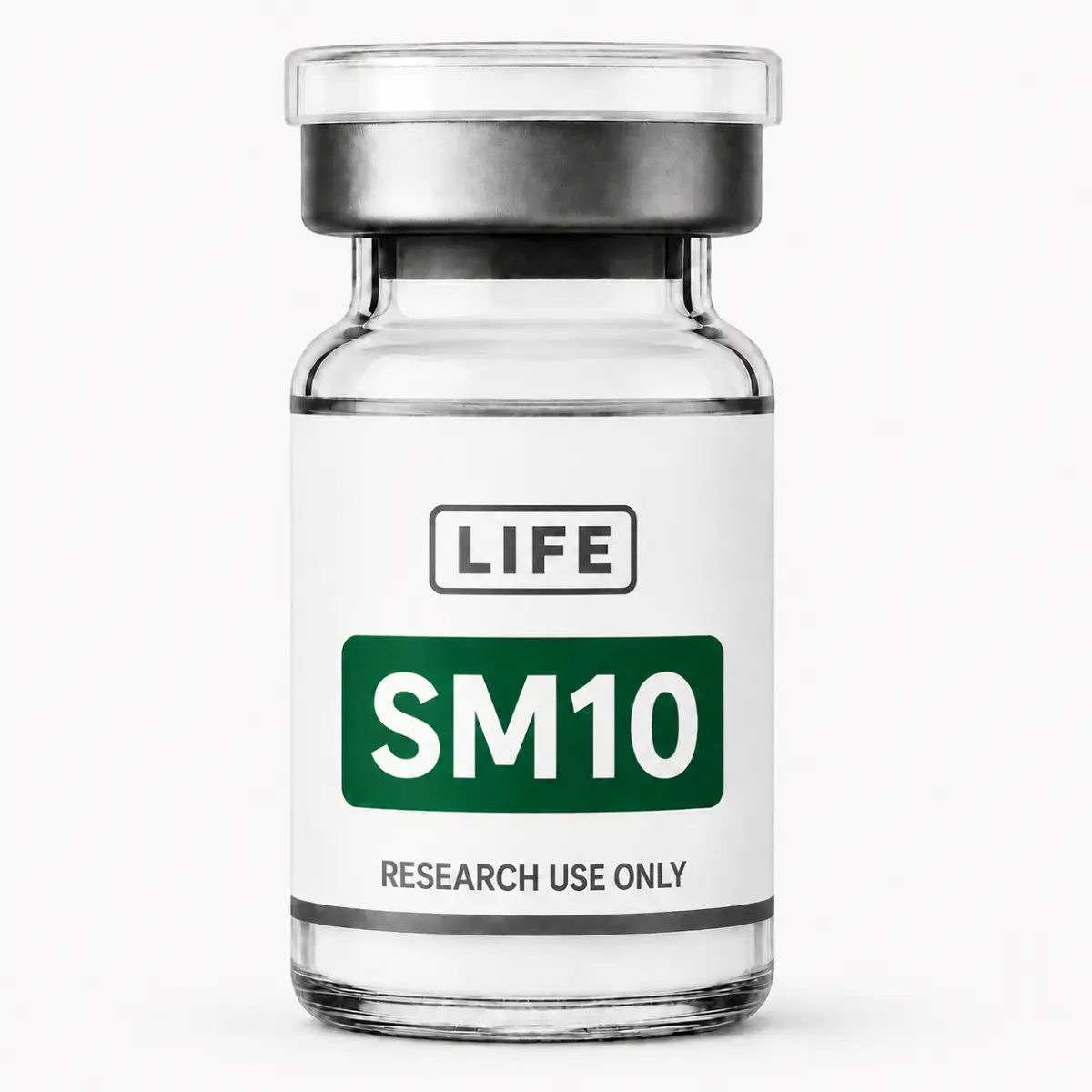
Available in two formats
Choose between a conventional lyophilized vial and a dual-chamber cartridge.
The cartridge keeps Semaglutide and its diluent in separate chambers until activation. This avoids transporting the peptide as a premixed solution and simplifies laboratory preparation by removing the separate liquid-transfer step. Final dual-chamber cartridge concentration: 10 mg in 1 mL. A compatible reusable device is required.
Η σεμαγλουτίδη είναι μια αγωνιστής υποδοχέων GLP-1 μακράς δράσης σχεδιασμένο ώστε να μιμείται τη δράση του ενδογενούς πεπτιδίου-1 που μοιάζει με γλυκαγόνη, παρέχοντας παράλληλα ουσιαστικά μεγαλύτερη βAλογική δράση από την φυσική ορμόνη. Σε αντίθεση με Τιρζεπατίδη και Ρετατρουτίδη, Η σεμαγlutίδη ενεργοποιεί αποκλειστικά τον υποδοχέα GLP-1, καθιστώντας την το απλούστερο μέλος της τρέχουσας γενιάς πεπτιδίων ινκρετίνης. Αυτός ο εκλεκτικός μηχανισμός έχει κάνει τη σεμαγλυτίδη ένα από τα πλέον διεξודיκamente μελετημένα μεταβολικά πεπτίδια τόσο στην προκλινική όσο και στην κλινική έρευνα την τελευταία δεκαετία.
Λόγω αυτού του μεγάλου όγκου αποδεικτικών στοιχείων, η σεμαγλουτίδη χρησιμοποιείται συχνά ως η ένωση αναφοράς κατά την αξιολόγηση νεότερων αγωνιστών διπλού και τριπλού υποδοχέα.
Γιατί η σεμαγλουτίδη παραμένει σημαντική στη μεταβολική έρευνα
Παρόλο που οι νεότεροι αγωνιστές πολλαπλών υποδοχέων έχουν προσελκύσει σημαντική προσοχή, η σεμαγlutide συνεχίζει να αποτελεί το επιστημονικό σημείο αναφοράς για τη βιολογία του GLP-1.
Η δημοσιευμένη έρευνα έχει διερευνήσει τη Σεμαγλουτίδη σε σχέση με:
- ρύθμιση της όρεξης
- μείωση σωματικού βάρους
- γλυκαιμικός έλεγχος
- έκκριση ινσulίνης
- γαστρική κένωση
- καρδιαγγειακά καταληκτικά σημεία
- μεταβολικό σύνδρομο
- μη αλκοολική λιπώδης νόσος του ήπατος
- μακροπρόθεσμη σηματοδότηση ινκρετινών
Η εκτενής κλινική βιβλιογραφία του καθιστά τη σεμαγλουτίδη ένα από τα σημαντικότερα μόρια σύγκρισης στην έρευνα για την παχυσαρκία και τον μεταβολισμό. Πλλές σύγχρονες μελέτες που αξιολογούν την τιρζεπατίδη, τη ρετατρουτίδη και αναδυόμενους συνδυασμούς GLP-1 χρησιμοποιούν τη σεμαγλουτίδη ως το πρότυπο αναφοράς.
Πώς λειτουργεί η σεμαγλουτίδη
Semaglutide εκλεκτικά ενεργοποιεί τον υποδοχέα GLP-1, βασικός ρυθmiστής της όρεξης, της ομοιοστασίας της γλυκόζης και των γαστρεντερικών σημάτων.
Η ενεργοποίηση των υποδοχέων GLP-1 έχει συνδεθεί σε δημοisευμένη έρευνα με:
- γλυκοζοεξαρτώμενη έκκριση ινσουλίνης
- καταστολή της έκκρισης γλυκαγόνης
- καθυστερημένη γαστρική κένωση
- μειωμένη πρόσληψη τροφής
- τροποποιημένη κεντρική σηματοδότηση της όρεξης
- βελτιώσεις σε διάφορους μεταβολικούς δείκτες
Σε αντίθεση με την τιρζεπατίδη, η σεμαγλουτίδη όχι ενεργοποιούν τους υποδοχείς GIP. Σε αντίθεση με τη Ρετατρουτίδη, έχει χωρίς γλυκαγόνη δραστηριότητα υποδοχέα.
Η αξία του επομένως έγκειται στην παροχή ενός καλά χαρακτηρισμένου μοντέλο GLP-1 μονού μονοπατιού, καθιστώντας το τον λογικό συγκριτικό παράγοντα για νεότερες ενώσεις ινκρετίνης.
Δημοisευμένα κλινικά ευρήματα για τη Σεμαγλουτίδη
Η σεμαγλουτίδη έχει μία από η μεγαλύτερη ανθρώπina απόδειξη βάσεις οποιουδήποτε πεπτιδίου χρησιμοποιείται επί του παρόντος στη μεταβολική έρευνα.
Στο κλινικό πρόγραμμα STEP, η σεμαγlutίδη μία φορά την εβδομάδα παρήγαγε ουσιώδεις μειώσεις στο σωματικό βάρος πάνω σε περιόδους θεραπείας 68 εβδομάδων, καθιερώνοντας τον αγωνιστή υποδοχέα GLP-1 ως μια βασική θεραπευτική στρατηγική για την έρευνα της παχυσαρκίας.
Πέρα από τα αποτελέσματα που σχετίζονται με το βάρος, πολλαπλά μεγάλα κλινικά προγράμματα έχουν αποδείξει βελτιώσεις σε:
- HbA1c
- σακχάρου νηστείας
- περιφέρεια μέσης
- αρτηριακή πίεση
- επιλεγμένες καρδιαγγειακές εκβάσεις
- δείκτες καρδιομεταβολικού κινδύνου
Επειδή αυτά τα ευρήματα έχουν αναπαραχθεί σε πολυάριθμες ανεξάρτητες δοκιμές, η ΣεμαγLUTIDE παραμένει το κύριο σημείο αναφοράς κατά των οποίων αξιολογούνται τα νεότερα πεπτίδια διπλής και τριπλής αγωνιστικής δράσης.
Δημοσιευμένα δεδομένα ασφάλειας και ανεκτικότητας
Οι δημοσιευμένες κλινικές μελέτες εντοπίζουν σταθερά τις γαστρεντερικές διαταραχές ως τις πιο συχνές ανεπιθύμητες ενέργειες που σχετίζονται με τη σεμαγլutίδη. Συχνά αναφερόμενα συμβάντα περιλαμβάνουν: ναυτία, έμετο, διάρροια, δυσκοιλιότητα και κοιλιακή δυσφορία.
Σε όλα τα κύρια κλινικά προγράμματα, αυτά τα συμβάντα ήταν γενικά πιο έντονα κατά τη διάρκεια κλιμάκωση δόσης και συνήθως περιγράφονταν ως ήπια έως μέτρια σε σοβαρότητα. Όπως συμβαίνει και με άλλους αγωνιστές υποδοχέων GLP-1, η σταδιακή κλιμάκωση της δόσης ήταν ένα σημαντικό συστατικό των δημοσιευμένων ερευνητικών πρωτοκόλλων που χρησιμοποιήθηκαν για τη βελτίωση της ανοχής.
Αυτή η ενότητα συνοψίζει τα δημοσιευμένα ευρήματα σχετικά με την ερευνητική και κλινική έρευνα για τη σεμαγλουτίδη και δεν προορίζεται ως καθοδήγηση για τη χρήση αυτού του προϊόντος.
Δημοσιευμένα σχήματα δοσολογίας που χρησιμοποιούνται στην έρευνα για τη σεμαγλουτίδη
Οι δημοσιευμένες μελέτες για τη σεμαγλουτίδη χρησιμοποίησαν γενικά χορήγηση μία φορά την εβδομάδα με σταδιακή κλιμάκωση της δόσης, επιτρέποντας στους ερευνητές να αξιολογήσουν τόσο την αποτελεσματικότητα όσο και τη γαστρεντερική ανοχή σε παρατεταμένες περιόδους θεραπείας.
Σε όλα τα μεγάλα προγράμματα για την παχυσαρκία και τον διαβήτη, πρωτόκολλα κλιμάκωσης χρησιμοποιήθηκαν πριν από την επίτευξη δόσεων συντήρησης, με τις μελέτες να συνεχίζονται έως και για 68 εβδομάδες στην έρευνα για την παχυσαρκία. Η δημοσιευμένη βιβλιογραφία αντικατοπτρίζει επομένως δομημένο σχεδιασμό κλινικών δοκιμών και όχι ένα ενιαίο, καθολικό δοσολογικό σχήμα.
| Πλαίσιο δημοisιευμένης μελέτης | Σχεδιασμός μελέτης | Συχνότητα | Διάρκεια |
| Πρόγραμμα παχυσαρκίας STEP | σταδιακή αύξηση της δόσης | μία φορά την εβδομάδα | 68 εβδομάδες |
| Πρόγραμμα διαβήτη SUSTAIN | σταδιακή αύξηση της δόσης | μία φορά την εβδομάδα | ποικίλος |
Αυτά τα χρονοδιαγράμματα συνοψίζουν τη δημοσιευμένη σχεδίαση κλινικής έρευνας και δεν αποτελούν οδηγίες για τη χρήση αυτού του προϊόντος.
Σεμαγλουτίδη εναντίον Τιρζεπατίδης εναντίον Ρετατ鲁τιδής
Semaglutide
- αγωνιστής υποδοχών GLP-1
- ενιαίος μηχανισμός υποδοχέα
- μεγαλύτερη βάση κ临床ών δεδομένων
- ένωση αναφοράς για την έρευνα του GLP-1
Τιρζεπατίδη
- GLP-1 + GIP διπλός αγωνιστής
- ευρύτερη σηματοδότηση ινκρετινών
- συχνά συγκρίνεται άμεσα με τη σεμαγlutίδη
Ρετατρουτίδη
- GLP-1 + GIP + γλυκαγόνη τριπλός αγωνιστής
- ευρύτερο προφίλ υποδοχέων
- αν αντιπροσωπεύει την τελευταία γενιά μεταβολικών πεπτιδίων πολλαπλών υποδοχέων
Για τους ερευνητές που μελετούν τη βιολογία των ινκριτινών, η σεμαγλουτίδη αποτελεί τη βάση πάνω στην οποία μπορούν να αξιολογηθούν ενώσεις διπλής και τριπλής αγωνιστικής δράσης.
Χαρακτηριστικά προϊόντος
Εφαρμογή: εργαστηριακή και αναλυτική έρευνα
Χρήση περιορισμού: όχι για ανθρώπινη κατανάλωση· όχι για ιατρική, κτηνιατρική ή καλλυντική χρήση
Παράγεται σε εγκαταστάσεις που συμμορφώνονται με τις ΟGMP υπό αυστηρά πρωτόκολλα ΠΚ.
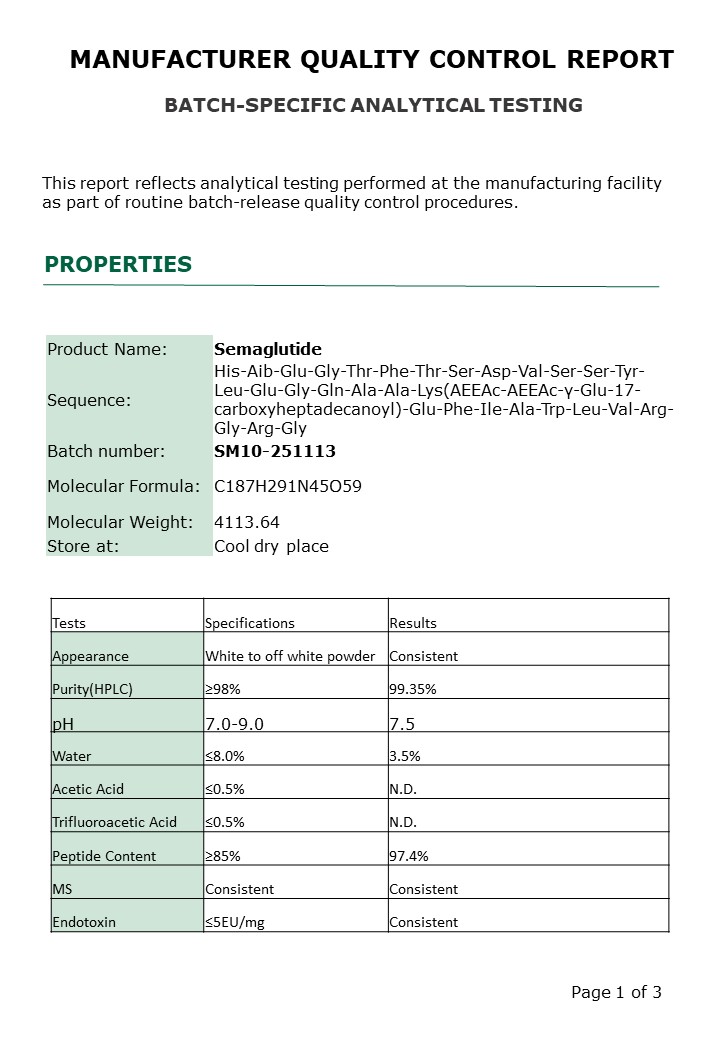
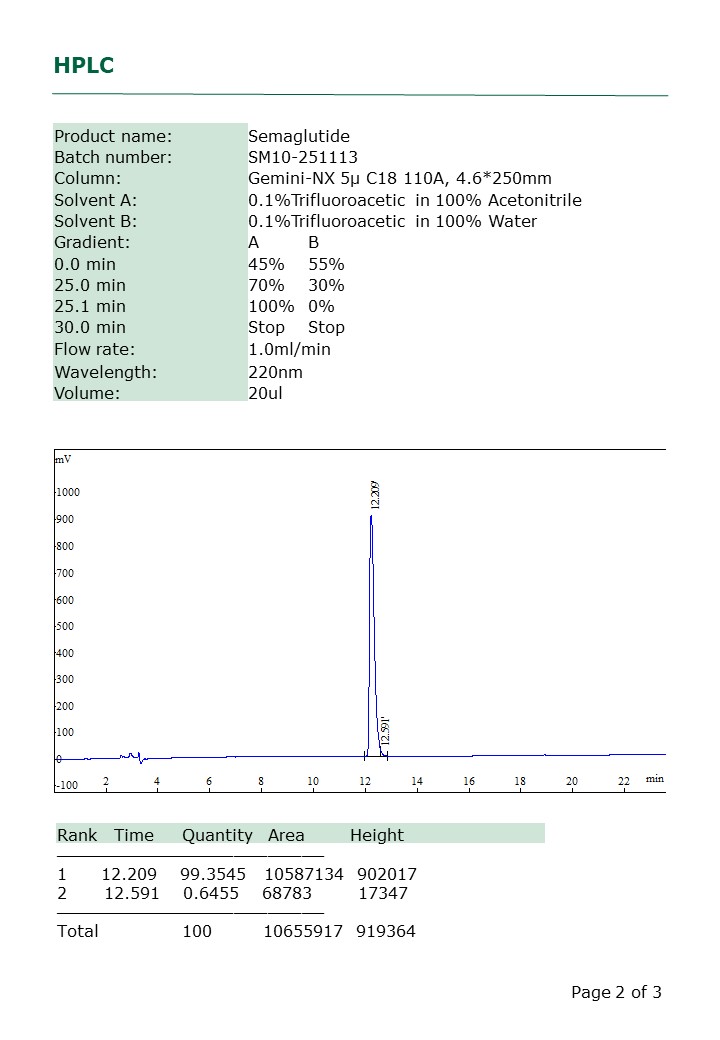
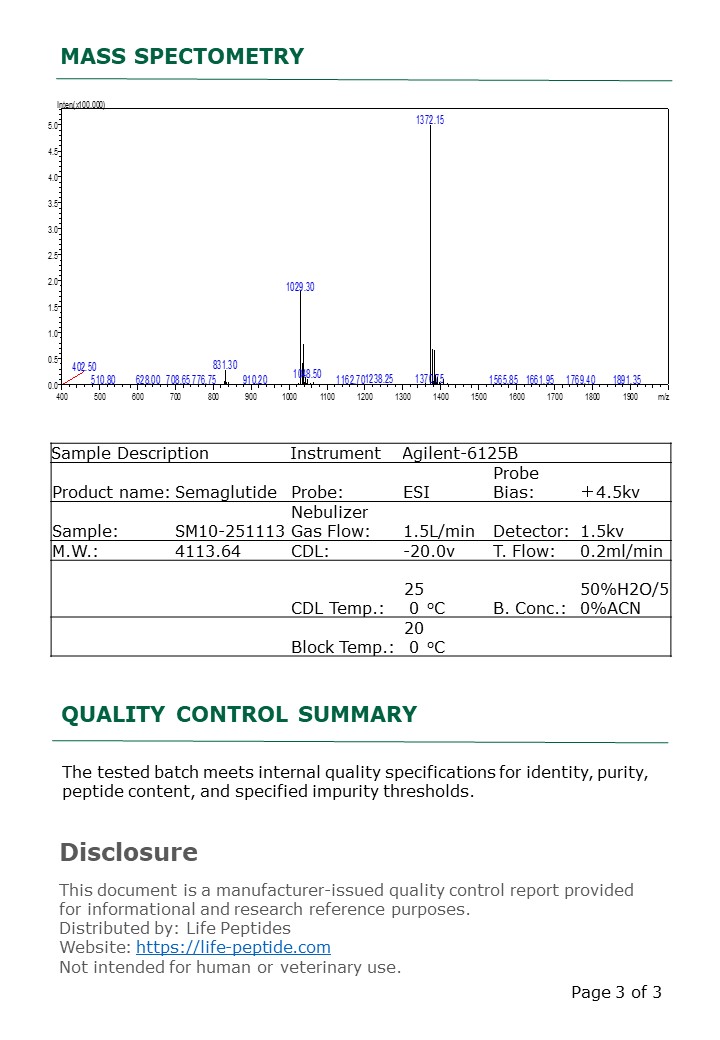
Κάθε παρτίδα ελέγχεται προσεκτικά στο εργαστήριο μετά την παραγωγή (μπορείτε να βρείτε το Πιστοποιητικό Ανάλυσης κάτω από τις εικόνες του προϊόντος).
Κατάψυξη-αποξήρανση (λυσόφιλη) για μέγιστη σταθερότητα και παρατεταμένη διάρκεια ζωής.
Σφραγισμένα σε αποστειρωμένες φιάλες, έτοιμα για ανασύσταση.
Καθαρότητα: ≥99% (ελέγχθηκε με HPLC)
Εμφάνιση: Λυοφιλοποιημένη λευκή/υπόλευκη σκόνη
Μοριακός τύπος: C187H291N45O59
Μριακό βάρος: 4113.64
Αλληλουχία: His-Aib-Glu-Gly-Thr-Phe-Thr-Ser-Asp-Val-Ser-Ser-Tyr-Leu-Glu-Gly-Gln-Ala-Ala-Lys(AEEAc-AEEAc-γ-Glu-17-καρβοξυεπταδεκανοϋλ)-Glu-Phe-Ile-Ala-Trp-Leu-Val-Arg-Gly-Arg-Gly
Αποθήκευση: τα αφυδατωμένα σε ξηρή ψύξη, σφραγισμένα φιαλίδια φυλάσσονται καλύτερα συντήρηση στους 2–8°C, η οποία είναι η μέθοδος αποθήκευσης που επιβεβαιώθηκε από τον συνεργάτη παραγωγής μας και είναι κατάλληλη για έως και 24 μήνες. Η ψύξη προτιμάται επειδή ελαχιστοποιεί τους περιττούς κύκλους ψύξης-απόψυξης κατά τον συνήθη χειρισμό. Εάν απαιτείται σημαντικά μακροχρόνια αποθήκευση, τα σφραγισμένα λυοφιλοποιημένα φιαλίδια μπορούν επίσης να διατηρηθούν κατεψυγμένα. Μόλις ανασυσταθεί, αποθηκεύετε πάντα σε 2–8°C και μην καταψύχετε.
Ανα
Η σεμαγλουτίδη παρέχεται ως λυοφιλοποιημένο φιαλίδιο και πρέπει να χειρίζεται σύμφωνα με τις τυπικές διαδικασίες ανασυστασης πεπτιδίων που είναι κατάλληλες για το ερευνητικό περιβάλλον. Πρέπει να ανασυσταθεί με Βακτηριοστατικό νερό πριν τη χρήση. Τα πεπτίδια της κλάσης GLP-1 μερικές φορές διαλύονται αργά και απαιτούν πολύ ήπια ανασύσταση για να αποφευχθεί ο αφρός ή να παραμείνει ελαφρώς θολό.
Για την επιλογή άλλων διαλυτών, σχεδιασμό συγκεντρώσεων και οδηγίες αποθήκευσης, δείτε το πλήρες Οδηγός Ανασύστασης Πεπτιδίων και Υπολογιστής Απεικόνισης.
Βασικές δημοσιευμένες μελέτες
- Wilding JPH et al. “Εβδομαδιαία Σεμαγλουτίδη σε Ενήλικες με Υπέρβαρο ή Παχυσαρκία”. New England Journal of Medicine, 2021.
- Frias JP, Davies MJ, Rosenstock J, et al. Τιρζεπατίδη έναντι Σεμαγλουτίδης μία φορά την εβδομάδα σε ασθενείς με σακχαρώδη διαβήτη τύπου 2 (SURPASS-2). New England Journal of Medicine. 2021.
- Lincoff AM, Brown-Frandsen K, Colhoun HM, et al. Σεμαγλουτίδη και καρδιαγγειακή έκβαση σε παχυσαρκία χωρίς διαβήτη (SELECT). New England Journal of Medicine. 2023.
- Aroda VR. Μια ανασκόπηση του προγράμματος κλινικών δοκιμών SUSTAIN. Diabetes, Obesity and Metabolism. 2019.
Συχνές Ερωτήσεις
Τι είναι η σεμαγլουτίδη;
Η σεμαγLUTΙΔΗ είναι ένας αγωνιστής υποδοχέων GLP-1 μακράς δράσης που μιμείται τη δραστηριότητα της φυσικά απαντώμενης ινκριτινικής ορμόνης πεπτιδίου-1 μοιάζους γλυκαγόνης (GLP-1). Έ γίνει ένα από τα πιο εκτενώς μελετημένα μεταβολικά πεπτίδια και χρησιμεύει ως η ένωση αναφοράς για τη σύγχρονη έρευνα του GLP-1. Δημοσιευμένες μελέτες έχουν ερευνήσει τη σεμαγλουτίδη σε σχέση με τη ρύθμιση της όρεξης, την ομοιοστασία της γλυκόζης, τα αποτελέσματα στο σωματικό βάρος και ευρύτερα καρδιομεταβολικά σήματα.
Πώς λειτουργεί η σεμαγλουτίδη;
Η σεμαγLUTIDΗ ενεργοποιεί εκλεκτικά τον υποδοχέα GLP-1, μια οδό που εμπλέκεται στη ρύθμιση της έκκρισης ινσουλίνης, της απελευθέρωσης γλυκαγόνης, της γαστρικής κένωσης και της σηματοδότησης της όρεξης. Σε αντίθεση με τους νεότερους αγωνιστές διπλών και τριπλών υποδοχέων, δρα μόνο στους υποδοχείς GLP-1, καθιστώντας την ένα σημαντικό μόριο αναφοράς για ερευνητές που συγκρίνουν διαφορετικές θεραπευτικές στρατηγικές βασισμένες στην ινκρετίνη.
Πώς διαφέρει η σεμαγλουτίδη από την τσιρζεπατίδη;
Η σεμαγLUTIDΗ ενεργοποιεί μόνο τον υποδοχέα GLP-1, ενώ η τιρζepatide είναι ένας διπλός αγωνιστής GLP-1/GIP. Και οι δύο ενώσεις ανήκουν στην κατηγορία των ινκριτινών, αλλά η τιρζepatide επεκτείνει τον μηχανισμό πέρα από τη σηματοδότηση του GLP-1. Ως αποτέλεσμα, η σεμαγλουτίδη χρησιμοποιείται συχνά ως το σημείο αναφοράς με το οποίο αξιολογούνται οι διπλοί αγωνιστές στη μεταβολική έρευνα.
Πώς διαφέρει η σεμαγλουτίδη από τη ρετατρουτίδη;
Η ρετατρουτίδη είναι ένας τριπλός αγωνιστής που στοχεύει τους υποδοχείς GLP-1, GIP και γλυκαγόνης, προσφέροντάς της το ευρύτερο προφίλ υποδοχέων που μελετάται επί του παρόντος μεταξύ των πεπτιδίων ινκρετίνης. Η σεμαγλουτίδη, αντίθετα, εστιάζει αποκλειστικά στην ενεργοποίηση του υποδοχέα GLP-1. Αυτό καθιστά τη σεμαγλουτίδη το θεμελιώδες μόριο αναφοράς για τη βιολογία του GLP-1, ενώ η ρετατρουτίδη αντιπροσωπεύει την επόμενη γενιά πολυ-υποδο一种ιακής μεταβολικής έρευνας.
Γιατί η σεμαγlutίδη παραμένει σημαντική όταν υπάρχουν νεότερα πεπτίδια;
Παρόλο που τα νεότερα πεπτίδια διπλού και τριπλού αγωνιστή έχουν προκαλέσει σημαντικό ενδιαφέρον, η Σεμαγлуτίδη παραμένει μία από τις πιο σημαντικές ουσίες στη μεταβολική έρευνα, επειδή διαθέτει τον μεγαλύτερο και πιο ώριμο όγκο δημοσιευμένων κλινικών δεδομένων. Π πολλές μελέτες που αξιολογούν την Τιρζεπατίδη, τη Ρετατρουτίδη και άλλα ερευνητικά πεπτίδια συνεχίζουν να χρησιμοποιούν τη Σεμαγλουτίδη ως κύριο συγκριτικό παράγοντα, καθιστώντας την κεντρική για την κατανόηση του πώς οι νεότερες θεραπείες με ινκρετίνες διαφέρουν από την καθιερωμένη αγωνιστική δράση των υποδοχέων GLP-1.
Ποιες ερευνητικές περιοχές μελετούν συνήθως τη Σεμαγλουτίδη;
Δημοisευμένες μελέτες έχουν διερευνήσει τη σεμαγλουτίδη σε ένα ευρύ φάσμα ερευνητικών τομέων του μεταβολισμού, συμπεριλαμβανομένης της παχυσαρκίας, της ρύθμισης του σωματικού βάρους, της σηματοδότησης της όρεξης, του μεταβολισμού της γλυκόζης, του διαβήτη τύπου 2, των καρδιαγγειακών εκβάσεων, της λιπώδους νόσου του ήπατος και της μακροχρόνιας βιολογίας των ινκριτινών. Η εκτεταμένη βιβλιογραφική της βάση την καθιστά ένα από τα πεπτίδια με τις συχνότερες αναφορές στη σύγχρονη μεταβολική έρευνα.
Πώς παρέχεται η σεμαγλουτίδη;
Αυτό το προϊόν παρέχεται ως 10 mg λυοφιλοποιημένης ΣεμαγLUTίδης σε αποστειρωμένο φιαλίδιο έρευνας. Κάθε παρτίδα συνοδεύεται από Πιστοποιητικό Ανάλυσης (COA), ενώ διατίθεται ανεξάρτητη αναλυτική επαλήθευση από τρίτους για επιλεγμένες παρτίδες. Το προϊόν προορίζεται αποκλειστικά για εργαστηριακή και αναλυτική έρευνα.
Μπορώ να αγοράσω Σεμαγλουτίδη στην Ευρώπη;
Ναι. Αποστέλλουμε Σεμαγлуτίδη στις περισσότερες ευρωπαϊκές χώρες χρησιμοποιώντας αξιόπιστες υπηρεσίες ταχυμεταφορών. Οι διαθέσιμοι τρόποι αποστολής και οι χρόνοι παράδοσης εμφανίζονται κατά την ολοκλήρωση της αγοράς με βάση τον προορισμό σας.
Αυτό το προϊόν προορίζεται για ανθρώπινη χρήση;
Όχι. Η σεμαγλουτίδη που διατίθεται από την Life Peptide προορίζεται αποκλειστικά για ερευνητικούς σκοπούς. Δεν προορίζεται για ανθρώπινη κατανάλωση, διάγνωση, θεραπεία ή πρόληψη ασθενειών. Οποιαδήποτε αναφορά σε δημοσιευμένες κλινικές μελέτες σε αυτή τη σελίδα περιλαμβάνεται αποκλειστικά με σκοπό τη σύνοψη της τρέχουσας επιστημονικής βιβλιογραφίας σχετικά με το μόριο της σεμαγλουτίδης.
Σχετικό ερευνητικό πλαίσιο
Η σεμαγλουτίδη ανήκει στην κατηγορία των αγωνιστών υποδοχέων GLP-1 στο πλαίσιο της μεταβολικής έρευνας που βασίζεται στην ινκριτίνη. Για μηχανιστική σύγκριση με διπλούς και τριπλούς αγωνιστές, δείτε μας Οδηγός μεταβολικής έρευνας GLP-1.
Περιηγηθείτε σε όλες τις ενώσεις στο Μεταβολική έρευνα.
Για τη σύγκριση μονοπατιών:
Διπλοί αγωνιστές: Τιρζεπατίδη (GLP-1/GIP)
Τριπλοί αγωνιστές: Retatrutide (GLP-1/GIP/γλυκαγόνη)
ΣΗΜΕΙΩΣΗ: Αυτό γίνεται αποκλειστικά για εκπαιδευτικούς σκοπούς και δεν συνιστά ιατρική συμβουλή.
Αποποίηση ευθύνης:
Αυτό το προϊόν πωλείται αποκλειστικά για ερευνητικούς σκοπούς. Δεν προορίζεται για τη διάγνωση, θεραπεία, ίαση ή πρόληψη οποιασδήποτε ασθένειας. Ο αγοραστής αναλαμβάνει πλήρως την ευθύνη για τον σωστό χειρισμό και τη χρήση.