Description
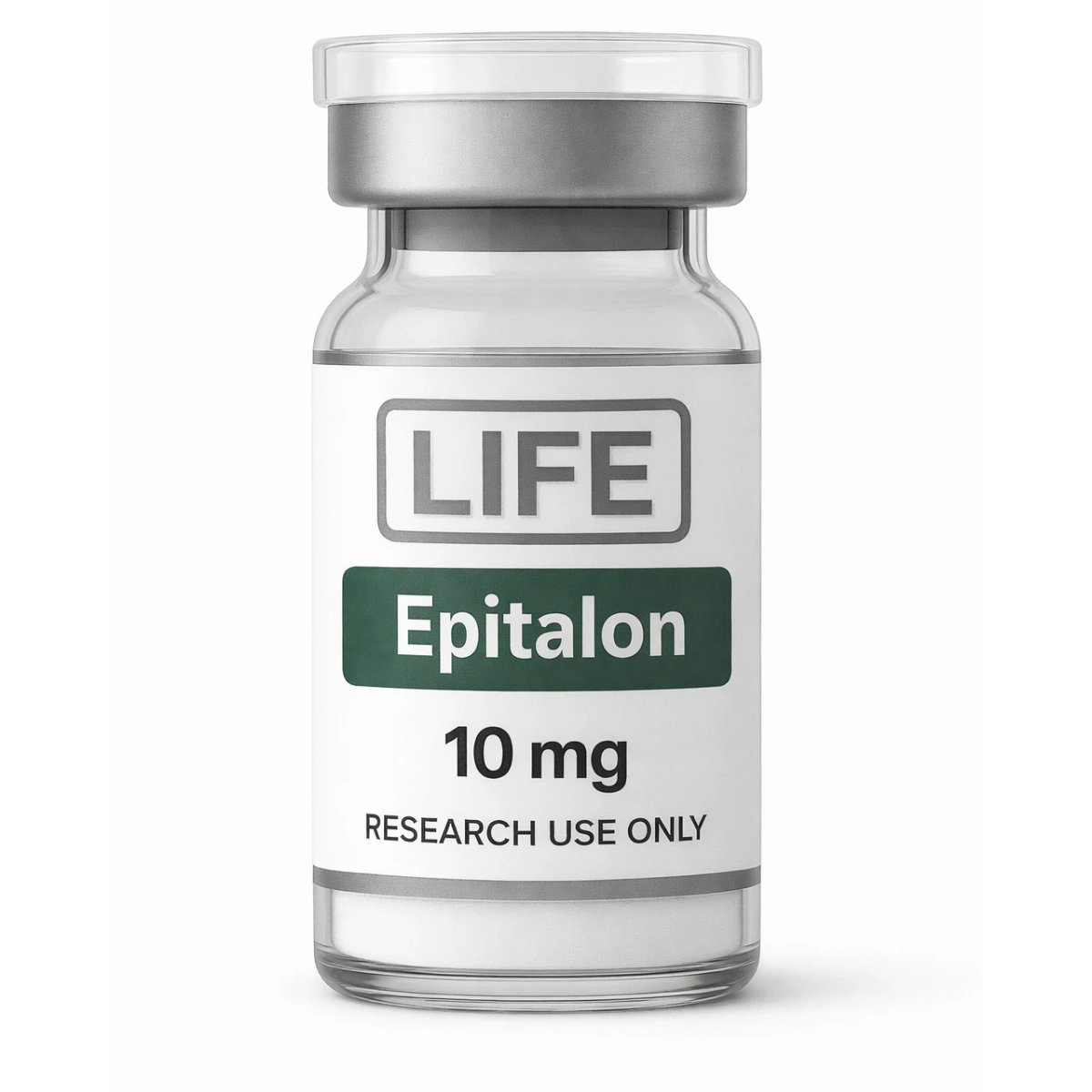
Epitalon (also known as Epithalon) is a synthetic tetrapeptide (Ala-Glu-Asp-Gly; AEDG) derived from Epithalamin, a peptide complex originally isolated from the pineal gland.
It has become one of the most recognised research peptides in longevity science because published studies have investigated its relationship with telomerase activation, telomere maintenance, circadian rhythm and healthy aging. Although the peptide is frequently discussed in longevity research, much of the evidence comes from laboratory and preclinical studies, with relatively limited independent human research.
Looking to buy Epitalon in Europe? LIFE Peptide supplies high-purity Epitalon for laboratory research with reliable EU-wide shipping.
Why Epitalon is widely investigated
Published research has investigated Epitalon in relation to:
- healthy aging
- telomerase activation
- telomere biology
- cellular senescence
- circadian rhythm
- melatonin regulation
- pineal gland function
- oxidative stress
- longevity research
Epitalon remains one of the few research peptides specifically developed to investigate biological aging rather than metabolism, growth hormone or tissue repair.
How Epitalon works
Current research has explored several potential mechanisms.
Telomerase activity
The best-known studies investigated whether Epitalon can increase expression of telomerase (hTERT) and influence telomere maintenance in cultured human cells. Independent laboratory work published in 2025 provided additional support for these observations, although clinical significance remains uncertain.
Pineal gland research
Epitalon has also been investigated for its relationship with pineal gland biology and melatonin synthesis, making it relevant to research on circadian rhythm and age-related changes in endocrine function.
Healthy aging
Animal studies have explored the relationship between Epitalon, cellular aging and lifespan, while human research has remained comparatively limited. Current evidence supports continued investigation but does not establish clinical longevity effects.
Oxidative stress
Researchers have also investigated Epitalon’s interaction with oxidative stress and age-related cellular regulation as part of broader longevity research.
Why Epitalon became one of the best-known longevity peptides
Few research peptides have generated as much discussion in longevity science as Epitalon.
Interest largely stems from early publications reporting telomerase activation and possible effects on cellular aging. However, one important limitation should be recognised: most of the published longevity literature originates from a single research group, and independent confirmation has only recently begun to emerge at the cellular level. Large placebo-controlled human trials remain unavailable.
For this reason, Epitalon is best viewed as one of the most promising investigational longevity peptides rather than an established anti-aging intervention.
Human and preclinical research
Published research includes:
- telomerase biology
- telomere maintenance
- pineal gland physiology
- melatonin regulation
- circadian rhythm
- healthy aging
- lifespan research
- oxidative stress
Laboratory findings are encouraging, but clinical evidence remains limited compared with more established research peptides.
Published safety observations
Most published human data involve relatively small studies. Early investigations generally reported good tolerability, but comprehensive long-term safety data are lacking. Researchers also note that because Epitalon has been investigated for telomerase activation, additional research is needed to better understand its long-term biological effects before firm conclusions can be drawn.
Product characteristics
Application: laboratory and analytical research
Use restriction: not for human consumption; not for medical, veterinary or cosmetic use
Produced in GMP-compliant facilities under strict QC protocols.
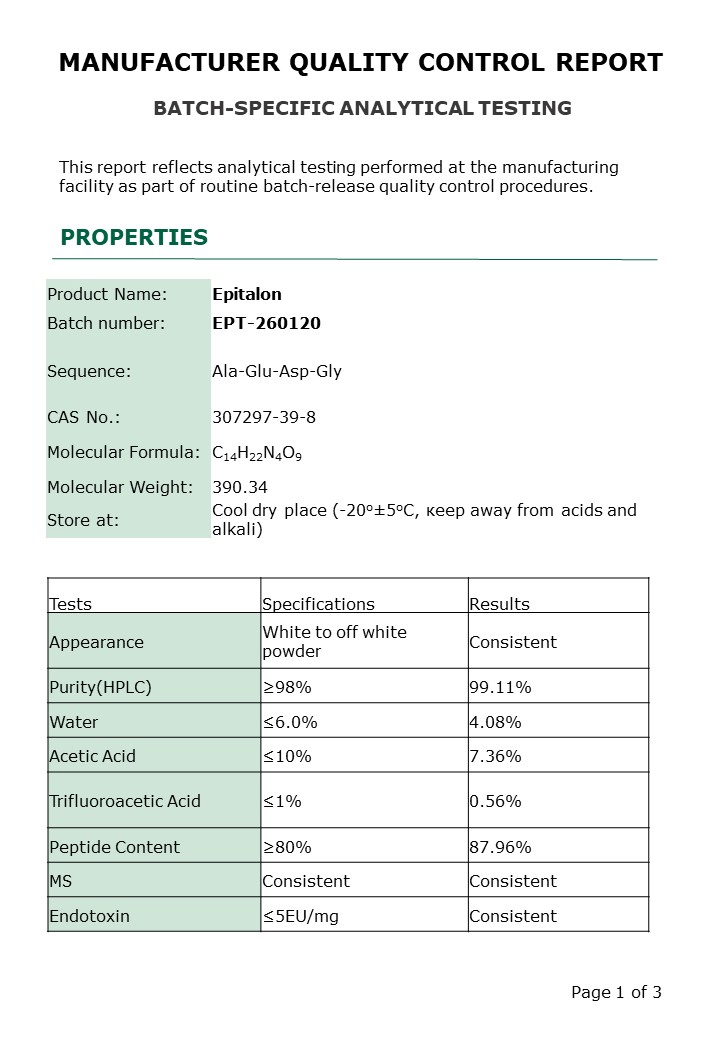
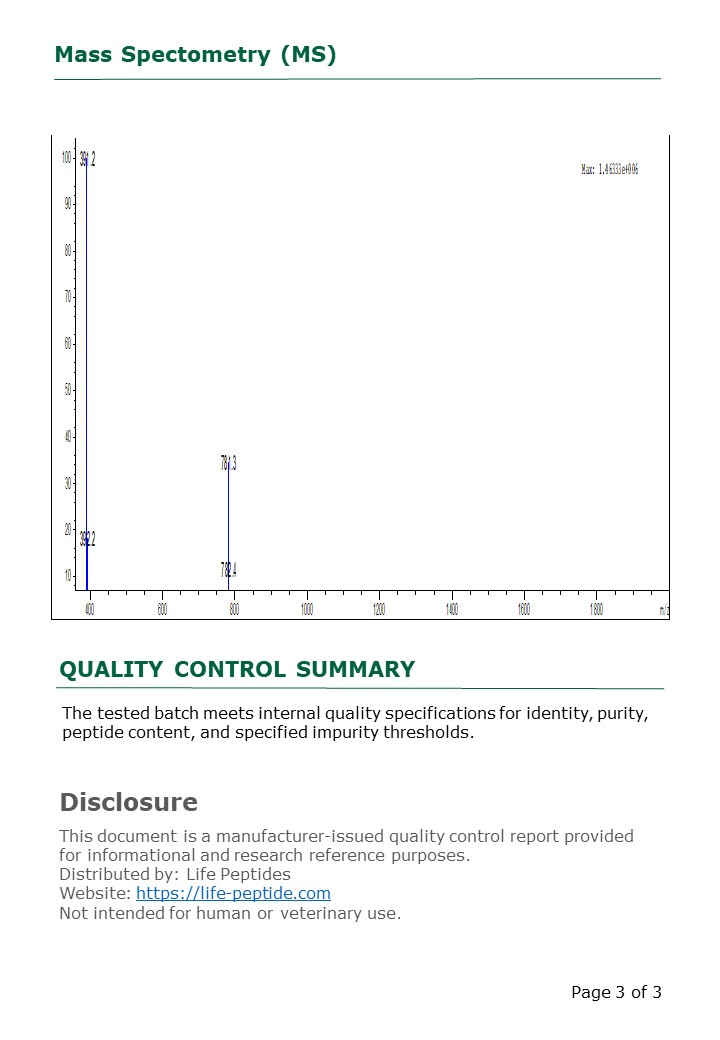
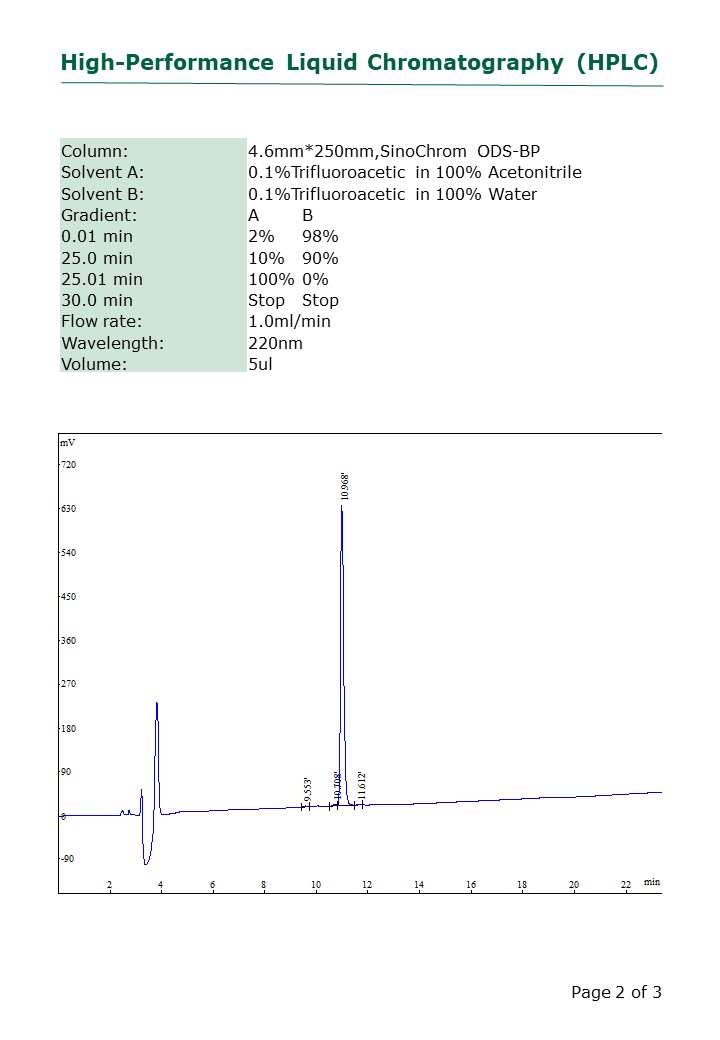
Each batch carefully lab tested after production (you can find Certificate of Analysis under product pictures).
Freeze-dried (lyophilized) for maximum stability and extended shelf life.
Sealed in sterile vials, ready for reconstitution.
Purity: ≥99.11% (HPLC-tested)
Appearance: Lyophilized white/off-white powder
Molecular formula: C14H22N4O9
Molecular weight: 390.34
Sequence: Ala-Glu-Asp-Gly
Storage: unopened lyophilized vials are best stored refrigerated at 2–8°C, which is the storage method confirmed by our manufacturing partner and suitable for up to 24 months. Refrigeration is preferred because it minimizes unnecessary freeze–thaw cycles during routine handling. If substantially longer-term storage is required, unopened lyophilized vials may also be kept frozen. Once reconstituted, always store at 2–8°C and do not freeze.
Reconstitution and handling
Epitalon is supplied as a lyophilised vial and should be handled using standard peptide reconstitution procedures appropriate to the research setting. Must be reconstituted with bacteriostatic water before use. To help preserve structural integrity, add the chosen solvent slowly against the inside wall of the vial rather than directly onto the peptide cake, and avoid vigorous shaking. Gentle swirling is generally sufficient once the peptide has fully dissolved. Standard laboratory practice also includes allowing refrigerated vials to reach room temperature before reconstitution to minimise condensation inside the vial.
For other solvent selection, concentration planning and storage guidance, see the full Peptide Reconstitution Guide and Reconstitution Calculator.
Selected research references
- Khavinson V, Bondarev I, Butyugov A. Epitalon Induces Telomerase Activity and Telomere Elongation in Human Somatic Cells, Bulletin of Experimental Biology and Medicine, 2003
The landmark publication reporting telomerase activation and telomere extension in cultured human cells.
- Al-Dulaimi A, Thomas R, Matta C, Roberts T. Independent Investigation of Epitalon-Induced Telomere Extension in Human Cell Lines, 2025
One of the first independent studies outside the original Russian research programme confirming telomere extension in human cell models and exploring underlying mechanisms.
- Khavinson V, Anisimov V. Pineal Peptides and Aging
A series of publications investigating Epitalon’s relationship with pineal function, melatonin regulation and healthy aging.
- Zhou et al. Recent Perspectives on Epitalon and Healthy Aging, 2025–2026 reviews
Modern reviews discussing current evidence, limitations and future directions for Epitalon research.
Frequently Asked Questions
What is Epitalon?
Epitalon is a synthetic tetrapeptide derived from Epithalamin. It is widely investigated for healthy aging, telomerase activity, telomere biology and pineal gland research.
Why is Epitalon associated with longevity research?
Early laboratory studies suggested that Epitalon may influence telomerase activity and telomere maintenance. These findings made it one of the best-known peptides in longevity research, although large independent human trials remain unavailable.
Does Epitalon lengthen telomeres?
Cell culture studies have reported telomerase activation and telomere extension, and recent independent laboratory work has supported these observations. However, whether these findings translate into meaningful clinical outcomes in humans has not yet been established.
Why is Epitalon linked to melatonin?
Research has investigated Epitalon’s effects on the pineal gland and melatonin synthesis, making it relevant to studies of circadian rhythm and age-related endocrine changes.
What research areas commonly investigate Epitalon?
Published research includes healthy aging, telomerase biology, telomere maintenance, pineal gland physiology, melatonin regulation, circadian rhythm and oxidative stress.
Why is Epitalon considered controversial?
The peptide has promising mechanistic and preclinical data, but much of the supporting literature originates from a single research programme. Independent replication has begun to emerge in laboratory models, yet robust randomized human trials remain lacking.
Can I buy Epitalon in Europe?
Yes. We ship Epitalon to most European countries using reliable courier services. Available shipping methods and delivery times are shown during checkout based on your destination.
Is this product intended for human use?
No. Epitalon supplied by LIFE Peptide is provided strictly for laboratory and analytical research. It is not intended for human consumption, diagnosis, treatment or prevention of disease. Any discussion of published studies summarises the scientific literature relating to the Epitalon molecule rather than the intended use of this product.
Related research context
Epitalon is frequently discussed alongside other research peptides investigating healthy aging, mitochondrial biology and cellular resilience.
MOTS-c – investigated for mitochondrial metabolism, exercise adaptation and healthy aging.
GHK-Cu – studied in relation to tissue repair, extracellular matrix remodelling and age-related skin biology.
DSIP – investigated for sleep physiology, circadian biology and neuroendocrine regulation.
Semax – researched for neuroprotection and cognitive function.
Selank – investigated in stress adaptation and neuroendocrine regulation.
SS-31 – investigated for mitochondrial function and cellular energy production.
Although these peptides are often grouped within longevity research, each investigates different biological pathways and should not be considered interchangeable.
NOTE: This is for educational reference only and does not constitute medical advice.
Disclaimer:
This product is sold for research purposes only. It is not intended to diagnose, treat, cure, or prevent any disease. Buyer assumes full responsibility for proper handling and use.