Descripción
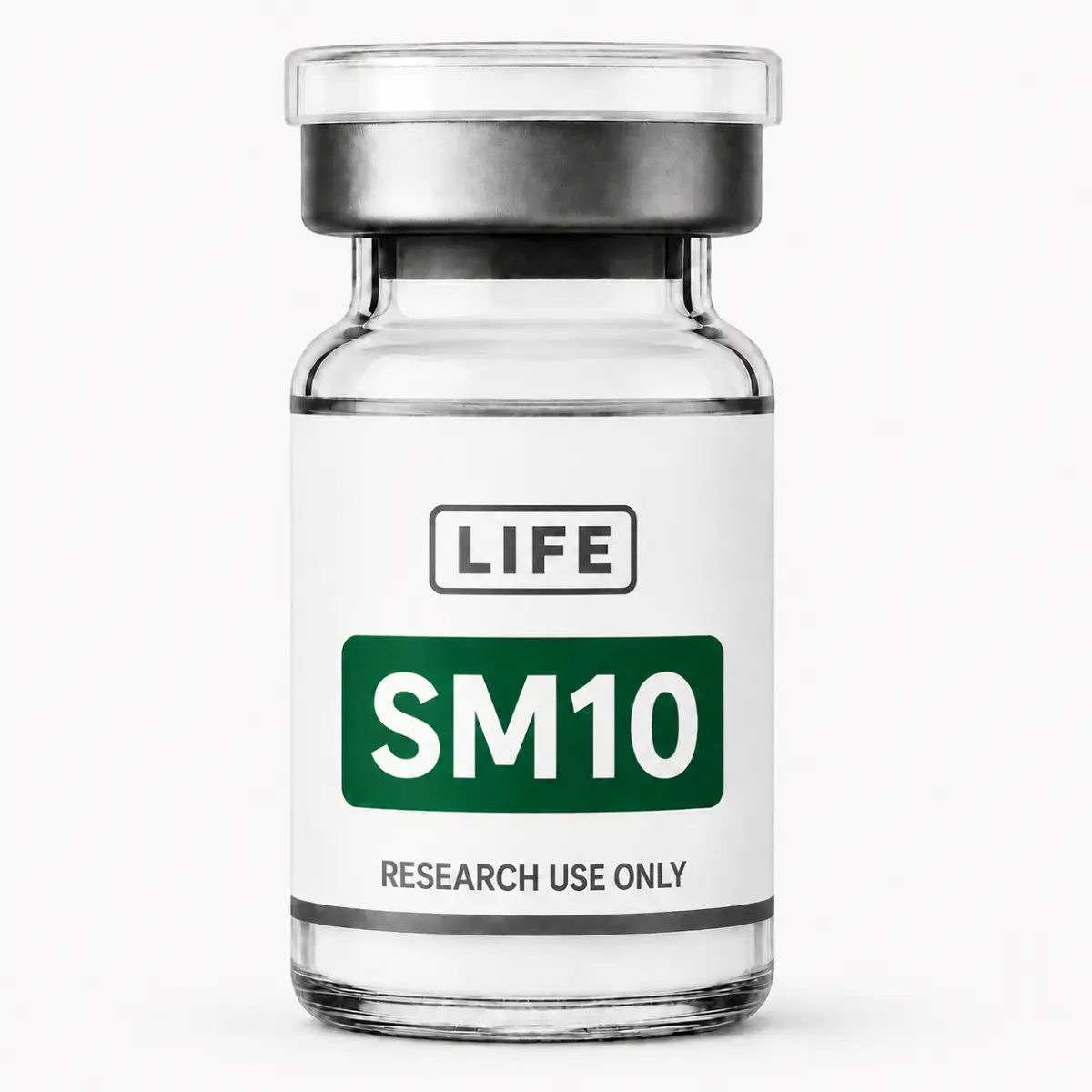
Semaglutida 10 mg en Europa ¿Quieres comprar semaglutida en Europa? Life Peptide suministra semaglutida de alta pureza para investigación de laboratorio con un servicio de envío fiable a toda la UE.
La semaglutida es un agonista del receptor de GLP-1 de acción prolongada diseñado para imitar la actividad del péptido-1 similar al glucagón endógeno a la vez que proporciona una actividad biológica sustancialmente más prolongada que la hormona nativa. A diferencia de Tirzepatida y Retatrutida, la semaglutida activa únicamente el receptor de GLP-1, lo que la convierte en el miembro más simple de la generación actual de péptidos incretínicos. Este mecanismo selectivo ha hecho que la semaglutida uno de los péptidos metabólicos más investigados extensamente tanto en la investigación preclínica como clínica durante la última década.
Debido a este gran cúmulo de evidencia, la semaglutida se utiliza frecuentemente como el compuesto de referencia al evaluar agonistas de receptores dobles y triples más nuevos.
Por qué la semaglutida sigue siendo importante en la investigación metabólica
Aunque los agonistas de receptores múltiples más nuevos han atraído considerable atención, la semaglutida sigue sirviendo como el referente científico para la biología del GLP-1.
La investigación publicada ha investigado la semaglutida en relación con:
- regulación del apetito
- reducción del peso corporal
- control glucémico
- secreción de insulina
- vaciamiento gástrico
- resultados cardiovasculares
- síndrome metabólico
- enfermedad del hígado graso no alcohólico
- señalización prolongada de incretinas
Su extensa literatura clínica convierte a la semaglutida en una de las moléculas comparadoras más importantes en la investigación sobre la obesidad y el metabolismo. Muchos estudios modernos que evalúan la tirzepatida, la retatrutida y las combinaciones emergentes de GLP-1 utilizan la semaglutida como el estándar de referencia.
Cómo funciona la semaglutida
Semaglutida activa selectivamente el receptor de GLP-1, un regulador clave del apetito, la homeostasis de la glucosa y la señalización gastrointestinal.
La activación de los receptores de GLP-1 se ha asociado en investigaciones publicadas con:
- secreción de insulina dependiente de glucosa
- supresión de la liberación de glucagón
- vaciamiento gástrico retardado
- ingesta reducida de alimentos
- señalización central del apetito alterada
- mejoras en varios marcadores metabólicos
A diferencia de la tirzepatida, la semaglutida sí no activar los receptores GIP. A diferencia de la retatrutida, tiene sin glucagón actividad de receptores.
Por lo tanto, su valor radica en proporcionar una característica bien definida modelo de GLP-1 de vía única, lo que lo convierte en el comparador lógico para los compuestos de incretina más nuevos.
Semaglutida frente a Tirzepatida frente a Retatrutida
Semaglutida
- Agonista del receptor GLP-1
- soltero mecanismo receptor
- la mayor base de evidencia clínica
- compuesto de referencia para la investigación de GLP-1
Tirzepatida
- GLP-1 + GIP dual agonista
- señalización por incretinas más amplia
- comparado frecuentemente de forma directa con la semaglutida
Retatrutida
- GLP-1 + GIP + glucagón triple agonista
- perfil de receptores más amplio
- representa la generación más reciente de péptidos metabólicos multirreceptores
Para los investigadores que investigan la biología de las incretinas, la semaglutida proporciona la base a partir de la cual se pueden evaluar compuestos de agonistas duales y triples.
Características del producto
Aplicación: investigación de laboratorio y análisis
Uso restringido: no apto para consumo humano; no apto para uso médico, veterinario o cosmético
Producido en instalaciones que cumplen con GMP bajo estrictos protocolos de control de calidad.
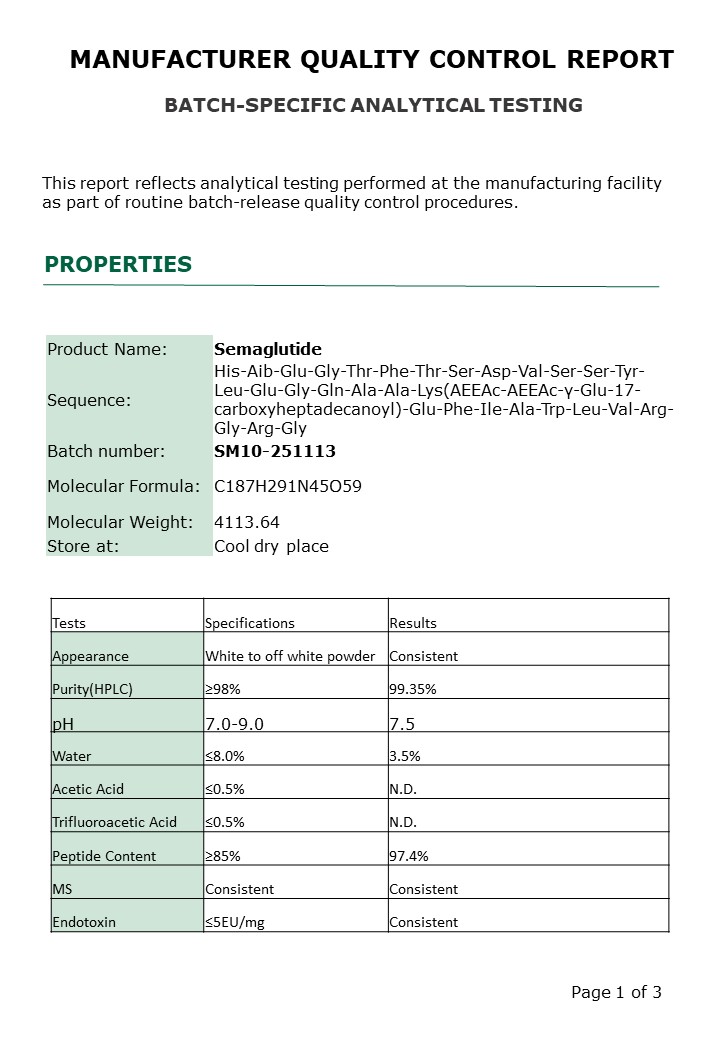
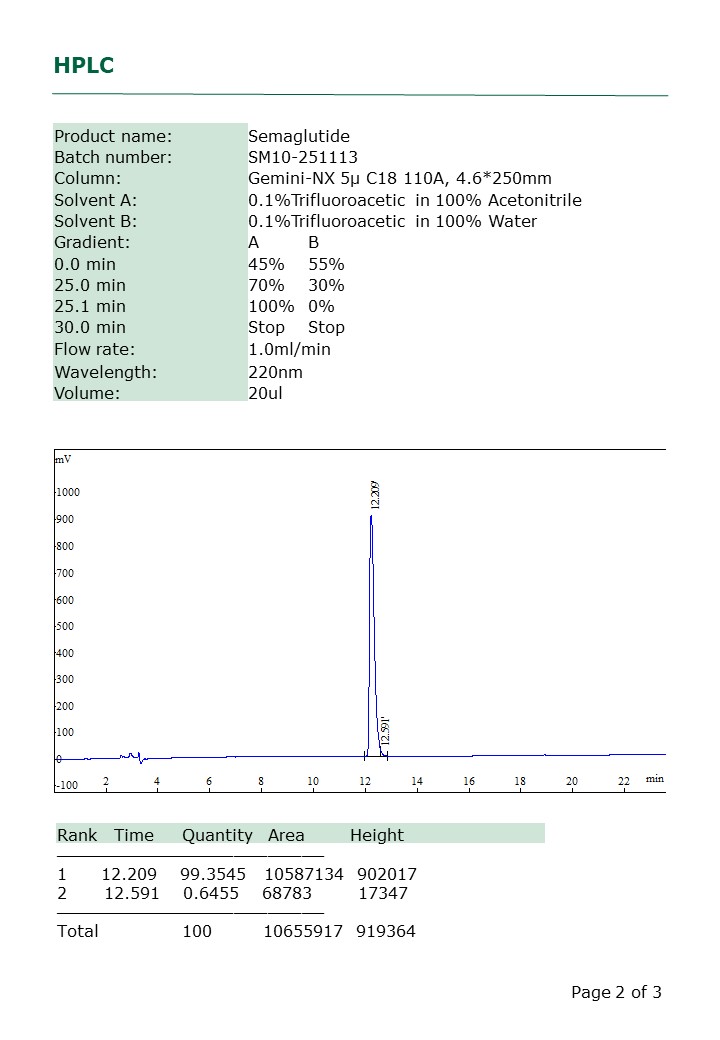
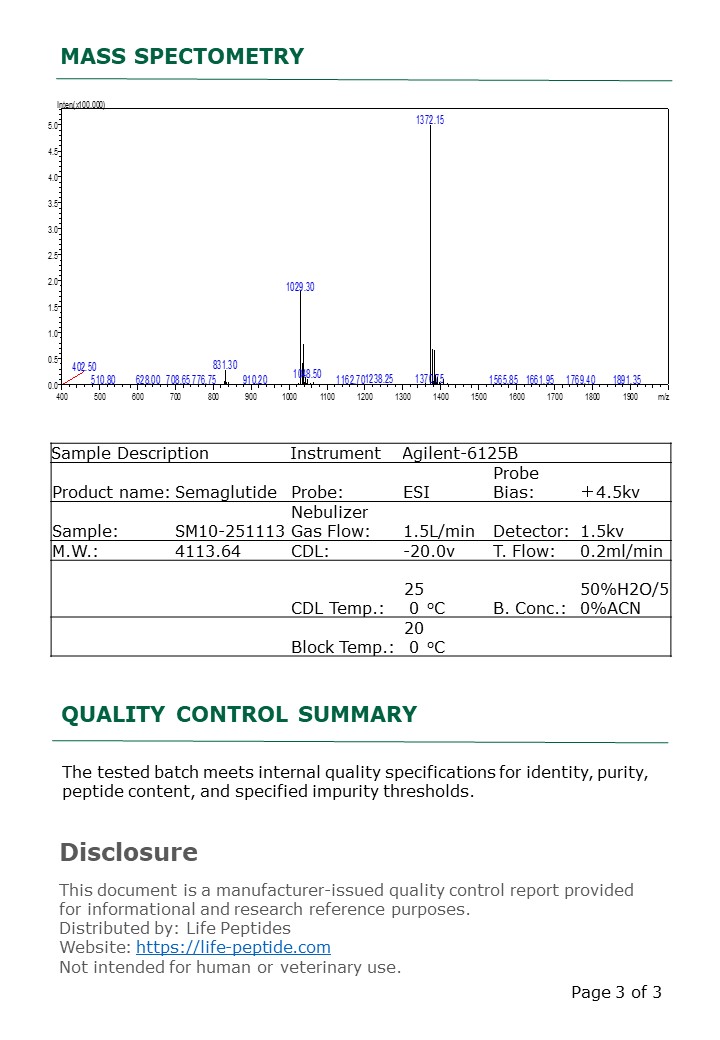
Cada lote se somete a pruebas de laboratorio exhaustivas después de la producción (puede encontrar el Certificado de Análisis debajo de las imágenes del producto).
Liofilizado (liofilizado) para máxima estabilidad y vida útil prolongada.
Sellado en viales estériles, listo para la reconstitución.
Pureza: ≥99% (analizada mediante HPLC)
Apariencia: Polvo blanco/blanquecino liofilizado
Fórmula molecular: C187H291N45O59
Peso molecular: 4113.64
Secuencia: His-Aib-Glu-Gly-Thr-Phe-Thr-Ser-Asp-Val-Ser-Ser-Tyr-Leu-Glu-Gly-Gln-Ala-Ala-Lys(AEEAc-AEEAc-γ-Glu-17-carboxiheptadecanoil)-Glu-Phe-Ile-Ala-Trp-Leu-Val-Arg-Gly-Arg-Gly
Almacenamiento: los viales liofilizados sin abrir se almacenan mejor refrigerar a 2–8 °C, que es el método de almacenamiento confirmado por nuestro socio de fabricación y adecuado para hasta 24 meses. Se prefiere la refrigeración porque minimiza los ciclos innecesarios de congelación y descongelación durante la manipulación rutinaria. Si se requiere un almacenamiento a más largo plazo, los viales liofilizados sin abrir también pueden mantenerse congelados. Una vez reconstituidos, almacene siempre a 2–8 °C y no congele.
Reconstitución y manipulación
Semaglutide se suministra como un vial liofilizado y debe manipularse utilizando los procedimientos estándar de reconstitución de péptidos apropiados para el entorno de investigación. Debe reconstituirse con agua bacteriostática Antes de usar. Los péptidos de la clase GLP-1 a veces tardan en disolverse y requieren una reconstitución muy suave para evitar la formación de espuma o que queden ligeramente turbios.
Para otras guías sobre selección de solventes, planificación de concentraciones y almacenamiento, consulte el completo Guía de Reconstitución de Péptidos y Calculadora de Reconstitución.
Estudios clave publicados
- Wilding JPH et al. “Semaglutide semanal en adultos con sobrepeso u obesidad. New England Journal of Medicine, 2021.
- Frías JP, Davies MJ, Rosenstock J, et al. Tirzepatida frente a semaglutida una vez a la semana en pacientes con diabetes tipo 2 (SURPASS-2). New England Journal of Medicine. 2021.
- Lincoff AM, Brown-Frandsen K, Colhoun HM, et al. Semaglutida y desenlaces cardiovasculares en la obesidad sin diabetes (SELECT). New England Journal of Medicine. 2023.
- Aroda VR. Una revisión del programa de ensayos clínicos SUSTAIN. Diabetes, Obesity and Metabolism. 2019.
Preguntas Frecuentes
¿Qué es la semaglutida?
La semaglutida es un agonista del receptor de GLP-1 de acción prolongada que imita la actividad de la hormona incretina natural péptido-1 similar al glucagón. Se ha convertido en uno de los péptidos metabólicos más estudiados exhaustivamente y sirve como compuesto de referencia para la investigación moderna sobre el GLP-1. Los estudios publicados han investigado la semaglutida en relación con la regulación del apetito, la homeostasis de la glucosa, los resultados de peso corporal y la señalización cardiometabólica más amplia.
¿Cómo funciona la semaglutida?
El semaglutida activa selectivamente el receptor de GLP-1, una vía implicada en la regulación de la secreción de insulina, la liberación de glucagón, el vaciamiento gástrico y la señalización del apetito. A diferencia de los agonistas más nuevos de receptores duales y triples, actúa únicamente sobre los receptores de GLP-1, lo que la convierte en una molécula de referencia importante para los investigadores que comparan diferentes estrategias terapéuticas basadas en incretinas.
¿Cómo es diferente Semaglutide a Tirzepatide?
El semaglutida solo activa el receptor de GLP-1, mientras que el tirzepatide es un agonista dual de GLP-1 y GIP. Ambos compuestos pertenecen a la clase de los incretinas, pero el tirzepatide amplía el mecanismo más allá de la señalización de GLP-1. Como resultado, el semaglutida suele utilizarse como referencia para evaluar los agonistas duales en la investigación metabólica.
¿Cómo es diferente el semaglutida al retatrutida?
Retatrutide es un agonista triple que actúa sobre los receptores de GLP-1, GIP y glucagón, lo que le confiere el perfil receptor más amplio actualmente en estudio entre los péptidos incretínicos. Por su parte, Semaglutide se centra exclusivamente en la activación del receptor de GLP-1. Esto hace de Semaglutide la molécula de referencia fundamental para la biología del GLP-1, mientras que Retatrutide representa la próxima generación de investigaciones metabólicas multireceptorales.
¿Por qué sigue siendo importante el semaglutida cuando existen péptidos más nuevos?
Aunque los péptidos duales y triples agonistas más recientes han despertado un gran interés, el semaglutida sigue siendo uno de los compuestos más importantes en la investigación metabólica debido a que cuenta con el mayor y más sólido conjunto de pruebas clínicas publicadas. Muchos estudios que evalúan el Tirzepatide, el Retatrutide y otros péptidos en fase de investigación siguen utilizando el semaglutida como comparador principal, lo que lo convierte en un elemento fundamental para comprender cómo las nuevas terapias con incretinas difieren del agonismo establecido del receptor de GLP-1.
¿En qué áreas de investigación se estudia comúnmente el Semaglutide?
Estudios publicados han investigado el Semaglutide en un amplio abanico de áreas de investigación metabólica, incluyendo la obesidad, la regulación del peso corporal, la señalización del apetito, el metabolismo de la glucosa, la diabetes tipo 2, los resultados cardiovasculares, la enfermedad de hígado graso y la biología de los incretinas a largo plazo. Su extensa base de evidencia lo convierte en uno de los péptidos más citados en la investigación metabólica moderna.
¿Cómo se suministra Semaglutide?
Este producto se suministra en forma de 10 mg de semaglutida liofilizada en un vial de investigación estéril. Cada lote viene acompañado de un Certificado de Análisis (COA), y se dispone de verificación analítica independiente por parte de un tercero para los lotes seleccionados. El producto está destinado exclusivamente a la investigación de laboratorio y analítica.
¿Puedo comprar Semaglutide en Europa?
Sí. Enviamos Retatrutide a la mayoría de los países europeos utilizando servicios de mensajería fiables. Los métodos de envío y los plazos de entrega disponibles se muestran durante el proceso de pago según su destino.
¿Está este producto destinado al uso humano?
No. El semaglutida suministrado por Life Peptide Isis se utiliza estrictamente para fines de investigación. No está destinado al consumo humano, ni para el diagnóstico, ni para el tratamiento ni para la prevención de enfermedades. Cualquier referencia a estudios clínicos publicados en esta página se incluye únicamente para resumir la literatura científica actual sobre la molécula del semaglutida.
Contexto de investigación relacionado
El semaglutida pertenece a la clase de agonistas del receptor de GLP-1 en la investigación metabólica basada en incretinas. Para una comparación de los mecanismos de acción con los agonistas duales y triples, véase nuestro artículo. Guía de investigación metabólica de GLP-1.
Explorar todos los compuestos en el Categoría de investigación metabólica.
Para la comparación de vías:
Agonistas duales: Tirzepatide (GLP-1/GIP)
Agonistas triples: Retatrutide (GLP-1/GIP/glucagón)
NOTA: Esto es solo para fines de referencia educativa y no constituye asesoramiento médico.
Descargo de responsabilidad:
Este producto se vende únicamente para fines de investigación. No está destinado a diagnosticar, tratar, curar ni prevenir ninguna enfermedad. El comprador asume toda la responsabilidad por su manipulación y uso adecuados.