

Descripción
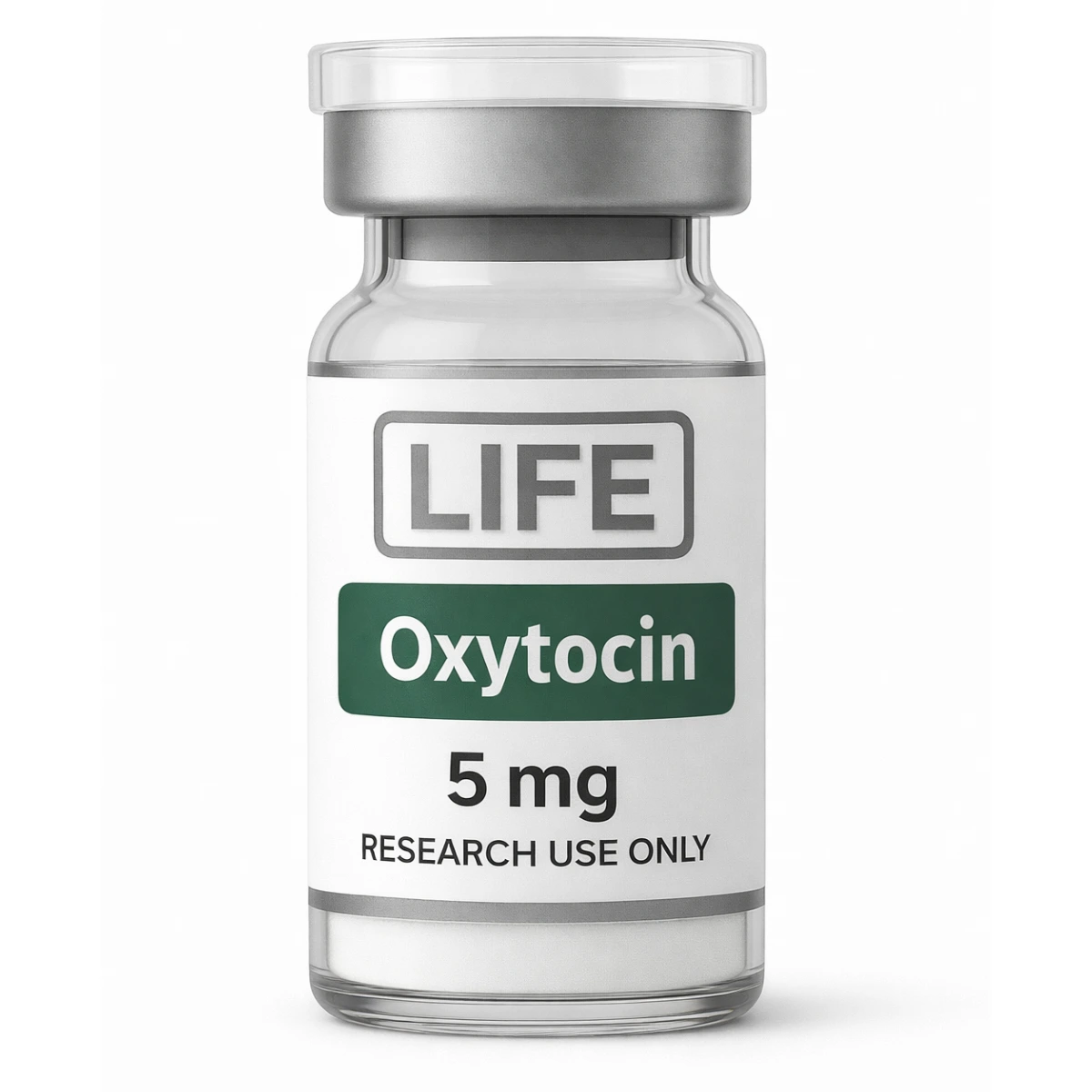
La oxitocina es una hormona peptídica de nueve aminoácidos de origen natural y neuropéptido producido en el hipotálamo y liberado por la hipófisis posterior.
Si bien es ampliamente reconocido por su papel esencial en el parto y la lactancia, la investigación moderna ha demostrado que la oxitocina también juega un papel central en vínculo social, procesamiento emocional, adaptación al estrés y comportamiento interpersonal. Debido a estas diversas funciones fisiológicas, se ha convertido en uno de los neuropéptidos más investigados en neurociencia conductual y neuroendocrinología.
¿Quieres comprar oxitocina en Europa? Life Peptide suministra oxitocina de alta pureza para investigación de laboratorio, con envíos fiables a toda la UE.
Por qué la oxitocina es ampliamente investigada
La investigación publicada ha analizado la Oxitocina en relación con:
- Vínculo social
- confianza y cognición social
- procesamiento emocional
- regulación del estrés
- vínculo de pareja
- conducta parental
- ansiedad social
- regulación del sistema nervioso autónomo
- señalización neuroendocrina
A diferencia de muchos neuropéptidos, la oxitocina ha sido investigada en neurociencia, psicología, endocrinología e investigación conductual, lo que la convierte en una de las moléculas de señalización mejor caracterizadas en biología social.
Cómo funciona la oxitocina
La oxitocina actúa a través del receptor de oxitocina (OXTR), que está ampliamente distribuido tanto en el cerebro como en los tejidos periféricos.
Las investigaciones publicadas han explorado su relación con:
Vínculo social
La oxitocina es una de las principales moléculas señalizadoras implicadas en el apego social, el vínculo de pareja y el comportamiento parental.
Procesamiento emocional
La investigación ha investigado cómo la oxitocina influye en el reconocimiento emocional, el procesamiento de expresiones faciales y la comunicación social.
Regulación del estrés
La oxitocina interactúa con los sistemas de respuesta al estrés del cuerpo y ha sido investigada por su influencia en la regulación del cortisol y el equilibrio autonómico.
Señalización neuroendocrina
Los estudios continúan investigando cómo la oxitocina coordina la comunicación entre el sistema nervioso y el sistema endocrino durante los desafíos fisiológicos y sociales.
Por qué la oxitocina es importante más allá del vínculo social
Aunque comúnmente se la denomina la “hormona del apego”, la investigación moderna ha demostrado que la función fisiológica de la oxitocina es considerablemente más amplia.
Estudios publicados han investigado su implicación en:
- aprendizaje social
- resiliencia emocional
- adaptación al estrés
- percepción del dolor
- comportamiento maternal
- vínculo de pareja
- regulación autonómica
Los investigadores ahora ven la oxitocina en general como un péptido que modula la importancia de la información social, en lugar de simplemente aumentar la confianza o las emociones positivas. Sus efectos a menudo dependen del entorno circundante y de las características individuales.
Investigación humana y preclínica
La oxitocina tiene uno de los programas de investigación humana más grandes de cualquier neuropéptido.
Estudios clínicos y experimentales han investigado la cognición social, la regulación emocional, los trastornos del espectro autista, la fisiología del estrés, el comportamiento materno, los trastornos de la alimentación y las condiciones psiquiátricas. Aunque muchos hallazgos son prometedores, los resultados siguen siendo variables en diferentes poblaciones y entornos de investigación, lo que pone de relieve la complejidad de la biología de la oxitocina.
Observaciones de seguridad publicadas
Los estudios humanos publicados generalmente han informado que la oxitocina es bien tolerada en condiciones de investigación controladas. Los efectos adversos informados han incluido dolor de cabeza transitorio, náuseas, enrojecimiento e irritación nasal en estudios que utilizan administración intranasal. Los investigadores también enfatizan que los efectos conductuales de la oxitocina dependen en gran medida del contexto, lo que significa que los resultados pueden diferir según el entorno social y las características individuales.
Características del producto
Aplicación: investigación de laboratorio y análisis
Uso restringido: no apto para consumo humano; no apto para uso médico, veterinario o cosmético
Producido en instalaciones que cumplen con GMP bajo estrictos protocolos de control de calidad.
Cada lote se somete a pruebas de laboratorio exhaustivas después de la producción (puede encontrar el Certificado de Análisis debajo de las imágenes del producto).
Liofilizado (liofilizado) para máxima estabilidad y vida útil prolongada.
Sellado en viales estériles, listo para la reconstitución.
Pureza: ≥99% (analizada mediante HPLC)
Apariencia: Polvo blanco/blanquecino liofilizado
Fórmula molecular: C43H66N12O12S2
Peso molecular: 1007.2
Secuencia: Cys-Tyr-Ile-Gln-Asn-Cys-Pro-Leu-Gly-NH2{Puente disulfuro mono}
Almacenamiento: los viales liofilizados sin abrir se almacenan mejor refrigerar a 2–8 °C, que es el método de almacenamiento confirmado por nuestro socio de fabricación y adecuado para hasta 24 meses. Se prefiere la refrigeración porque minimiza los ciclos innecesarios de congelación y descongelación durante la manipulación rutinaria. Si se requiere un almacenamiento a más largo plazo, los viales liofilizados sin abrir también pueden mantenerse congelados. Una vez reconstituidos, almacene siempre a 2–8 °C y no congele.
Reconstitución y manipulación
La oxitocina se suministra en un vial liofilizado y debe manipularse utilizando los procedimientos estándar de reconstitución de péptidos apropiados para el entorno de investigación. Debe reconstituirse con agua bacteriostática o agua salina antes de su uso. Para ayudar a preservar la integridad estructural, agregue el disolvente elegido lentamente contra la pared interior del vial en lugar de directamente sobre la torta de péptido, y evite agitar vigorosamente. Un suave movimiento circular es generalmente suficiente una vez que el péptido se ha disuelto por completo. La práctica estándar de laboratorio también incluye permitir que los viales refrigerados alcancen la temperatura ambiente antes de la reconstitución para minimizar la condensación dentro del vial.
Para otras guías sobre selección de solventes, planificación de concentraciones y almacenamiento, consulte el completo Guía de Reconstitución de Péptidos y Calculadora de Reconstitución.
Referencias de investigación seleccionadas
- Lawson EA. Comprensión de la oxitocina en la fisiología y fisiopatología humanas: un camino hacia la terapéutica, fisiología y endocrinología integral, 2024
Una revisión moderna exhaustiva que cubre la fisiología, la biología de los receptores y la investigación terapéutica de la oxitocina.
- Uvnäs-Moberg K, et al. El Yin y el Yang de los Sistemas de Oxitocina y Estrés, Frontiers in Endocrinology, 2024
Una revisión que examina la interacción entre la señalización de la oxitocina, la regulación del estrés y la fisiología autonómica.
- Wang Y, y col. Neuropéptidos que Afectan el Comportamiento Social en Mamíferos: Oxitocina, Péptidos, 2024
Una reseña moderna que resume el papel de la oxitocina en el comportamiento social, el vínculo y la neurobiología.
- Gimpl G, Fahrenholz F. El Sistema del Receptor de Oxitocina: Estructura, Función y Regulación, Physiological Reviews, 2001
Una revisión histórica que describe la biología del receptor de oxitocina y sus mecanismos de señalización.
Preguntas Frecuentes
¿Qué es la Oxitocina?
La oxitocina es una hormona peptídica y neuropéptido que se produce de forma natural en el hipotálamo. Es ampliamente investigada por su papel en el vínculo social, el procesamiento emocional, la regulación del estrés y la señalización neuroendocrina.
¿Por qué se llama a la oxitocina la hormona del vínculo?
La oxitocina participa en la formación de parejas, el comportamiento parental y el apego social. Sin embargo, la investigación moderna sugiere que su papel es más amplio que la simple promoción de la confianza o el afecto. En cambio, parece regular la forma en que el cerebro procesa la información socialmente relevante.
Las áreas de investigación que comúnmente investigan la oxitocina son:* **Neurociencia:** Estudia el papel de la oxitocina en el cerebro, incluyendo su liberación, receptores y efectos sobre el comportamiento, el aprendizaje y la memoria. * **Psicología Social:** Investiga cómo la oxitocina influye en la interacción social, la confianza, la empatía, el apego y el comportamiento prosocial. * **Psiquiatría:** Examina la implicación de la oxitocina en trastornos mentales como la depresión, la ansiedad, el autismo y la esquizofrenia, y su potencial como tratamiento. * **Endocrinología:** Estudia la producción y liberación de oxitocina por la hipófisis, así como sus efectos en el cuerpo, incluyendo el parto y la lactancia. * **Biología del Comportamiento:** Analiza cómo la oxitocina modula comportamientos específicos en diferentes especies, como el cuidado parental, la agresión y la formación de vínculos sociales. * **Medicina Reproductiva:** Investiga el uso de la oxitocina para inducir el parto, controlar hemorragias posparto y promover la lactancia. * **Farmacología:** Desarrolla y evalúa fármacos que actúan sobre el sistema de la oxitocina para tratar diversas condiciones médicas y psicológicas. * **Genética:** Explora las bases genéticas de la producción y función de la oxitocina, y cómo las variaciones genéticas pueden influir en el comportamiento y la susceptibilidad a trastornos.
Los estudios publicados investigan la oxitocina en la cognición social, la fisiología del estrés, la regulación emocional, el vínculo de pareja, el comportamiento maternal, la función del sistema nervioso autónomo y la neurociencia conductual.
¿Cómo difiere la oxitocina del PT-141?
La oxitocina investiga principalmente los vínculos sociales y la señalización neuroendocrina, mientras que la PT-141 investiga principalmente las vías de los melanocortinos implicadas en el deseo y la excitación sexual. Aunque ambas influyen en aspectos del comportamiento humano, actúan a través de sistemas biológicos completamente diferentes.
¿En qué se diferencia la oxitocina de la kisspeptina-10?
Ambos son neuropéptidos, pero la kisspeptina-10 regula la señalización de las hormonas reproductivas a través del eje HPG, mientras que la oxitocina se investiga principalmente por su comportamiento social, vinculación y regulación del estrés.
¿La oxitocina solo interviene en el parto?
No. Si bien la oxitocina es esencial para el parto y la lactancia, la investigación moderna ha demostrado funciones importantes en la cognición social, la regulación emocional, la fisiología del estrés y la función del sistema nervioso autónomo.
¿Puedo comprar Oxitocina en Europa?
Sí. Enviamos Oxitocina a la mayoría de los países europeos utilizando servicios de mensajería fiables. Los métodos de envío disponibles y los plazos de entrega se muestran durante el proceso de pago según su destino.
¿Está este producto destinado al uso humano?
No. La oxitocina suministrada por Life Peptide se destina exclusivamente a la investigación de laboratorio y analítica. No está destinada al consumo humano, ni al diagnóstico, tratamiento o prevención de enfermedades. Cualquier referencia a estudios publicados resume la literatura científica relacionada con la molécula de oxitocina, y no el uso previsto de este producto.
Contexto de investigación relacionado
La oxitocina se discute frecuentemente junto con otros péptidos de investigación que investigan el comportamiento social, la regulación emocional, la adaptación al estrés y la función neuroendocrina.
Kisspeptina-10 – investigado principalmente para la regulación de hormonas reproductivas y el control neuroendocrino del eje HPG.
PT-141 – estudió la señalización melanocortínica central relacionada con el deseo y la excitación sexual.
Selank – investigado en respuestas al estrés, comportamiento relacionado con la ansiedad y función cognitiva.
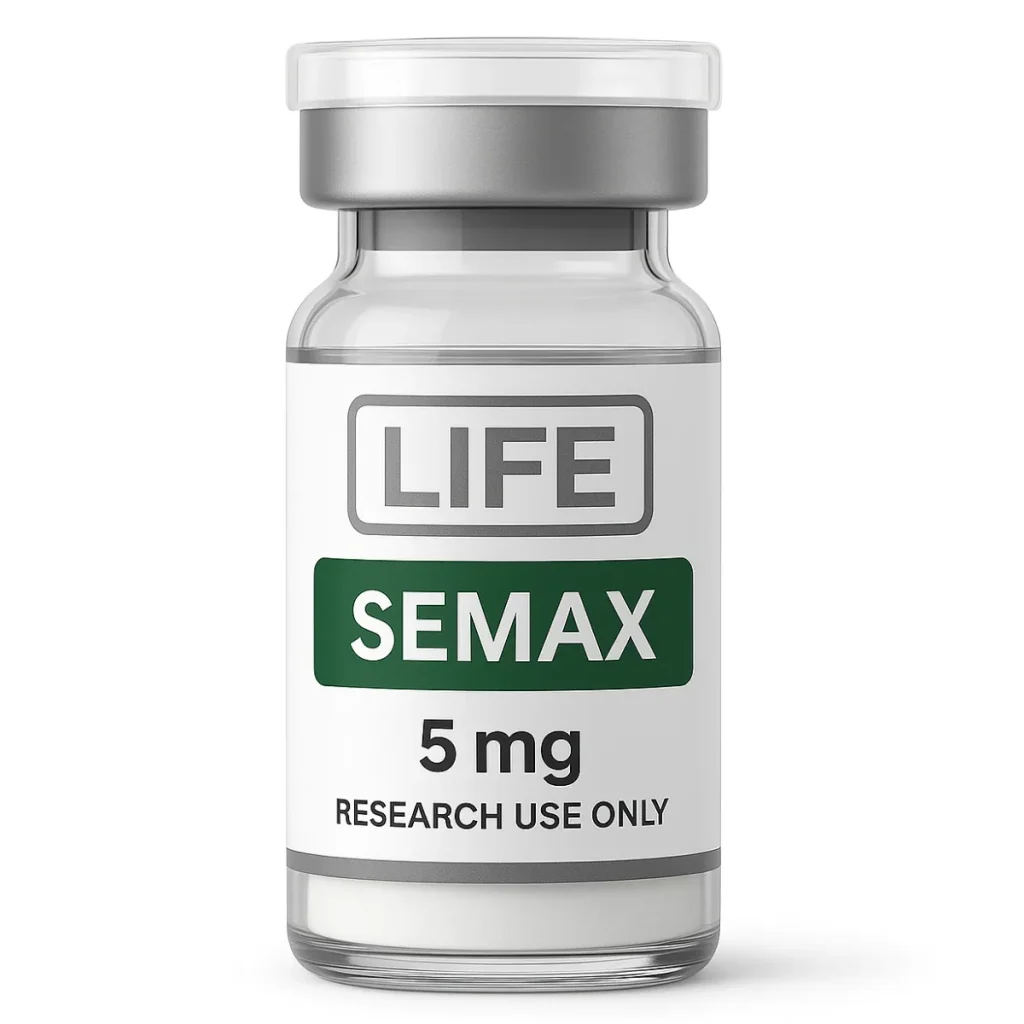
Semax – se centra en la cognición, la neuroplasticidad y la neuroprotección.
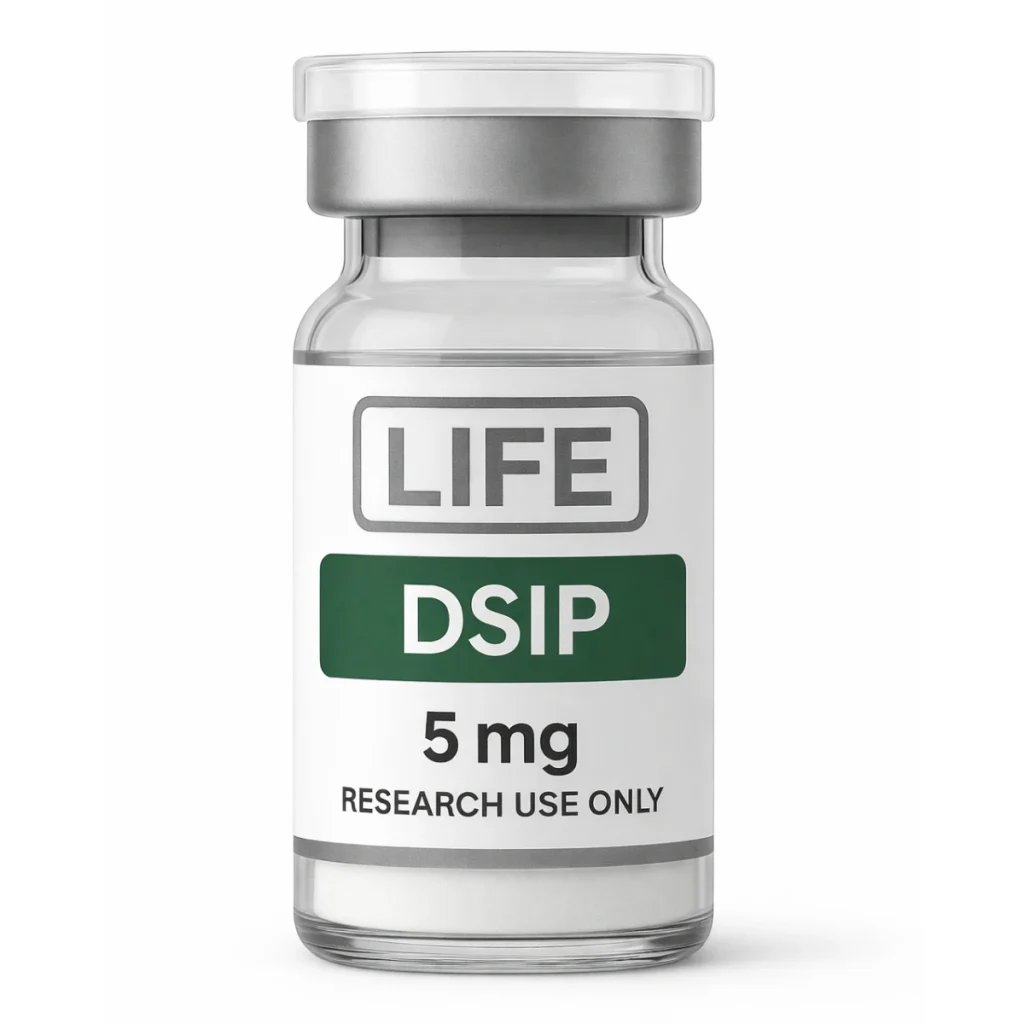
DSIP – investigado en fisiología del sueño, adaptación al estrés y regulación neuroendocrina.
Aunque estos péptidos a veces se discuten juntos, cada uno investiga vías neurobiológicas distintas y no deben considerarse compuestos de investigación intercambiables.
Para un contexto más amplio, explora la Investigación cognitiva, categoría de péptidos y señalización de neuropéptidos relacionados.
NOTA: Esto es solo para fines de referencia educativa y no constituye asesoramiento médico.
Descargo de responsabilidad:
Este producto se vende únicamente para fines de investigación. No está destinado a diagnosticar, tratar, curar ni prevenir ninguna enfermedad. El comprador asume toda la responsabilidad por su manipulación y uso adecuados.