Descripción
El péptido inductor del sueño delta (DSIP) es un neuropeéptido de nueve aminoácidos de ocurrencia natural aislado por primera vez durante la investigación del sueño en la década de 1970. Desde su descubrimiento, se ha convertido en uno de los primeros péptidos investigados para la regulación del sueño y sigue siendo ampliamente referenciado en investigaciones que exploran la arquitectura del sueño, la fisiología del estrés y la señalización neuroendocrina.
Aunque originalmente se identificó por su papel potencial en la promoción del sueño delta, investigaciones posteriores sugirieron que el DSIP puede influir en una gama más amplia de procesos fisiológicos, incluida la biología circadiana, las respuestas al estrés, la modulación del dolor y la regulación hormonal. A pesar de décadas de investigación, su mecanismo de acción preciso sigue sin comprenderse por completo, lo que lo convierte en un tema interesante para la investigación en curso.
¿Quieres comprar DSIP en Europa? Life Peptide suministra DSIP de alta pureza para investigación de laboratorio con un servicio de envío fiable a toda la UE.
Por qué se investiga ampliamente el DSIP
La investigación publicada ha investigado el DSIP en relación con:
- calidad del sueño
- arquitectura del sueño
- sueño delta
- adaptación al estrés
- regulación neuroendocrina
- ritmo circadiano
- modulación del dolor
- fisiología de la recuperación
- función del sistema nervioso autónomo
A diferencia de los compuestos sedantes, el DSIP se ha investigado principalmente como un péptido implicado en la regulación fisiológica del sueño en lugar de como un sedante directo.
Cómo funciona el DSIP
El mecanismo biológico exacto del DSIP sigue siendo incierto y no se ha identificado ningún receptor específico de manera concluyente.
La investigación actual ha explorado su relación con:
Fisiología del sueño
El DSIP se ha investigado por su influencia en la arquitectura del sueño, en particular el sueño de ondas lentas (delta), aunque los resultados publicados han sido variados en los diferentes estudios.
Regulación del estrés
Los investigadores han explorado posibles interacciones entre el DSIP y el eje hipotalámico-pituitario-adrenal (HPA), examinando su posible papel en las respuestas fisiológicas al estrés.
Señalización neuroendocrina
Estudios publicados han investigado posibles efectos sobre la regulación hormonal, la biología circadiana y la función del sistema nervioso central.
Investigación sobre la recuperación
Debido a que el sueño reparador desempeña un papel fundamental en la recuperación, el DSIP también se ha investigado en estudios que analizan la recuperación física, la resiliencia al estrés y la fatiga.
Por qué el DSIP sigue siendo relevante en la investigación del sueño
El DSIP ocupa una posición única entre los péptidos de investigación.
A diferencia de los compuestos más nuevos que se dirigen principalmente a la secreción de la hormona del crecimiento o a las vías metabólicas, el DSIP se desarrolló específicamente para investigar los mecanismos biológicos subyacentes al sueño en sí.
Aunque la evidencia moderna sigue siendo limitada y a veces inconsistente, el DSIP sigue despertando interés científico debido a su papel potencial en regulación de la arquitectura natural del sueño en lugar de producir sedación farmacológica.
Investigación humana y preclínica
El DSIP ha sido investigado en modelos de laboratorio y estudios en humanos durante más de cuarenta años.
La investigación publicada incluye la fisiología del sueño, el insomnio, la biología del estrés, el dolor, la abstinencia de opiáceos y la regulación neuroendocrina. Si bien los primeros hallazgos generaron un interés considerable, los estudios posteriores han arrojado resultados mixtos y se necesita más investigación para aclarar su papel fisiológico y su potencial terapéutico.
Cómo se diferencia el DSIP de los péptidos relacionados
| Objetivo de la investigación | Péptido recomendado |
|---|---|
| Investigación sobre la fisiología del sueño y la recuperación | DSIP |
| Investigación sobre la hormona del crecimiento y el sueño | Ipamorelin / CJC-1295 Sin DAC |
| Estrés y metabolismo mitocondrial | MOTS-c |
| Rendimiento cognitivo | Semax |
A diferencia de los secretagogos de la hormona del crecimiento, el DSIP se investiga principalmente por su fisiología del sueño y la regulación neuroendocrina, en lugar de por la estimulación del eje GH.
Observaciones de seguridad publicadas
Los estudios en humanos publicados generalmente informaron buena tolerabilidad a corto plazo, aunque la evidencia clínica general sigue siendo limitada. La limitación más importante de la investigación sobre el DSIP no es la seguridad, sino la inconsistencia de la eficacia entre los estudios. La evidencia actual aún no explica completamente su mecanismo de acción ni identifica qué poblaciones pueden responder de manera más consistente.
Características del producto
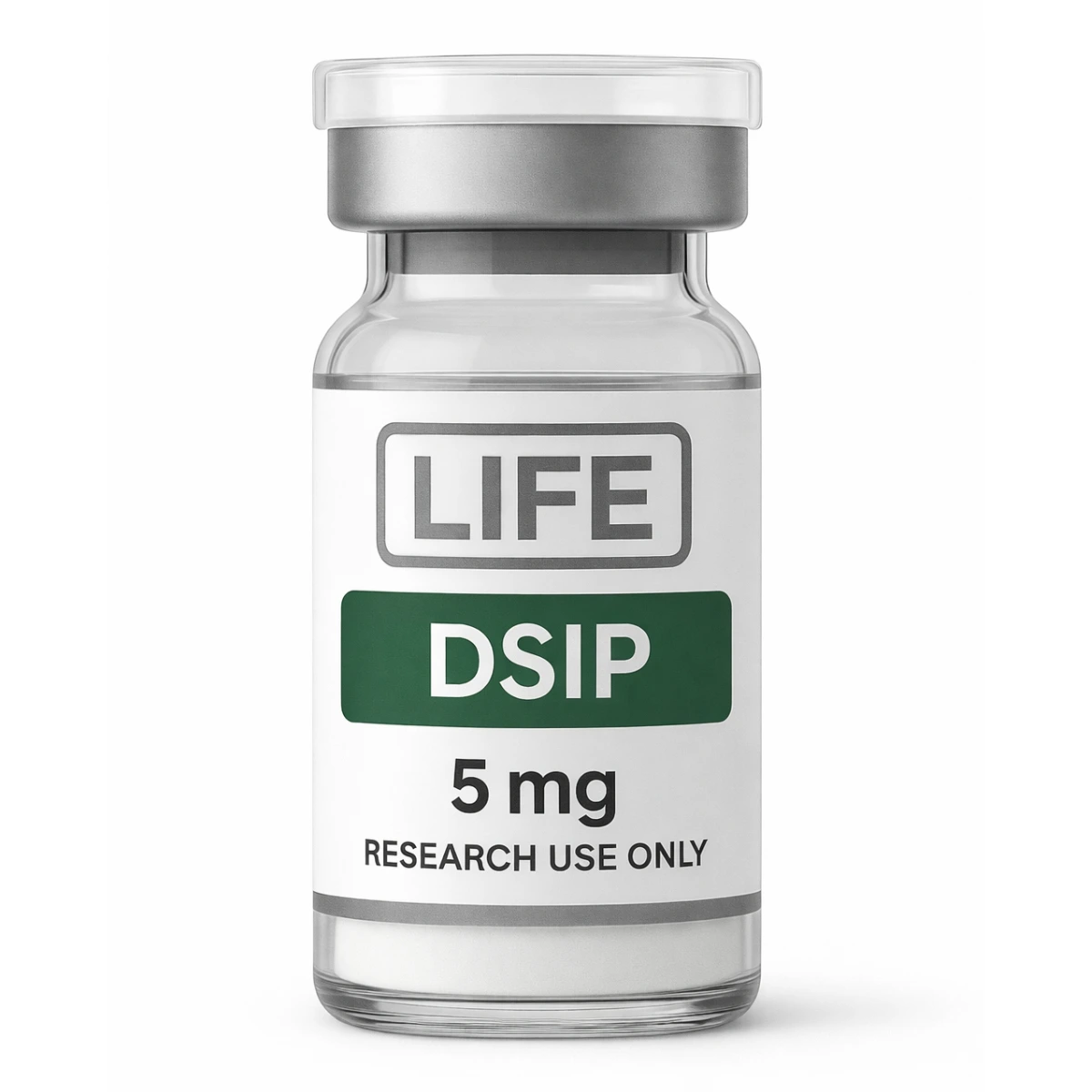
Aplicación: investigación de laboratorio y análisis
Uso restringido: no apto para consumo humano; no apto para uso médico, veterinario o cosmético
Producido en instalaciones que cumplen con GMP bajo estrictos protocolos de control de calidad.
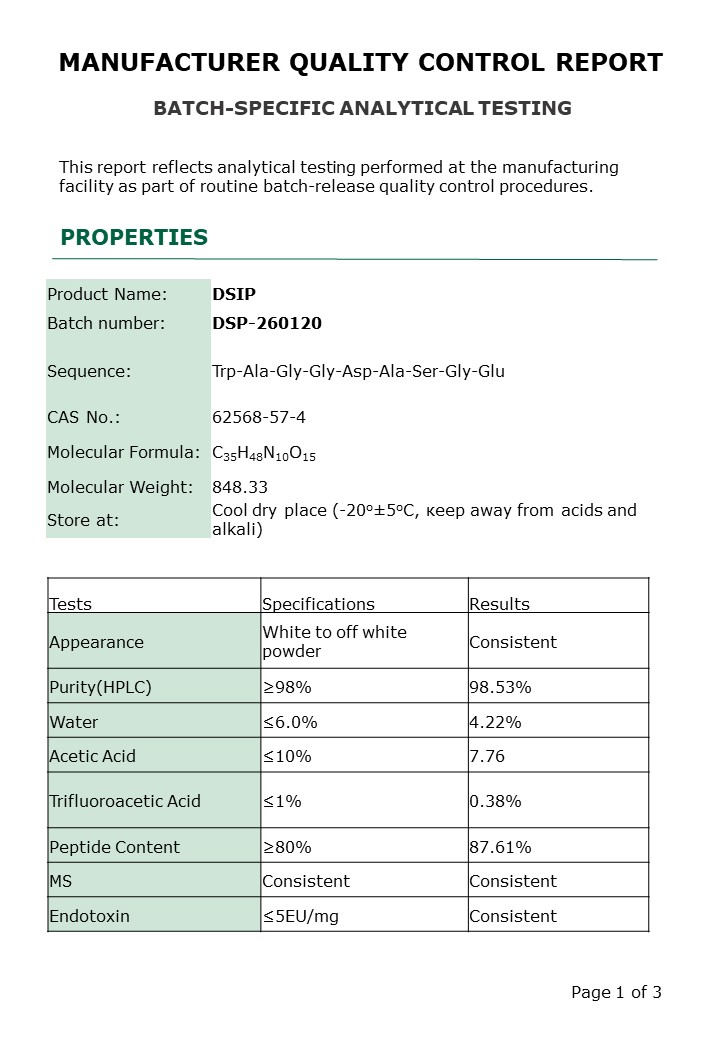
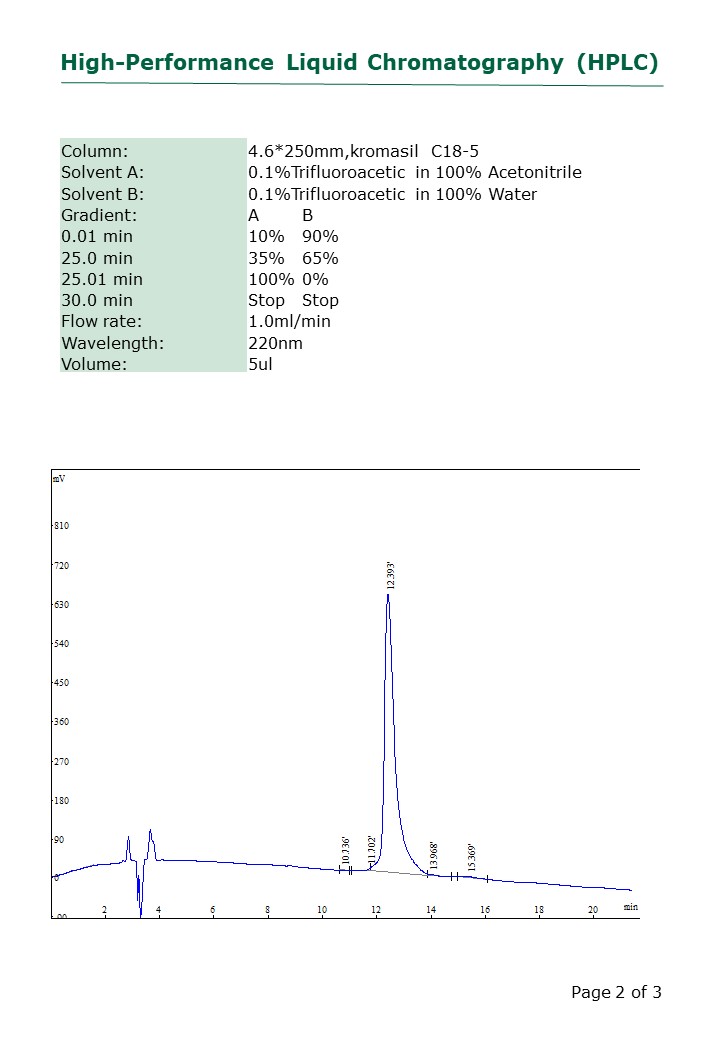
Cada lote se somete a pruebas de laboratorio exhaustivas después de la producción (puede encontrar el Certificado de Análisis debajo de las imágenes del producto).
Liofilizado (liofilizado) para máxima estabilidad y vida útil prolongada.
Sellado en viales estériles, listo para la reconstitución.
Pureza: ≥98,51 TP4T (analizada mediante HPLC)
Apariencia: Polvo blanco/blanquecino liofilizado
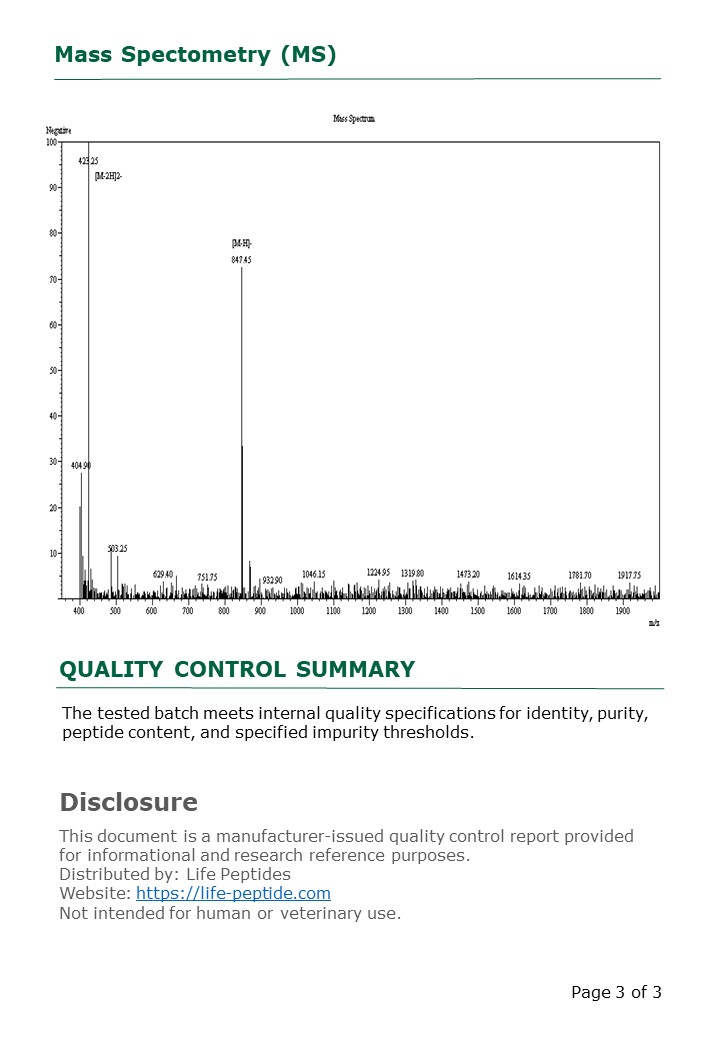
Fórmula molecular: C35H48N10O15
Peso molecular: 848.33
Secuencia: Trp-Ala-Gly-Gly-Asp-Ala-Ser-Gly-Glu
Almacenamiento: los viales liofilizados sin abrir se almacenan mejor refrigerar a 2–8 °C, que es el método de almacenamiento confirmado por nuestro socio de fabricación y adecuado para hasta 24 meses. Se prefiere la refrigeración porque minimiza los ciclos innecesarios de congelación y descongelación durante la manipulación rutinaria. Si se requiere un almacenamiento a más largo plazo, los viales liofilizados sin abrir también pueden mantenerse congelados. Una vez reconstituidos, almacene siempre a 2–8 °C y no congele.
Reconstitución y manipulación
DSIP se suministra en un vial liofilizado y debe manipularse utilizando los procedimientos estándar de reconstitución de péptidos apropiados para el entorno de investigación. Debe reconstituirse con agua bacteriostática antes de usar. Para ayudar a preservar la integridad estructural, agregue el disolvente elegido lentamente contra la pared interior del vial en lugar de directamente sobre el péptido en polvo, y evite agitar vigorosamente. La agitación suave suele ser suficiente una vez que el péptido se ha disuelto por completo. La práctica estándar de laboratorio también incluye permitir que los viales refrigerados alcancen la temperatura ambiente antes de la reconstitución para minimizar la condensación dentro del vial.
Para otras guías sobre selección de solventes, planificación de concentraciones y almacenamiento, consulte el completo Guía de Reconstitución de Péptidos y Calculadora de Reconstitución.
Referencias de investigación seleccionadas
- Graf MV, Kastin AJ. Péptido inductor del sueño delta (DSIP): Una revisión, Neuroscience & Biobehavioral Reviews, 1984
La revisión histórica que resume el descubrimiento, la distribución biológica y los primeros hallazgos experimentales relacionados con el DSIP.
- Graf MV, Kastin AJ. Péptido inductor del sueño delta (DSIP): Una actualización, Péptidos, 1986
Una revisión ampliada que abarca la investigación sobre el sueño, el estrés, el dolor, la abstinencia y la neuroendocrinología publicada después de la oleada inicial de investigaciones sobre el DSIP.
- Schoenenberger GA, et al. El péptido inductor del sueño delta (DSIP): propiedades comparativas del nonapéptido original y sintético, Experientia, 1977
La publicación original que describe el DSIP sintético y confirma su similitud biológica con el péptido aislado de forma natural.
- Kastin AJ. Péptido inductor del sueño delta: perspectivas históricas y direcciones futuras, varias publicaciones de revisión.
Preguntas Frecuentes
¿Qué es el DSIP?
El DSIP (péptido inductor del sueño delta) es un neuropéptido de origen natural que se identificó por primera vez durante la investigación del sueño en la década de 1970. Se investiga ampliamente por su relación con la fisiología del sueño, la regulación del estrés y la señalización neuroendocrina.
¿Por qué se asocia el DSIP con la investigación del sueño?
El DSIP se aisló originalmente debido a su posible relación con el sueño de ondas lentas (delta). Desde entonces, la investigación publicada ha investigado su papel en la arquitectura del sueño, aunque los resultados han sido variados y su mecanismo biológico preciso sigue siendo incierto.
¿Es el DSIP un sedante?
No. La investigación publicada generalmente investiga el DSIP como un regulador de los procesos fisiológicos del sueño en lugar de como un sedante directo. Esto lo distingue de los compuestos que inducen el sueño mediante sedación farmacológica.
¿Qué áreas de investigación investigan comúnmente el DSIP?
La investigación actual incluye la fisiología del sueño, la biología del estrés, el ritmo circadiano, la señalización neuroendocrina, la recuperación, la modulación del dolor y la función del sistema nervioso autónomo.
¿En qué se diferencia el DSIP de los secretagogos de la GH?
El DSIP se investiga principalmente para la regulación del sueño y la fisiología neuroendocrina, mientras que péptidos como la Ipamorelin, el GHRP-2 o el CJC-1295 investigan principalmente la secreción de la hormona de crecimiento a través del eje GH.
¿Por qué se sigue investigando el DSIP a pesar de los resultados mixtos?
Aunque los hallazgos clínicos no siempre han sido consistentes, el DSIP sigue siendo uno de los pocos péptidos desarrollados específicamente para investigar la regulación natural del sueño. Su historia única y su amplia distribución fisiológica siguen convirtiéndolo en un tema interesante para la investigación del sueño y neuroendocrina.
¿Puedo comprar DSIP en Europa?
Sí. Realizamos envíos de DSIP a la mayoría de los países europeos utilizando servicios de mensajería confiables. Los métodos de envío disponibles y los tiempos de entrega se muestran durante el pago según su destino.
¿Está este producto destinado al uso humano?
No. El DSIP suministrado por Life Peptide se destina exclusivamente a la investigación de laboratorio y analítica. No está destinado al consumo humano, ni al diagnóstico, tratamiento o prevención de enfermedades. Cualquier referencia a estudios publicados resume la bibliografía científica actual relacionada con la molécula DSIP, y no el uso previsto de este producto.
Contexto de investigación relacionado
El DSIP se discute con frecuencia junto con otros péptidos de investigación que investigan sueño, recuperación, adaptación al estrés y función cognitiva. Aunque estos péptidos se dirigen a diferentes vías biológicas, los investigadores a menudo los comparan según el sistema fisiológico bajo investigación.
Semax – investigado principalmente para la investigación del rendimiento cognitivo, la neuroprotección y la neuroplasticidad.
Selank – estudiado en relación con las respuestas al estrés, el comportamiento relacionado con la ansiedad y la regulación neuroendocrina.
MOTS-c – se centra en el metabolismo mitocondrial, la adaptación al ejercicio y la homeostasis energética celular en lugar de en el sueño en sí.
Ipamorelin y CJC-1295 Sin DAC – secretagogos de la hormona de crecimiento comúnmente investigados en la investigación sobre la recuperación, la composición corporal y el eje GH/IGF-1.
KPV – investigados para la regulación inmune y la señalización inflamatoria, lo que representa un enfoque diferente para la investigación de la recuperación.
Aunque estos péptidos se mencionan a veces juntos en discusiones centradas en la recuperación, investigan sistemas fisiológicos distintos y no deben considerarse compuestos de investigación intercambiables.
Explorar todos los compuestos en el Categoría de investigación cognitiva.
NOTA: Esto es solo para fines de referencia educativa y no constituye asesoramiento médico.
Descargo de responsabilidad:
Este producto se vende únicamente para fines de investigación. No está destinado a diagnosticar, tratar, curar ni prevenir ninguna enfermedad. El comprador asume toda la responsabilidad por su manipulación y uso adecuados.