Descrizione
Il tesamorelin è un analogo sintetico della ormone di rilascio dell'ormone della crescita (GHRH) consistente della sequenza completa di 44 aminoacidi del GHRH con modifiche strutturali che migliorano la stabilità e la resistenza alla degradazione enzimatica.
A differenza dei peptidi GHRP, che stimolano il recettore della grelina (GHSR-1a), la tesamorelin agisce direttamente sul recettore del GHRH nell'ipofisi anteriore, promuovendo la secrezione pulsatile fisiologica dell'ormone della crescita endogeno. Questa selettività recettoriale ha reso la tesamorelin uno dei peptidi più accuratamente studiati nella fisiologia dell'ormone della crescita e nella ricerca metabolica.
Vuoi acquistare la tesamorelina in Europa? Life Peptide fornisce tesamorelina ad alta purezza per la ricerca di laboratorio, con spedizioni affidabili in tutta l'Unione Europea.
Perché Tesamorelin è importante nella ricerca endocrina
Il Tesamorelin differisce da molti secretagoghi perché imita strettamente la segnalazione naturale del GHRH da parte dell'organismo piuttosto che attivare le vie della grelina.
La ricerca pubblicata ha indagato il Tesamorelin in relazione a:
- secrezione pulsatile dell'ormone della crescita
- Regolazione dell'IGF-1
- composizione corporea
- tessuto adiposo viscerale
- grasso epatico
- fisiologia endocrina
- regolazione metabolica
- funzione ipofisaria
La sua estesa base di prove umane ha stabilito la Tesamorelin come uno degli analoghi del GHRH meglio caratterizzati disponibili per la ricerca metabolica ed endocrina.
Come funziona il Tesamorelin
A differenza dei peptidi GHRP, la tesamorelin attiva il recettore dell'ormone di rilascio dell'ormone della crescita (GHRHR).
La ricerca pubblicata ha esplorato la sua relazione con:
Secrezione dell'ormone della crescita
La tesamorelina stimola il rilascio pulsatile fisiologico dell'ormone della crescita endogeno attraverso l'attivazione diretta dei recettori GHRH dell'ipofisi.
Regolazione dell'IGF-1
Studi clinici dimostrano costantemente un aumento dell'IGF-1 circolante in seguito alla somministrazione di Tesamorelin, rendendolo un importante strumento di ricerca per la fisiologia dell'asse GH.
Composizione corporea
Un'area principale di indagine è stata la relazione tra la stimolazione endogena dell'ormone della crescita (GH) e i cambiamenti nel tessuto adiposo viscerale e nella massa magra.
Fisiologia metabolica
I ricercatori hanno anche studiato il metabolismo epatico dei grassi, la regolazione dei lipidi e adattamenti metabolici più ampi associati al rilascio fisiologico di GH.
Perché il Tesamorelin è ampiamente studiato nella ricerca metabolica
Tra i secretagoghi dell'ormone della crescita, la Tesamorelin occupa una posizione unica perché gran parte della sua ricerca si è concentrata su salute metabolica piuttosto che la sola carenza di ormone della crescita.
Studi pubblicati hanno esplorato:
- tessuto adiposo viscerale
- grasso epatico
- composizione corporea
- sindrome metabolica
- Fisiologia dell'IGF-1
- regolazione endocrina
- Lipodistrofia associata all'HIV
Questa ampia evidenza clinica ha reso la Tesamorelin uno dei peptidi più importanti per lo studio dell'interazione tra l'asse dell'ormone della crescita e la fisiologia metabolica.
Ricerca umana e preclinica
Tesamorelin ha uno dei le prove cliniche più solide basi tra tutti i secretagoghi dell'ormone della crescita.
Numerosi studi di fase III hanno indagato i suoi effetti sulla secrezione dell'ormone della crescita, sul tessuto adiposo viscerale, sul metabolismo lipidico e sul grasso epatico. A differenza di molti peptidi di ricerca, Tesamorelin ha ricevuto anche l'approvazione normativa per una specifica indicazione clinica, con conseguente estesa raccolta di dati di sicurezza ed efficacia a lungo termine sull'uomo.
In che modo la Tesamorelin differisce dagli altri secretagoghi dell'ormone della crescita
Tesamorelin
- Analogo del GHRH
- Attivazione diretta del recettore GHRH
- Forti prove cliniche
- Ampia ricerca metabolica
- Analogo del GHRH
- Emivita di ricerca più lunga
- Principalmente sperimentale
- Agonista del recettore della grelina
- Secretagogo selettivo dell'ormone della crescita
- Effetti sull'appetito minimi
- Potente agonista del recettore della grelina
- Impulsi GH robusti
- Fisiologia endocrina
- Agonista del recettore della grelina
- Appetito e ricerca sull'ormone della crescita
- Fisiologia gastrointestinale
- Osservazioni di sicurezza pubblicate
Gli studi clinici pubblicati hanno generalmente riportato che il Tesamorelin è ben tollerato. Gli eventi avversi segnalati più comunemente includevano dolore al sito di iniezione reazioni, artralgia, edema periferico e aumenti transitori dell’IGF-1, con effetti gastrointestinali che si manifestano con minore frequenza rispetto a molti peptidi metabolici moderni. I dati sulla sicurezza derivano da studi clinici controllati condotti principalmente su pazienti affetti da lipodistrofia associata all’HIV.
Caratteristiche del prodotto
Applicazione: ricerca di laboratorio e analitica
Uso limitato: non per il consumo umano; non per uso medico, veterinario o cosmetico
Prodotto in stabilimenti conformi alle GMP secondo rigidi protocolli di controllo qualità.
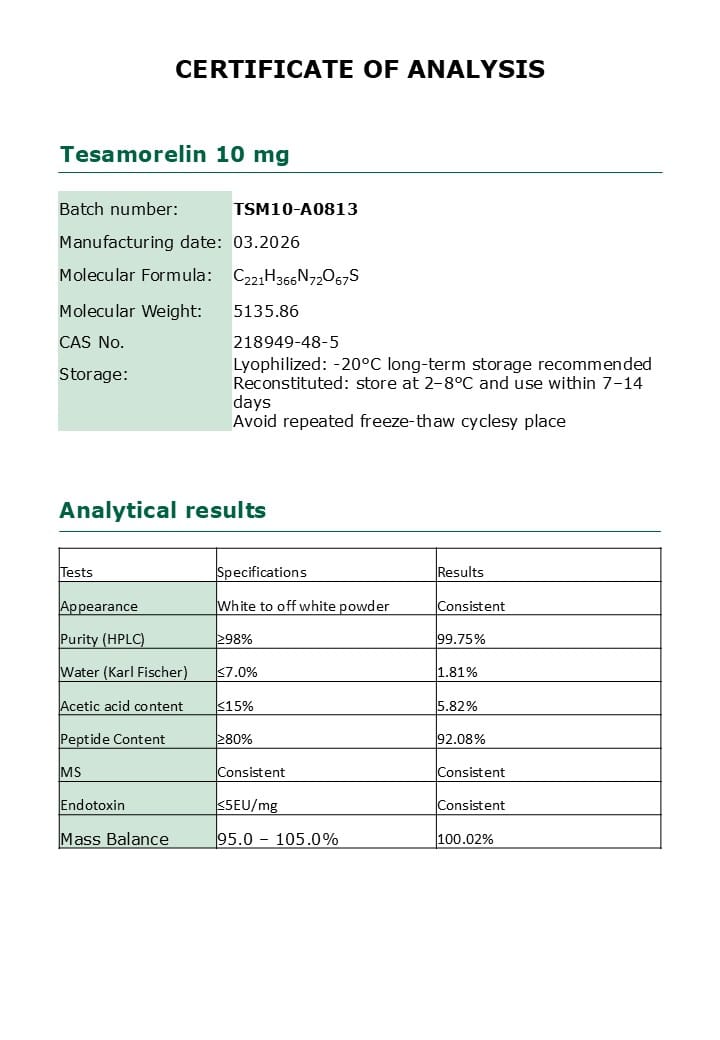
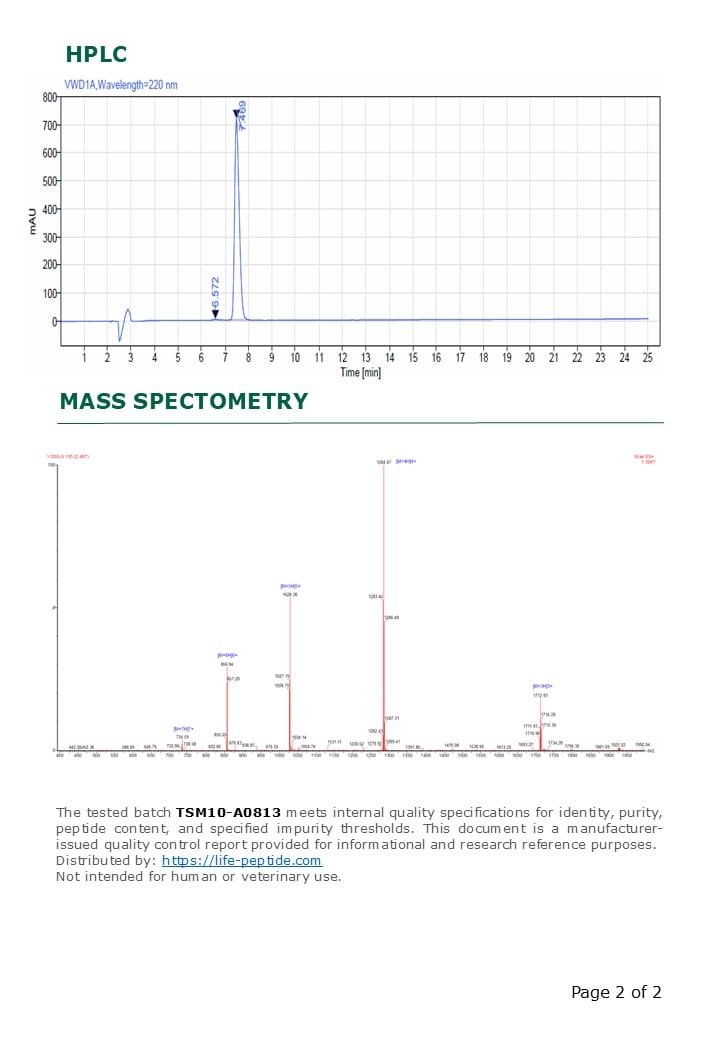
Ogni lotto viene accuratamente testato in laboratorio dopo la produzione (puoi trovare il Certificato di Analisi sotto le immagini del prodotto).
Liofilizzato (liofilizzato) per la massima stabilità e una lunga durata di conservazione.
Sigillato in fiale sterili, pronto per la ricostituzione.
Purezza: ≥ 99% (HPLC)
Aspetto: polvere liofilizzata bianca
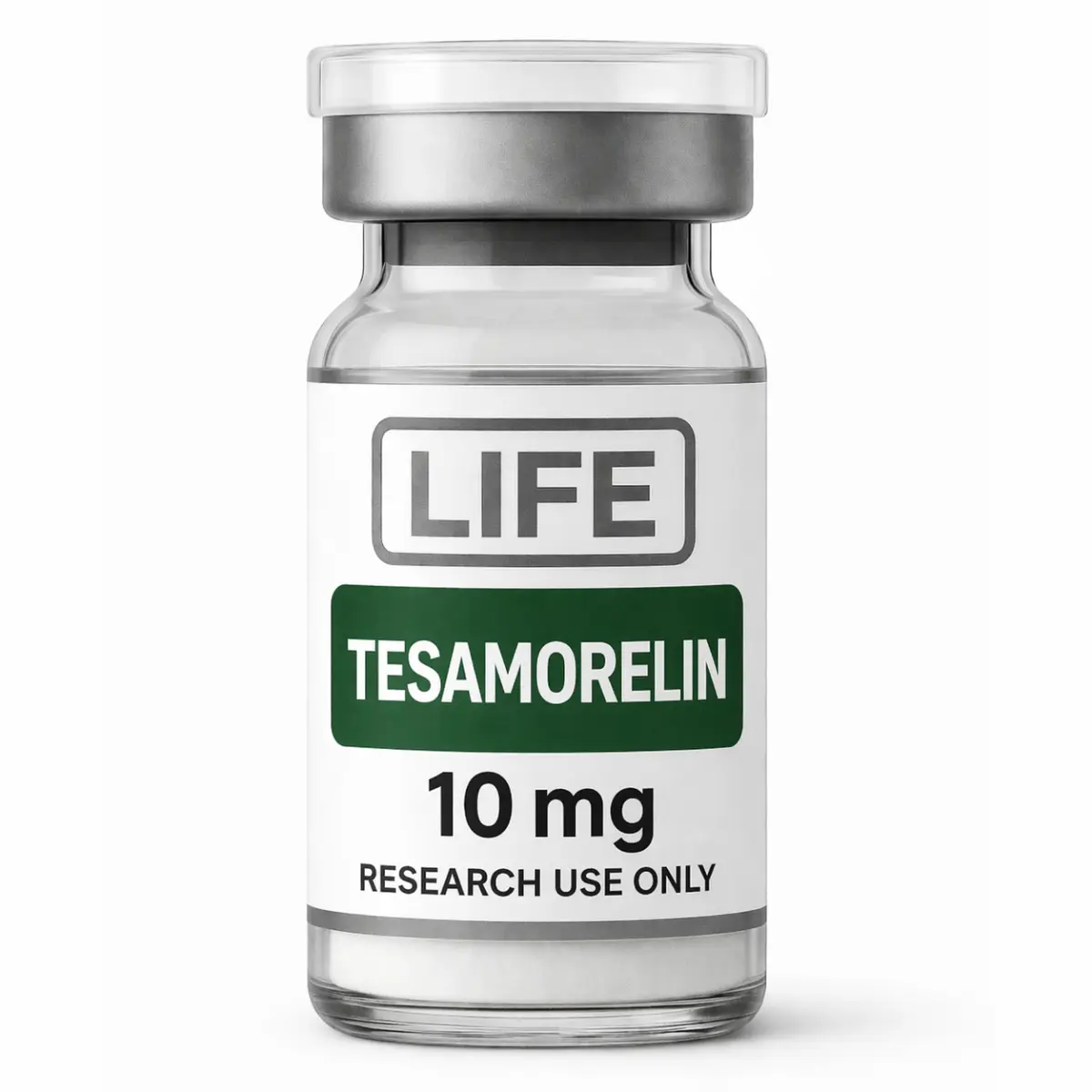
Formula molecolare: C221H366N72O67S
Peso molecolare: 5135,78
N. CAS: 218949-48-5
Archiviazioneflaconcini liofilizzati non aperti sono meglio conservati refrigerato a 2–8°C, che è il metodo di conservazione confermato dal nostro partner di produzione e adatto fino a 24 mesi. Si preferisce la refrigerazione perché minimizza inutili cicli di congelamento-scongelamento durante la manipolazione di routine. Se è necessaria una conservazione a termine sostanzialmente più lungo, i flaconcini liofilizzati non aperti possono anche essere conservati congelati. Una volta ricostituita, conservare sempre a 2-8°C e non congelare.
Ricostituzione e manipolazione
Il tesamorelin è fornito come flaconcino liofilizzato e deve essere manipolato utilizzando le procedure standard di ricostituzione dei peptidi appropriate per l'ambiente di ricerca. Deve essere ricostituito con acqua batteriostatica prima dell'uso. Per aiutare a preservare l'integrità strutturale, aggiungere il solvente scelto lentamente contro la parete interna del flaconcino piuttosto che direttamente sulla polvere del peptide, ed evitare agitazioni vigorose. Il delicato movimento rotatorio è generalmente sufficiente una volta che il peptide si è completamente sciolto. La pratica standard di laboratorio include anche il far raggiungere ai flaconcini refrigerati la temperatura ambiente prima della ricostituzione per minimizzare la condensa all'interno del flaconcino.
Per altre indicazioni sulla scelta del solvente, sulla pianificazione della concentrazione e sullo stoccaggio, consultare il pieno Guida alla Ricostituzione dei Peptidi e Calcolatore di Ricostituzione.
Studi chiave pubblicati
- Falutz J, Allas S, Blot K, et al. Effetti metabolici di un fattore di rilascio dell'ormone della crescita in pazienti con HIV. New England Journal of Medicine, 2007.
Lo studio pivotale di Fase III che dimostra riduzioni del tessuto adiposo viscerale in seguito al trattamento con Tesamorelin preservando al contempo la massa magra.
- Stanley TL, Feldpausch MN, Oh J, et al. Effetto del tesamorelin sul grasso viscerale e sul grasso epatico in pazienti con infezione da HIV e accumulo di grasso addominale. JAMA, 2014.
Uno studio fondamentale che mostra riduzioni del grasso viscerale ed epatico, espandendo la ricerca sul Tesamorelin nella fisiologia epatica metabolica.
- Spooner LM, et al. Tesamorelin: un analogo del fattore di rilascio dell'ormone della crescita per la lipodistrofia associata all'HIV. Farmaci, 2012.
Una revisione completa che copre la farmacologia, il meccanismo d'azione e lo sviluppo clinico del Tesamorelin.
- Badran AS, et al. Composizione corporea, grasso epatico, parametri metabolici e di sicurezza della tesamorelina: una meta-analisi di studi randomizzati controllati. Obesity Research & Clinical Practice, 2026.
Una recente meta-analisi che riassume le prove cliniche sulla composizione corporea, sul grasso epatico e sui risultati metabolici negli studi sul Tesamorelin.
Domande Frequenti
Che cos’è la tesamorelina?
La tesamorelina è un analogo sintetico dell’ormone che rilascia l’ormone della crescita umano (GHRH). Stimola la ghiandola pituitaria attraverso il recettore del GHRH, favorendo il rilascio fisiologico pulsatile dell’ormone della crescita endogeno. È ampiamente studiato nella ricerca endocrina e metabolica relativa all’asse GH/IGF-1, alla composizione corporea e al tessuto adiposo viscerale.
In che modo il tesamorelin differisce dal CJC-1295?
Sia la tesamorelina che il CJC-1295 sono analoghi del GHRH che attivano la stessa via recettoriale. La tesamorelina vanta un’ampia base di evidenze cliniche, compresa l’approvazione normativa per il trattamento della lipodistrofia associata all’HIV, mentre il CJC-1295 rimane principalmente un peptide sperimentale oggetto di ricerca. Il loro meccanismo d’azione a livello recettoriale è simile, ma il loro sviluppo clinico differisce in modo sostanziale.
In che modo il tesamorelin si differenzia dall’ipamorelin o dai peptidi GHRP?
La tesamorelina stimola il rilascio dell’ormone della crescita attraverso il recettore GHRH, mentre l’ipamorelina, il GHRP-2 e il GHRP-6 attivano il recettore della grelina (GHSR-1a). Si tratta di vie fisiologiche complementari, motivo per cui gli analoghi del GHRH e i peptidi GHRP sono spesso oggetto di studio congiunto nella ricerca endocrinologica.
Perché la tesamorelina è oggetto di numerose ricerche nel campo della ricerca metabolica?
Oltre alla fisiologia dell'ormone della crescita, la tesamorelina è stata ampiamente studiata per i suoi effetti sulla composizione corporea, sul tessuto adiposo viscerale, sul grasso epatico, sul metabolismo lipidico e sulla regolazione dell'IGF-1. Questa ampia evidenza clinica la distingue da molti altri secretagoghi dell'ormone della crescita.
In quali ambiti di ricerca viene solitamente studiato il tesamorelin?
Gli studi pubblicati hanno esaminato il ruolo della tesamorelina nella secrezione dell'ormone della crescita, nella regolazione dell'IGF-1, nella fisiologia ipofisaria, nella composizione corporea, nel tessuto adiposo viscerale, nel grasso epatico, nella regolazione metabolica e nella segnalazione endocrina.
È possibile combinare la tesamorelina con i peptidi GHRP nell'ambito della ricerca?
Sì. Poiché la tesamorelina attiva il recettore del GHRH mentre i peptidi GHRP attivano il recettore della grelina, i ricercatori spesso analizzano congiuntamente queste vie per studiare i meccanismi complementari che regolano la secrezione pulsatile dell’ormone della crescita. I disegni degli studi variano da caso a caso e i risultati devono essere interpretati nel contesto delle ricerche pubblicate.
Posso acquistare la tesamorelina in Europa?
Sì. Spediamo Tesamorelin nella maggior parte dei paesi europei utilizzando servizi di corriere affidabili. I metodi di spedizione disponibili e i tempi di consegna vengono mostrati durante il pagamento in base alla vostra destinazione.
Questo prodotto è destinato all'uso umano?
No. La tesamorelina fornita da Life Peptide è destinata esclusivamente alla ricerca di laboratorio e analitica. Non è destinata al consumo umano, né alla diagnosi, al trattamento o alla prevenzione di malattie. Qualsiasi riferimento a studi pubblicati riporta una sintesi della letteratura scientifica relativa alla molecola della tesamorelina, piuttosto che all’uso previsto di questo prodotto.
Contesto di ricerca correlato
La tesamorelina appartiene alla classe degli analoghi del GHRH e alla ricerca sulla segnalazione dell'ormone della crescita, che comprende peptidi oggetto di studio per la regolazione endocrina, la modulazione dell'asse GH e i meccanismi di rilascio pulsatile degli ormoni.
Per una visione più ampia delle vie di segnalazione GH e dei meccanismi peptidici comparativi, consulta il nostro Guida alla ricerca sui peptidi dell'ormone della crescita.
I ricercatori che studiano l'interazione dell'asse GH potrebbero anche esaminare:
CJC-1295 (senza DAC)
Ipamorelin
GHRP-2
GHRP-6
Sfoglia tutti i composti in Categoria dei secretagoghi dell'ormone della crescita.
Ricercatori che studiano la regolazione endocrina possono anche esplorare composti in Ricerca metabolica, incluso GLP-1 e agonisti incretinici multipathway.
NOTA: Questo è solo a scopo didattico e non costituisce parere medico.
Disclaimer
Questo prodotto è venduto esclusivamente a scopo di ricerca. Non è destinato a diagnosticare, trattare, curare o prevenire alcuna malattia. L'acquirente si assume la piena responsabilità per la corretta manipolazione e utilizzo.