Description
Cagrilintide is a long-acting analogue of amylin, a naturally occurring peptide hormone that is co-secreted with insulin by pancreatic β-cells following food intake.
Unlike Semaglutide, Tirzepatide and Retatrutide, which act primarily through incretin pathways, Cagrilintide targets amylin and calcitonin receptor systems, introducing a complementary mechanism for regulating appetite and energy balance. This distinct pharmacology has made it one of the most important investigational compounds in modern metabolic peptide research.
Because its mechanism differs fundamentally from GLP-1 receptor agonists, Cagrilintide has become an important molecule for researchers investigating combination therapies that engage multiple appetite-regulating pathways simultaneously.
Looking to buy Cagrilintide in Europe? LIFE Peptide supplies high-purity Cagrilintide for laboratory research with reliable EU-wide shipping.
Why Cagrilintide matters in metabolic research
Cagrilintide represents one of the first long-acting amylin analogues capable of maintaining sustained receptor activation through once-weekly administration in published clinical research.
Its unique mechanism has made it an important research tool for studying:
- appetite regulation
- satiety signalling
- gastric emptying
- energy balance
- body-weight regulation
- amylin biology
- combination therapy with GLP-1 receptor agonists
Rather than replacing GLP-1 agonists, Cagrilintide is frequently investigated as a complementary metabolic peptide because it activates physiological pathways that differ from incretin signalling alone.
How Cagrilintide works
Cagrilintide primarily activates amylin receptors, with additional activity through calcitonin receptor complexes.
Amylin is released naturally alongside insulin after meals and contributes to physiological regulation of:
- satiety
- gastric emptying
- glucagon secretion
- food intake
Unlike GLP-1 receptor agonists, which primarily amplify incretin signalling, Cagrilintide reproduces key aspects of endogenous amylin physiology. This complementary mechanism explains why it has become a major focus of combination research with Semaglutide and other incretin-based peptides.
Published clinical findings on Cagrilintide
Human clinical studies have demonstrated that investigational Cagrilintide produces dose-dependent reductions in body weight together with improvements in appetite control and satiety. In the Phase 2 dose-finding trial published in The Lancet, once-weekly Cagrilintide produced significantly greater body-weight reduction than placebo and was generally well tolerated across the investigated dose range.
One of the most important developments in subsequent research has been the investigation of Cagrilintide in combination with Semaglutide. Rather than acting on the same receptor, the two molecules engage complementary biological pathways, allowing researchers to evaluate whether combined amylin and GLP-1 signalling produces broader metabolic effects than either mechanism alone. Later combination studies supported this rationale and helped establish Cagrilintide as a leading partner for GLP-1-based metabolic research.
Cagrilintide vs Semaglutide vs Tirzepatide
Cagrilintide
- Long-acting amylin analogue
- Amylin / calcitonin receptor activity
- Complementary to incretin signalling
- Frequently investigated in combination with GLP-1 agonists
- GLP-1 receptor agonist
- Foundation of GLP-1 research
- Extensive clinical evidence
- GLP-1 / GIP dual agonist
- Expanded incretin signalling
- Often compared with combination strategies involving Cagrilintide
Product characteristics
Application: laboratory and analytical research
Use restriction: not for human consumption; not for medical, veterinary or cosmetic use
Produced in GMP-compliant facilities under strict QC protocols.
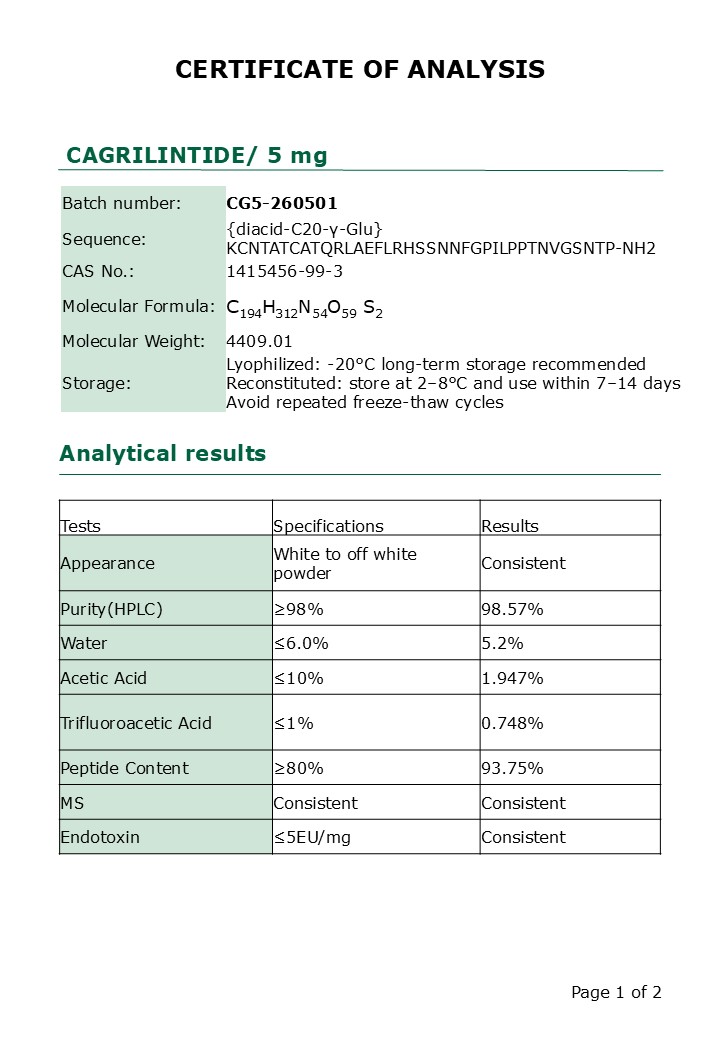
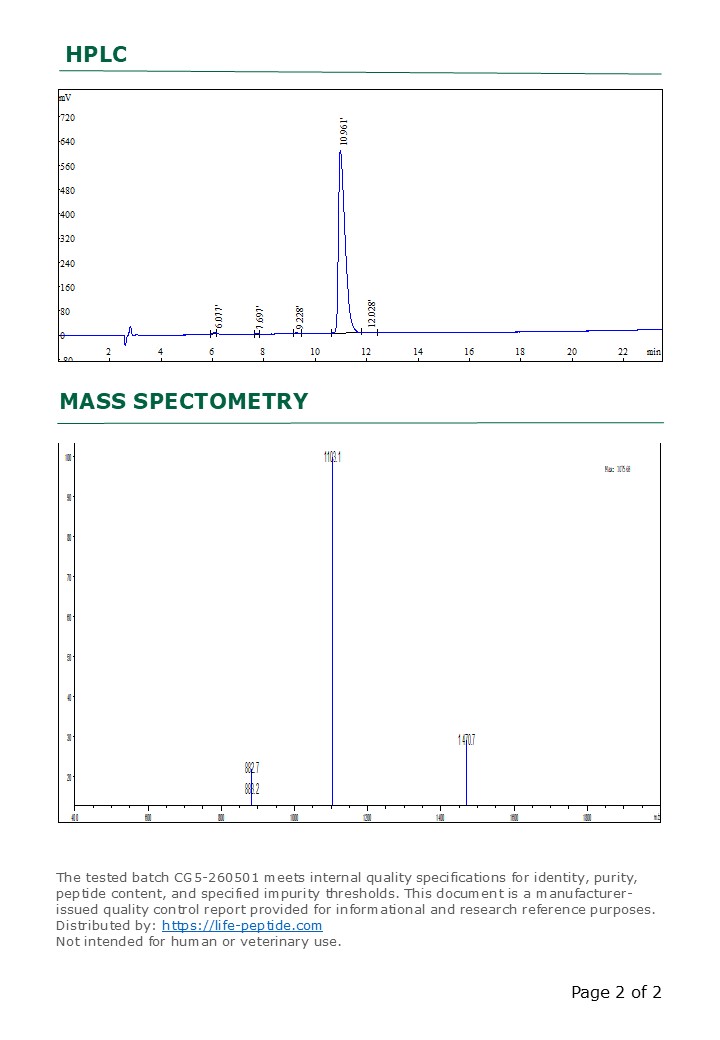
Each batch carefully lab tested after production (you can find Certificate of Analysis under product pictures).
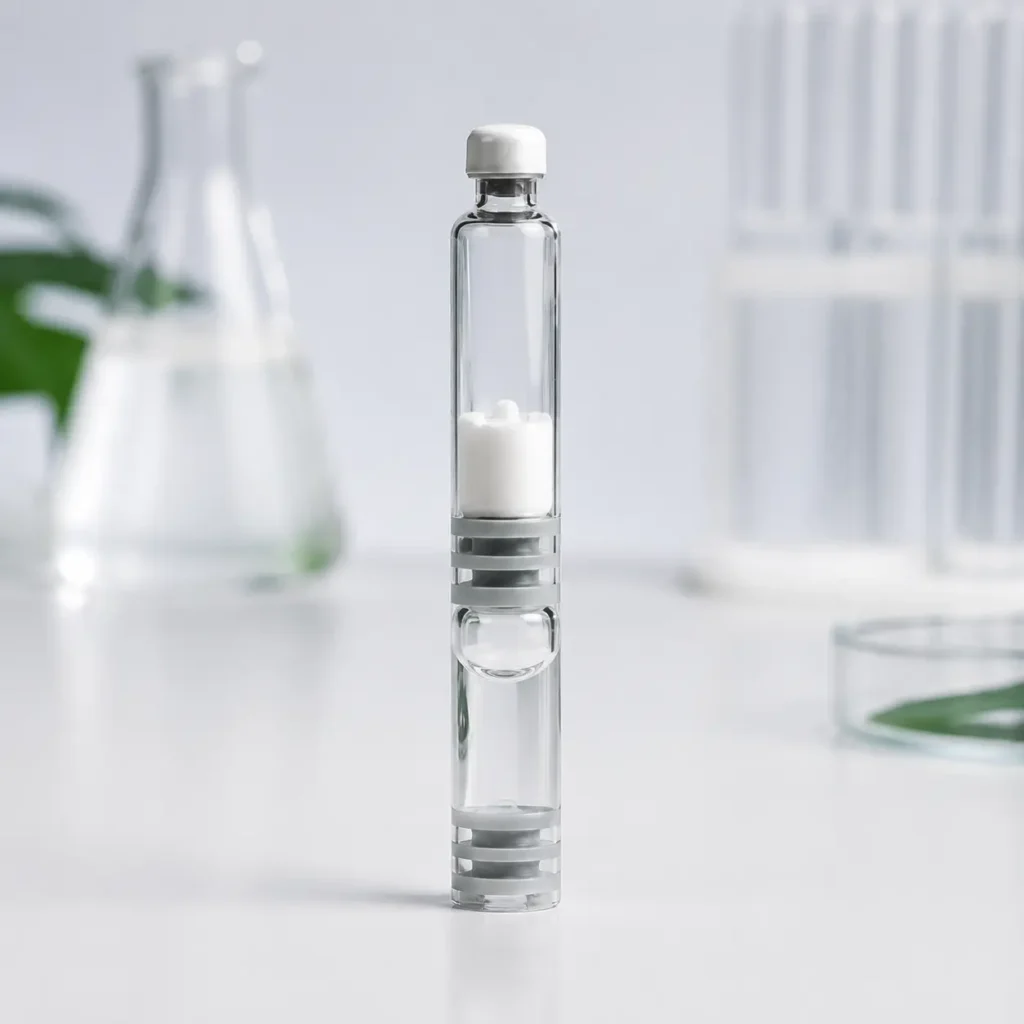
Freeze-dried (lyophilized) for maximum stability and extended shelf life.
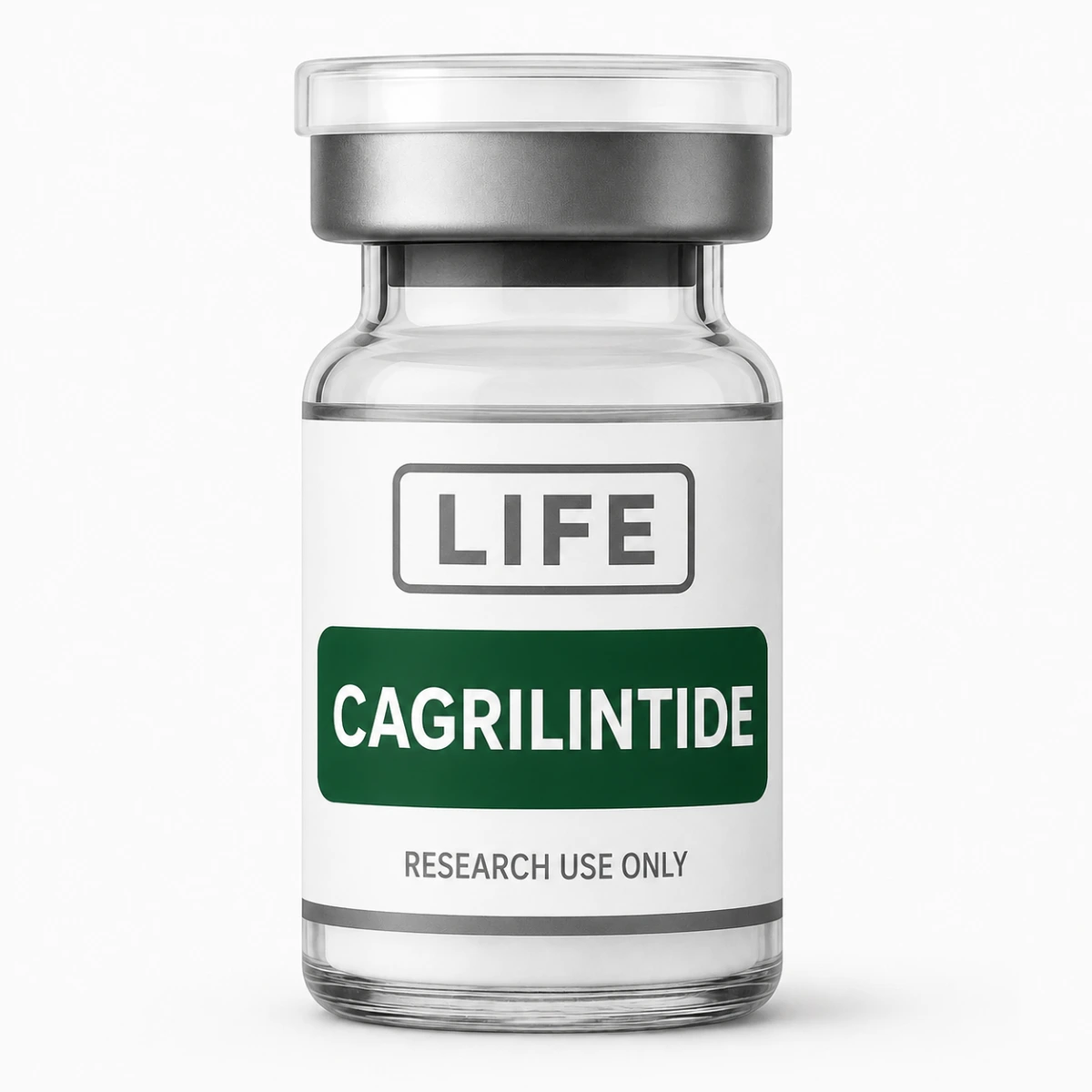
Sealed in sterile vials, ready for reconstitution.
Purity: ≥ 98.6% (HPLC)
Appearance: white lyophilized powder
Molecular formula: C194H312N54O59 S2
Molecular weight: 4409.01
Sequence: {diacid-C20-γ-Glu}KCNTATCATQRLAEFLRHSSNNFGPILPPTNVGSNTP-NH2
Storage: unopened lyophilized vials are best stored refrigerated at 2–8°C, which is the storage method confirmed by our manufacturing partner and suitable for up to 24 months. Refrigeration is preferred because it minimizes unnecessary freeze–thaw cycles during routine handling. If substantially longer-term storage is required, unopened lyophilized vials may also be kept frozen. Once reconstituted, always store at 2–8°C and do not freeze.
Reconstitution and handling
Cagrilintide is supplied as a lyophilised vial and should be handled using standard peptide reconstitution procedures appropriate to the research setting. Must be reconstituted with bacteriostatic water before use. GLP-1 class peptides are sometimes slow to dissolve and require very gentle reconstitution to avoid foaming or remaining slightly cloudy.
For other solvent selection, concentration planning and storage guidance, see the full Peptide Reconstitution Guide and Reconstitution Calculator.
Key published studies
- Lau DCW et al. Once-weekly Cagrilintide for Weight Management in People with Overweight or Obesity. The Lancet. 2021.
The landmark Phase 2 dose-finding study demonstrating significant dose-dependent body-weight reduction and establishing Cagrilintide as the leading long-acting amylin analogue for metabolic research.
- Kruse T et al. Development of Cagrilintide, a Long-Acting Amylin Analogue. Journal of Medicinal Chemistry. 2021.
The foundational medicinal chemistry publication describing the molecular design, receptor pharmacology and development strategy behind Cagrilintide as a long-acting amylin analogue.
- Frias JP et al. Efficacy and Safety of Co-administered Cagrilintide with Semaglutide in Type 2 Diabetes. The Lancet. 2023.
The pivotal clinical study evaluating combined amylin and GLP-1 receptor agonism, providing the scientific rationale for subsequent CagriSema research.
- D’Ascanio AM et al. Cagrilintide: A Long-Acting Amylin Analog for the Treatment of Obesity. Cardiology in Review. 2023.
A comprehensive review summarising pharmacology, mechanism of action, clinical development and the role of Cagrilintide within modern metabolic research.
Frequently Asked Questions
What is Cagrilintide?
Cagrilintide is a long-acting analogue of the hormone amylin, designed to reproduce and prolong physiological amylin signalling. Unlike GLP-1 receptor agonists, it primarily targets amylin receptor pathways, making it one of the leading investigational peptides for studying appetite regulation and satiety biology.
How does Cagrilintide work?
Cagrilintide activates amylin receptor systems involved in satiety, gastric emptying and energy balance. Its mechanism complements rather than duplicates GLP-1 receptor signalling, which is why it is frequently investigated alongside GLP-1 agonists such as Semaglutide.
Why is Cagrilintide often combined with Semaglutide?
Cagrilintide and Semaglutide act through different biological pathways. Cagrilintide primarily targets amylin receptor signalling, while Semaglutide activates the GLP-1 receptor. Published clinical research has investigated whether combining these complementary mechanisms can produce broader metabolic effects than either pathway alone.
How is Cagrilintide different from GLP-1 receptor agonists?
Unlike Semaglutide, Tirzepatide and Retatrutide, Cagrilintide is not an incretin receptor agonist. It is a long-acting amylin analogue with a distinct mechanism of action, making it an important addition to metabolic research rather than simply another GLP-1-derived peptide.
What research areas commonly investigate Cagrilintide?
Published studies have investigated Cagrilintide in relation to appetite regulation, satiety signalling, body-weight outcomes, gastric emptying, energy balance and combination therapy with GLP-1 receptor agonists. Its unique pharmacology has made it one of the leading molecules in amylin-based metabolic research.
Can I buy Cagrilintide in Europe?
Yes. We ship Cagrilintide to most European countries using reliable courier services. Available shipping methods and delivery times are shown during checkout based on your destination.
Is this product intended for human use?
No. Cagrilintide supplied by LIFE Peptide is provided strictly for laboratory research and analytical use. It is not intended for human consumption, diagnosis, treatment or prevention of disease. Any discussion of published clinical studies on this page is included solely to summarise the current scientific literature surrounding the Cagrilintide molecule.
Related research context
Cagrilintide belongs to the amylin analogue class within metabolic research.
For comparative frameworks:
• GLP-1 receptor agonists (e.g., Semaglutide)
• Dual agonists (e.g., Tirzepatide)
• Combination models (e.g., CagriSema research frameworks)
For broader mechanism comparison, see the GLP-1 metabolic research guide and explore the Metabolic research category for related compounds.
NOTE: This is for educational reference only and does not constitute medical advice.
Disclaimer
This product is sold for research purposes only. It is not intended to diagnose, treat, cure, or prevent any disease. Buyer assumes full responsibility for proper handling and use.