Popis
Kisspeptin-10 je nejkratší biologicky aktivní fragment endogenní rodiny peptidů kisspeptinů a jedna z nejdůležitějších signálních molekul v reprodukční endokrinologii.
Kisspeptin-10 namísto přímého působení na varlata nebo vaječníky stimuluje Receptor KISS1 (GPR54) na hypotalamických neuronech, což spouští uvolňování gonadotropin-releasing hormon (GnRH). To aktivuje celou hypotalamo-hypofyzárně-gonadální (HPG) osu, která reguluje luteinizační hormon (LH), folikuly stimulující hormon (FSH) a následnou produkci reprodukčních hormonů.
Kvůli této centrální roli se kisspeptin stal jedním z nejintenzivněji zkoumaných peptidů ve výzkumu plodnosti, reprodukční endokrinologie a neuroendokrinní fyziologie.
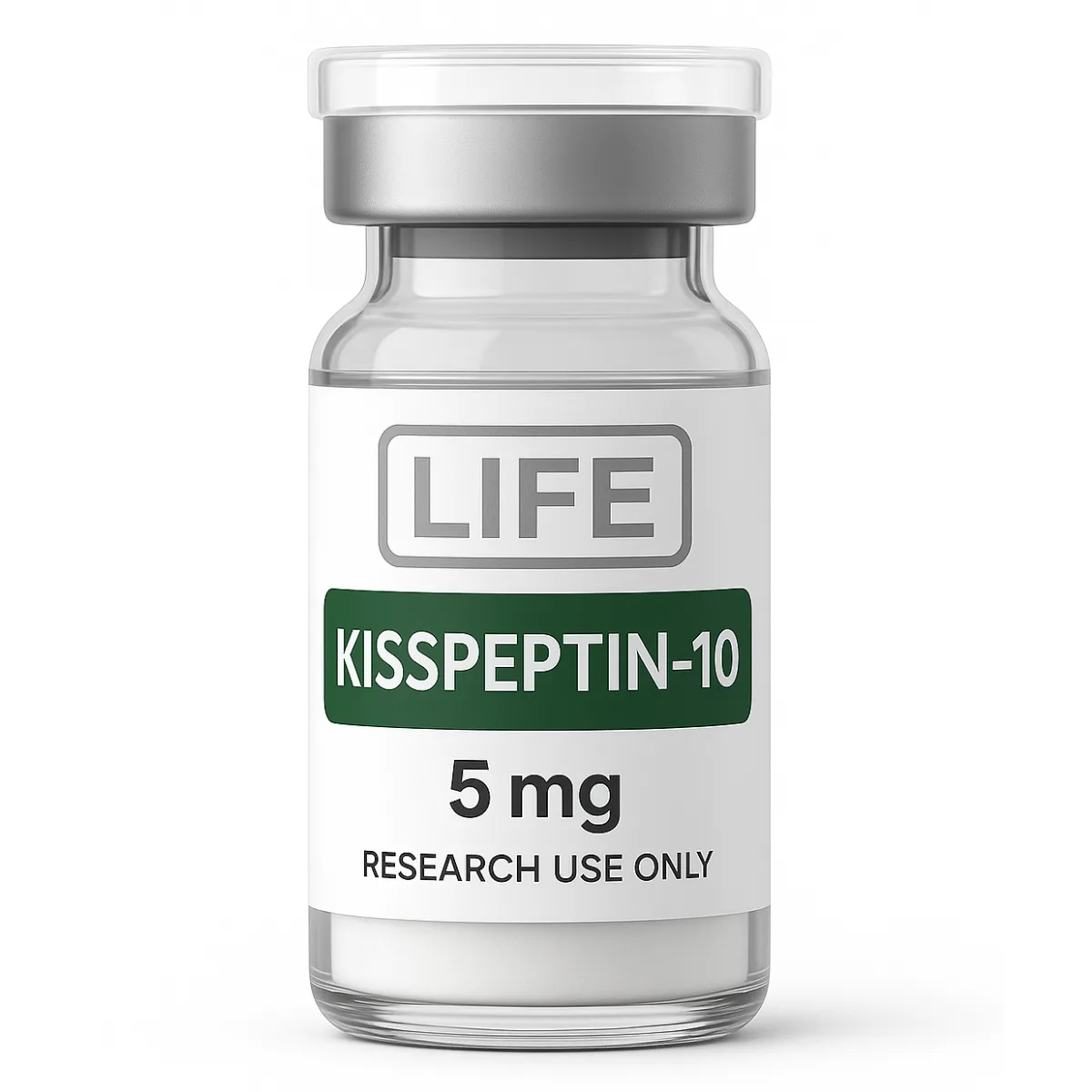
Chcete si v Evropě koupit kisspeptin? Společnost Life Peptide dodává kisspeptin vysoké čistoty pro laboratorní výzkum a zajišťuje spolehlivou dopravu po celé EU.
Proč je Kisspeptin-10 důležitý ve výzkumu plodnosti
Na rozdíl od sloučenin, které přímo nahrazují hormony, Kisspeptin-10 funguje tak, že aktivuje tělo’s přirozená signalizace reprodukčních hormonů dráha.
Publikovaný výzkum zkoumal kisspeptin-10 ve vztahu k:
- výzkum plodnosti
- regulace reprodukčních hormonů
- Signaling GnRH
- Sekrece LH a FSH
- fyziologie ovulace
- mužská reprodukční endokrinologie
- reprodukční endokrinologie žen
- regulace puberty
- funkce hypotalamicko-hypofyzárně-gonadální osy
Protože kisspeptin sedí na vrcholu kaskády reprodukčních hormonů, stal se klíčovým peptid v moderním výzkumu reprodukce.
Jak funguje Kisspeptin-10
Na rozdíl od peptidů, které působí přímo na endokrinní žlázy, Kisspeptin-10 funguje prostřednictvím receptoru KISS1, čímž aktivuje hypotalamické GnRH neurony.
Publikovaný výzkum zkoumal jeho vztah s:
Sekrece GnRH
Kisspeptin je uznáván jako primární fyziologický spouštěč uvolňování GnRH a následné signalizace reprodukčních hormonů.
Regulace LH a FSH
Aktivace GnRH neuronů vede k pulznímu uvolňování luteinizačního hormonu a folikuly stimulujícího hormonu z hypofýzy.
Puberta a reprodukční zralost
Výzkum prokázal, že signalizace pomocí kisspektinu hraje ústřední roli při nástupu puberty a udržování reprodukčních funkcí.
Neuroendokrinní integrace
Studie zkoumaly, jakým způsobem kisspeptin integruje nutriční stav, metabolické signály a reprodukční fyziologii v hypotalamu.
Proč je kisspeptin-10 široce zkoumán ve výzkumu plodnosti
Kisspeptin zaujímá jedinečné postavení, protože reguluje osu reprodukčních hormonů na jeho nejvyšší fyziologické úrovni.
Publikované studie prozkoumaly:
- plodnost
- asistovaná reprodukce (IVF)
- sekrece reprodukčních hormonů
- indukce ovulace
- fyziologie plodnosti
- mužské reprodukční hormony
- ženské pohlavní hormony
- hypothalamické amenorea
- opožděná puberta
- reprodukční neuroendokrinologie
V poslední době vědci zkoumali také vztah mezi signalizací kisspeptinu, sexuálním chováním a emočním zpracováním, čímž rozšířili jeho roli za hranice klasické reprodukční endokrinologie.
Lidský a preklinický výzkum
Kisspeptin má jednu z nejsilnějších datových bází lidských důkazů mezi neuroendokrinními peptidy.
Klinické studie prokázaly předvídatelnou stimulaci reprodukčních hormonů prostřednictvím fyziologické aktivace osy HPG, zatímco novější studie zkoumaly její účinky na nervové zpracování související s přitažlivostí, emočními reakcemi a sexuálním chováním. Výzkum nadále zkoumá potenciální aplikace u reprodukčních poruch, neplodnosti a neuroendokrinní regulace.
Jak se Kisspeptin-10 liší od ostatních reprodukčních peptidů
Kisspeptin-10
- Fertilita a regulace reprodukčních hormonů
- Regulace GnRH
- Výzkum osy HPG
- Agonista melanokortinového receptoru
- Výzkum sexuálního vzrušení
- Signální dráhy centrálního nervového systému
- Sociální pouta
- Párové pouto
- Mateřské chování
- Neuroendokrinní signalizace
Přestože se o těchto peptidech často mluví společně, regulují různé aspekty reprodukční biologie. Kisspeptin primárně řídí reprodukční hormonální signalizace, zatímco PT-141 ovlivňuje sexuální motivace, Oxytocin reguluje sociální chování, a Melanotan II primárně ovlivňuje pigmentace.
Publikované bezpečnostní poznatky
Publikované studie na lidech obecně uvádějí, že podávání kisspeptinu bylo v kontrolovaných výzkumných prostředích dobře snášeno. Protože stimuluje fyziologickou kaskádu reprodukčních hormonů, místo aby je přímo nahrazoval, současné výzkumy se zaměřily na přechodné endokrinní odpovědi a neuroendokrinní regulaci. Probíhající výzkum nadále hodnotí jeho širší terapeutický potenciál.
Vlastnosti produktu
Aplikace: laboratorní a analytický výzkum
Použití omezené: není určeno k lidské spotřebě; pro lékařské, veterinární ani kosmetické použití
Vyrobeno v zařízeních splňujících správnou výrobní praxi (GMP) za přísných protokolů kontroly kvality.
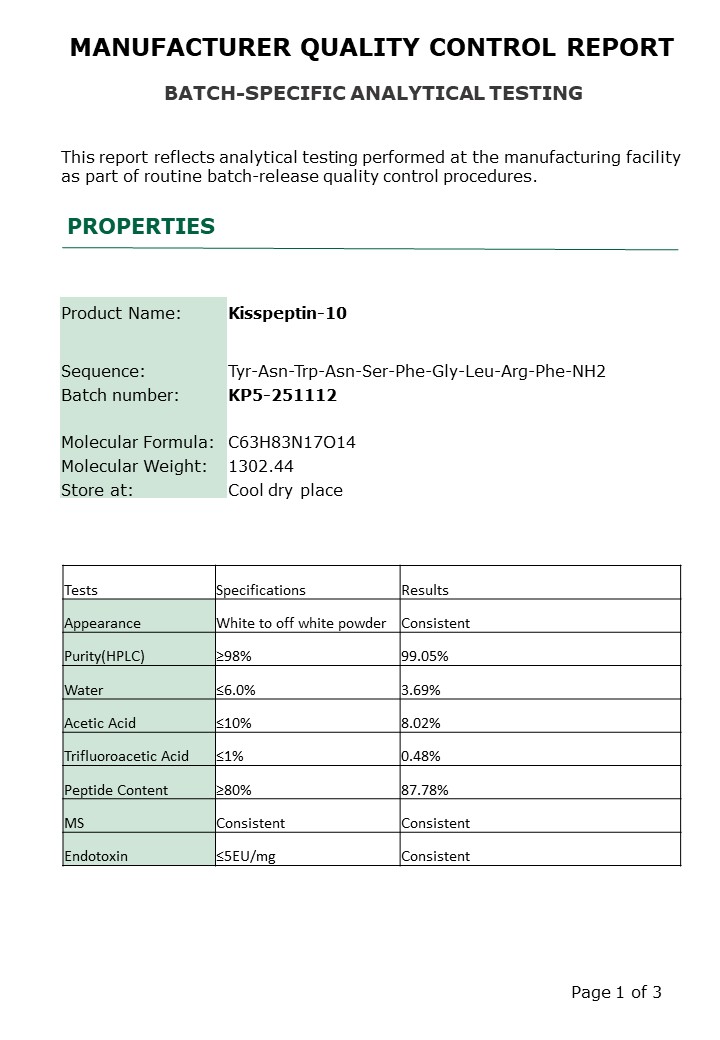
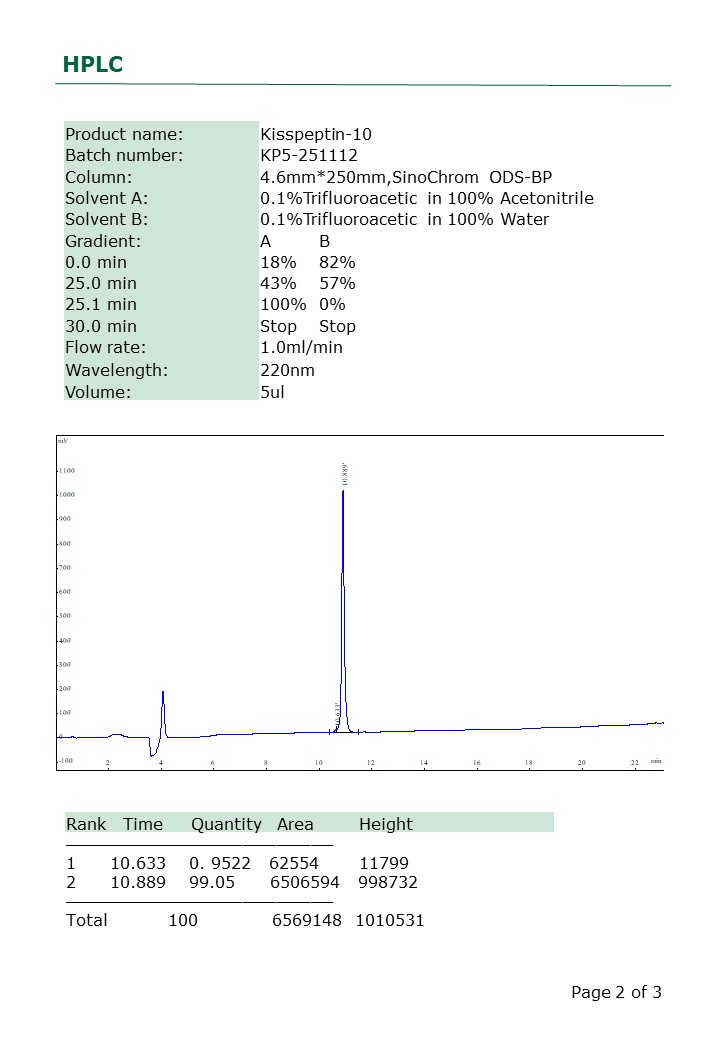
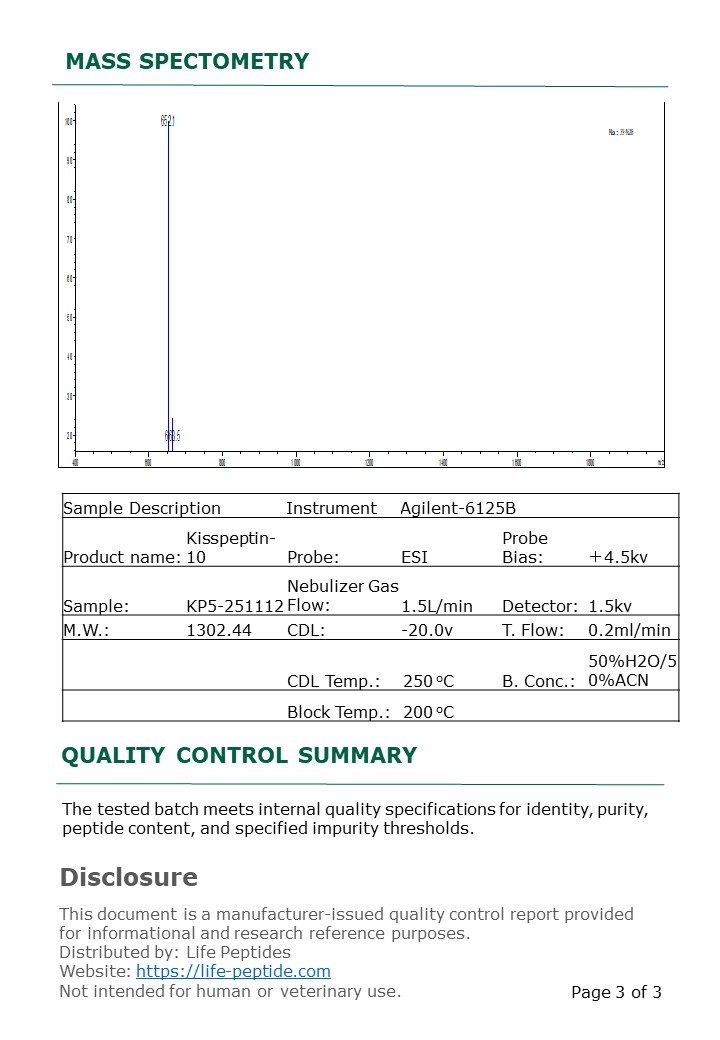
Každá šarže je po výrobě pečlivě laboratorně testována (Certifikát o analýze najdete pod obrázky produktů).
Lyofilizováno (sušeno mrazem) pro maximální stabilitu a prodlouženou trvanlivost.
Uzavřeno ve sterilních lahvičkách, připraveno k rekonstituci.
Čistota: ≥99% (testováno metodou HPLC)
Vzhled: Lyofilizovaný bílý/nebíle bílý prášek
Molekulární vzorec: C63H83N17O14
Molekulová hmotnost: 1302,44
Tyr-Asn-Trp-Asn-Ser-Phe-Gly-Leu-Arg-Phe-NH2
ÚložištěNeotevřené lyofilizované lahvičky jsou nejlépe skladovány chlazené při 2–8 °C, což je metoda skladování potvrzená naším výrobním partnerem a vhodná až po dobu 24 měsíců. Preferuje se chlazení, protože minimalizuje zbytečné cykly zmrazování a rozmrazování během běžné manipulace. Pokud je vyžadováno podstatně delší skladování, lze zmrazené uchovávat i neotevřené lyofilizované lahvičky. Po rekonstituci vždy skladujte při 2–8 °C a nezmrazujte.
Rekonstituce a manipulace
Kisspeptin je dodáván v lyofilizované lahvičce a měl by být zpracováván standardními postupy rekonstituce peptidů vhodnými pro výzkumné prostředí. Musí být rekonstituován pomocí bakteriostatická voda před použitím. Pro zachování strukturální integrity přidejte zvolené rozpouštědlo pomalu po vnitřní stěně lahvičky namísto přímo na peptidový prášek a vyhněte se prudkému protřepávání. Jemné kroužení je obecně dostačující, jakmile se peptid zcela rozpustí. Standardní laboratorní postupy zahrnují také ponechání chlazených lahviček dosáhnout pokojové teploty před rekonstitucí, aby se minimalizovala kondenzace uvnitř lahvičky.
Pro další pokyny k výběru rozpouštědla, plánování koncentrací a skladování viz úplné Průvodce rekonstitucí peptidů a Kalkulačka rekonstituce.
Klíčové publikované studie
- Dhillo WS, Comninos AN, a kol. Neuroendokrinní regulace reprodukčního chování a emoční kontroly kisspeptinem. Journal of Clinical Endocrinology & Metabolism, 2025.
Komplexní přehled týkající se role kisspeptinu v reprodukční endokrinologii, zpracování emocí a sexuálním chování.
- Stoynev N, Kumanov P. Systém Kisspeptinu – fyziologie a klinické perspektivy. Annales d’Endocrinologie, 2025.
Moderní přehled fyziologie kisspeptinu, reprodukční endokrinologie a nových klinických aplikací.
- Chakraborty AP, Banerjee A. Isoformy kisspeptinu: Všestranní hráči v reprodukci i mimo ni. Journal of Molecular Endocrinology, 2025.
Podrobná recenze vysvětlující izoformy kisspeptinu, biologii receptorů a regulaci osy HPG.
- Comninos AN a kol. Podávání kisspeptinu stimuluje reprodukční hormony, ale neovlivňuje úzkost u lidí. Journal of Clinical Endocrinology & Metabolism, 2025.
Lidský výzkum zkoumající endokrinní odezvy a behaviorální výsledky po podání kisspeptinu.
Často kladené otázky
Kisspeptin-10 je peptid, který hraje klíčovou roli v regulaci reprodukčních funkcí. Je součástí většího proteinu zvaného kisspeptin a jeho hlavní úlohou je stimulovat uvolňování hormonů z hypofýzy, které pak ovlivňují vaječníky u žen a varlata u mužů.
Kisspeptin-10 je nejkratší biologicky aktivní fragment rodiny peptidů kisspeptinů. Aktivuje receptor KISS1 (GPR54) a slouží jako přirozený spouštěč uvolňování GnRH v těle, což z něj činí jeden z nejdůležitějších peptidů ve výzkumu reprodukčních hormonů.
Kisspeptin-10 je důležitý ve výzkumu plodnosti, protože hraje klíčovou roli v regulaci hormonů, které řídí reprodukční funkce. Konkrétně:* **Stimuluje uvolňování GnRH:** Kisspeptin-10 působí na neurony v hypotalamu, které produkují gonadotropin-releasing hormon (GnRH). GnRH je nezbytný pro start sekrece dalších hormonů z hypofýzy, jako jsou luteinizační hormon (LH) a folikulostimulační hormon (FSH). * **Řídí sekreci LH a FSH:** LH a FSH jsou klíčové hormony pro vývoj vajíček u žen a produkci spermií u mužů. Také jsou zodpovědné za ovulaci a udržení těhotenství. * **Je spouštěčem ovulace:** Vrh LH (LH surge), který vede k ovulaci, je přímo závislý na působení kisspeptinu. * **Důležitost pro pubertu:** Kisspeptin-10 se podílí na nástupu puberty, kdy se aktivuje osáta hypotalamus-hypofýza-gonády. * **Potenciál pro léčbu neplodnosti:** Díky své centrální roli v reprodukčním systému je kisspeptin-10 a jeho analogy předmětem výzkumu pro potenciální léčbu různých forem neplodnosti, například u žen s poruchami ovulace nebo u mužů s nízkou hladinou testosteronu.Stručně řečeno, kisspeptin-10 funguje jako "hlavní spínač" pro reprodukční osy v těle a jeho poruchy mohou vést k problémům s plodností. Jeho pochopení otevírá nové možnosti pro diagnostiku a léčbu reprodukčních poruch.
Kisspeptin reguluje kaskádu reprodukčních hormonů stimulací sekrece GnRH. Následně to řídí uvolňování LH a FSH, čímž se kisspeptin stává centrálním peptidem ve studiích plodnosti, ovulace a reprodukční endokrinologie.
Jak se Kisspeptin-10 liší od PT-141?
Ačkoli jsou oba peptidy zkoumány v rámci reprodukčního výzkumu, mají rozdílné účely. Kisspeptin-10 reguluje signalizaci reprodukčních hormonů prostřednictvím osy HPG, zatímco PT-141 působí primárně na melanokortinové receptory zapojené do sexuální touhy a vzrušení.
Může kisspeptin-10 ovlivnit testosteron nebo estrogen?
Kisspeptin přímo nestimuluje produkci testosteronu ani estrogenu. Místo toho aktivuje uvolňování GnRH, které následně reguluje sekreci LH a FSH a následnou produkci pohlavních hormonů prostřednictvím přirozených endokrinních drah těla.
Jaké oblasti výzkumu se běžně zabývají kisspeptinem-10?
Publikovaný výzkum zahrnuje plodnost, regulaci reprodukčních hormonů, signalizaci GnRH, sekreci LH a FSH, ovulaci, pubertu, reprodukční endokrinologii, hypothalamickou amenoreu a neuroendokrinní fyziologii.
Může kisspeptin-10 ovlivnit funkci mozku i reprodukční hormony?
Ano. Nedávné studie zkoumaly vztah mezi signalizací kisspeptinu a emočním zpracováním, přitažlivostí, náladou a reprodukčním chováním, čímž rozšířily svůj výzkum za hranice klasické reprodukční endokrinologie.
Lze v Evropě koupit Kisspeptin?
Ano. Kisspeptin zasíláme do většiny evropských zemí pomocí spolehlivých kurýrních služeb. Dostupné způsoby dopravy a dodací lhůty se zobrazí během pokladny na základě vaší cílové destinace.
Je tento produkt určen k lidskému použití?
Ne. Kisspeptin-10 dodávaný společností Life Peptide je určen výhradně pro laboratorní a analytický výzkum. Není určen k lidské spotřebě, diagnostice, léčbě ani prevenci nemocí. Jakékoli zmínky o publikovaných studiích představují pouze shrnutí současné vědecké literatury týkající se molekuly kisspeptinu-10, nikoli zamýšleného použití tohoto produktu.
Související výzkumný kontext
Kisspeptin-10 patří do širší kategorie výzkumu neuroendokrinní a peptidové signalizace, se zaměřením na hypotalamickou regulaci a reprodukční endokrinní komunikační dráhy.
Výzkumníci zabývající se příbuznými neuroendokrinními signálními modely mohou také zkoumat:
- PT-141 výzkum neuroendokrinní signální transdukce zprostředkované melanokortinem
- Sekre sagoga růstového hormonu interakce hypotalamické a hypofyzární dráhy
- Kognitivní a neurovýzkumné peptidy — modely peptidové signalizace v CNS
POZNÁMKA: Tento text slouží pouze pro vzdělávací účely a nepředstavuje lékařskou pomoc.
Upozornění:
Tento produkt je prodáván pouze pro výzkumné účely. Není určen k diagnostice, léčbě, vyléčení nebo prevenci jakýchkoli onemocnění. Kupující přebírá plnou odpovědnost za řádnou manipulaci a použití.